Lyon’s Historic Site, inscribed in 1998, covers 2,000 years of continuous urban development from Roman Lugdunum to Renaissance silk-trading city to nineteenth-century industrial metropolis. Within three hours, the Cistercian abbey of Fontenay, the Burgundy vineyards, and the Pont du Gard extend a heritage circuit that traces French civilisation from the Roman era forward.
Historic Site of Lyon: Roman Capital to Silk City City centre
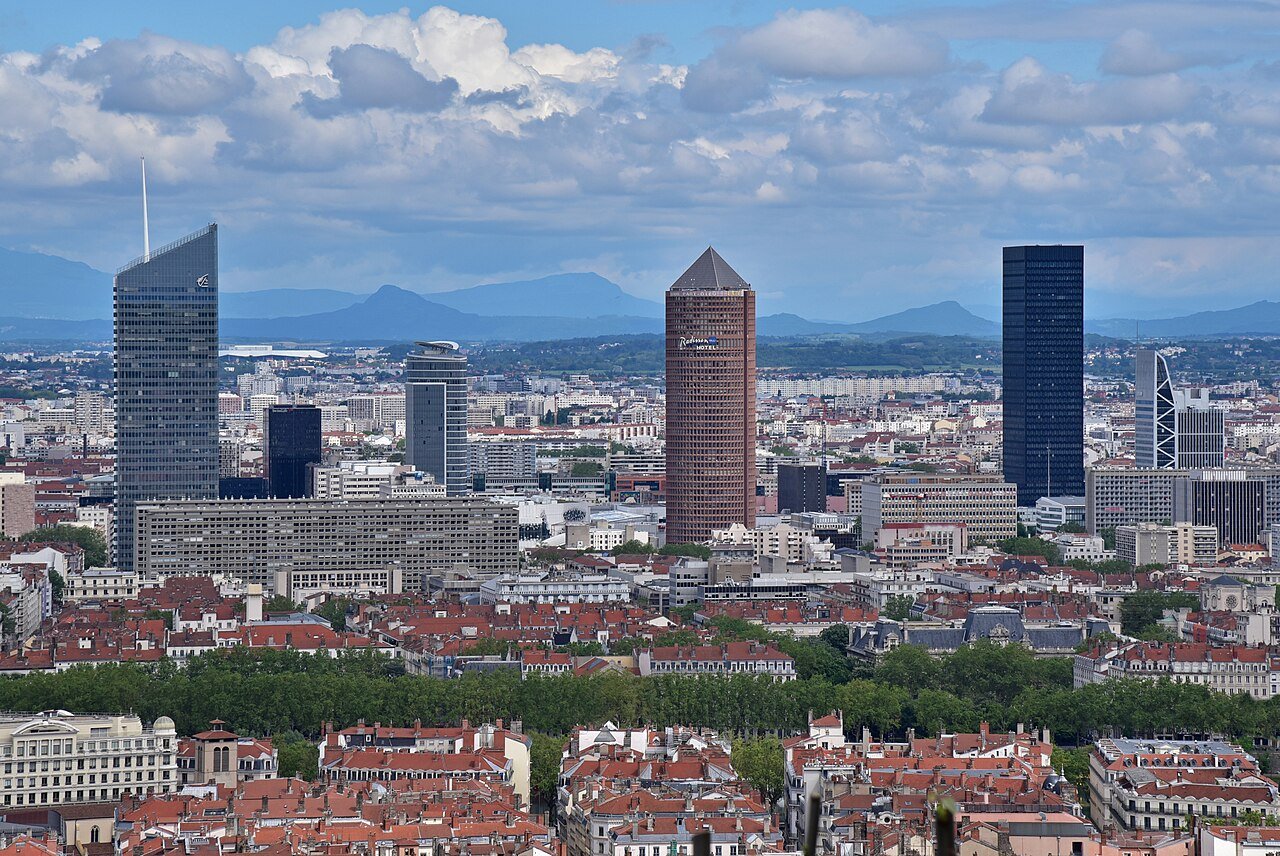
The Historic Site of Lyon, inscribed in 1998 under criteria (ii) and (iv), covers 427 hectares on four hills and the two riverbanks that define Lyon’s topography. Fourvière hill holds the Roman theatre complex (1st century BCE–2nd century CE), still in use for the Nuits de Fourvière summer festival, and the Gallo-Roman Museum, built into the hillside above the theatre cavea. The Presqu’île — the peninsula between the Rhône and Saône — contains the Place Bellecour (one of the largest pedestrian squares in Europe), the Hôtel-Dieu hospital (rebuilt by Soufflot in the eighteenth century), and the Opéra National de Lyon. Old Lyon (Vieux-Lyon) on the right bank of the Saône is the best-preserved Renaissance neighbourhood in France: the traboules (covered passageways connecting courtyards through city blocks) that silk workers used to move bolts of fabric quickly between workshops and markets are now a defining feature of the historic district, and guided tours explore their labyrinthine network. The Croix-Rousse quarter, inscribed within the same property, preserves the nineteenth-century silk-weaving infrastructure — the ateliers with their high windows admitting the north light that weavers required.
Cistercian Abbey of Fontenay: Pure Romanesque in Burgundy 🚗 ~1.5 hrs northwest via A6
The Cistercian Abbey of Fontenay, inscribed in 1981 under criteria (i) and (iv), is the oldest surviving Cistercian monastery in the world — founded by Bernard of Clairvaux in 1118, completed by 1147, and preserved without significant alteration since its sale during the French Revolution (to a paper mill, which paradoxically maintained the buildings). The Cistercian architectural programme — unadorned stone, barrel-vaulted nave, no figurative ornament, all proportions governed by an arithmetic ratio — is here at its purest. The church, cloister, dormitory, refectory, forge, and dovecote form a complete monastic complex in a sheltered valley. The forge, powered by a water wheel on the stream, was operational from the twelfth century and is one of the oldest surviving industrial buildings in France.
Burgundy Vineyards: Climats and the Slopes of Beaune 🚗 ~1.5 hrs north to Beaune
The Climats of the Burgundy Wine Regions, inscribed in 2015 under criteria (iii) and (v), protect a 60-kilometre strip of east-facing vineyard slopes between Dijon and Mâcon where medieval monks identified and mapped individual parcels (each a climat) for their distinct character. The inscription covers the slope itself, its stone enclosures (murets), the villages embedded in the vineyards, and the historic centre of Beaune with the Hôtel-Dieu (1443) — the hospice whose annual wine auction has set Burgundy price benchmarks for five centuries. The Côte de Nuits (Gevrey-Chambertin, Chambolle-Musigny, Vosne-Romanée) and Côte de Beaune (Pommard, Meursault, Puligny-Montrachet) constitute the heart of the inscription; walking the Route des Grands Crus between Nuits-Saint-Georges and Dijon gives the best sense of the micro-topography that determines wine character.
Vézelay and Autun: Romanesque Burgundy 🚗 ~2 hrs northwest of Lyon
The Basilica and Hill of Vézelay, inscribed in 1979 under criteria (i) and (vi), is a Romanesque pilgrimage church at the top of a fortified hill village that was the departure point for two crusades and one of the major assembly points on the Santiago de Compostela pilgrimage route. The nave of the Madeleine basilica (1096–1150) has alternating tan and white voussoirs in its arches — a Cluniac decorative device; the tympanum of the narthex (1120–1135), showing the Pentecost with figures distorted by visionary energy, is one of Romanesque sculpture’s masterworks. The Cathedral of Saint-Lazare at Autun (built over the same period) contains the Last Judgement tympanum carved by Gislebertus — one of the first named medieval sculptors in France — and the capital series in the nave, which includes the haunting Flight into Egypt.
Practical information
Lyon Part-Dieu station is served by TGV from Paris Gare de Lyon (2 hrs), Marseille (1.5 hrs), and Geneva (2 hrs). Fontenay is accessible by TER train to Montbard (45 mins from Dijon) then taxi; Beaune is 45 minutes from Dijon by TER. Vézelay and Autun require a car from Lyon or a connection via Dijon or Nevers. Lyon’s Fête des Lumières in December and the Nuits de Fourvière summer festival (June–July) are the key cultural events. The best time for Burgundy vineyard walking is late September to November, during and after the harvest.
Frequently Asked Questions
Is Lyon a UNESCO World Heritage Site?
Yes. The Historic Site of Lyon was inscribed in 1998 under criteria (ii) and (iv). The inscription covers 427 hectares encompassing the Roman hill of Fourvière, the medieval and Renaissance Old Lyon, the Presqu’île, and the nineteenth-century silk-weaving district of Croix-Rousse.
What are the traboules of Lyon?
Traboules are covered passageways that connect the courtyards of building complexes across blocks, allowing movement between streets without going outside. Lyon has approximately 40 publicly accessible traboules in Vieux-Lyon and Croix-Rousse; the Office de Tourisme publishes a traboule map and guided tours are available daily.
How far is the Fontenay Abbey from Lyon?
Approximately 180 kilometres by road — about 1.5 hours via the A6 autoroute and then D905 through Montbard. By train: TGV or TER to Montbard (1.5 hrs from Lyon), then taxi (15 minutes). Fontenay pairs naturally with Vézelay (45 km away) and Burgundy vineyard stops at Beaune for a two-day circuit.
Sources
- S1 — Pelletier, André. Histoire de Lyon: De la capitale des Gaules à la métropole européenne. Éditions Lyonnaises, 2007. ISBN 978-2-84147-190-4.
- S2 — Bayard, Françoise. Lyon sous l'Ancien Régime. Hachette, 1997. ISBN 978-2-01-235120-2.
Spotted an error? Write to editorial@culturalheritageonline.com and we correct it the same day.