Sri Lanka holds eight UNESCO World Heritage Sites, and three of them can be reached in a single day from Colombo — a fourth, Sigiriya, rewards an early start with an extended journey. Whether you head south along the coast to a Dutch colonial fort or northeast into the highlands to a temple that has defined Sinhala kingship for centuries, each site represents a different chapter of this island’s layered history. This guide covers honest journey times, what to expect on arrival, and the best way to plan your day. From Cultural Heritage Online.
Old Town of Galle and its Fortifications 2 hrs by car / 2 hrs 30 min by train
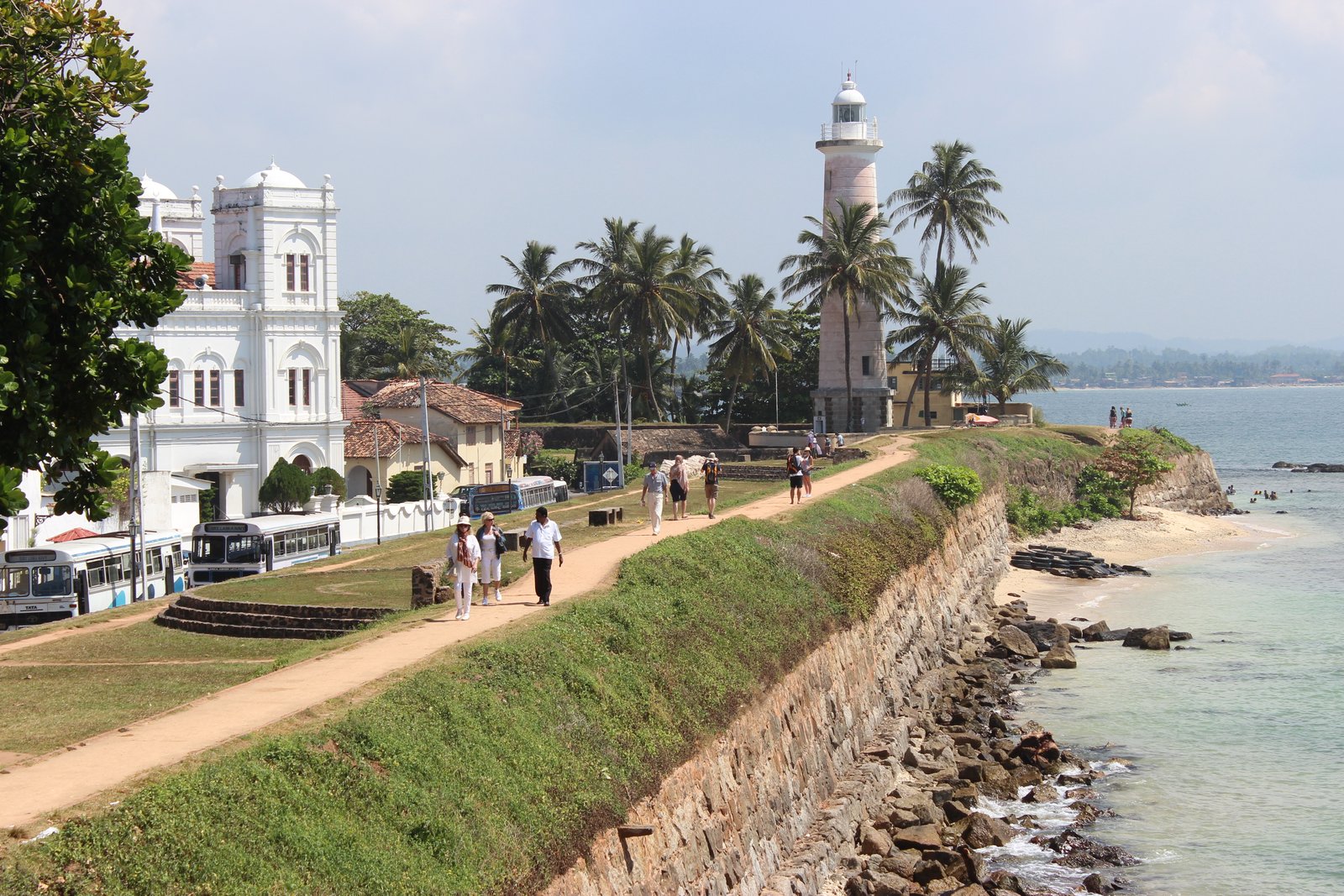
Galle sits at the southwestern tip of Sri Lanka, 115 kilometres south of Colombo on a rocky promontory where the Indian Ocean wraps around on three sides. The Portuguese established a trading post here in the early sixteenth century, but the fortifications visitors walk today are overwhelmingly a creation of the Dutch East India Company (VOC), which captured Galle from Portugal in 1640 and over the following decades rebuilt the defences in coral and granite. The result — a 36-hectare walled town with fourteen bastions and a grid of narrow streets lined with colonnaded houses — remained virtually intact through British occupation from 1796 and was inscribed as a UNESCO World Heritage Site in 1988. UNESCO recognised it as the best-preserved example of a fortified colonial city built by Europeans in South and Southeast Asia. Inside the walls, the Dutch Reformed Church (1755), the All Saints’ Anglican Church, and the old VOC warehouse share the same quiet lanes with boutique hotels and local workshops. The sea breeze off the ramparts in the late afternoon carries the salt smell of the ocean unimpeded — the fort’s western bastions face open water with nothing between them and the horizon.
Getting there: By car or private transfer via the Southern Expressway (E01), allow 2 hours from Colombo with no traffic; real-world journey times can stretch to 2 hours 30 min at weekends. By train, Sri Lanka Railways operates the coastal line from Colombo Fort station directly to Galle station (200 m from the fort entrance); journey time 2 hours 30 min to 3 hours depending on the service — book a reserved seat in advance. Entry to the fort and rampart walk is free; individual museum entry is Rs 200–500. Allow: 3–4 hours for the rampart circuit, Dutch Quarter streets, and a museum. Best for: Colonial architecture, coastal scenery, and those combining Galle with a beach night at nearby Unawatuna or Hikkaduwa.
Sacred City of Kandy 2 hrs 30 min by Intercity Express
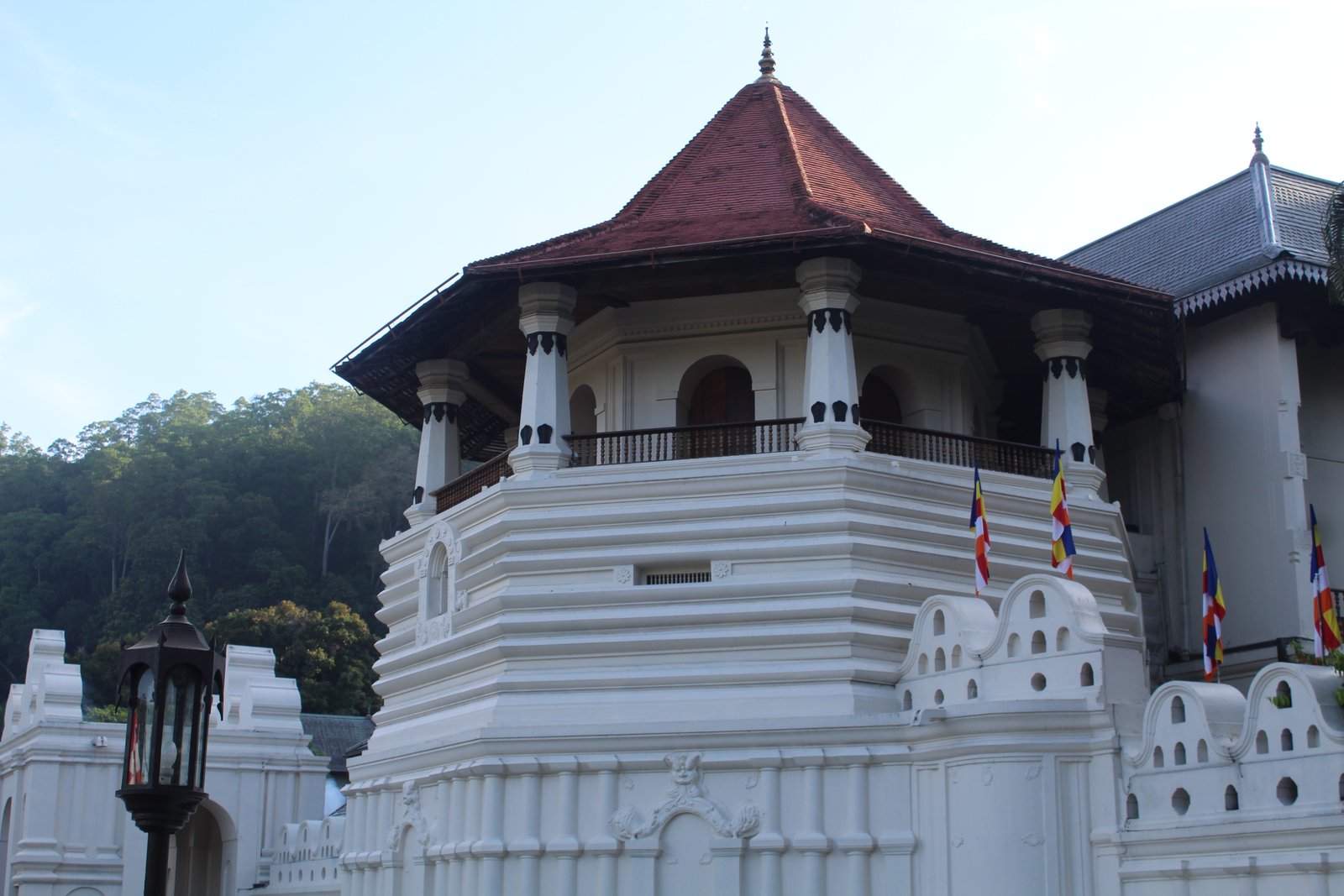
Kandy was the last capital of the independent Sinhala monarchy — a highland city that held out against Portuguese and Dutch incursions for over two centuries before the British annexed the Kingdom of Kandy in 1815, ending more than 2,500 years of unbroken Sinhala rule. The city and its surrounding landscape, inscribed as a UNESCO World Heritage Site in 1988 alongside Galle, is built around the Temple of the Sacred Tooth Relic (Sri Dalada Maligawa), a seventeenth-century complex of white-washed walls and red-tiled roofs set directly beside Kandy Lake. The relic it houses — a tooth of the Buddha said to have been retrieved from his funeral pyre at Kushinagar in 543 BCE and brought to Sri Lanka in the fourth century CE concealed in the hair of Princess Hemamala — has shaped the political legitimacy of Sri Lankan rulers for fifteen centuries: whoever holds the relic, tradition holds, holds the right to govern. Each July or August, the Esala Perahera festival draws the relic through the city in a candlelit procession involving over a hundred elephants, Kandyan drummers, and fire-dancers; in 2026 the main procession runs from 18 to 28 August. The moat and the Paththirippuwa octagonal tower were added in the final years of the Kandyan kingdom by royal architect Devendra Moolacharya — intricate wooden carving on the doorways remains vivid after two centuries.
Getting there: Sri Lanka Railways Intercity Express departs Colombo Fort at 06:55 and 15:35 daily; journey time approximately 2 hours 30 min to Kandy station (15-minute walk or tuk-tuk to the temple). Book reserved seats in advance — carriages sell out weeks ahead during Perahera season. By road, 115 km via the A1; allow at least 3 hours due to hill-country traffic. Allow: 3–4 hours for the temple complex, a walk around Kandy Lake, and the Udawattakele forest sanctuary above town. Best for: Buddhist heritage, the Esala Perahera festival (July–August), and travellers continuing to the hill country tea country by train.
Ancient City of Sigiriya 4 hrs direct / 4 hrs via Kandy
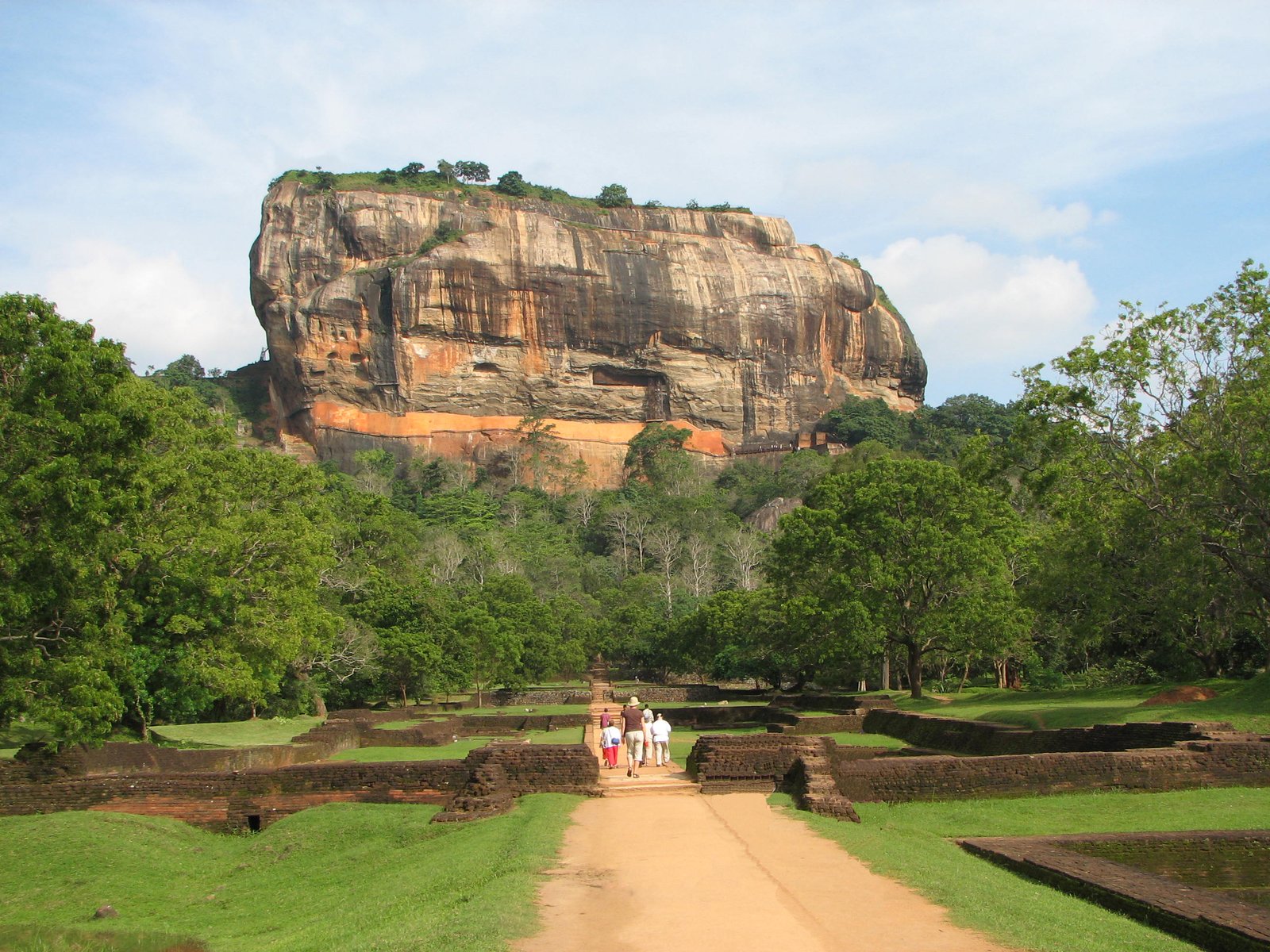
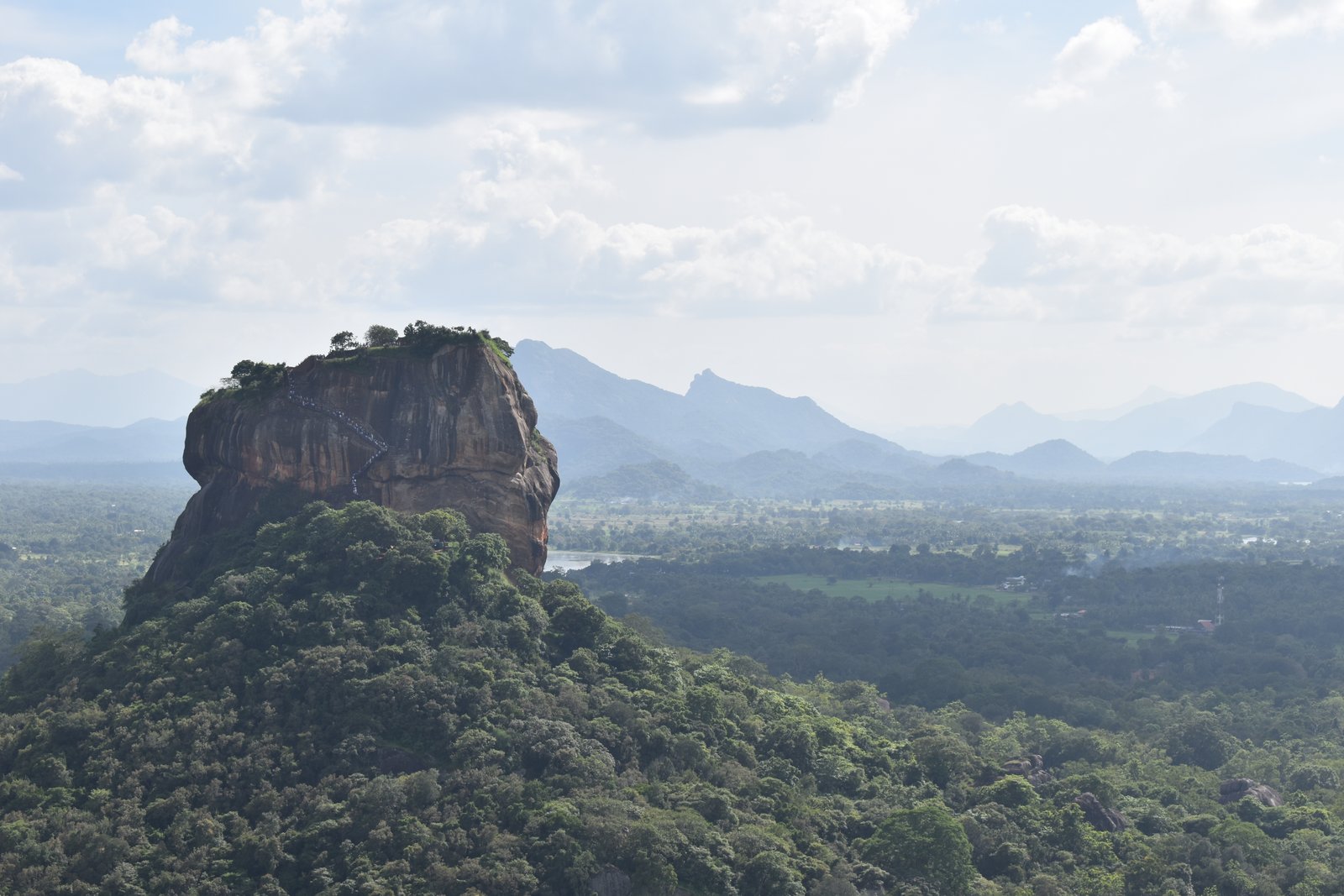
Sigiriya is an outlier in scale and ambition. A column of granite approximately 180 metres above the surrounding plain rises from the northern Matale District, and on its flat summit King Kashyapa (CE 477–495) built a fortified palace complex visible for kilometres in every direction. According to the ancient Sinhala chronicle the Cūḷavaṃsa, Kashyapa chose this near-vertical rock after seizing the throne from his father, turning an almost unscalable geological accident into a declaration of power. The ascent passes through formal water gardens at ground level, then through a gallery of frescoes depicting apsaras — celestial figures whose pigments, applied on a lime-plaster surface, have survived fifteen centuries of monsoon. Halfway up, an enormous lion’s-paw gateway (the Lion Gate, now reduced to its paws) once flanked the final staircase. At the summit, cisterns, throne platforms, and the outlines of pavilions remain. The site was inscribed as Sri Lanka’s first UNESCO World Heritage Site in 1982. Over a thousand pieces of graffiti scratched into the polished mirror wall by pilgrims and monks between the eighth and thirteenth centuries add a second, more intimate layer of history to the rock’s surfaces. The journey from Colombo is genuine — four hours each way — and Sigiriya rewards an early departure.
Getting there: Direct route: bus from Colombo Central Bus Stand to Dambulla (3 hrs 30 min), then tuk-tuk or bus to Sigiriya (30 min). Via Kandy: train to Kandy (2 hrs 30 min) then bus or taxi onwards (1 hr 30 min) — this is the more comfortable option and allows a brief stop in Kandy. By private car with driver, allow 4–4 hrs 30 min from Colombo. Entrance fee for foreign visitors: USD 30 (payable at the ticket office at the base). Allow: 2–3 hours at the rock itself (ascent and descent); budget a full day from Colombo including travel. Best for: Travellers with one full free day, early risers (gates open at 07:00; the ascent in the midday heat is demanding), and those combining Sigiriya with a night in Dambulla or Sigiriya village.
Frequently Asked Questions
How many UNESCO World Heritage Sites can be reached as day trips from Colombo?
Three sites are practical as day trips from Colombo: the Old Town of Galle and its Fortifications (115 km south, 2–2 hrs 30 min), the Sacred City of Kandy (115 km northeast, 2 hrs 30 min by Intercity Express), and the Ancient City of Sigiriya (175 km northeast, 4 hrs). Sigiriya requires an early start and a full day including travel. Sri Lanka has eight UNESCO World Heritage Sites in total; the remaining five — Dambulla, Polonnaruwa, Anuradhapura, Sinharaja, and the Central Highlands — require overnight stays to visit comfortably.
Which UNESCO site is closest to Colombo?
Both Galle and Kandy lie approximately 115 kilometres from Colombo and take a similar amount of time to reach — roughly 2 hours by car to Galle via the Southern Expressway, or 2 hours 30 min by Intercity Express train to Kandy. Galle is slightly faster by road in ideal conditions; Kandy is more reliably timed by train and avoids Colombo’s southern highway traffic. Either is a comfortable half-day journey that leaves plenty of time to explore the site itself.
Do visitors need a visa to enter Sri Lanka, and when is the best time to visit?
Most nationalities require an Electronic Travel Authorisation (ETA) for Sri Lanka, obtainable online before departure via the official government portal (eta.gov.lk). The fee is USD 20 for most countries. The best season for visiting the western and central sites — Colombo, Galle, Kandy, and Sigiriya — is from December to April, when the southwest monsoon has ended and skies are reliably clear. The east coast experiences the opposite monsoon pattern. Avoid the Galle–Colombo coastal corridor during the peak of the southwest monsoon (May–July), when heavy rain can disrupt coastal rail services.
What is the best local transport for getting between Colombo, Kandy, and Sigiriya?
For Kandy, the Sri Lanka Railways Intercity Express from Colombo Fort is the most reliable option: departures at 06:55 and 15:35, reserved seats available in advance, journey time approximately 2 hours 30 min. For Galle, the coastal line from Colombo Fort is scenic and direct (2 hrs 30 min), or the Southern Expressway is faster by private car (2 hrs). For Sigiriya, no direct rail connection exists; the cleanest option is to take the morning train to Kandy and then a private taxi or inter-city bus from Kandy Bus Station to Sigiriya (1 hr 30 min, approximately LKR 3,000–4,000 by taxi). Hiring a driver for the full day from Colombo — covering Sigiriya and optionally Dambulla Cave Temple — is common and costs approximately USD 60–90 depending on the vehicle.
Sources
- S1 — Bandaranayake, Senake. Sigiriya: City, Palace and Royal Gardens. Central Cultural Fund, 1999. ISBN 978-955-613-111-6.
- S2 — Brohier, R. L. The Golden Age of Military Adventure in Ceylon. Colombo Apothecaries Company, 1978. ISBN 978-955-9170-01-3.
Spotted an error? Write to editorial@culturalheritageonline.com and we correct it the same day.