The Grand Canal runs 7 kilometres from the Classical Gardens of Suzhou as the crow flies. The Liangzhu City ruins lie 106 km away, the West Lake landscape at Hangzhou 116 km, and the Yellow Sea-Bohai Gulf bird sanctuaries 128 km. Suzhou itself, inscribed in 1997, is the clearest expression of the Chinese garden tradition, where nature is recreated in miniature inside city walls.
The World Heritage sites within reach of Suzhou
The distances below are straight lines between the reference points that UNESCO publishes for each property, measured to the nearest component of a serial site. They tell you what is close. They do not tell you how long the road or train takes, which depends on the route, the season and the service.
| Site | Country | Distance | Inscribed | Type |
|---|---|---|---|---|
| The Grand Canal | China | 7 km | 2014 | Cultural |
| Archaeological Ruins of Liangzhu City | China | 106 km | 2019 | Cultural |
| West Lake Cultural Landscape of Hangzhou | China | 116 km | 2011 | Cultural |
| Migratory Bird Sanctuaries along the Coast of Yellow Sea-Bohai Gulf of China | China | 128 km | 2019 | Natural |
| Imperial Tombs of the Ming and Qing Dynasties | China | 172 km | 2000 | Cultural |
| Mount Huangshan | China | 255 km | 1990 | Mixed |
Read together, these sites trace a long Jiangnan conversation about water, mountains and the idealised landscape. The Grand Canal supplied the mercantile wealth that paid for garden construction; West Lake, from the 9th century onward, supplied the model of a landscape improved through causeways, islands and framed vistas. Mount Huangshan supplied the granite peaks and sea-of-clouds scenery that the Suzhou designers compressed into rock and pond.
Nine gardens, not one: how the inscription works
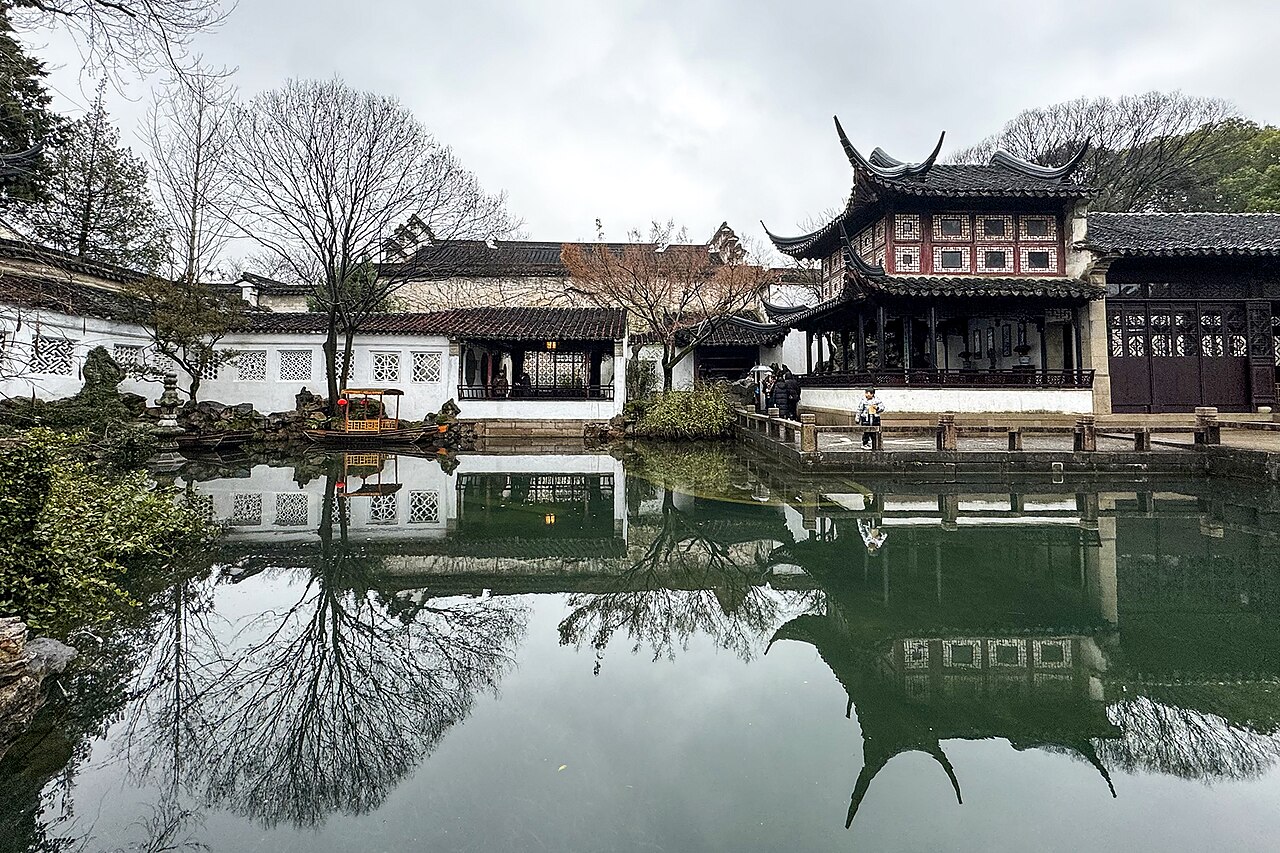
When UNESCO lists the Classical Gardens of Suzhou, it lists nine properties spread across the historic city. The Humble Administrator’s Garden, Lingering Garden, Net Master’s Garden, Mountain Villa with Embracing Beauty, Canglang Pavilion, Lion Grove Garden, Garden of Cultivation, Couple’s Garden Retreat, and Retreat & Reflection Garden are treated together as the best surviving examples of Chinese “Mountain and Water” gardens. The earliest, Canglang Pavilion, was built in the early 11th century; the most developed period of garden building ran through the 11th to 19th centuries, the span UNESCO’s case focuses on.

Why the gardens were built inside city walls
The Suzhou garden begins with a contradiction: its makers wanted wilderness, but they made it in a city. UNESCO’s description is precise on the impulse. Garden building started under private owners around the 4th century, inspired by the royal hunting grounds of the Wu Kingdom, whose capital Suzhou had been since the 6th century BCE. The gardens are expressions of a reclusive ideal: officials and intellectuals wanted to harmonise with nature while cultivating their own temperament, and they did so within the space of a single urban residence.
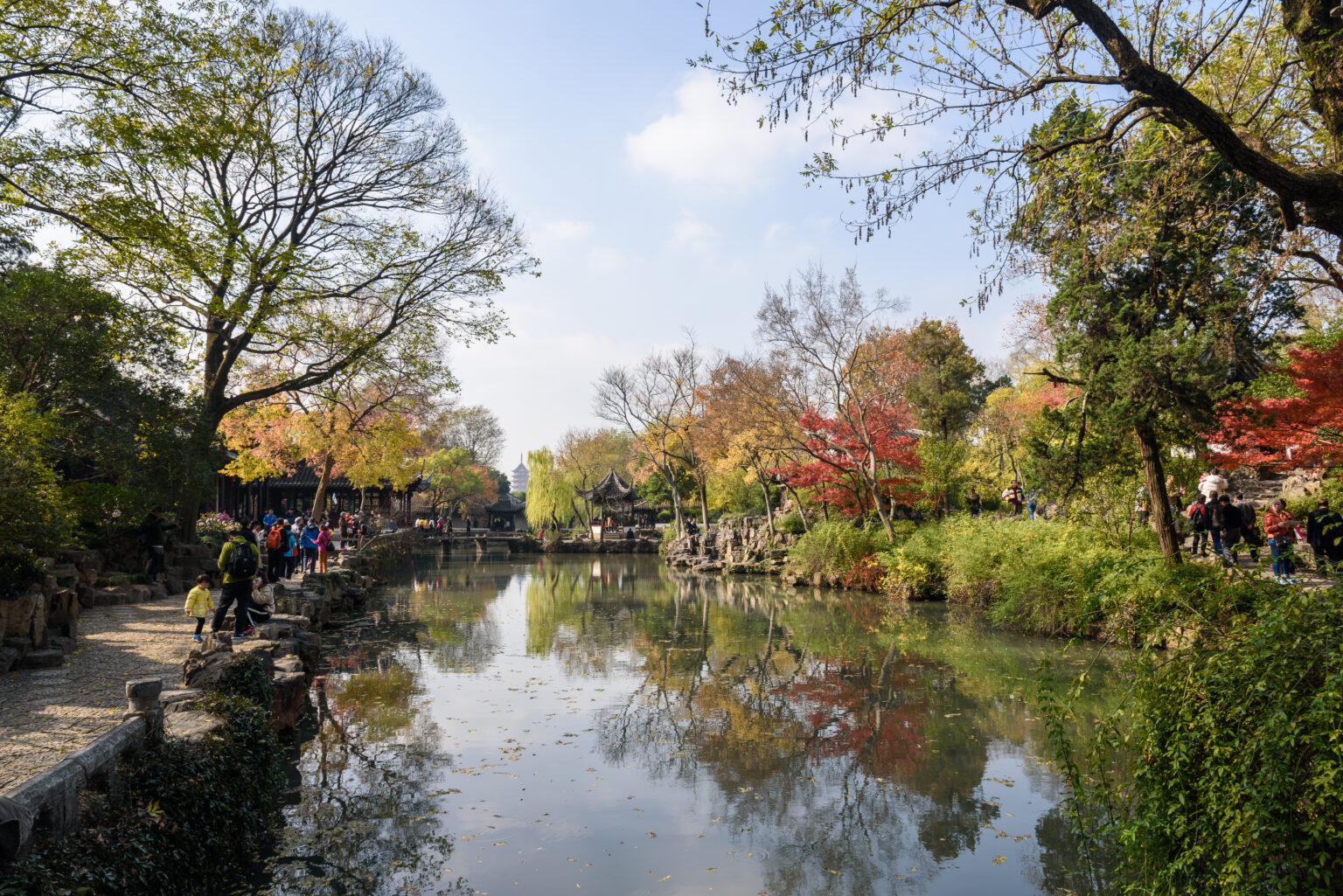
That constraint produced the garden’s defining technique. Builders used water, stones, plants and small pavilions to suggest a complete natural world in a limited plot. Rock formations stand in for mountain peaks; ponds do the work of lakes; a walk of a few hundred metres is paced to feel like a longer journey. UNESCO calls the result a microcosm of the natural world, and traces its influence far beyond China.
Why the Grand Canal is only seven kilometres away
The Grand Canal is not simply nearby; it is the reason the gardens exist in the form they do. The canal was built in sections from the 5th century BC and unified as an imperial waterway in the 7th century under the Sui dynasty. By the 13th century it stretched more than 2,000 km and linked five river basins, moving grain and raw materials and feeding the capital. Suzhou stands on that commercial spine, and the wealth the canal carried through the city funded the builders of private gardens: retired officials, merchants, and scholars with capital to spare. A visit from the gardens to the canal follows the money back to its source.
The canal remains a working waterway, not a museum piece. UNESCO notes that it is still in use today as a major means of communication, which means Suzhou’s two World Heritage inscriptions belong to different kinds of time: the gardens preserve a designed past, while the canal carries the same economic function it has carried for centuries.
What the Suzhou technique gave to world garden art
UNESCO’s case for the gardens rests on their influence as much as their beauty. Criterion (ii) covers the systemic form of landscaping developed over more than 2,000 years, and its effect on garden design in China and elsewhere. Criterion (i) credits the freehand brushwork of traditional Chinese landscape painting as the source of the garden aesthetic: the designers imported the painter’s way of seeing, then built it in three dimensions. The resulting style shaped garden art on both sides of the world.
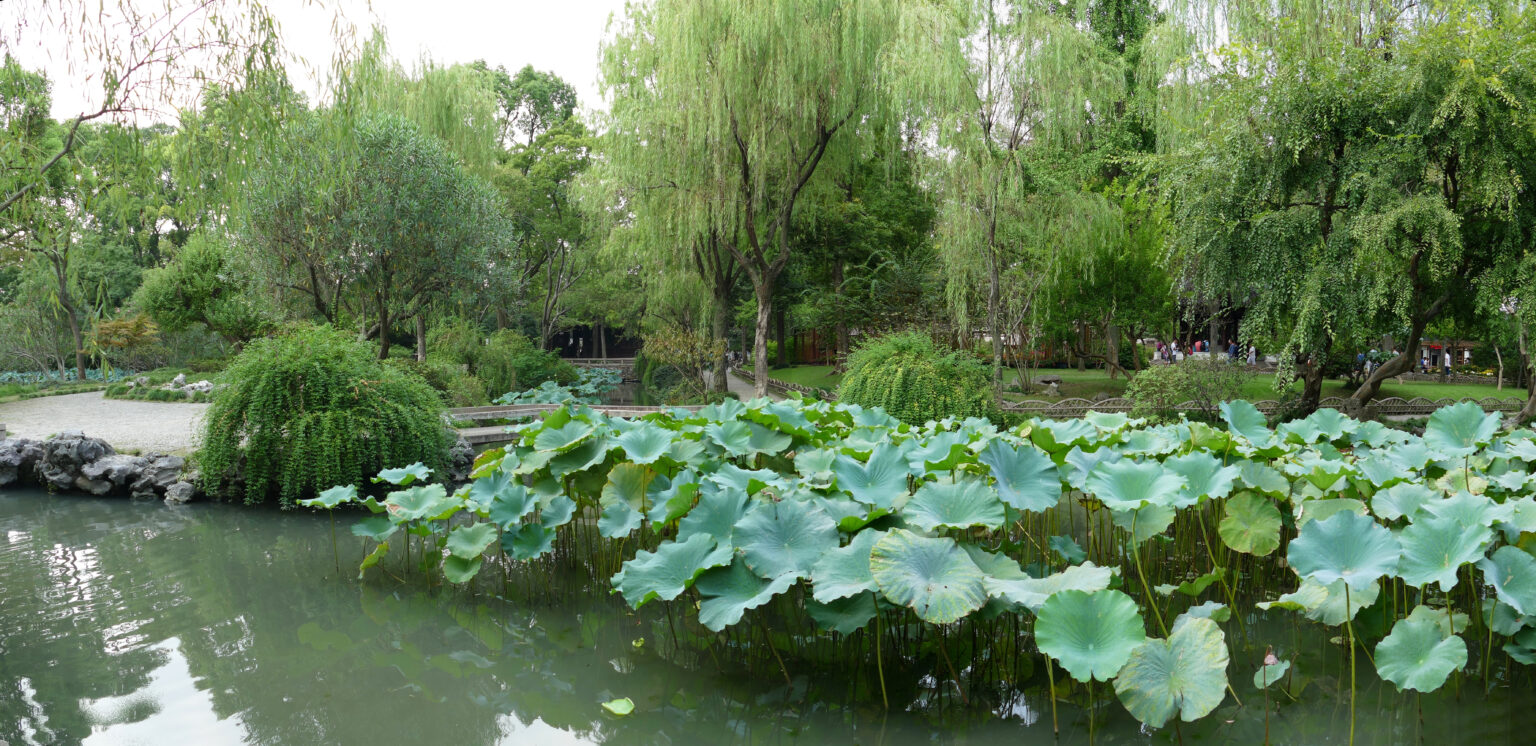
The gardens also carry a precise image of a regional culture. Criterion (iv) identifies them as specimens of East Yangtze Delta life from the 11th to 19th centuries, expressing philosophy, literature, art and craft but also the social and technological achievements of the period. Criterion (v) focuses on the harmony between residence and contrived nature, and on the lifestyles and customs the gardens preserve.
Today more than 50 classical gardens survive in Suzhou. The nine inscribed properties are the ones UNESCO judges the finest embodiments of the type, and the rest provide the urban context in which they sit.
Frequently Asked Questions
Which UNESCO World Heritage sites are near Suzhou?
The Grand Canal is 7 km away in a straight line, the Archaeological Ruins of Liangzhu City 106 km, the West Lake Cultural Landscape of Hangzhou 116 km, and the Migratory Bird Sanctuaries along the Coast of Yellow Sea-Bohai Gulf of China 128 km. Further out are the Imperial Tombs of the Ming and Qing Dynasties (172 km) and Mount Huangshan (255 km).
How many gardens make up the Classical Gardens of Suzhou inscription?
Nine gardens are inscribed, including the Humble Administrator’s Garden, Lingering Garden, Net Master’s Garden, Canglang Pavilion, Lion Grove Garden, Garden of Cultivation, Couple’s Garden Retreat, Retreat & Reflection Garden, and the Mountain Villa with Embracing Beauty. More than fifty classical gardens survive in Suzhou today.
When were the Classical Gardens of Suzhou inscribed on the World Heritage List?
In 1997, under criteria (i), (ii), (iii), (iv) and (v). The listed gardens date from the 11th to 19th centuries, and the garden tradition in Suzhou goes back to the 6th century BCE, when the city was the capital of the Wu Kingdom.
What makes the Suzhou gardens different from other Chinese gardens?
They are the finest built expressions of the “Mountain and Water” garden type, designed as microcosms of nature within a single urban residence. UNESCO cites their synthesis of painting, poetry and craftwork, and their profound influence on garden art in China and the wider world.
Sources
- UNESCO World Heritage Centre — Classical Gardens of Suzhou (inscribed 1997). https://whc.unesco.org/en/list/813/
- UNESCO World Heritage Centre — The Grand Canal (inscribed 2014). https://whc.unesco.org/en/list/1443/
- UNESCO World Heritage Centre — Archaeological Ruins of Liangzhu City (inscribed 2019). https://whc.unesco.org/en/list/1592/
- UNESCO World Heritage Centre — West Lake Cultural Landscape of Hangzhou (inscribed 2011). https://whc.unesco.org/en/list/1334/
- UNESCO World Heritage Centre — Mount Huangshan (inscribed 1990). https://whc.unesco.org/en/list/547/
Spotted an error? Write to [email protected] and we correct it the same day.