The Port, Fortresses and Group of Monuments, Cartagena (inscribed 1984) is the most complete example of a Spanish colonial fortified port in the Americas — a walled city on the Caribbean coast of Colombia whose sixteenth to eighteenth-century defensive systems (the Castillo de San Felipe de Barajas, the city walls, and the bay fortifications) are the largest and most sophisticated in the New World, while the old city within the walls is the most colourful and best-preserved colonial townscape in Colombia.
Cartagena de Indias: The Most Fortified City in the Americas Bolívar Department, Caribbean coast, Colombia
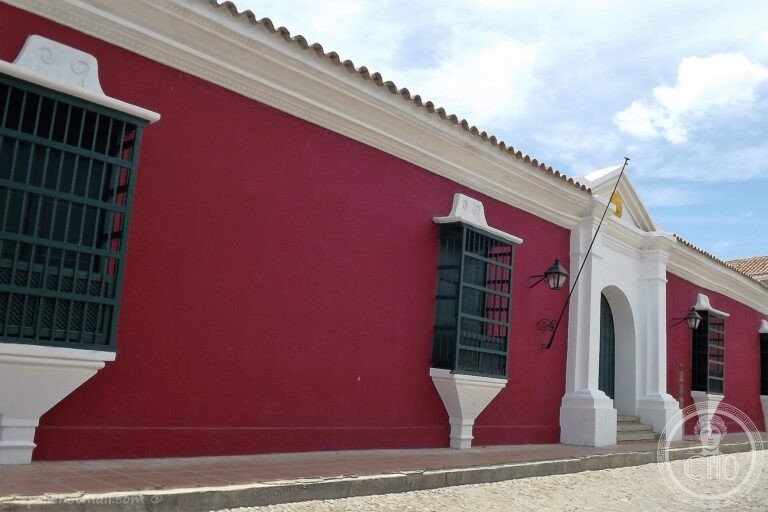
The Port, Fortresses and Group of Monuments, Cartagena (inscribed in 1984 under criteria (iv) and (vi)) is the most significant colonial port site in the northern coast of South America — a walled city of approximately 1.5 km² on a bay of the Colombian Caribbean coast, founded in 1533 CE by the conquistador Pedro de Heredia and developed by the Spanish colonial administration into the most important port in the Americas for the export of Andean gold and silver and the import of European goods. Cartagena’s fortifications (the focus of the UNESCO inscription) are the largest surviving Spanish colonial military engineering complex in the Americas: the Castillo de San Felipe de Barajas (the principal fort, built 1536–1657 CE on the San Lázaro hill overlooking the bay, with an elaborate system of tunnels, ramps, and firing galleries within the hillside that made it nearly impregnable — the British Admiral Edward Vernon’s 1741 attack on Cartagena with 186 ships and 23,600 soldiers was repulsed by the fort’s commander Blas de Lezo with only 6 ships and 3,000 soldiers, one of the most spectacular Spanish colonial military victories), the 11 km circuit of city walls (murallas, built in stone between 1616 and 1796 CE, up to 17 metres thick at the base), and the secondary forts at Boca Chica and Manga Island controlling the bay entrance. The historic city within the walls is the most photogenic colonial townscape in Colombia: brightly painted one and two-storey houses with balconies overflowing with bougainvillea and other tropical flowers, colonial churches (the Cathedral of Cartagena, 1575 CE; the Church of San Pedro Claver, 1654 CE), plazas, and the former slave market quarter of Getsemaní.
Gabriel García Márquez’s City Cartagena de Indias, Caribbean coast
Cartagena de Indias is the city most closely associated with Gabriel García Márquez (1927–2014, the most celebrated Latin American writer of the twentieth century and the creator of Magical Realism as a literary movement) — the city where he studied (at the University of Cartagena) and began his journalistic and literary career, and the setting (in veiled form) of several of his most important novels, particularly “Love in the Time of Cholera” (El amor en los tiempos del cólera, 1985, set in an unnamed Caribbean port city that is recognizably Cartagena) and “Of Love and Other Demons” (Del amor y otros demonios, 1994, set in the colonial period). García Márquez’s house in the Manga neighbourhood of Cartagena (which he owned from the 1990s until his death in 2014) is not open to the public, but the city centre contains several significant García Márquez references: the bronze statue of García Márquez at the historic city wall near the Torre del Reloj (Clock Tower Gate), and the Café de los Periodistas (the cafe where the young García Márquez worked as a journalist in the late 1940s).
Practical information
Rafael Núñez International Airport (CTG) serves Cartagena with direct flights from Miami, New York, Toronto, Madrid, Bogotá, Medellín, and Cali. The walled city is approximately 5 km from the airport (15 minutes by taxi). The historic centre is compact and walkable (approximately 1.5 km across); the Castillo de San Felipe de Barajas is 1 km east of the old city walls (taxi or short walk). The old city is best explored on foot in the early morning (before 10 a.m.) when it is cooler and less crowded; the late afternoon (5–7 p.m.) is the most photogenic time for the coloured facades. The best season is December–April (dry Caribbean season); the rainy season (May–November) has afternoon showers but remains warm. The Hay Festival Cartagena (January, the Latin American extension of the Welsh Hay Festival of Literature) is the most significant cultural event.
Frequently Asked Questions
Is Cartagena de Indias a UNESCO World Heritage Site?
Yes. The Port, Fortresses and Group of Monuments, Cartagena was inscribed in 1984 under criteria (iv) and (vi). Colombia has 9 UNESCO World Heritage Sites (as of 2024): Cartagena (1984), Los Katíos National Park (1994, natural), the Historic Centre of Santa Cruz de Mompox (1995), the National Archaeological Park of Tierradentro (1995), the San Agustín Archaeological Park (1995), Malpelo Fauna and Flora Sanctuary (2006, natural), the Coffee Cultural Landscape of Colombia (2011), the Chiribiquete National Park (2018), and the Qhapaq Ñan (2014, shared).
What was the trans-Atlantic slave trade’s role in Cartagena?
Cartagena de Indias was the principal port of entry for enslaved Africans into the Spanish colonies of South America from the sixteenth to the early nineteenth century — the only port in Spanish South America legally licensed to import enslaved people (under the asiento system, which granted exclusive trade monopolies), handling an estimated 1 million enslaved people over the colonial period. The most significant figure associated with Cartagena’s slave trade history is Saint Peter Claver (Pedro Claver, 1580–1654 CE), a Jesuit priest from Catalonia who spent 40 years in Cartagena attending to enslaved people arriving on slave ships — greeting them at the docks with food and medicine, learning African languages to communicate with them, baptizing approximately 300,000 by his own account, and advocating (within the limits of his theological framework) for their humane treatment. He was canonized in 1888 and declared the patron saint of the African peoples by Pope Leo XIII. The Church of San Pedro Claver in Cartagena contains his tomb and a small museum of his missionary activity; the Plaza de San Pedro Claver outside the church is one of the most atmospheric colonial squares in the city.
Who was Blas de Lezo and why did he defeat a British fleet of 186 ships?
Blas de Lezo (1689–1741 CE) was a Spanish naval officer who had lost his left leg at the Battle of Málaga (1704), his left eye at the Siege of Toulon (1707), and his right arm at the Battle of Barcelona (1713) — earning the nickname “Mediohombre” (Half Man) — and commanded the defence of Cartagena de Indias against the British Admiral Edward Vernon’s attack of 1741, known as the Battle of Cartagena de Indias. Vernon’s fleet of 186 ships and 23,600 men (the largest British naval force assembled before the Napoleonic Wars) besieged Cartagena for 67 days; Lezo’s defence of the Castillo de San Felipe with a force of approximately 3,000 men (soldiers, sailors, and local militia) repulsed the attack so decisively that Vernon’s fleet withdrew with an estimated 18,000 dead from combat, disease, and starvation. The British defeat at Cartagena (so total that Vernon’s advance victory bulletin had already been printed and distributed in London) is one of the least-remembered major British military disasters and one of the most significant Spanish colonial military victories. Blas de Lezo died of disease shortly after the battle; his statue (intact) stands outside the Castillo de San Felipe.
Sources
- S1 — Marco Dorta, Enrique. Cartagena de Indias: Puerto y plaza fuerte. Fondo Cultural Cafetero, 1988. ISBN 978-958-9144-02-2.
- S2 — García Márquez, Gabriel. Love in the Time of Cholera. Penguin Books, 1988. ISBN 978-0-14-011990-9.
Spotted an error? Write to editorial@culturalheritageonline.com and we correct it the same day.