

Romania holds some of the most complete medieval and pre-Roman heritage in Europe, and three UNESCO World Heritage Sites lie within a long day’s drive of Bucharest: a Saxon citadel town in Transylvania, a constellation of fortified churches across seven villages, and the mountain strongholds of an ancient Dacian kingdom. From Cultural Heritage Online.
Historic Centre of Sighisoara 260 km north · 3.5 hr by road
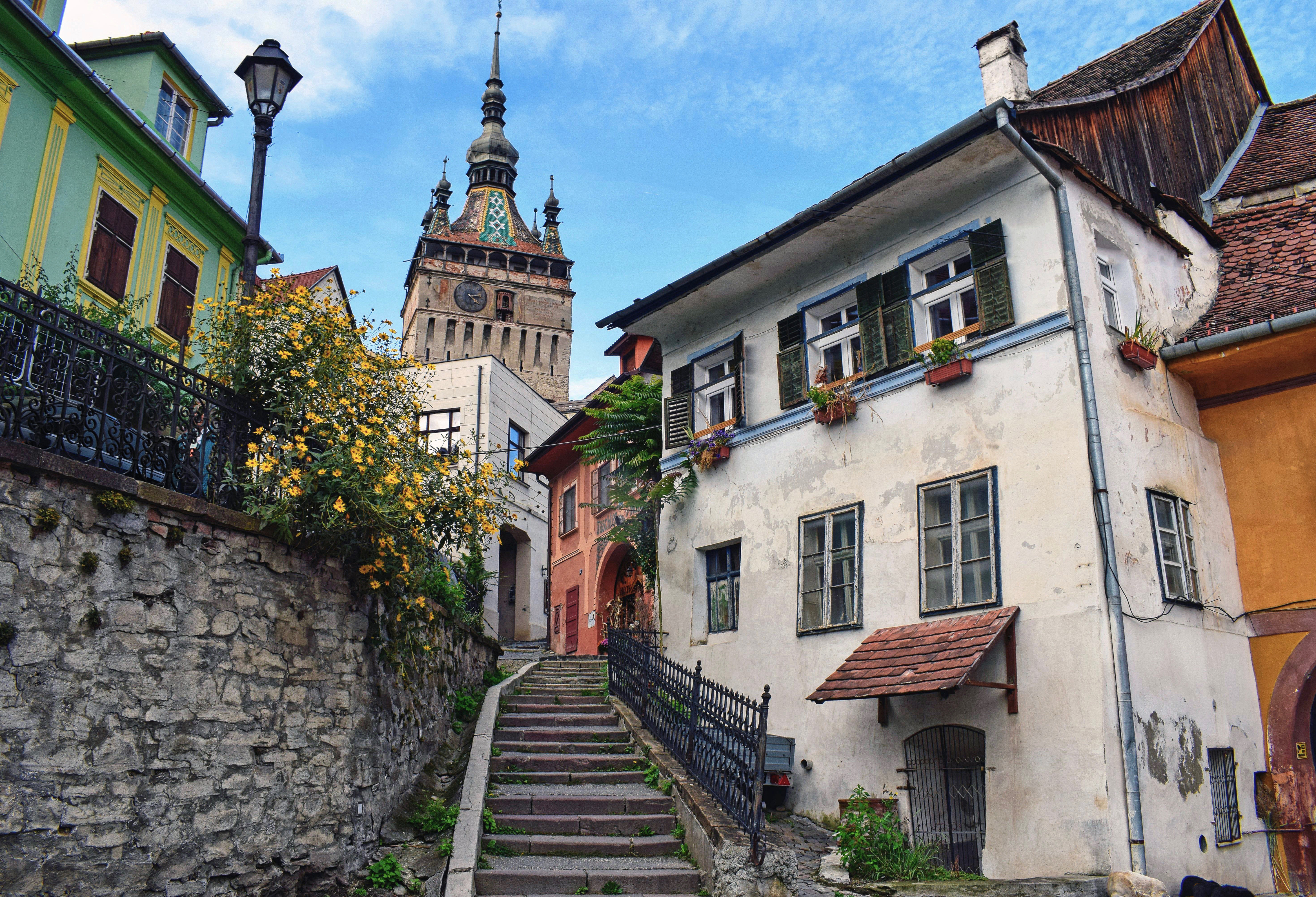
Sighisoara is one of the few fortified medieval towns in Europe still inhabited as a living community, not merely preserved as an open-air museum. The upper citadel sits on a limestone ridge above the Târnava Mare valley, its skyline defined by nine surviving towers and the 64-metre Clock Tower (Turnul cu Ceas), built in the fourteenth century when it served as the main gate and treasury of the Saxon merchant guild. UNESCO inscribed the historic centre in 1999 in recognition of its architectural coherence and the remarkable survival of its urban fabric across seven centuries.
The Covered Stairway — a roofed wooden passage of 175 steps — climbs from the lower town to the Church of the Hill (Biserica din Deal), a Romanesque-Gothic structure built between the fourteenth and sixteenth centuries that still contains painted interior panels and carved stone epitaphs. Below, on Strada Școlii, a small yellow house marks the birthplace of Vlad III, the fifteenth-century Wallachian prince known to history as Vlad the Impaler and to legend as Dracula, son of Vlad Dracul. The house is now a restaurant, which makes it easy to visit and easy to misread as the whole story; the citadel itself is the point.
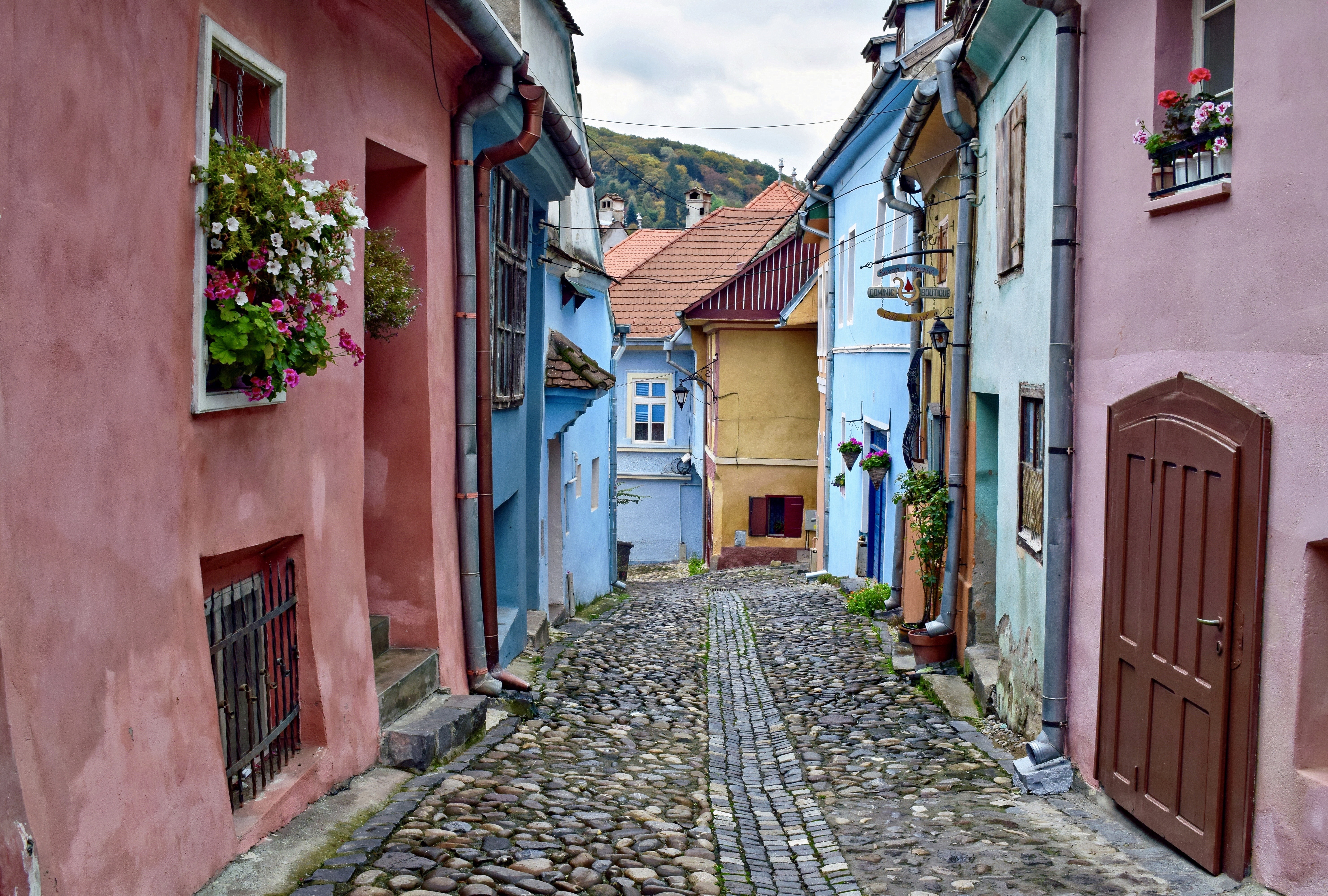
The coloured plaster facades of the merchant houses — ochre, rust, cobalt, pale green — date mostly from the seventeenth and eighteenth centuries, but they follow the plot lines of much older Saxon burgher plots. On summer evenings, when day-trippers have gone and the shadows lengthen across the cobbles, the citadel acquires a stillness that is genuinely rare in heritage towns of this calibre.
Getting there: By road via the A1/DN1 motorway and DN13A; 3.5 hr from Bucharest. Train connections exist but are slow (6–7 hr). Allow: One full day minimum; overnight recommended to experience the citadel after tour groups depart. Best for: Travellers drawn to intact medieval urbanism, architectural history, and Saxon heritage.
Villages with Fortified Churches in Transylvania — Biertan 270 km north · 3.5–4 hr by road
The UNESCO inscription of 1993 — extended in 1999 to cover seven villages — recognises a pattern of settlement unique to Transylvania: German-speaking Saxon communities who arrived from the twelfth century onwards and, over the following centuries, enclosed their churches within rings of fortified walls to shelter the entire village population in times of raid. Biertan holds the most architecturally significant of these complexes, its fifteenth- and sixteenth-century church enclosed by three concentric walls with 23 towers and three gatehouses on a hilltop above the village.
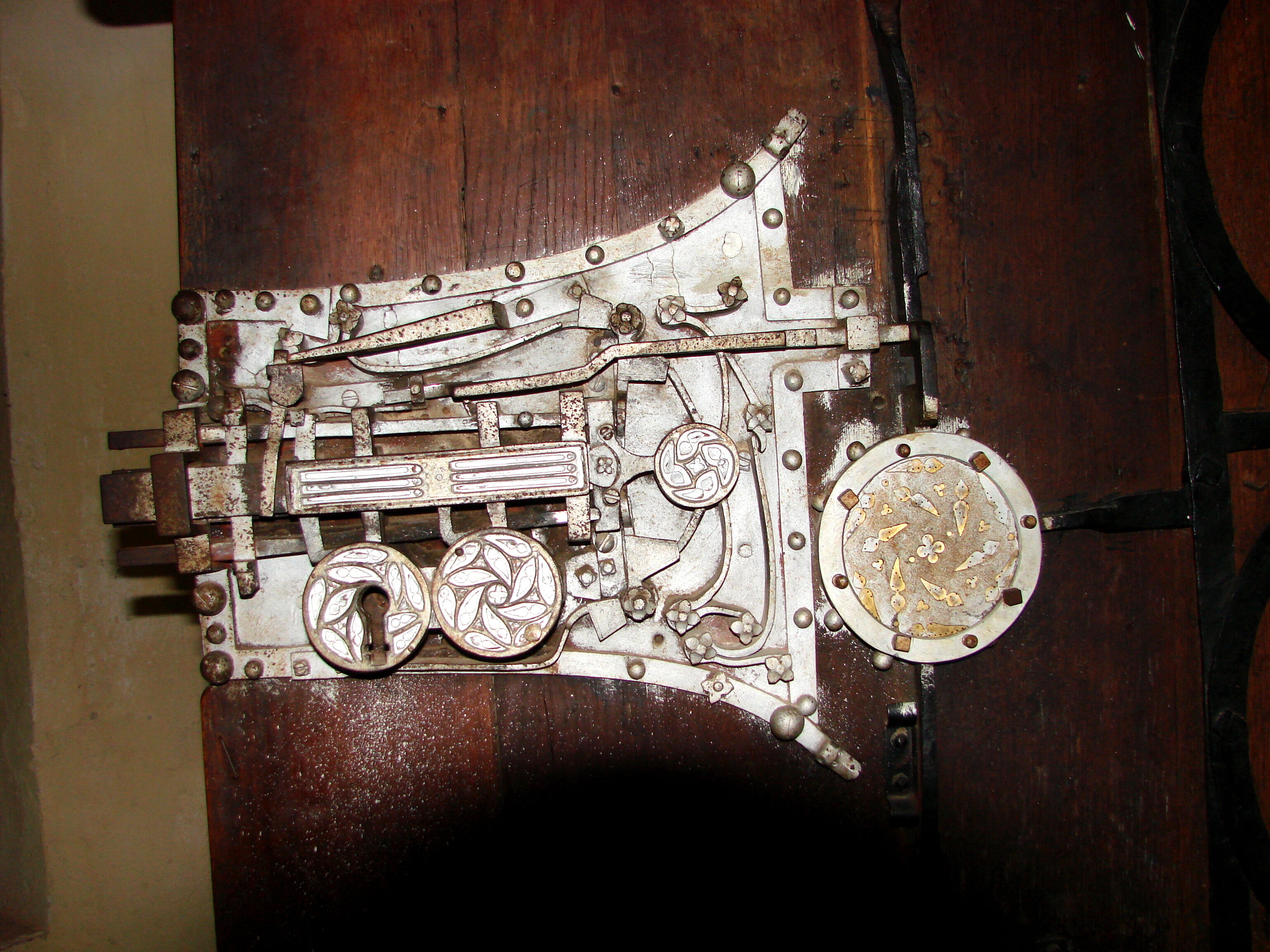
Inside the church, the sacristy door carries what may be the most intricate lock ever fitted to a piece of furniture: a mechanism with 19 bolts operated by a single key, built in the late fifteenth century and awarded a prize at the 1900 Paris World Exhibition. The Biertan bishops reportedly used an adjacent room, known as the Divorce Room, to confine couples seeking separation for two weeks with a single bed, a single plate, and a single spoon — a remarkably practical approach to marital mediation. The diocese records show it worked most of the time.
The other six villages of the inscription — Viscri, Câlnic, Dârjiu, Prejmer, Saschiz, and Valea Viilor — are reachable on a circuit through the Transylvanian hills. Viscri, partially restored with the involvement of King Charles III, draws the most visitors after Biertan; its unpaved approach road and white-washed church tower have become a recurring image in coverage of rural Transylvania. Each village repays an hour’s visit; taken together, they document a coherent Saxon civilisation that endured here for eight centuries.
Getting there: By road via Sibiu; Biertan is 70 km northeast of Sibiu. Easily combined with Sighisoara in a two-day Transylvania circuit. Allow: Half a day for Biertan alone; a full day to include two or three other villages on the circuit. Best for: Visitors interested in vernacular architecture, Transylvanian Saxon history, and rural landscapes off the main tourist routes.
Dacian Fortresses of the Orăștie Mountains 360 km northwest · 5 hr by road
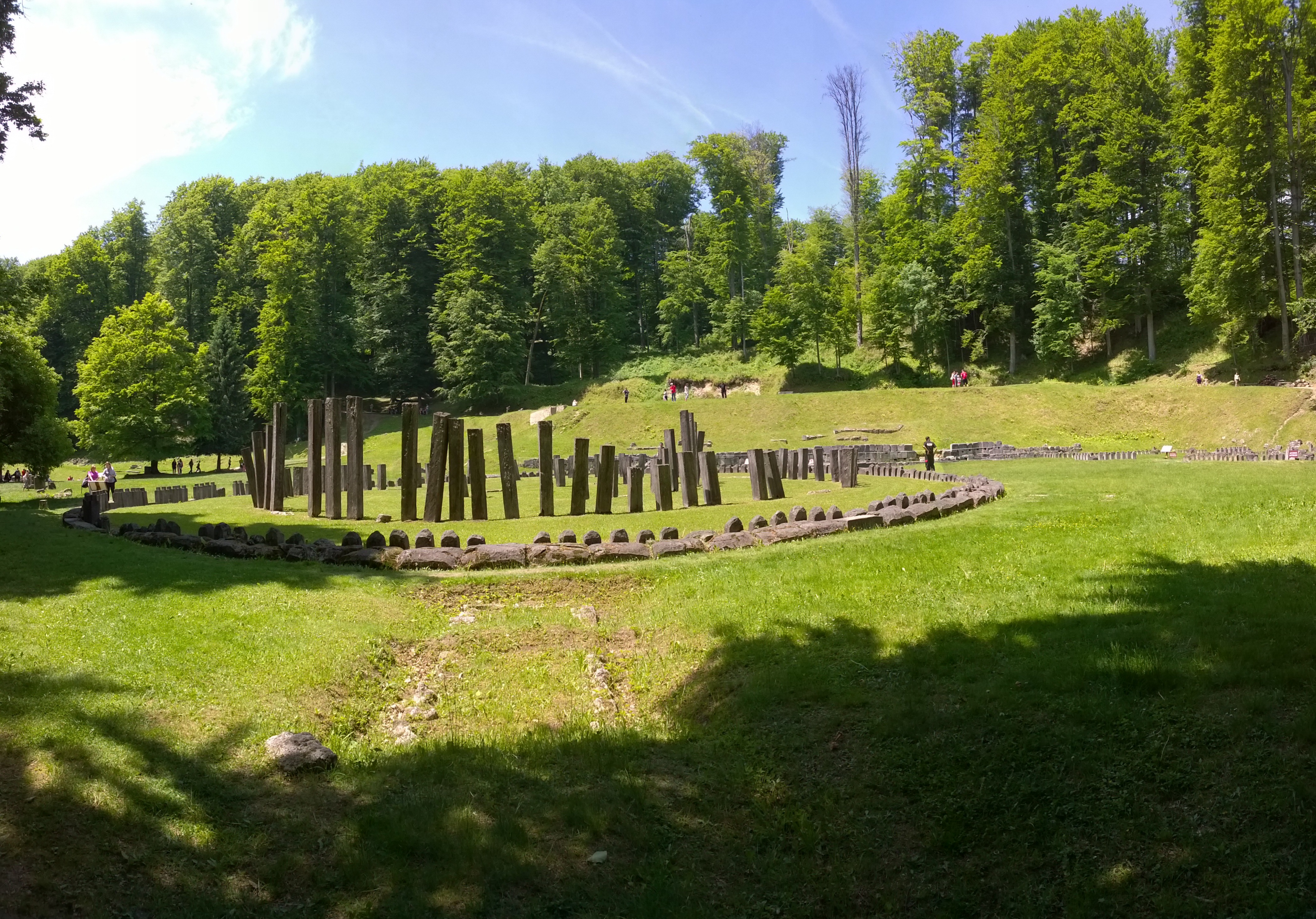
The six Dacian fortresses inscribed by UNESCO in 1999 represent the military and political core of the Dacian kingdom at its peak, before the Roman emperor Trajan’s campaigns of 101–102 AD brought it to an end. Sarmizegetusa Regia, the capital, sits at roughly 1,200 metres elevation in the Șureanu Mountains of western Romania — a position chosen for its defensibility and its association with the Dacian religious elite. The site is not easy to reach; a forest road climbs steeply from the valley below, and the last stretch is on foot. The effort is proportionate to what awaits.
What makes these fortresses exceptional in European terms is the construction technique known as murus dacicus: outer stone faces filled with rubbed earth and timber, engineered with a precision that reflects contact with Hellenistic military architecture. The stone was cut in a distinctive andesite, quarried locally, and the courses are laid without mortar. At Sarmizegetusa Regia, the sacred zone contains stone disc-altars and the remains of a large circular sanctuary that bears structural comparison with Stonehenge, though the cultural connection is coincidental. The evidence of high-level metalworking — tools, weapons, coinage in Dacian silver and gold — places this civilisation well outside the category of simple hill-forts.
The other five fortresses — Blidaru, Piatra Craivii, Căpâlna, Băniță, and Costești-Cetățuie — are distributed across the same mountain system and vary from substantial multi-terrace complexes to smaller signal and refuge points. Costești-Cetățuie, accessible by road and a short climb, is the most visited after Sarmizegetusa and gives a clear picture of the murus dacicus walls at eye level.
Getting there: By road via Orăștie and the Grădiștea de Munte valley; the forest road to Sarmizegetusa Regia requires a capable vehicle and is closed in winter. 5 hr from Bucharest. Allow: A full day for Sarmizegetusa Regia and one additional fortress; plan an overnight in Deva or Hunedoara. Best for: Travellers with a serious interest in pre-Roman archaeology, mountain landscapes, and sites that attract few crowds relative to their historical significance.
Frequently Asked Questions
How many UNESCO World Heritage Sites are near Bucharest?
Three UNESCO World Heritage Sites are accessible on day trips or short excursions from Bucharest: the Historic Centre of Sighisoara (inscribed 1999), the Villages with Fortified Churches in Transylvania — anchored by Biertan (inscribed 1993, extended 1999), and the Dacian Fortresses of the Orăștie Mountains (inscribed 1999). Romania has nine UNESCO sites in total.
How do you get from Bucharest to Sighisoara?
The most practical option is by car: take the A1/DN1 motorway northwest through Ploiești and Brașov, then continue on the DN13A to Sighisoara — approximately 260 km and 3.5 hours in normal traffic. Trains run from Bucharest Gara de Nord to Sighișoara but take 6–7 hours and involve at least one change; they suit travellers who prefer not to drive. No direct bus service covers the full route without a transfer.
Can you visit Sighisoara and Biertan in the same trip?
Yes, and combining them is the logical approach. Both sites lie in Transylvania within roughly 70 km of each other, and both are best reached via Sibiu. A two-day itinerary works well: spend the first day and night at Sighisoara, then drive southwest the following morning to visit Biertan and one or two of the other fortified church villages (Viscri or Saschiz are particularly worthwhile) before heading back toward Bucharest via Brașov.
Who were the Dacians, and why are their fortresses a UNESCO site?
The Dacians were a Thracian people who dominated the Carpathian region from roughly the second century BC until the Roman conquest of 101–102 AD under Emperor Trajan. At their peak, they built a sophisticated network of fortified complexes in the Orăștie Mountains using a construction technique — murus dacicus, stone outer walls enclosing an earth-and-timber core — that combined local craft with Greek military engineering principles. The six fortresses inscribed by UNESCO in 1999 are exceptional because they demonstrate the full extent of Dacian political organisation, religious life, and metalworking technology in a single concentrated area, and because Sarmizegetusa Regia, their capital, was abandoned after the Roman conquest and never built over, leaving the ancient layout largely intact.
Sources
- S1 — Treptow, Kurt W. A History of Romania. Center for Romanian Studies, 1997. ISBN 978-973-98091-0-8.
- S2 — Djuvara, Neagu. A Brief Illustrated History of Romanians. Humanitas, 2014. ISBN 978-973-50-4334-6.
Spotted an error? Write to editorial@culturalheritageonline.com and we correct it the same day.

.jpg)


