Tubbataha Reefs Natural Park (Filipino: “Natural Park ng Tubbataha Reefs” — from “Tubbataha” = a word of possible Visayan origin, commonly translated as “long reef exposed at low tide” [from Visayan “tuba” = to grow/extend outward + “taha” = low tide/exposed], though some sources propose alternative etymologies from the Cagayanon language of Cagayan de Sulu; the two atolls of the park — the North Atoll and the South Atoll — are separated by approximately 8 km of open water in the centre of the Sulu Sea), inscribed by UNESCO in 1993 and extended in 2009, is a UNESCO World Heritage designation that recognises Tubbataha Reefs Natural Park (located approximately 150 km southeast of Puerto Princesa, Palawan, in the middle of the Sulu Sea) as one of the most pristine and biologically significant coral reef systems in the Philippines — an undisturbed oceanic atoll reef with no permanent human population, accessible only by liveaboard dive boat during the approximately 3-month diving season (April–June, when weather and sea conditions permit), and managed primarily to prevent all extractive use of its marine environment.
The pristine atolls of the Sulu Sea: biodiversity at the Coral Triangle’s heart North Atoll · South Atoll · Ranger Station · Puerto Princesa 150 km by sea · Liveaboard access only
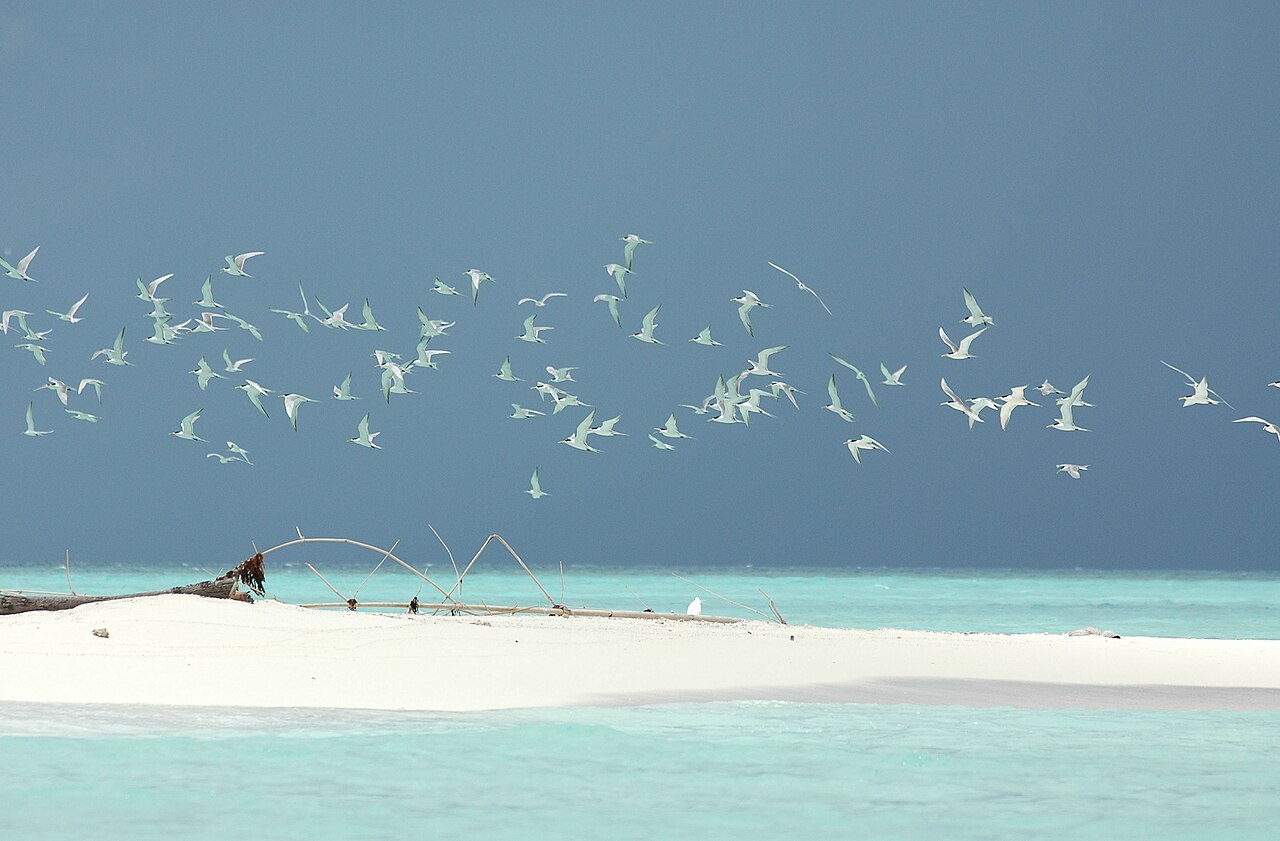
Tubbataha Reefs Natural Park (total protected area approximately 96,828 ha — of which approximately 33,200 ha is reef and shallow marine habitat and the remainder is deeper open water of the Sulu Sea) consists of two coral atolls (the North Atoll, approximately 16 km × 4 km in extent, with a large shallow lagoon enclosed by an outer reef crest and a patch reef system inside the lagoon; and the South Atoll, smaller and more compact at approximately 5 km × 3 km, with a single large coral head at its centre) rising from the deep Sulu Sea floor (approximately 500–1,000 m depth in the surrounding open water) to the ocean surface, their outer reef slopes dropping precipitously from the reef crest at 0–5 m depth to the deep wall at 40–100 m and beyond. Tubbataha’s extreme geographic isolation — the nearest inhabited land is approximately 150 km away, there is no freshwater source on either atoll, and the site is accessible only in calm weather during the April–June northeast monsoon reversal season — is the primary reason for the exceptional quality of its coral reef ecosystem: the park has been almost entirely free of artisanal and commercial fishing since the implementation of the “no-take” management regime in the 1980s CE (following the campaign of the Palawan-based environmental organisation Haribon Foundation, which documented the progressive destruction of the Tubbataha reefs by blast fishing and cyanide fishing in the 1970s–1980s CE and successfully lobbied for the establishment of the protected area), allowing the fish and coral communities to recover to a near-pristine state. The marine biodiversity of Tubbataha is exceptional by Philippine standards (which are already among the highest in the world for coral reef biodiversity): the park contains approximately 600 fish species (including 13 shark species — the leopard shark [Stegostoma fasciatum], the whitetip reef shark [Triaenodon obesus], the blacktip reef shark [Carcharhinus melanopterus], the grey reef shark [Carcharhinus amblyrhynchos], the nurse shark [Ginglymostoma cirratum], and the whale shark [Rhincodon typus] as the most commonly encountered), approximately 360 coral species (of the estimated 500 total Philippine coral species), 11 species of sea turtle (all species found in Philippine waters regularly use Tubbataha’s beaches and shallow reef areas), manta ray aggregations (the oceanic manta ray [Manta birostris] and the reef manta ray [Manta alfredi] both feed regularly on the plankton-rich upwellings around the atoll walls), several species of dolphin including spinner dolphins (Stenella longirostris) and bottlenose dolphins (Tursiops truncatus) that use the atoll lagoon as a nursery and resting area, and an important seabird nesting colony on the North Atoll bird sanctuary (the brown booby [Sula leucogaster], the red-footed booby [Sula sula], the great frigatebird [Fregata minor], and the magnificent frigatebird [Fregata magnificens] all nest in the low vegetation of the North Atoll’s bird island). The diving conditions at Tubbataha are regarded by the international dive community as among the best in the Philippines and in Asia: the vertical outer reef walls (which drop from the reef crest at approximately 5 m to depths beyond the recreational diving limit at 40 m, in a continuous cascade of coral-encrusted limestone and deep-water gorgonian sea fans) attract the largest concentrations of pelagic fish (the resident populations of grey reef sharks, whitetip reef sharks, and barracuda schools that patrol the outer wall) and the best visibility in the Philippine archipelago (horizontal visibility of 30–40 m is typical during the April–June calm season). The South Atoll is generally considered the more challenging and more rewarding of the two atolls for diving: the stronger currents that sweep around the compact South Atoll create ideal feeding conditions for the large pelagic species (hammerhead sharks are regularly encountered at the South Atoll in the deeper water beyond the wall) but require experienced divers who can manage strong current diving.
Practical information
Tubbataha Reefs Natural Park is accessible ONLY by liveaboard dive boat from Puerto Princesa, Palawan (Francisco B. Reyes Airport, PPS, with direct connections to Manila). The dive season is strictly limited to approximately 15 March–15 June each year (outside this season, the northwest monsoon creates sea conditions that make the 150 km open-water crossing to Tubbataha unsafe for the dive boats). Multiple Philippine liveaboard dive operators run 4–7 night Tubbataha itineraries during the season; advance booking is essential, typically 6–12 months ahead for peak season trips (April–May). All visitors must pay the Tubbataha park entry fee plus the liveaboard environmental fee; overnight anchoring is prohibited (liveaboard boats use mooring buoys). No scuba diving certifications below Open Water level are accepted; Advanced Open Water certification is strongly recommended. Non-divers can also participate as snorkelers on most liveaboard trips.
Frequently Asked Questions
What dive conditions should I expect at Tubbataha and what experience level is required?
Tubbataha Reefs Natural Park is generally considered an “advanced” dive destination in the Philippine dive community, primarily because of the strong and unpredictable currents that are inherent to its exposed oceanic atoll position and the lack of sheltered dive sites with consistently easy conditions. The specific current patterns at Tubbataha are driven by the interaction of the Sulu Sea circulation (the semi-enclosed sea current system that circulates between the Philippine archipelago and Borneo-Sulawesi) with the tidal flow over and around the two atolls: the outer walls of both atolls experience strong “drift” currents (currents parallel to the reef wall that carry divers along the wall face in a single direction — typically starting at the “upstream” end of the wall in the current direction and ending at the “downstream” end near the atoll corner where currents intensify), variable “surge” (the vertical water movement caused by wave action passing over the outer reef crest — most noticeable in the 0–5 m reef crest zone where snorkelers and novice divers spend most of their time), and occasional strong “downwellings” (vertical current flows directed downward along the outer wall face, typically associated with the passage of large current eddies past the atoll — downwellings can carry unprepared divers below their planned depth range in a short period, which is why the open-water certification minimum and strong recommendation for Advanced Open Water certification exists). The minimum certification required for Tubbataha liveaboard participation is Open Water (a certification that certifies divers to a maximum recreational depth of 18 m in most certification systems); however, virtually all Tubbataha liveaboard operators strongly recommend Advanced Open Water certification (certified to 30 m in most systems) or equivalent experience, because many of the most spectacular dive sites at Tubbataha — the shark encounter sites at the outer wall corners, the hammerhead aggregation sites at the South Atoll, and the manta ray cleaning stations — are accessible primarily at depths of 20–30 m and in current conditions that require good buoyancy control and current management skills. A minimum of 30–50 logged dives (preferably including drift diving experience) is typically recommended by liveaboard operators as the practical experience threshold for comfortable Tubbataha diving, even for divers with Advanced Open Water certification.
What conservation threats face Tubbataha and how is the park managed?
Tubbataha Reefs Natural Park is managed by the Tubbataha Management Office (TMO — a collaborative management body established by the Philippine government and involving the Philippine Navy [which provides enforcement vessels and personnel], the Palawan Council for Sustainable Development, the World Wildlife Fund-Philippines, and the local government of Puerto Princesa) under the Natural Parks Act of the Philippines (Republic Act 9147, the Wildlife Resources Conservation and Protection Act, 2001 CE) and the Tubbataha Reefs Natural Park Act of 2009 (Republic Act 10067, which replaced the earlier 1993 proclamation establishing the park and significantly strengthened the management authority and enforcement powers). The primary conservation threats to Tubbataha are: (1) illegal fishing (despite the no-take zone designation and the Philippine Navy patrol vessels, Tubbataha continues to experience intrusions by Vietnamese, Chinese, and Philippine illegal fishing vessels — the remoteness and large open-water area of the park make comprehensive monitoring and enforcement difficult, and multiple incidents of illegal fishing boat seizures have occurred within the park boundaries since the park was established); (2) vessel groundings (the low profile of the Tubbataha atolls and the poor charting of the reef crest make Tubbataha a navigational hazard for vessels crossing the Sulu Sea; multiple accidental groundings have occurred, the most publicised being the grounding of the US Navy minesweeper USS Guardian on the North Atoll in January 2013 CE, which caused significant damage to approximately 1,000 m² of coral reef and resulted in a diplomatic incident between the Philippines and the United States over the grounding of a foreign naval vessel in a Philippine protected area); (3) climate change and coral bleaching (the reef systems of Tubbataha, despite their distance from the immediate stressors of fishing and pollution, are not immune to the climate-change-driven thermal bleaching events that have severely damaged coral reef systems throughout the Indo-Pacific region — the 1998 and 2010 CE mass bleaching events caused significant temporary coral mortality at Tubbataha, though the reefs’ remoteness and the low background stress levels have allowed relatively rapid recovery); and (4) the operational impacts of the dive tourism itself (the liveaboard boats operating in Tubbataha have potential impacts through anchor damage [now largely eliminated by the mooring buoy system], sewage discharge [regulated by the TMO], accidental coral breakage by divers [managed through the pre-dive briefings required for all Tubbataha dives], and the fuel spill risk from the boat engines operating in the park).
EXCERPT: Tubbataha Reefs Natural Park, Sulu Sea, Philippines, UNESCO-inscribed 1993/2009 — the most pristine coral reef in the Philippines: two oceanic atolls with 600 fish species, 13 shark species (hammerheads, whale sharks), 360 coral species, manta ray aggregations, and a seabird nesting colony, accessible only by liveaboard dive boat 150 km from Puerto Princesa, April–June season.
META: UNESCO World Heritage Sites near Tubbataha Reefs Philippines: Puerto-Princesa Underground River Philippines (UNESCO 1999), Mount Hamiguitan Philippines (UNESCO 2014) — Tubbataha Reefs Natural Park Sulu Sea Philippines UNESCO 1993, coral reef pristine Philippines, shark whale shark hammerhead, manta ray 360 coral species, liveaboard dive boat Puerto Princesa 150km, April June season only.
Sources
- S1 — UNESCO World Heritage Centre — Tubbataha Reefs Natural Park (Ref. 653) — https://web.archive.org/web/20230601000000/https://whc.unesco.org/en/list/653/
- S2 — Tubbataha Management Office Official Portal — https://tubbatahareefs.org/
Spotted an error? Write to [email protected] and we correct it the same day.