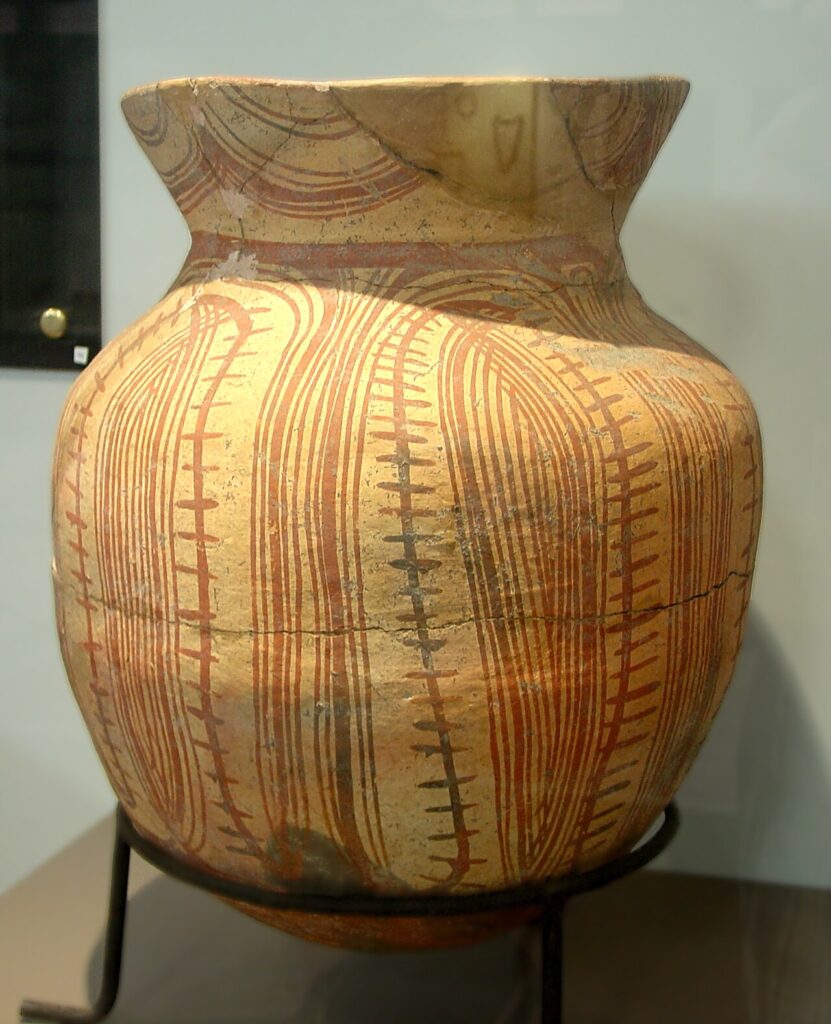
Ban Chiang Archaeological Site (บ้านเชียง, “Ban Chiang” — “Chiang Village”, named for the village of Ban Chiang in Udon Thani Province, northeast Thailand/Isan region), inscribed by UNESCO in 1992, is the most significant prehistoric site discovered in mainland Southeast Asia — a continuously occupied settlement mound in the rain-fed upland rice-farming zone of the Khorat Plateau (northeast Thailand) that preserves the material evidence of a Bronze Age agricultural civilisation spanning approximately 3,600 years (from approximately 1500 BCE to approximately 200 CE, covering Neolithic, Bronze Age, and Iron Age periods) and that generated, in the 1970s, one of the most significant and controversial archaeological discoveries of the 20th century: the claim that Ban Chiang’s bronze technology (independently developed in situ, not derived from Chinese or Indian tradition) predated Chinese bronze-casting by centuries — a claim that, if verified, would have repositioned Southeast Asia from the periphery to the origin point of the Bronze Age in Asia. The Ban Chiang site is a “mound site” (a tell — a settlement mound created by accumulated layers of human occupation over millennia, with older occupation layers buried beneath later ones), approximately 300 m × 200 m in extent and approximately 5 m high above the surrounding rice paddies — the accumulated depth of human settlement from approximately 1500 BCE to approximately 200 CE. The characteristic material culture of Ban Chiang — the painted pottery with its swirling red-on-buff geometric and curvilinear designs (particularly the late-period “red-on-buff ware” with its distinctive spirals, loop scrolls, and bands that became the visual symbol of Thai prehistoric art) — is displayed in the on-site Ban Chiang National Museum and in the Bangkok National Museum’s prehistoric gallery.
Ban Chiang’s Bronze Age archaeology and the northeast Thailand heritage corridor Ban Chiang Village · Ban Chiang National Museum · Udon Thani · Khon Kaen · Chiang Mai — 0 to 700 km
The Ban Chiang archaeological site was discovered in 1966 CE by an American anthropology student, Stephen Young (son of the American ambassador to Thailand), who stumbled on pottery sherds and bones eroding from the village path surface. The initial local finds were not scientifically excavated; before professional archaeology began, significant quantities of Ban Chiang pottery and bronze objects entered the international antiquities market and were purchased by collectors worldwide, creating both a significant body of material outside any scientific context and a major conservation problem. Scientific excavations at the site were conducted by the University of Pennsylvania Museum and the Fine Arts Department of Thailand in 1974–1975 (the principal excavation season) and in subsequent smaller campaigns. The 1974–1975 excavation established the stratigraphy of the Ban Chiang mound: a sequence of occupation layers from the earliest levels (approximately 1500 BCE, with plain and cord-marked pottery and the earliest evidence of bronze at the site) through the middle period (approximately 900–300 BCE, with more elaborate bronze technology and the early painted pottery traditions) to the late period (approximately 300 BCE–200 CE, with the elaborate red-on-buff painted pottery and iron technology). The controversy over Ban Chiang’s bronze technology dates are: the initial thermoluminescence (TL) dating of the earliest bronze-containing levels (published in the 1970s by a University of Pennsylvania team) suggested dates as early as 3500–4500 BCE for the earliest bronze at the site — dates that would have made Ban Chiang’s bronze technology the world’s oldest by approximately 2,000 years, predating Chinese bronze by approximately 2,000 years and the Near Eastern/Anatolian bronze tradition by approximately 1,500 years. The dating controversy was resolved, after considerable academic dispute, by the 1990s: subsequent AMS radiocarbon dating of organic materials in secure association with bronze objects produced dates approximately 1500–900 BCE for the earliest Ban Chiang bronze — dates that are broadly contemporary with Chinese Shang dynasty bronze (approximately 1600–1046 BCE) and considerably later than Near Eastern/Anatolian bronze (approximately 3300–2000 BCE). Ban Chiang is thus not the world’s oldest bronze technology, but remains a significant independent bronze-using culture in Southeast Asia. The in-situ display at Ban Chiang (the Wat Phosi museum within the village, where a section of the original excavation trench has been preserved open for visitors to see the burial layers of skeletons and pottery in their original positions) is one of the most unusual in-situ archaeological displays in Southeast Asia.
Practical information
Ban Chiang village is approximately 50 km east of Udon Thani city (Udon Thani Province, northeast Thailand/Isan region) by Highway 22 (Route Udon Thani–Sakon Nakhon). From Udon Thani: bus from Udon Thani bus terminal to Ban Phue junction (approximately 45 minutes), then songthaew to Ban Chiang village (approximately 15 minutes); or by motorcycle hire/vehicle from Udon Thani (approximately 1 hour). Udon Thani has good domestic air connections to Bangkok (1 hour) and some connections to Chiang Mai. The Ban Chiang National Museum (operated by the Fine Arts Department) is the primary visitor facility — open Wednesday–Sunday 09:00–16:00; admission fee applies. The in-situ excavation display at Wat Phosi (within the village, a short walk from the museum) shows the original burial layers in situ and is included in the museum ticket. The village of Ban Chiang has some guesthouse accommodation for overnight visitors; day trip from Udon Thani is feasible. The best collection of Ban Chiang material outside the site (for comparison with in-situ displays) is in the Bangkok National Museum’s prehistoric gallery (Building 13, Gallery of Prehistory). Best visiting months: November–April (dry season, Khorat Plateau). Nearby: Phu Phan National Park (approximately 100 km east), Khon Kaen (approximately 120 km south, the major city of northeast Thailand) with its own Khon Kaen National Museum’s prehistoric collection from the region.
Frequently Asked Questions
What was the Ban Chiang Bronze Age controversy and how was it resolved?
The Ban Chiang Bronze Age dating controversy (approximately 1972–1995 CE) was one of the most significant debates in Southeast Asian archaeology of the 20th century, with implications that extended far beyond the technical question of when bronze first appeared at a specific Thai village site. The core of the controversy was: in the early 1970s, researchers at the University of Pennsylvania Museum (who were analysing materials from the pre-scientific looting of Ban Chiang sites that had entered American collections, as well as early surface material from the village) published thermoluminescence (TL) dates for Ban Chiang pottery that suggested extraordinarily early dates — in some analyses, as early as 3500 BCE or even 4500 BCE for the appearance of pottery and bronze metalwork at the site. These TL dates were accepted by some archaeologists and widely publicised (National Geographic ran a major feature on Ban Chiang as “The world’s oldest Bronze Age culture?”) and entered popular archaeology discourse as the claim that Southeast Asia, not China or the Near East, was the origin point of the Bronze Age in Asia. The challenge to the dating came from two directions: (1) the context problem — a significant proportion of the Ban Chiang material that produced the extreme TL dates was from the pre-scientific looting and antiquities market, where the stratigraphic context (essential for TL dating accuracy) was irrecoverably lost; (2) subsequent AMS radiocarbon dating (a more reliable method than TL for organic materials) of organic samples from the 1974–1975 University of Pennsylvania Museum excavation in secure stratigraphic association with bronze objects produced dates in the range approximately 1500–1000 BCE for the earliest bronze at the site — dates that put Ban Chiang’s bronze technology broadly contemporary with Chinese Shang dynasty bronze. By approximately 1995, the archaeological consensus had converged on the more conservative AMS radiocarbon dates: Ban Chiang bronze began approximately 1500–1000 BCE, making it contemporary with early Chinese bronze and approximately 1,500–2,000 years later than the Near Eastern/Anatolian bronze tradition (beginning approximately 3000–3300 BCE). What Ban Chiang does represent — even with the revised dating — is a significant, apparently independent bronze-using culture in mainland Southeast Asia that developed sophisticated metal-casting technology and a distinctive artistic tradition (the painted pottery) without any demonstrated direct influence from Chinese or Indian cultural traditions, suggesting either independent invention or a diffusion path that has not yet been identified. The controversy’s resolution also highlighted broader methodological issues in archaeological dating (the specific limitations of TL dating when stratigraphic context is insecure) and the specific damage done by looting and the antiquities market to archaeological knowledge — themes that remain central to Southeast Asian archaeology.
What is the significance of Ban Chiang’s painted pottery and why is it so famous?
Ban Chiang’s painted pottery tradition — particularly the “late period red-on-buff ware” (approximately 300 BCE–200 CE, the final phase of the Ban Chiang cultural sequence before the site appears to have been abandoned or absorbed into different cultural patterns) — is famous for a combination of technical quality, distinctive visual style, and the specific historical circumstances of its discovery that made it globally recognisable far beyond the normal audience for prehistoric Southeast Asian material culture. The technical characteristics of the late Ban Chiang pottery are: (1) the two-colour painted decoration applied before firing, using a red ochre paint on a buff (cream-coloured) clay surface, in curvilinear patterns of spirals, loop scrolls, concentric bands, and organic meander lines that cover the entire surface of the vessel; (2) the vessel forms, primarily globular jars with flared rims and geometric painted bands, that are functional storage and funerary vessels in a range of sizes; (3) the firing quality, which is high-temperature oxidation-fired ceramic (not glazed, but with a controlled firing atmosphere that produces consistent buff surfaces). The visual distinctiveness of the red-on-buff spirals and meander patterns (which have no close parallel in contemporaneous Chinese, Indian, or mainland Southeast Asian ceramic traditions) is the basis of the Ban Chiang pottery’s recognisability — the swirling red patterns on the cream background have been widely reproduced as a decorative motif in Thai craft and tourist goods, making Ban Chiang pottery one of the most recognisable visual symbols of Thai cultural heritage (comparable in visual recognisability to Sukhothai walking Buddhas or Angkor stone carvings) despite being a prehistoric archaeological product rather than a traditionally named artistic object. The discovery circumstances that amplified Ban Chiang’s visibility were: the pre-scientific looting of the 1960s and early 1970s placed large quantities of Ban Chiang pottery on the international art market (where it was purchased by major Western museums and private collectors, generating significant academic interest in the source), and the subsequent National Geographic coverage and UNESCO inscription turned Ban Chiang pottery into a globally known symbol of Southeast Asian prehistoric achievement, so that the material now appears in major museum collections from the Smithsonian to the British Museum to the Asian Art Museum in San Francisco — a distribution that ironically resulted directly from the archaeological looting that damaged the scientific context the pottery might otherwise have provided.
EXCERPT: Ban Chiang Archaeological Site, UNESCO-inscribed 1992, is the largest prehistoric settlement mound in mainland Southeast Asia — 3,600 years of continuous occupation (1500 BCE–200 CE) in northeast Thailand’s Isan region, famous for its red-on-buff swirling painted pottery and the Bronze Age dating controversy that briefly claimed this as the world’s oldest bronze-using culture.
META: UNESCO World Heritage Sites near Ban Chiang Archaeological Site Thailand: Historic Town of Sukhothai 300 km west (UNESCO 1991), Historic City of Ayutthaya 450 km south (UNESCO 1991) — Ban Chiang Bronze Age pottery Udon Thani Thailand UNESCO heritage, prehistoric Thailand Isan Khorat Plateau, painted buff ware bronze metalwork, Ban Chiang National Museum Wat Phosi excavation trench.
Sources
- S1 — UNESCO World Heritage Centre — Ban Chiang Archaeological Site (Ref. 575) — https://web.archive.org/web/20230601000000/https://whc.unesco.org/en/list/575/
- S2 — UNESCO World Heritage Centre — Statement of Outstanding Universal Value (Ref. 575) — https://whc.unesco.org/en/list/575/
Spotted an error? Write to the editors and we correct it the same day.