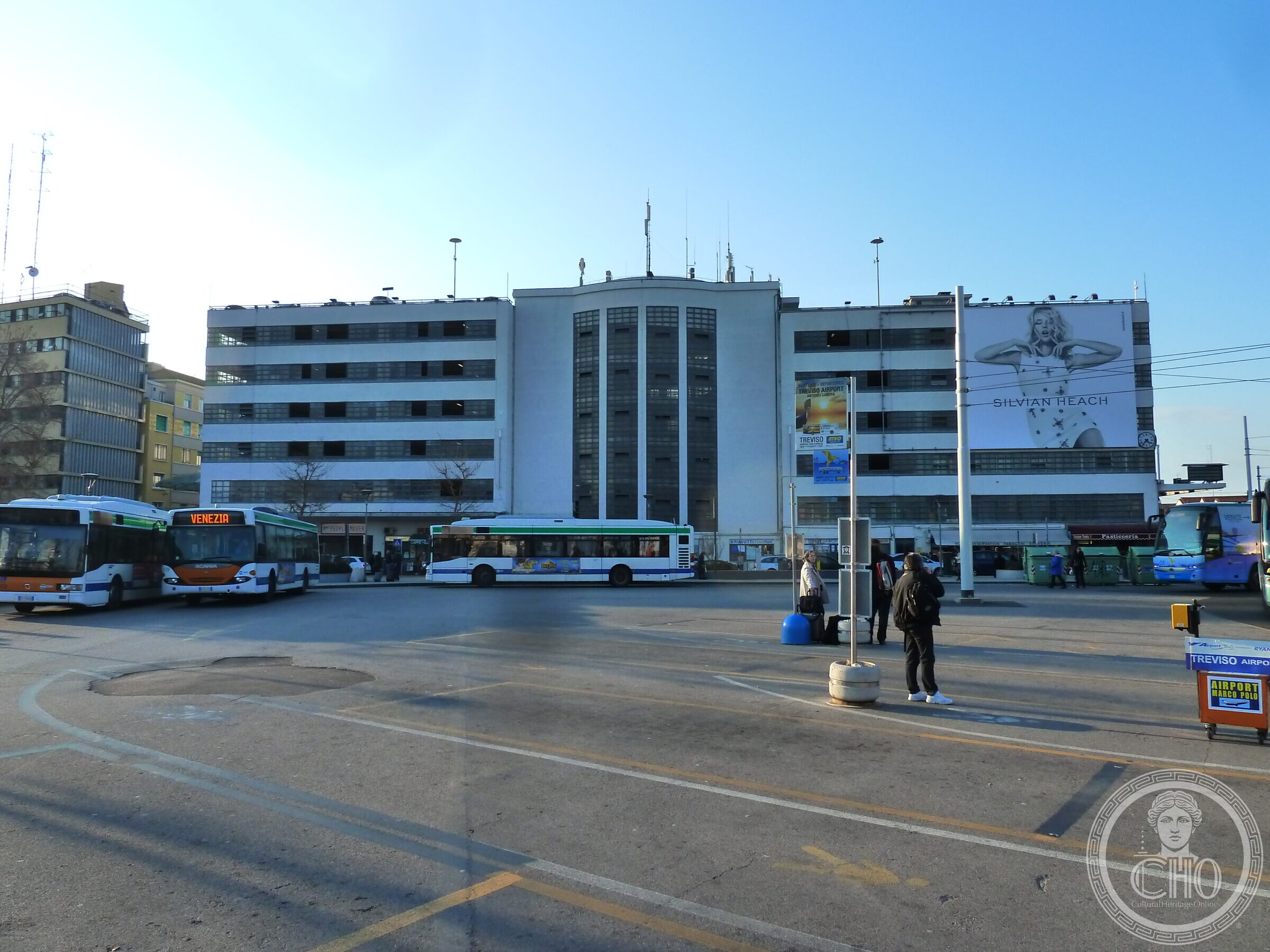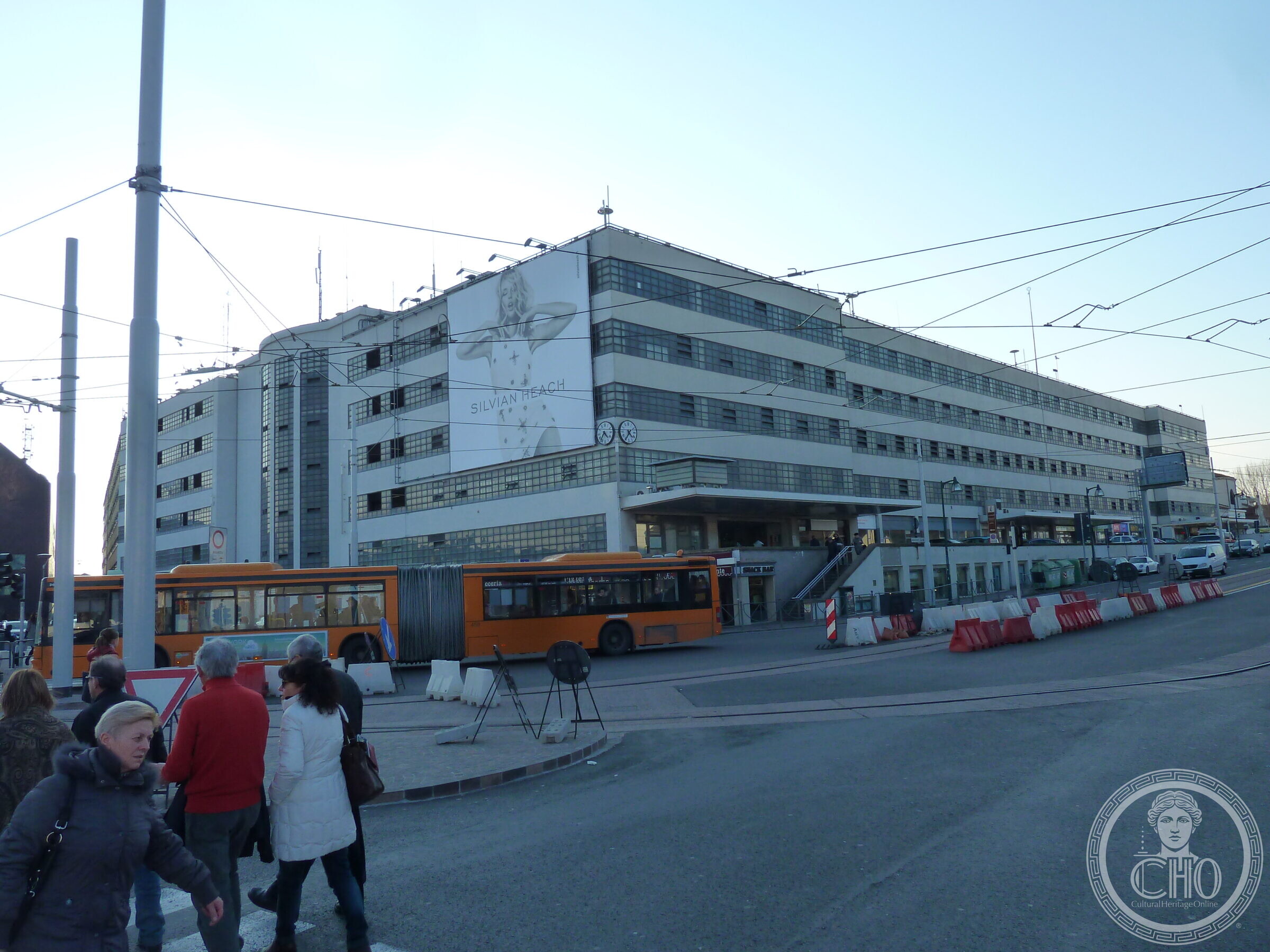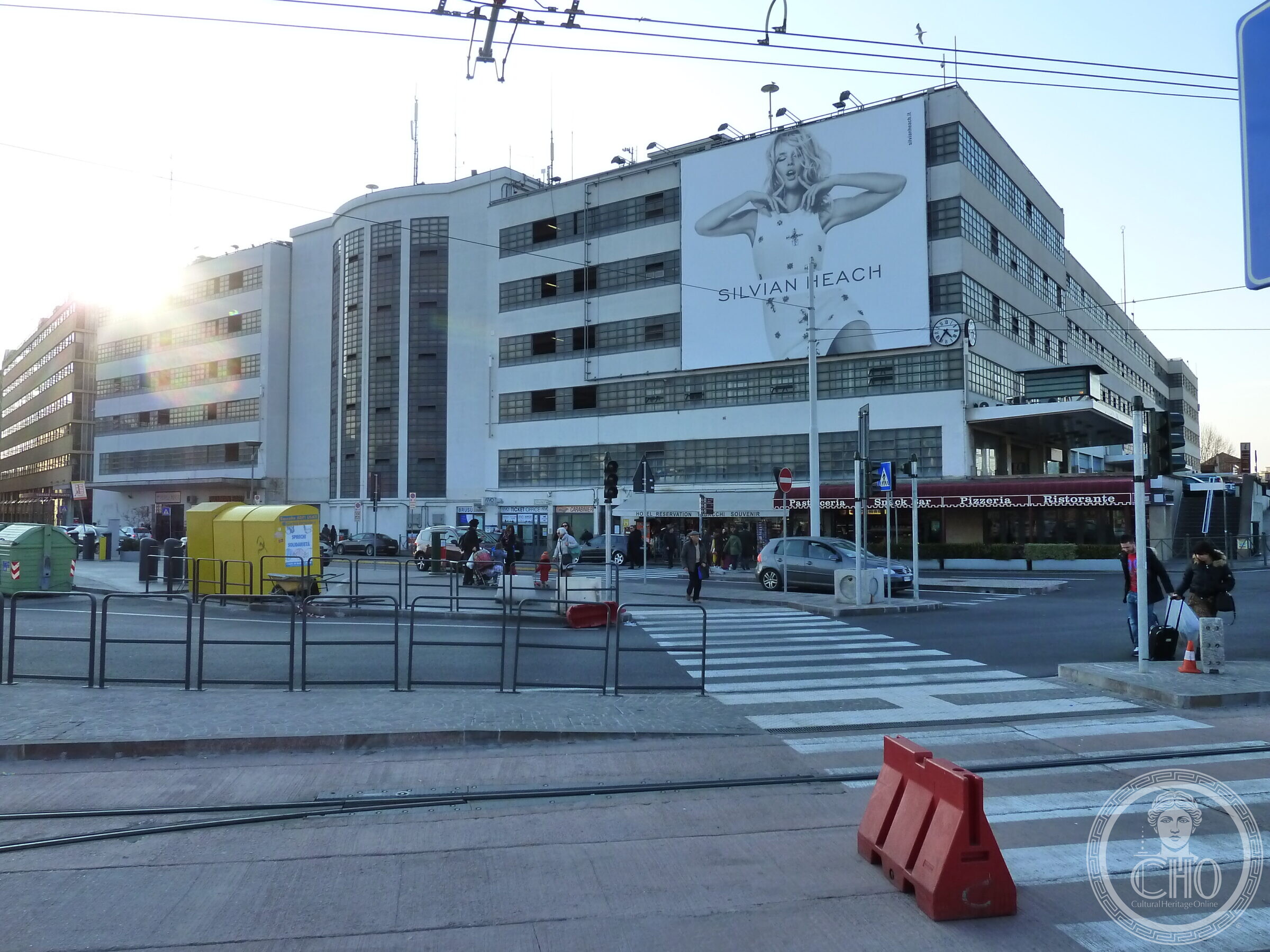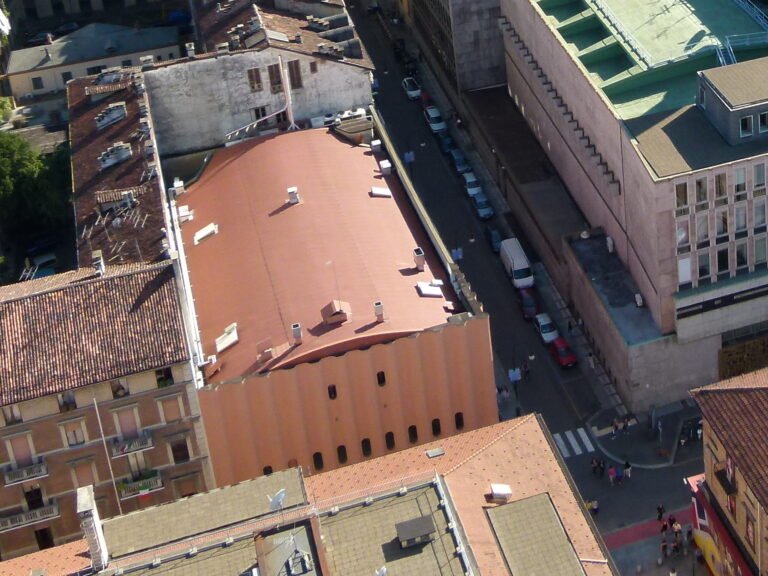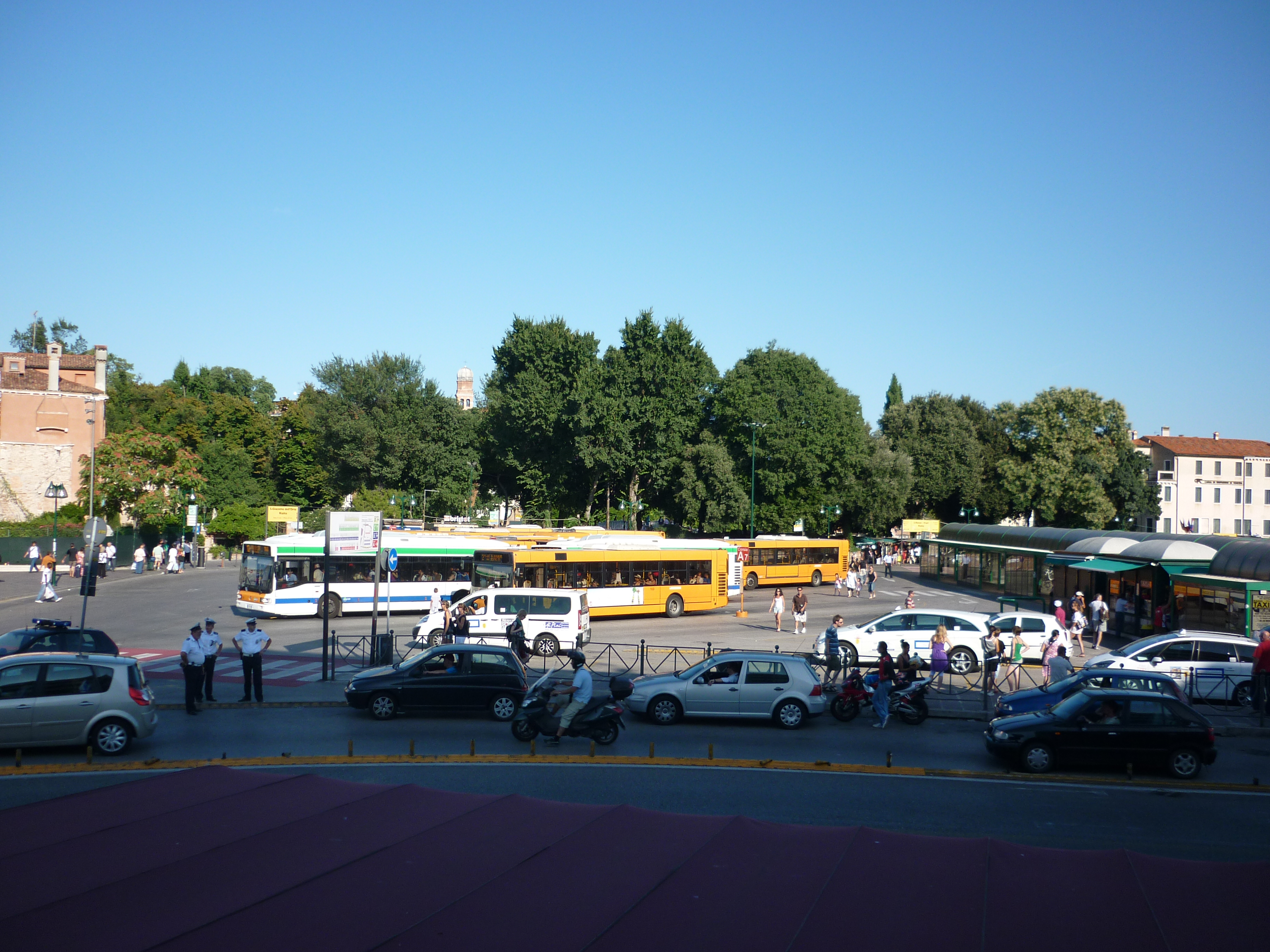
The I.N.A. Garage is a Rationalist automotive structure designed by engineer Eugenio Miozzi at Piazzale Roma, Venice, between 1931 and 1934. Originally built to serve the National Insurance Institute (Istituto Nazionale delle Assicurazioni), the building now functions as the municipal car park (Autorimessa Comunale).
Piazzale Roma itself opened on 25 April 1933 as a junction for the newly constructed Littorio Bridge (now the Liberty Bridge), which established the first vehicular link between Venice and the mainland. The I.N.A. Garage stands prominently on this plaza as an imposing expression of Rationalist design. Until the 1950s, it housed Europe’s largest covered parking facility, reflecting the modernizing infrastructure projects undertaken in Venice during this period.
About Eugenio Miozzi
Eugenio Miozzi (1889–1979) was an Italian engineer who graduated from Bologna in 1912 and served in Libya before the First World War. After 1918, he worked on post-war reconstruction in northern Italy. On 1 March 1931, Venice’s municipal government appointed him head of the Public Works and Services Department, a position he held until his retirement in 1954. During this period, Miozzi oversaw numerous projects that transformed the city’s infrastructure, including major works at Piazzale Roma.
Details
- Creator: Eugenio Miozzi, engineer
- Year: 1931–34
- Location: Piazzale Roma, Venice, Veneto, Italy
- Movement: Italian Rationalism
- Current use: Municipal car park (Autorimessa Comunale)
Explore more: 318 heritage places in Venezia
Frequently asked questions
Who designed the I.N.A. Garage?
Engineer Eugenio Miozzi designed the structure. Miozzi was appointed head of Venice’s Public Works and Services Department in 1931 and supervised major infrastructure projects throughout the city.
When was Piazzale Roma inaugurated?
Piazzale Roma was inaugurated on 25 April 1933 as a junction for the newly constructed Littorio Bridge, which connected Venice to the mainland by road for the first time.
What was significant about this garage?
The I.N.A. Garage remained Europe’s largest covered parking facility until the 1950s, exemplifying the modernizing infrastructure developments in Venice during the 1930s.
Sources
In a period postcard
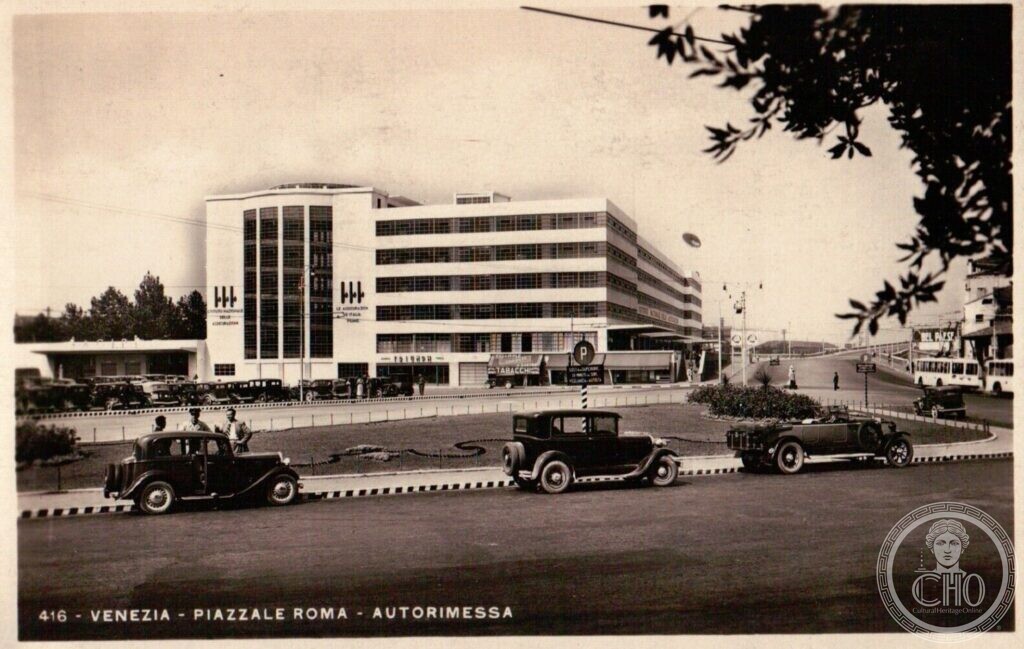
The building today
Photographs by Stefano Vigolo, 28 February 2015, while the tram works were under way in Piazzale Roma.