
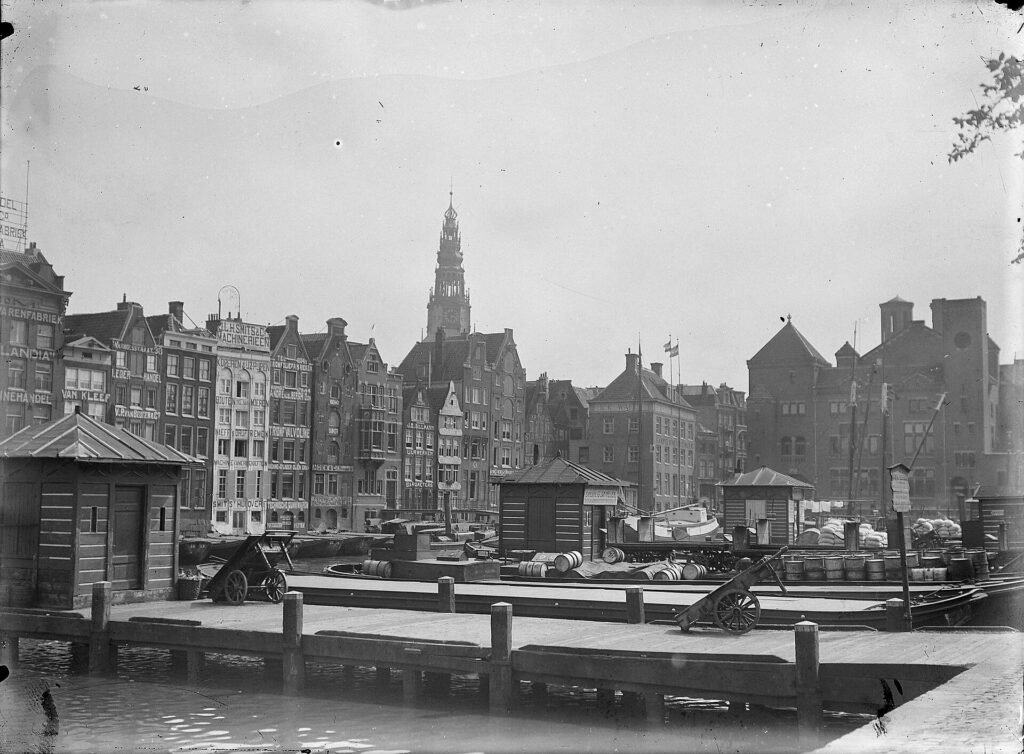
Berlage stripped the ornament off a stock exchange and, in doing so, opened the door to modern Dutch architecture.
At a glance
The Beurs van Berlage stands on the Damrak, a long brick hall with a clock tower, built as Amsterdam’s commodities exchange. Hendrik Petrus Berlage designed it between 1896 and 1903. He turned his back on the historical styles of the nineteenth century and let brick, iron and glass speak plainly. The traders left long ago; today the building hosts concerts, fairs and exhibitions.
Key facts
- Location: Damrak, Amsterdam
- Architect: Hendrik Petrus Berlage
- Built: 1896–1903
- Style: rationalist brick (proto-modern)
- Today: cultural and events venue
History
Amsterdam needed a new exchange and held a competition; Berlage won and built it as a manifesto. He pared the design down to honest materials: load-bearing brick, exposed iron trusses, and art set into the structure rather than stuck on top.
When it opened in 1903 it looked startlingly bare to eyes used to ornament. Within a generation it was read as the starting point of modern architecture in the Netherlands, and the trading floors gave way to a public cultural hall.
What you see
The great hall runs under a glazed iron roof, its brick walls left frankly visible. The clock tower on the Damrak carries the mottoes and reliefs that are the building’s only flourishes. Nothing pretends to be marble or stone. Stand inside and the building explains its own construction.
Practical information
- Open: varies by event and exhibition
- Cost: free to admire outside; events ticketed
- Best for: the main hall and the Damrak tower
- Time needed: 30–45 minutes
Getting there
The Beurs faces the Damrak between Amsterdam Centraal and Dam Square, a five-minute walk from the station. Trams and the metro stop close by.
Nearby
- Dam Square — the city’s central square, two minutes south
- Oude Kerk — the old church behind the exchange
Sources
- Encyclopædia Britannica / Wikipedia — Beurs van Berlage
- Beurs van Berlage — official venue history
- Wikimedia Commons — image source and licence
Find it on the map
See this place and what’s around it →📷 Become a Cultural Heritage Online photographer
Share your photos of places: they stay published under your name as the author. The more they're seen, the more you get noticed — and soon a contest will reward the most appreciated photos.
Log in or sign up free to add a photoIs this page about you?
This page is read by travellers and heritage enthusiasts who find it on Google. Tell us how you are connected to this place and we will take it from there.