
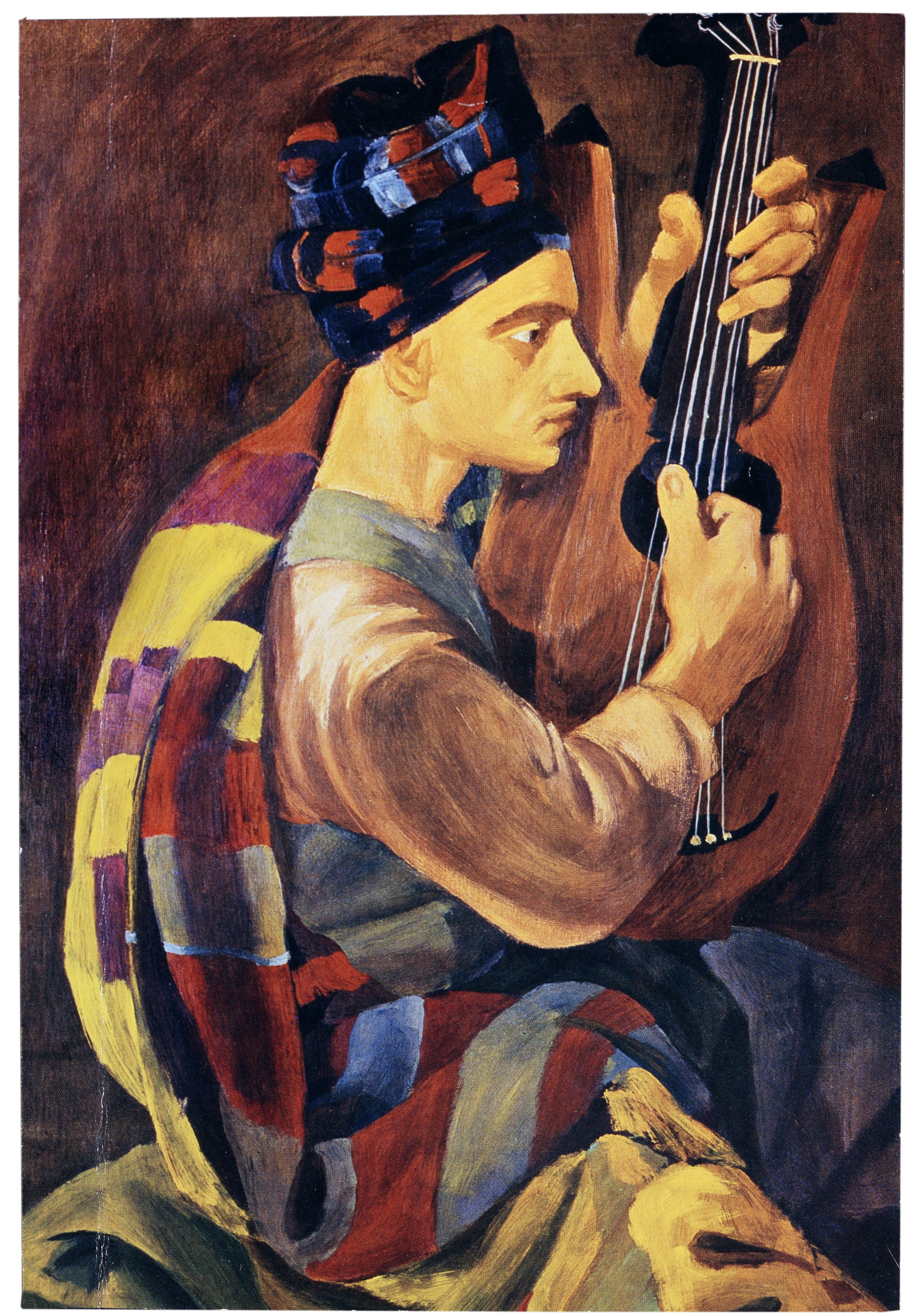
Davide Salmista is a portrait painted by Corrado Cagli in 1936 and now part of the Vatican Museums collection.
Cagli, born in Ancona in 1910 and raised in Rome from 1915, was a central figure of the Scuola Romana (New Roman School of Painting), formed alongside artists such as Giuseppe Capogrossi and Emanuele Cavalli. By 1936, when this portrait was created, Cagli had already established himself through his 1932 solo exhibition at the Gallery of Art of Rome and his mural commissions throughout the city. The work exemplifies the figurative idiom of the Scuola Romana during the mid-1930s, a period before Cagli’s emigration to the United States in 1938.
About Corrado Cagli
Cagli was an Italian painter of Jewish heritage whose career spanned decades of European and American art. He made his artistic debut in 1927 with a mural in Via Sistina, Rome. In 1938, following Mussolini’s persecution of Jews, he fled to Paris and then New York, where he became a U.S. citizen. After the war—during which he fought in Europe and witnessed the liberation of Buchenwald—he returned to Rome in 1948 to permanent residence, continuing to experiment across various artistic methods.
Details
- Creator: Corrado Cagli (1910–1976)
- Year: 1936
- Current location: Vatican Museums
- Movement: Scuola Romana
- Subject: Davide Salmista (portrait)
Explore more: 509 heritage places in Roma
Frequently asked questions
Who was Corrado Cagli?
Corrado Cagli was an Italian painter born in Ancona in 1910 who co-founded the Scuola Romana with artists including Giuseppe Capogrossi. A Jewish artist, he fled Italy in 1938 during Mussolini’s persecutions, emigrating to the United States where he served in World War II and later returned to Rome in 1948.
What is the Scuola Romana?
The Scuola Romana (New Roman School of Painting) was a group of Italian painters including Cagli, Capogrossi, and Cavalli, active during the 1930s. The movement represented a figurative approach to modern painting centred in Rome.
Where is the work housed?
The portrait is held in the Vatican Museums collection.
Sources
- S1 — D'Amico, Fabrizio. Corrado Cagli. Skira, 1999. ISBN 978-88-8118-620-4.
- S2 — Pontiggia, Elena. Il Novecento Italiano. Abscondita, 2003. ISBN 978-88-8416-048-5.
Spotted an error? Write to editorial@culturalheritageonline.com and we correct it the same day.


