Formed in 1927 by the State Railways and ENIT, CIT invented modern mass leisure in Italy, organizing the legendary ‘Treni Popolari’ and exporting the allure of Italian cultural heritage to ticket halls worldwide.
Until the mid-1920s, the “Grand Tour” of Italy remained an aristocratic preserve. Wealthy British, German, and American elites travelled by private carriage or first-class sleeper cars to Venice, Florence, and Rome, while ordinary working Italians rarely journeyed beyond their home province. The railway network had been nationalized into the *Ferrovie dello Stato* (FS), but there was no unified commercial infrastructure to organize ticketing, mountain hotel vouchers, guides, luggage transit, or foreign tourist promotion.
On 23 March 1927, under a joint mandate from the Ministry of Communications, Ferrovie dello Stato, and ENIT (Ente Nazionale Industrie Turistiche), the Compagnia Italiana Turismo (CIT) was incorporated in Rome. Its mission was revolutionary: to transform Italian culture, landscape, and art into a modern, democratized, and globally marketed experience.
The invention of the Treni Popolari
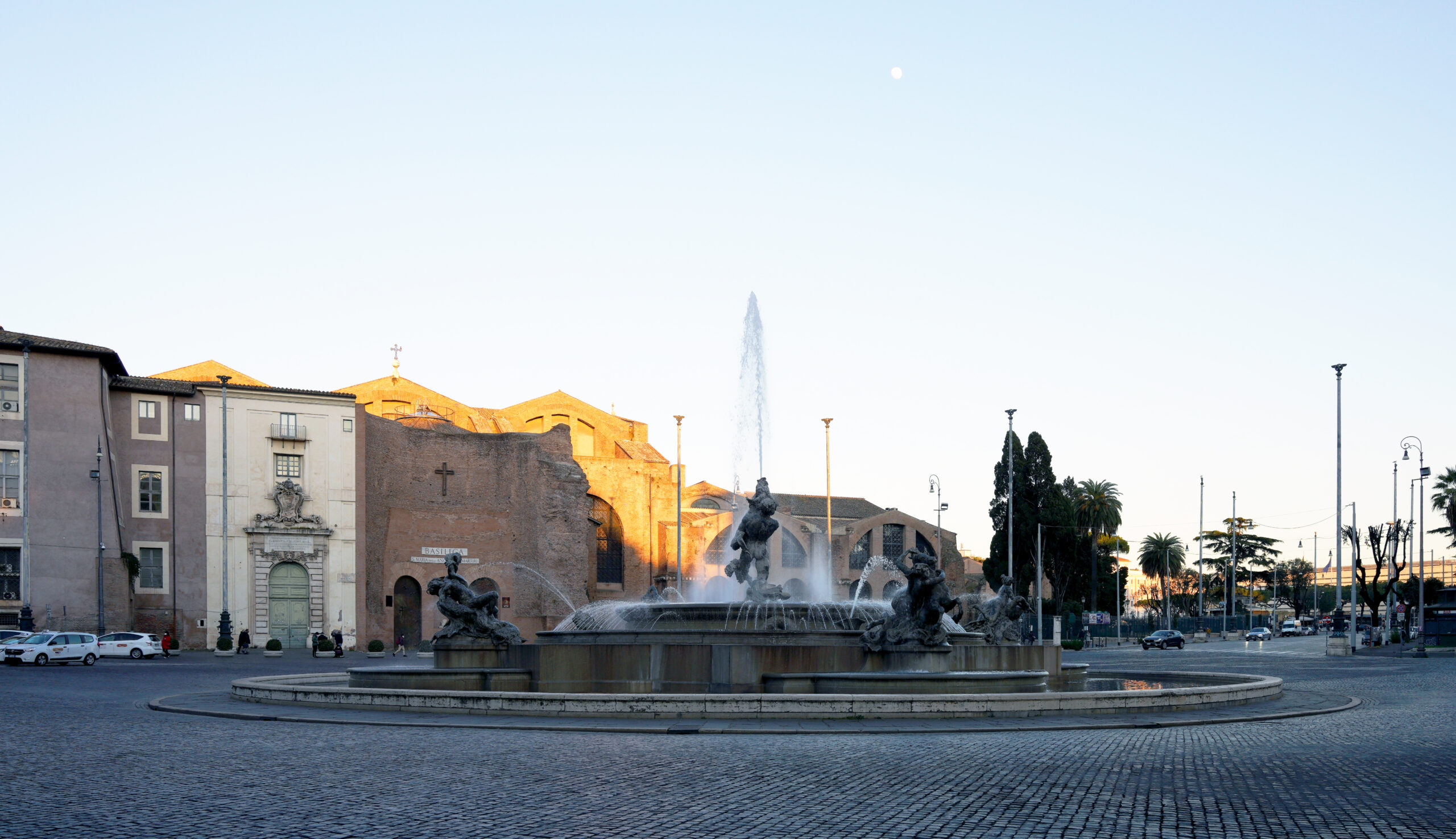
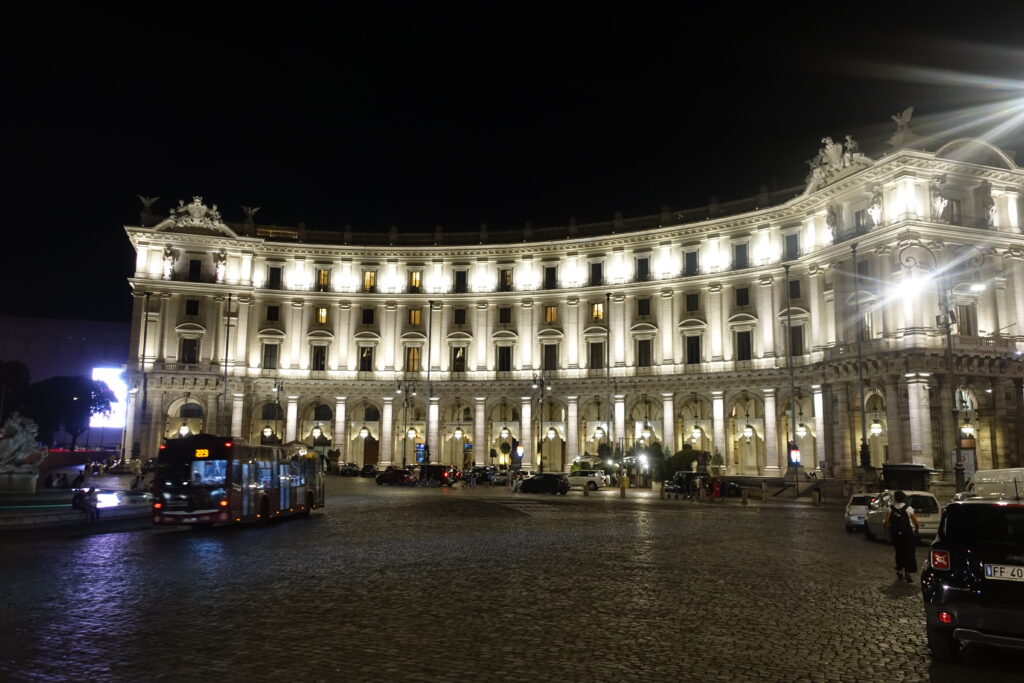
Operating from its monumental headquarters under the curving porticoes of Piazza Esedra in Rome (adjacent to the newly expanding Termini station), CIT immediately reorganized passenger travel. In 1931, it launched the legendary Treni Popolari (People’s Trains): special Sunday excursion trains offering seventy percent discounts on standard fares, complete with packed lunch vouchers and admission tickets to state museums.
For the first time in Italian history, factory workers from Turin could spend a Sunday gazing at the canals of Venice, and Neapolitan schoolteachers could walk through the ruins of Pompeii or the Uffizi in Florence. CIT handled logistical coordination for millions of travellers, operating its own motorcoach fleets, alpine rest-houses, and guide services.
The visual empire: Dudovich and the foreign salons
CIT was also the premier promoter of the Italian image abroad. Opening lavish travel salons on the Champs-Élysées in Paris, Piccadilly in London, Fifth Avenue in New York, and the Galleria Vittorio Emanuele in Milan, CIT commissioned the finest graphic illustrators of the age—most notably Marcello Dudovich, Mario Puppo, and Gino Boccasile.
Their glorious Art Deco and Futurist posters depicted streamlined electric locomotives racing past ancient Roman aqueducts, sun-drenched Positano cliffs, and gleaming alpine peaks, creating an indelible romantic visual mythology of Italy that lured millions of international tourists across the Alps.
The golden postwar era and the digital sunset
For four decades following the Second World War, CIT was the undisputed giant of Italian travel, operating hundreds of agency branches and pioneering inclusive package tours, hotel chains, and charter flights. However, the dawn of the internet era, airline deregulation, and low-cost online booking engines caught the state-affiliated behemoth unprepared. Plagued by debt and rigid bureaucracy, CIT slipped into administration in the early 2000s, bringing an end to the historic company that had first taught Italy how to travel.
What remains today
Though the commercial agency has vanished, CIT’s cultural legacy is etched into the very foundations of global tourism. The vintage promotional posters designed for CIT are celebrated as masterworks of graphic design, preserved in the Collezione Salce in Treviso, the Victoria and Albert Museum in London, and the Library of Congress in Washington. Under the sweeping colonnades of Piazza della Repubblica in Rome, the architectural grandeur of its interwar booking halls still evokes the golden morning when the train whistles sounded, ticket windows opened, and the heritage of Italy was opened to the world.
Historic Views & Archives
From the Archives: Historical Newsreels
I treni popolari e le comitive turistiche dell’ENIT e CIT
Historic newsreel documenting the departure of “Treni Popolari” from major Italian stations: thousands of working-class families and students embarking on low-cost weekend excursions to art cities, seaside beaches, and alpine sanctuaries.
Visiting the Site: Street View & Modern Geography
Piazza della Repubblica (historic Piazza Esedra) directly faces the Baths of Diocletian and the approach to Roma Termini. Under the monumental curving porticoes of the palazzi designed by Gaetano Koch, CIT operated its flagship international booking salon, money exchange, and travel bureau.
Historic Address: Piazza della Repubblica 64 (formerly Piazza Esedra), 00185 Roma, Italy
Sources
- S1 — Treves, Anna. Le migrazioni interne e il turismo in Italia. FrancoAngeli, 1998. ISBN 978-88-464-0712-2.
- S2 — De Grazia, Victoria. Le donne nel regime fascista. Marsilio, 1993. ISBN 978-88-317-5712-6.
Spotted an error? Write to editorial@culturalheritageonline.com and we correct it the same day.