Founded on 15 March 1926 in Arezzo, Unoaerre was assigned the first official goldsmith hallmark of the province—1AR—transforming an ancient Etruscan gold tradition into Europe’s greatest continuous jewellery manufacture.
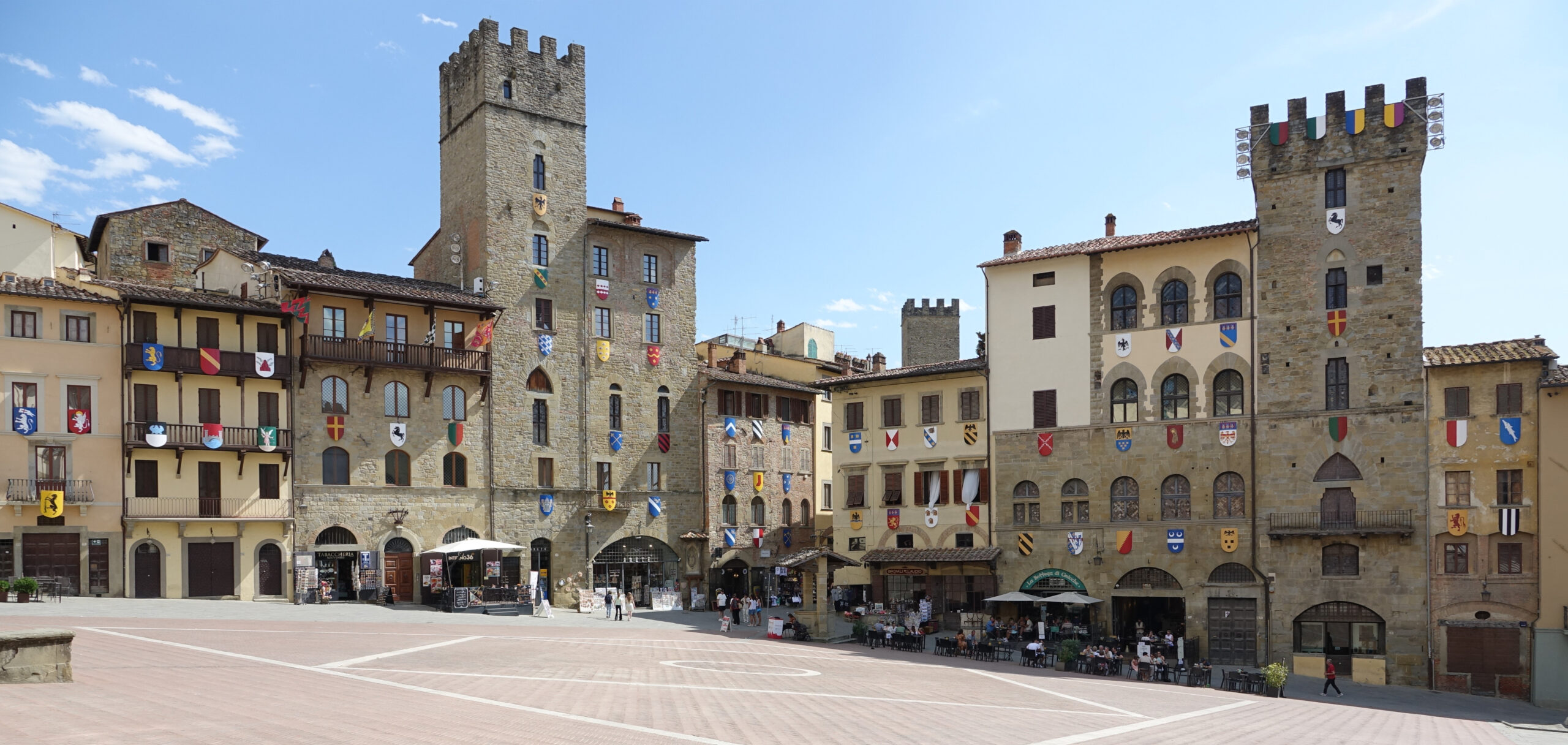
The relationship between Arezzo and gold stretches back twenty-five hundred years to the master Etruscan metalworkers who perfected the microscopic technique of gold granulation. Throughout the Middle Ages and Renaissance, the city perched above the Val di Chiana maintained skilled guilds of church silversmiths and reliquary engravers. Yet by the 1920s, Arezzo’s precious trade was still fractured into dozens of tiny, undercapitalized home workbenches.
On 15 March 1926, two visionary artisans joined forces: Carlo Zucchi (1900–1987) and Leopoldo Gori (1894–1977). Establishing Gori & Zucchi in central Arezzo, they had an unprecedented concept: to apply continuous industrial engineering and modern metallurgical science to the manufacture of gold chains, wedding rings (*fedi nuziali*), and medals, eliminating the wasteful scrap metal and erratic purities that plagued hand workshops.
The birth of 1AR: The first provincial hallmark
In 1934, when the Italian state instituted a national registry of goldsmith makers’ marks, Gori & Zucchi was officially awarded the very first registration in the province of Arezzo: 1 AR (number one, Arezzo). Transcribed phonetically, the hallmark became the company’s legendary brand name: Unoaerre.
Zucchi and Gori mechanized the production of gold chain links. They designed precision automated chain-weaving machines that drew solid gold wire down to the thickness of a human hair and coiled it into seamless Venetian, Figaro, and curb links with microscopic solder joints. By the late 1930s, Unoaerre was turning out tens of thousands of classic yellow gold wedding rings annually, becoming the trusted provider of wedding bands for millions of Italian couples.
The gold capital of Europe
In the postwar reconstruction, Unoaerre was the engine that transformed Arezzo into the undisputed gold jewellery manufacturing capital of Europe, processing hundreds of tonnes of fine gold every year. Moving into a vast modern factory complex in San Zeno, the company employed over twelve hundred workers, operating continuous electrolytic refining plants, assay laboratories, and its own school of engraving and design.
The firm became so central to Italian cultural life that in times of family milestones, a “fede Unoaerre” was considered an essential rite of passage.
What remains today
Unoaerre continues to produce gold and silver jewellery in Arezzo, exporting to over forty countries. In the San Zeno industrial complex, the company established the Museo dell’Oreficeria Unoaerre, the first Italian museum dedicated entirely to the industrial archaeology of gold. On display are early hand-cranked wire-drawing benches, prototype chain-making machines from the 1920s, and historic collections designed in collaboration with artists such as Giò Pomodoro, Pietro Cascella, and Salvador Dalí—a glittering monument to the moment when Arezzo’s ancient Etruscan gold dust was forged into modern industrial precision.
Historic Views & Archives
From the Archives: Historical Newsreels
L’arte orafa toscana e la lavorazione della catena d’oro
Historic archival documentary illustrating the metallurgical casting, wire drawing, and chain link assembly of Italian gold jewellery, celebrating the artisanal accuracy of Tuscan master craftsmen.
Visiting the Site: Street View & Modern Geography
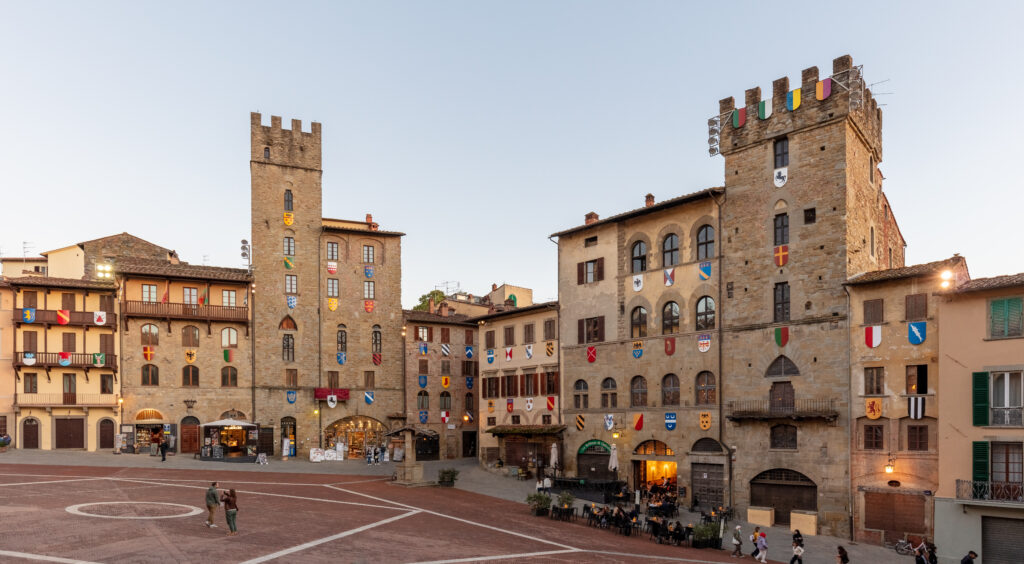
Corso Italia is the central spine of Arezzo, where Carlo Zucchi and Leopoldo Gori opened their first central goldsmith workshop. Later moving to the monumental industrial complex in San Zeno, the site preserves the Museo dell’Oreficeria Unoaerre displaying centuries of gold manufacturing history.
Historic Address: Corso Italia 88 (historic) & Strada Due 28, San Zeno, 52100 Arezzo, Italy
Sources
- Camera di Commercio di Arezzo-Siena, Archivio Storico del Registro Marchi Metalli Preziosi: Assegnazione 1AR (1934)
- Dizionario Biografico degli Italiani (Treccani), entry on Carlo Zucchi
- Museo dell’Oreficeria Unoaerre, Unoaerre: Storia della prima industria orafa d’Italia (1926–2026), Arezzo, 2026
- Giuliano Centro, L’oro di Arezzo: L’industria orafa e la società aretina nel Novecento, Florence, Polistampa, 2002