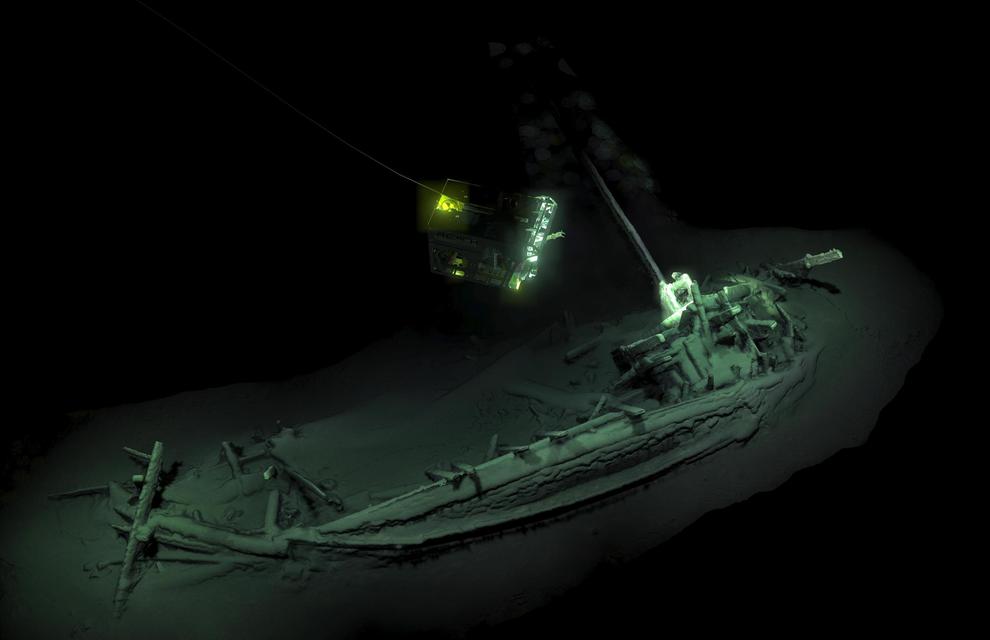
In December 2018, archaeologists announced the discovery of a 2,400-year-old Greek merchant ship lying intact on the floor of the Black Sea at approximately 2,000 metres depth. The vessel, identified by a team led by British archaeologist Joe Adams as part of the Black Sea Maritime Archaeology Project, measures 23 metres in length and remains one of the oldest ships ever found.
Preservation and Discovery
The ship’s exceptional state of preservation results from the oxygen-free conditions at that depth combined with the unique environment of the Black Sea, a closed prehistoric basin. The wreck retains its mast, rudder, and rowing benches. Radiocarbon dating conducted by researchers at the University of Southampton confirmed the vessel’s age at approximately 2,400 years, with analysis performed on small fragments brought to the surface.
“A ship that survived intact from the classical period at two kilometres depth is something I would never have believed possible to see,” Adams told the Guardian. He emphasised that the discovery would significantly alter understanding of ancient shipbuilding and maritime practices in the classical world.
Connection to Ancient Literature
The ship’s design closely resembles the vessel depicted on the Siren Vase, a Greek pot housed in the British Museum collection, which is believed to represent Ulysses’ ship during his encounter with the Sirens as described in Homer’s Odyssey. This similarity strengthens the ship’s historical significance.
Preservation in Place
Adams confirmed that the vessel will remain on the sea floor. Raising it to the surface would destroy it with current technology. The Black Sea Maritime Archaeology Project has also yielded other significant discoveries, including complete Roman ships with amphoras and Cossack vessels from the service of Russian tsars in the 17th century. Documentation of the find was captured in a documentary screened at the British Museum in London.
Frequently asked questions
Why does the ship remain underwater?
Raising the 2,400-year-old vessel to the surface would destroy it with existing recovery technology, according to the archaeological team.
How was the ship’s age confirmed?
Radiocarbon-14 dating was performed by researchers at the University of Southampton on small fragments of the wreck brought to the surface, confirming an age of approximately 2,400 years.
What does the ship resemble from ancient sources?
The vessel’s design closely matches the ship depicted on the Siren Vase in the British Museum, believed to represent Ulysses’ ship from Homer’s Odyssey.