In December 2018, Egyptian archaeologists announced the discovery of an exceptionally well-preserved tomb at the Saqqara necropolis near Cairo, containing intact hieroglyphics, paintings, and sculptures dating back over 4,400 years. The tomb belonged to Wahtye, a high-ranking priest, and dates to the reign of Pharaoh Neferurkare Kakai, the third king of Egypt’s Fifth Dynasty, placing it between 2500 and 2300 BCE. The announcement was made by Khaled el-Enany, minister of the Supreme Council of Antiquities.
Contents and Layout
The tomb measures 10 metres long, 3 metres wide, and approximately 3 metres in height. Its interior walls are adorned with 24 sculptures, some representing pharaohs. The chamber also contains 42 statues arranged in niches—18 larger ones and 24 smaller ones—depicting Wahtye alongside his mother, wife, and other family members. According to officials, the tomb is “exceptionally well-preserved, colorful, and contains various sculptures within.”
Part of Wider Discoveries
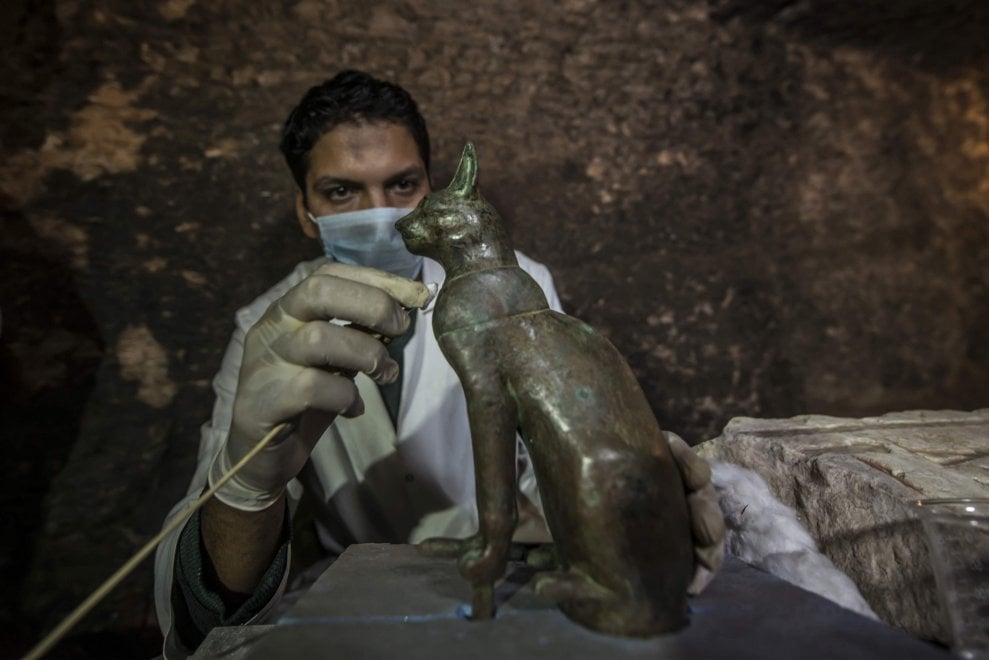
This discovery follows other significant finds at Saqqara announced in November of the same year, including eight mummified remains in ornate sarcophagi, as well as mummified cats and scarab beetles alongside wooden animal sculptures. Saqqara, the rich necropolis of Memphis, served as a capital of ancient Egypt for more than two millennia and contains countless treasures. The site is home to the famous step pyramid of Pharaoh Djoser, the first pyramid of the pharaonic era, built by architect Imhotep around 2700 BCE and considered one of the world’s oldest monuments.
Frequently asked questions
Who was Wahtye?
Wahtye was a high-ranking priest whose tomb was discovered at Saqqara, dating to the Fifth Dynasty reign of Pharaoh Neferurkare Kakai, between 2500 and 2300 BCE.
What makes this tomb exceptional?
The tomb is exceptionally well-preserved with intact colours, hieroglyphics, paintings, and 42 statues depicting the priest and his family members in various niches throughout the chamber.
Where is Saqqara located?
Saqqara is a necropolis located near Cairo and served as the burial ground for Memphis, the ancient Egyptian capital, for over two millennia.