
Cartier: Melbourne Winter Masterpieces — NGV International
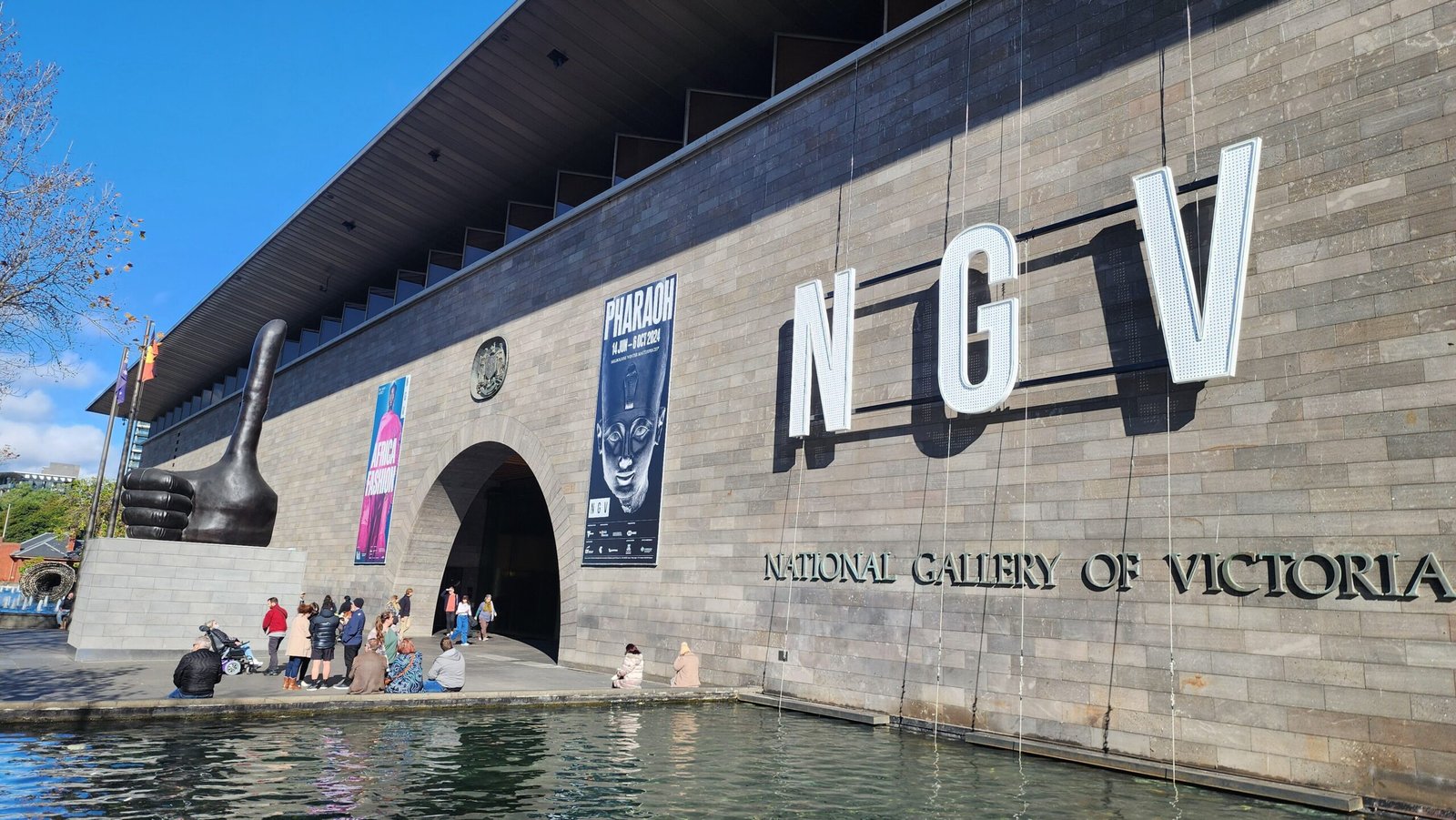
The National Gallery of Victoria has given its 2026 Melbourne Winter Masterpieces slot to Cartier, a survey of nearly four hundred jewels, timepieces and objects assembled with the Victoria and Albert Museum in London and the Maison itself. For readers of this archive the interest is not only the stones. It is the year 1925, and what happened to European design when a jeweller stopped drawing garlands.
The exhibition that gave the style its name
In 1925 Paris held the Exposition internationale des arts décoratifs et industriels modernes, the fair from whose title the term Art Deco was later abbreviated. Cartier showed there, and the NGV exhibition takes that moment as a hinge: it is where, in the gallery’s own account, the house’s “strikingly bold and modern designs came to international prominence”, helping establish Art Deco as a global movement rather than a Parisian manner.
What changed was the grammar. The jewellery of the Belle Époque had been an exercise in softness — garlands, bows, laurel, the whole vocabulary of eighteenth-century ornament rendered in platinum so fine it disappeared. The new work set flat planes of colour against each other, borrowed geometry from Egypt, India and Persia, and let black onyx do structural work. It is the same shift that was happening in architecture at the same moment, at a scale you can wear.
Practical details
- When: 12 June – 4 October 2026
- Where: NGV International, Ground Level, 180 St Kilda Road, Melbourne
- Hours: daily 10am–5pm; Friday nights 6–10pm with a separate ticket; extended hours on the final weekend
- Tickets: adult A$43, concession A$39, child (5–15) A$19, family A$99; NGV members A$38, premium members free
- Organised by: the NGV with the Victoria and Albert Museum, London, and Cartier; exhibition design by Studio Sabine Marcelis and CLOUD
- Information: ngv.vic.gov.au
Where the style went next
What was named in Paris in 1925 did not stay in Paris, and it did not stay in jewellery. Within a decade it had been built, at full size, in cities that had no Beaux-Arts past to argue with. Our archive follows it there: to South Beach in Miami, where the style went pastel and grew porthole windows; to the Bund in Shanghai, which for a time held more of it than anywhere outside New York; to Marine Drive in Mumbai, whose curve of flats is now inscribed on the World Heritage List; and to Napier in New Zealand, a town that had to be rebuilt after an earthquake in 1931 and was rebuilt in the style of its moment.
The National Gallery of Victoria itself, founded in 1861, is Australia’s oldest and most visited art museum.
📷 Become a Cultural Heritage Online photographer
Share your photos of events: they stay published under your name as the author. The more they're seen, the more you get noticed — and soon a contest will reward the most appreciated photos.
Log in or sign up free to add a photo