
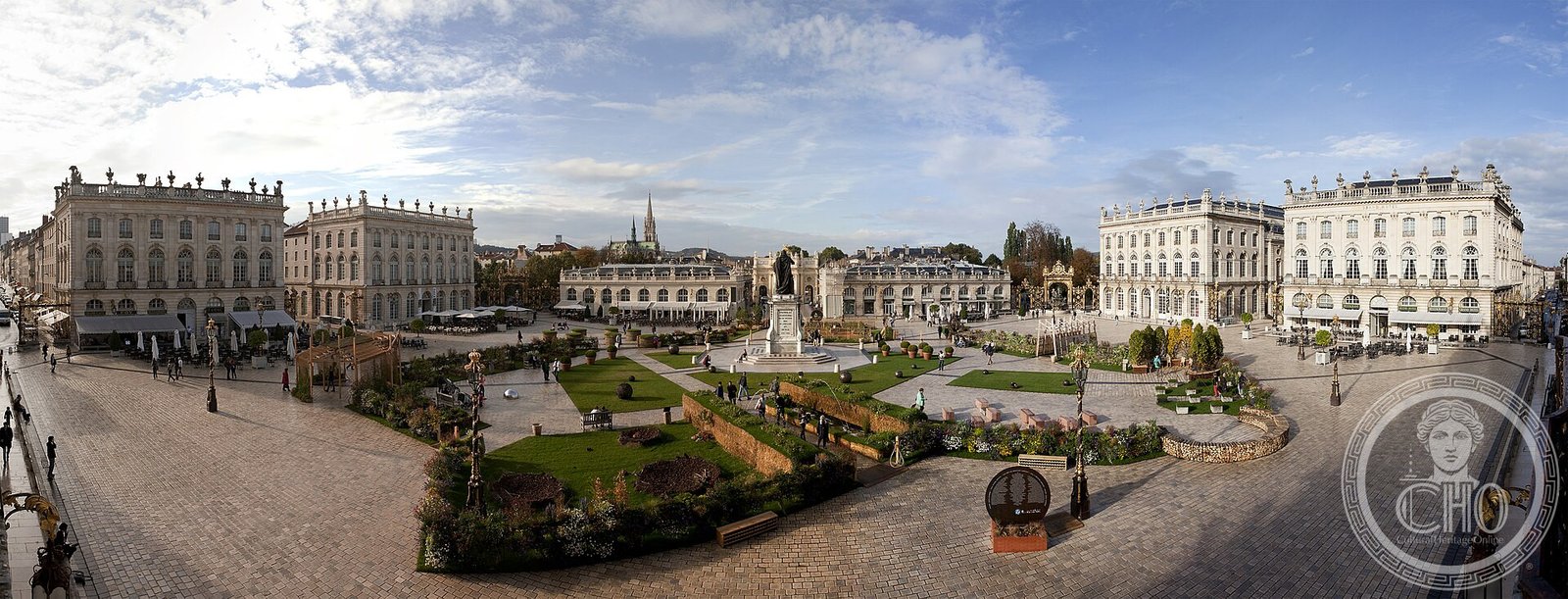
Nancy in the 1890s was a city of glass and wood — literally. Émile Gallé’s cameo glass, Louis Majorelle’s sinuous furniture, and the Daum brothers’ lampwork produced a French Art Nouveau so rooted in natural materials and botanic observation that it became its own named movement: the École de Nancy.
At a glance
The École de Nancy was not a school in the institutional sense but an artistic alliance — formally constituted in 1901 as the Alliance Provinciale des Industries d’Art — whose founders included Émile Gallé, Louis Majorelle, the Daum brothers and the architect Eugène Vallin. Their common programme: apply the Art Nouveau aesthetic to applied and decorative arts with absolute technical mastery, drawing on the natural forms of the Lorraine landscape for ornament. The result was a regional variant of Art Nouveau more disciplined and more deeply rooted in craft than the Paris mainstream, and today Nancy’s Musée de l’École de Nancy offers the most complete single-city collection of the movement’s applied arts in France.
Key facts
- Country: France (Lorraine / Grand Est)
- Key period: 1890–1914 (École de Nancy / Art Nouveau applied arts)
- Key figure: Émile Gallé (1846–1904) — glassmaker, ebeniste, botanist, founder of the École de Nancy
- Also notable: Louis Majorelle (furniture), Daum Frères (glass), Auguste Daum, Eugène Vallin (architecture)
- UNESCO heritage: Place Stanislas (with Place de la Carrière and Place d’Alliance), World Heritage since 1983
- Essential sites: Musée de l’École de Nancy, Villa Majorelle (house-museum), Place Stanislas
- Annual anniversaries: Gallé nascita 8 maggio, Gallé morte 23 settembre
History
Émile Gallé was born in Nancy on 8 May 1846 into a family of decorative arts manufacturers. He studied botany, philosophy and music before taking over and transforming the family glass and faience workshop. His early work in the 1870s drew on Persian, Japanese and Roman precedents; by the late 1880s he had developed the clair de lune glass tints and verre parlant (speaking glass — engraved with literary quotations) that made him famous. His marquetry furniture, exhibited in Paris in 1889 and 1900, brought him international renown and won the Grand Prix at both expositions.
Gallé formally constituted the Alliance Provinciale des Industries d’Art (École de Nancy) on 13 February 1901 with Majorelle, the Daum brothers and Victor Prouvé. The alliance aimed to raise the status of applied arts to equal fine arts, and to root the French decorative arts industry in the regional identity of Lorraine — at that moment a politically charged claim, given that Alsace-Lorraine had been ceded to Germany after the Franco-Prussian War of 1870. Gallé died in Nancy on 23 September 1904, before the movement reached its full public impact; Majorelle and the Daums continued into the 1910s.
What you see
The Musée de l’École de Nancy (38-38bis rue du Sergent Blandan) occupies a fin-de-siècle villa and its extended gallery wing. The collection is arranged chronologically: Gallé’s botanical cameo glass — some pieces with up to five superimposed layers, each etched to a different depth — occupies the central rooms; Majorelle’s marquetry furniture and wrought-iron lamps fill the ground-floor salons. The museum’s garden, planted with the botanical species Gallé used as ornamental sources, is open in summer.
The Villa Majorelle (1 rue Louis Majorelle) is the furnished house-museum of the furniture designer: an Art Nouveau house designed by Henri Sauvage in 1901–1902, with interiors conceived as a total artwork, and recently restored. Place Stanislas, ten minutes north by foot, is a Baroque ensemble of gilded iron gates by Jean Lamour (1755) — UNESCO-listed and among the most beautiful public squares in France.
Practical information
- Musée de l’École de Nancy: open Wed–Sun 10:00–18:00; closed Mon–Tue; admission €6
- Villa Majorelle: open for guided visits; check nancy.fr for current hours
- Place Stanislas: free, always accessible; fountains active April–October
- Nancy Museum Pass: covers both museums and several others
- Time needed: half-day for Musée + Villa Majorelle; add 1h for Place Stanislas stroll
Getting there
Nancy is served by TGV from Paris-Est (1h30). From Nancy station, the tram line T1 reaches the city centre in 5 minutes. The Musée de l’École de Nancy is a 25-minute walk from the station or a 10-minute tram ride (stop Foch-Thiébaut). By car: A31 from Metz (40 min) or Strasbourg (1h30).
Related in CHO
- Anniversario nascita: Émile Gallé — 8 maggio 1846
- Anniversario morte: Émile Gallé — 23 settembre 1904
- Paris — Belle Époque, Art Nouveau & Modernism
- Brussels — Victor Horta and Art Nouveau Architecture
Sources
Find it on the map
See this place and what’s around it →Events here — now on & upcoming
- Birth Anniversary: Émile Gallé — May 8, 184608 May 2027See the event →
- Death Anniversary: Émile Gallé — September 23, 190423 Sep 2026See the event →
📷 Become a Cultural Heritage Online photographer
Share your photos of places: they stay published under your name as the author. The more they're seen, the more you get noticed — and soon a contest will reward the most appreciated photos.
Log in or sign up free to add a photo