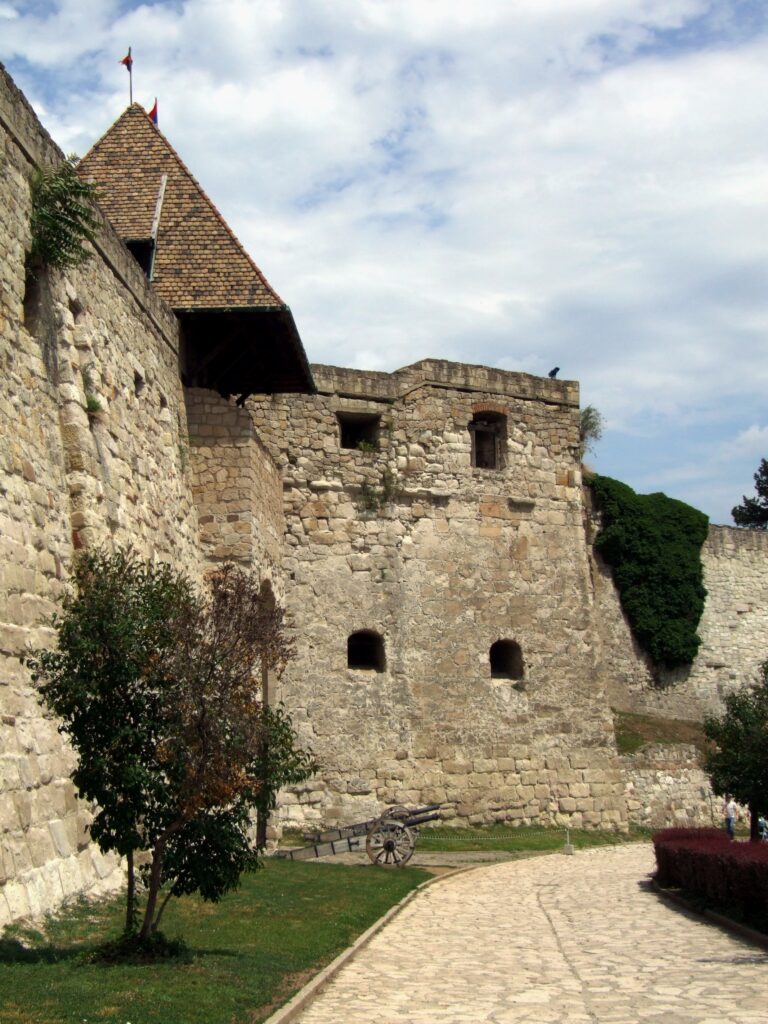
Six buildings between the Danube and the villa district, from Ödön Lechner’s Zsolnay roofs to the Liszt Academy: 8.6 kilometres on foot and by tram, through the style Budapest invented for itself.
A style invented on purpose
Budapest did not import Art Nouveau so much as commission its own. In the two decades before the First World War the city was building itself as a European capital at speed, and the Millennium of 1896 — a thousand years of the Hungarian kingdom — created an appetite for an architecture that was neither Viennese nor Parisian. Ödön Lechner answered with a programme: structural rationalism, cladding in Zsolnay pyrogranite made in Pécs, and ornament drawn from Hungarian folk embroidery and pottery. His argument, set out in writing and built in brick, was that a national style could not come from neo-Gothic or neo-Baroque, because those belonged to other people’s histories.
The trail that follows runs roughly west to east, from the Danube bridgehead to a quiet nineteenth-century villa district, 8.6 kilometres with trams covering the two long stretches. It is a full day if you go into the buildings, half a day if you only look up.
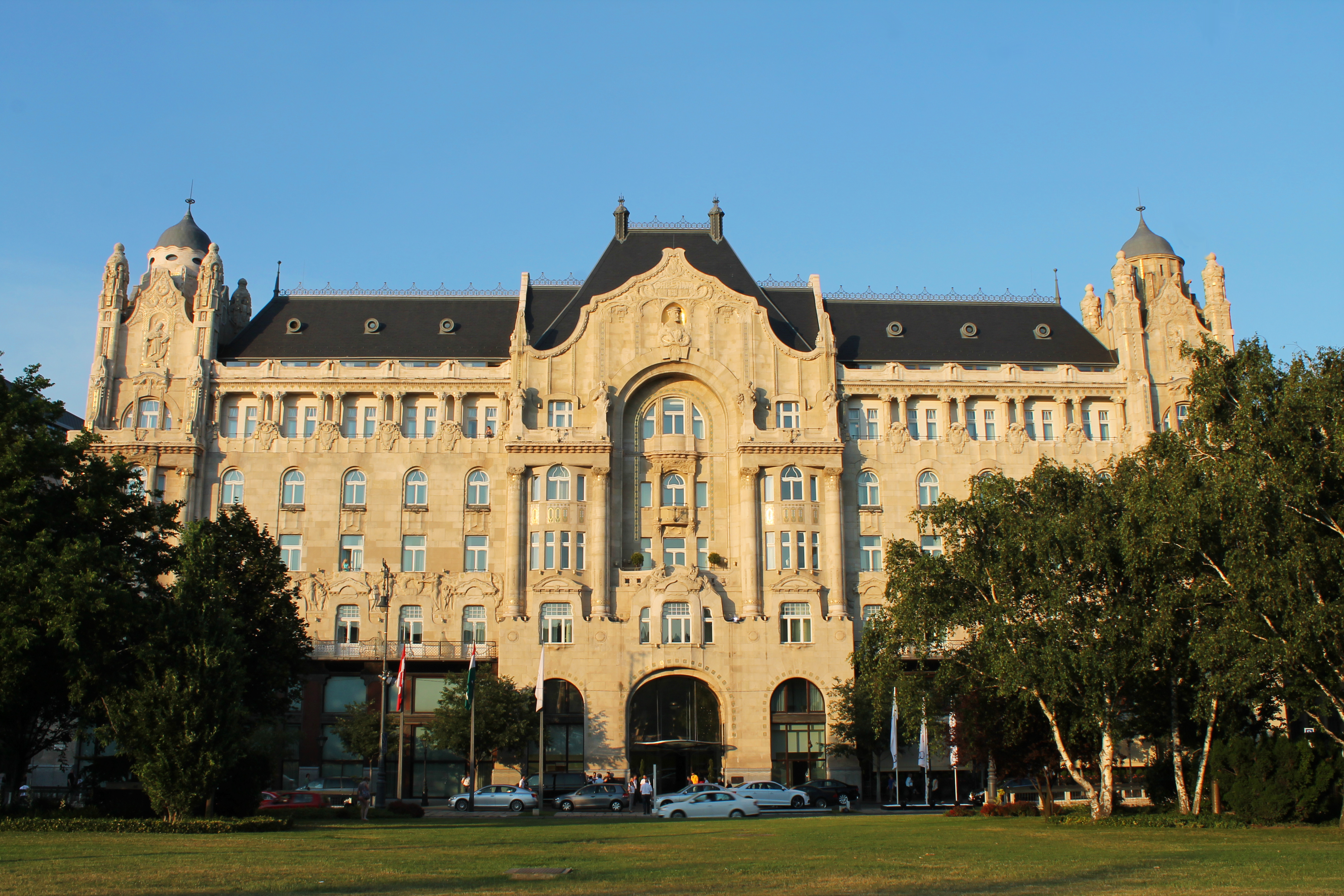
The Gresham, where the ornament was for the company
Gresham Palace stands at the head of Széchenyi István tér, facing the Chain Bridge. The Gresham Life Assurance Company, founded in London in 1848, wanted its Central European headquarters on the most visible site in the city, and Zsigmond Quittner gave it a facade of floral friezes and ceramic inserts over a masonry base that projects exactly the solidity an insurer needs. The interior courtyards and stairwells were the work of the Vágó brothers, József and László, with stained glass by Miksa Róth. The ironwork gates on the street carry peacock feathers and the company’s initials. The building was divided and run down through the twentieth century, restored as a single building in 2004, and has been the Four Seasons since.
Two insurance palaces
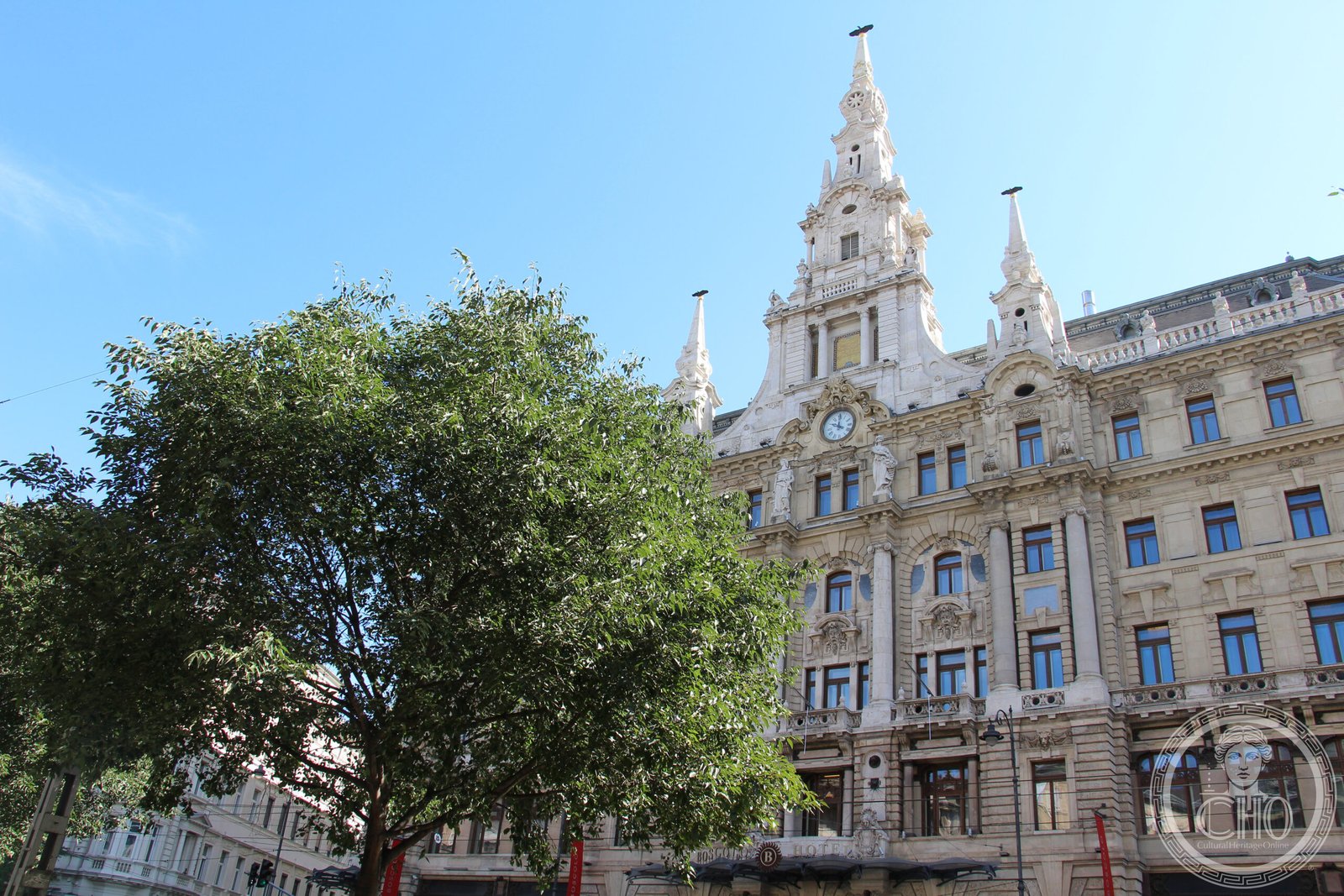
The New York Palace on Erzsébet körút was built for another insurance company, New York Life, between 1891 and 1894, by Flóris Korb and Kálmán Giergl. It is eclectic rather than Szecesszió — marble columns, carved lion heads, iron balconies — but the Café New York at street level made it the literary address of the city. The writers of Nyugat, the journal that carried Hungarian modernism into print, held their editorial sessions in the red-velvet booths, and the story that Ferenc Molnár threw the café keys into the Danube on opening night so that it could never close is probably not true and tells you what the place meant anyway. The café reopened in 2006, restored, inside what is now the Anantara New York Palace hotel.
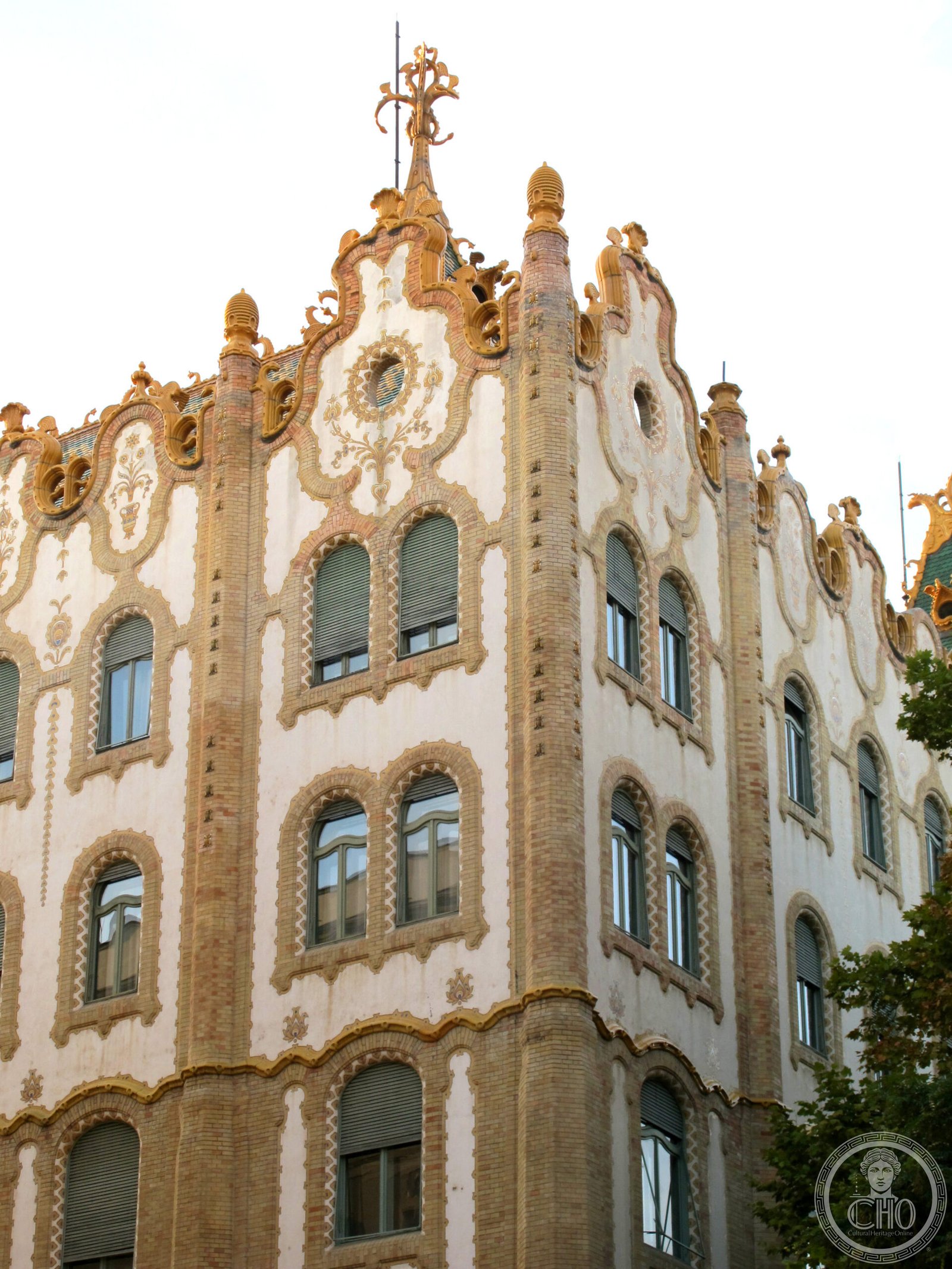
Two blocks north, the Hungarian Postal Savings Bank on Hold utca shows Lechner at his most disciplined. Designed in 1899 and completed in 1901, it presents an almost plain front to the street — the brief was a working financial building, not a ceremonial one — and puts the ornament where it can only be seen at an angle: along the cornice and the attic, in Zsolnay ceramic, with bees on the rooftop urns as the emblem of industry and saving. It is now the Budapest headquarters of OTP Bank, and the roofline is best read from across the street, looking up.
The museum that made the method
The Museum of Applied Arts on Üllői út, in Ferencváros, was where Lechner first applied the theory at the scale of a public building. He designed it with Gyula Pártos for the Millennial programme of 1896: a white rendered facade with green and yellow Zsolnay ceramic, a roof of the same tiles visible from several blocks away, and a central hall under an iron-and-glass dome with white ceramic gallery rails. The collection inside is one of the strongest in Central Europe, but the building is the exhibit: it is the moment the Magyar style stopped being an argument and became a fact on the street.
Where the style becomes a concert hall
The Franz Liszt Academy of Music on Liszt Ferenc tér was designed by Kőrössy Albert Kálmán and Márkus Géza and completed in 1907, twelve years after the institution was founded. The exterior uses the Szecesszió vocabulary, but the reason to go in is the Grand Hall: about twelve hundred seats, a ceiling height calculated for orchestral sound, and an interior that has served as a recording and broadcast venue for a century. The restoration between 2009 and 2013 brought it back close to its 1907 state.
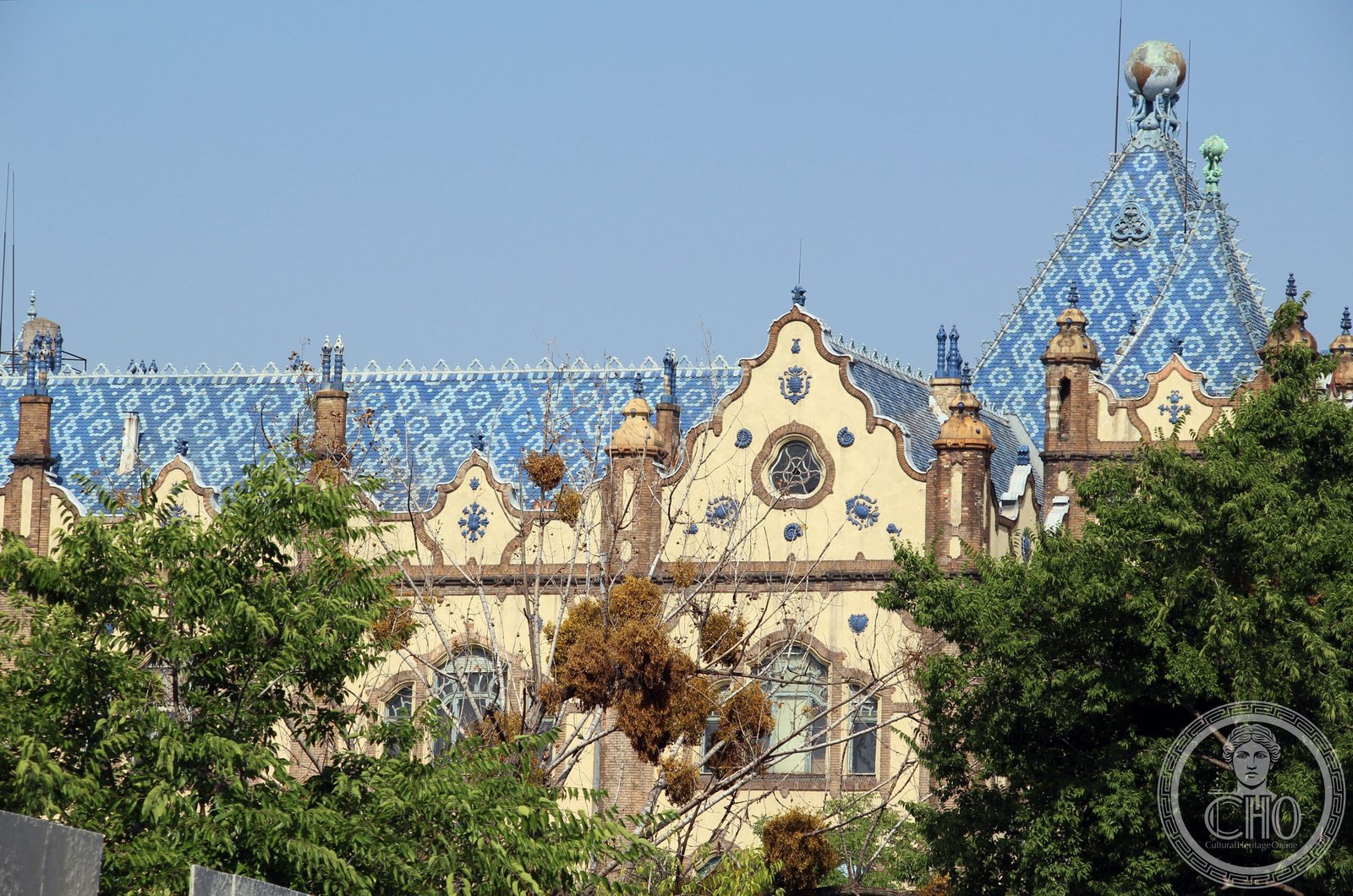
The last roof, and what it is holding up
The Geological Institute on Stefánia út, completed in 1899, is Lechner’s most programmatic building and the end of the trail. The blue-green Zsolnay roof is the first thing you see; the figures at the roofline are geologists carrying the weight of the globe, moulded to order at Pécs, so that the client’s science sits on top of the building doing architectural work. The institute has been mapping Hungarian mineral resources from this address for more than a century, through two wars and the state reorganisations that followed, and it still houses a small museum open to the public.
Walking it
The order on the Budapest Szecesszió trail page runs Gresham Palace, the Postal Savings Bank, the Liszt Academy, the New York Palace, the Museum of Applied Arts and the Geological Institute: west to east, 8.6 kilometres, about six hours with time inside the buildings. Trams 2 and 4 cover the long legs along the Danube and around the boulevard; the middle section between Hold utca and Liszt Ferenc tér is a fifteen-minute walk. The two banks and the two hotels are working buildings, so the interiors are visited only where they are public.
Sources
- Budapest Szecesszió: An Art Nouveau Walking Trail · https://culturalheritageonline.com/itineraries/budapest-szecesszio-art-nouveau-trail/
- The Lost Cities of Hungarian Secession · https://culturalheritageonline.com/magazine/the-lost-cities-of-hungarian-secession/
- Where to stay in Budapest for the Secession · https://culturalheritageonline.com/magazine/where-to-stay-in-budapest-for-the-secession/
Spotted an error? Write to [email protected] and we correct it the same day.