The Kyoto Institute of Technology traces a distinct path from industrial textile education to advanced materials research, connecting Kyoto with Venice through shared scientific purpose.
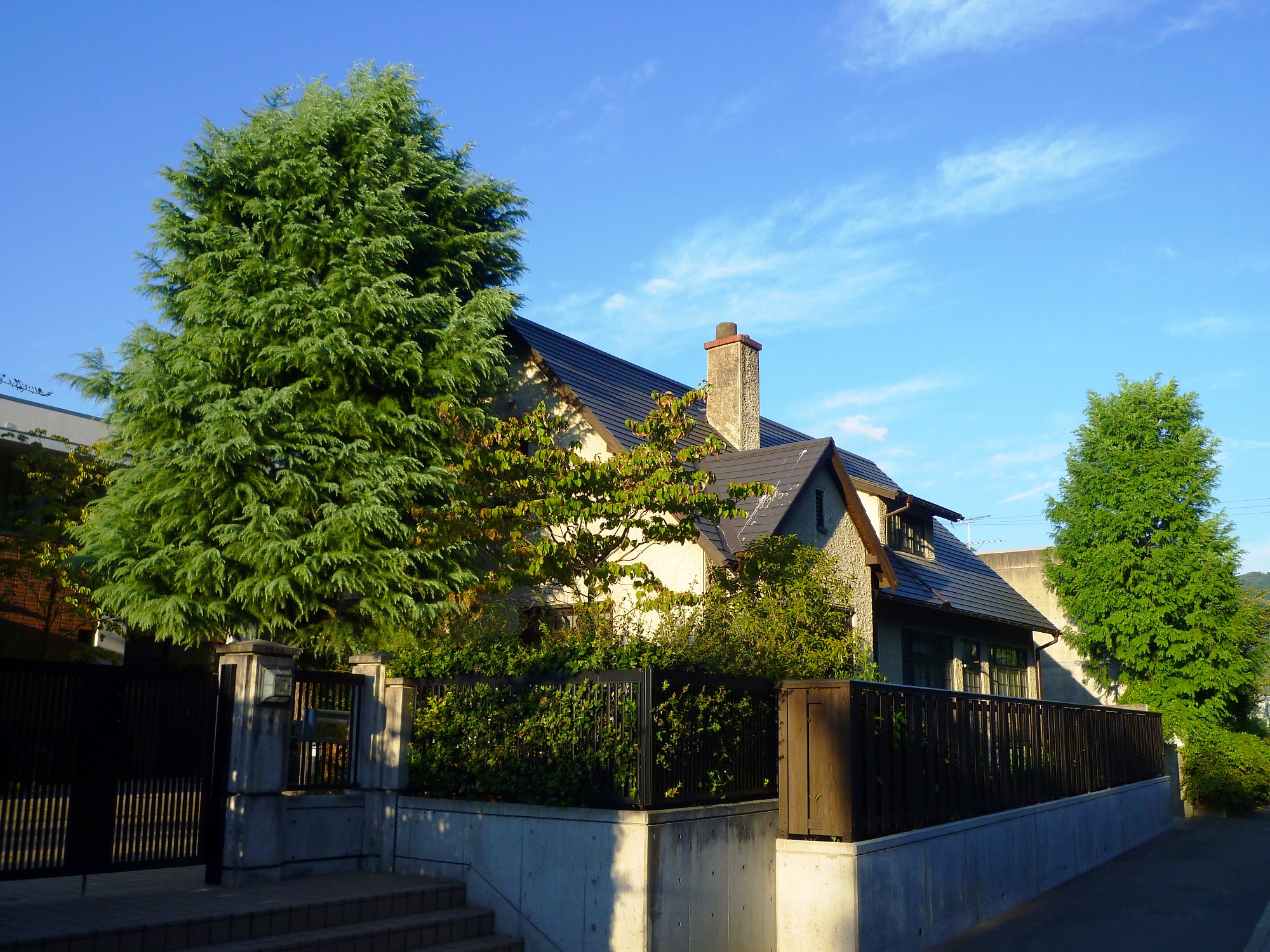
The Kyoto Institute of Technology (KIT) stands in the Matsugasaki district of Sakyo-ku, Kyoto. Its postal address places it close to the historic and academic fabric of the city. Yet the story of KIT is not simply a local one. It is a story about how a Japanese institution built its identity around a single material tradition and then extended that tradition into new scientific fields and international partnerships. The thread running through its history is literally a fibre.
A Faculty Built on Textiles
For much of its existence, KIT has been defined by its relationship to the textile industry. The Faculty of Textile Science occupies a central place in the institution’s past and present. This faculty delivered skilled human resources and technical advances in the field of fibre and textile science and engineering. Its work contributed to the development of Japan by linking education to an industry that was essential to the country’s modern growth. The faculty did not simply train workers; it built a body of scientific knowledge around the behaviour of fibres, the chemistry of materials and the mechanics of production.
The location in Kyoto mattered. Kyoto has long been associated with craft, weaving and the refinement of textile traditions. KIT took those traditions and gave them an engineering and scientific foundation. The continuity of this focus is striking. While other institutions broadened into general engineering, KIT kept fibre science at the core of its academic project.
Reorganisation and the Center for Fiber and Textile Science
Change came through institutional expansion. In fiscal year 2006, KIT underwent a process of growth and rebuilding that included the establishment of a graduate school. In conjunction with this expansion, the Center for Fiber and Textile Science (CFTS) was created. The centre gave the university a dedicated body for coordinating research in its historical area of strength. Its address in Matsugasaki, Sakyo-ku, Kyoto, places it at the heart of the KIT campus. The CFTS was not a museum of past practice; it was a response to the need for a more structured research environment in an evolving field.
The establishment of the centre in 2006 marked a shift from teaching alone towards a more integrated research mission. It also signalled that fibre science, often seen as a mature discipline, still demanded dedicated institutional attention. The centre became a point of contact for international collaboration and for the exchange of knowledge between universities with similar specialisations.
A New Educational Framework
The next major reorganisation came in fiscal year 2015. In that year, the ‘Academic Field of Fiber Science and Engineering’ and the ‘Faculty of Fiber Science and Engineering’ were organised as new education and research organisations within KIT. This was a deliberate restructuring. It brought teaching and research into a single coherent framework under the banner of fibre science and engineering.
The choice of wording is significant. The university chose ‘Fiber Science and Engineering’ rather than simply ‘Textile Science’. The change suggests a broadening of scope, from traditional textiles towards the science of fibres in a wider sense. Fibres are present in composite materials, in medical technologies and in advanced manufacturing. The 2015 reorganisation positioned KIT to engage with those possibilities while retaining its historical identity.
An International Network of Textile Universities
KIT is not isolated in its specialisation. It is a member of AUTEX, a worldwide network of textile universities. Membership in AUTEX connects KIT to a community of institutions that share research interests in fibres, textiles and related materials. Through this network, the university participates in the exchange of ideas and the development of international research projects. AUTEX membership confirms that KIT’s focus on textiles is part of a larger global conversation rather than a purely national one.
Partnership with Ca’ Foscari University of Venice
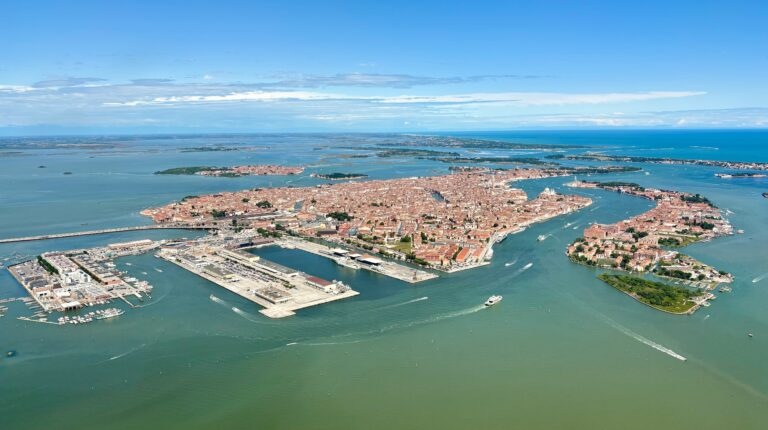
The international dimension of KIT’s work appears most concretely in its partnership with Ca’ Foscari University of Venice. The two institutions collaborate on a double degree in the Master of Science in Science and Technology of Bio and Nanomaterials. This programme allows students to study advanced materials at the intersection of biology, chemistry and physics. It links Kyoto and Venice, two cities with long histories of craft and trade, through a shared scientific curriculum.
The partnership extends to doctoral study. Ca’ Foscari University of Venice offers a PhD programme in Science and Technology of Bio and Nanomaterials in partnership with the Kyoto Institute of Technology. This PhD programme moves beyond traditional textile science into the field of nanomaterials. Yet the connection to fibre science remains conceptually strong. Nanomaterials often involve structures at the scale of molecules and fibres. The collaboration brings together KIT’s long experience in fibre engineering with Ca’ Foscari’s strengths in chemistry and materials science.
The double degree and the PhD programme represent a new chapter in KIT’s history. They show how an institution rooted in industrial textile education can extend its expertise into emerging scientific fields. The partnership with Venice is not a break with the past. It is an extension of the same concern with materials, structure and function that once drove the Faculty of Textile Science.
Today, KIT continues to operate as a university with a strong disciplinary focus. Its history is visible in its faculty names, its research centres and its international agreements. The institution has moved from delivering skilled workers for Japan’s textile industry to training scientists in bio and nanomaterials. What has remained constant is the interest in how materials are made, how they behave and how they can be engineered for new purposes. That continuity gives KIT a distinct place among Japanese universities and among the worldwide network of textile institutions.
Sources
- AUTEX, ‘Kyoto Institute of Technology’, https://autex.org/members/kyoto-institute-technology
- Kyoto Institute of Technology, ‘Undergraduate Programs’, https://www.kit.ac.jp/en/academic-programs/undergraduate-programs/
- Ca’ Foscari University of Venice, ‘PhD programme in Science and Technology of Bio and Nanomaterials’, https://www.unive.it/pag/16584/?tx_news_pi1%5Bnews%5D=12104&cHash=0347fe17b6447560999f985d6fd58624
- Uni4Education, ‘Master of Science in Science and Technology of Bio and Nanomaterials, Ca’ Foscari University of Venice’, https://www.uni4edu.com/university/venedik-ca-foscari/programs/science-and-technology-of-bio-and-nanomaterials-ma
Spotted an error? Write to editorial@culturalheritageonline.com and we correct it the same day.