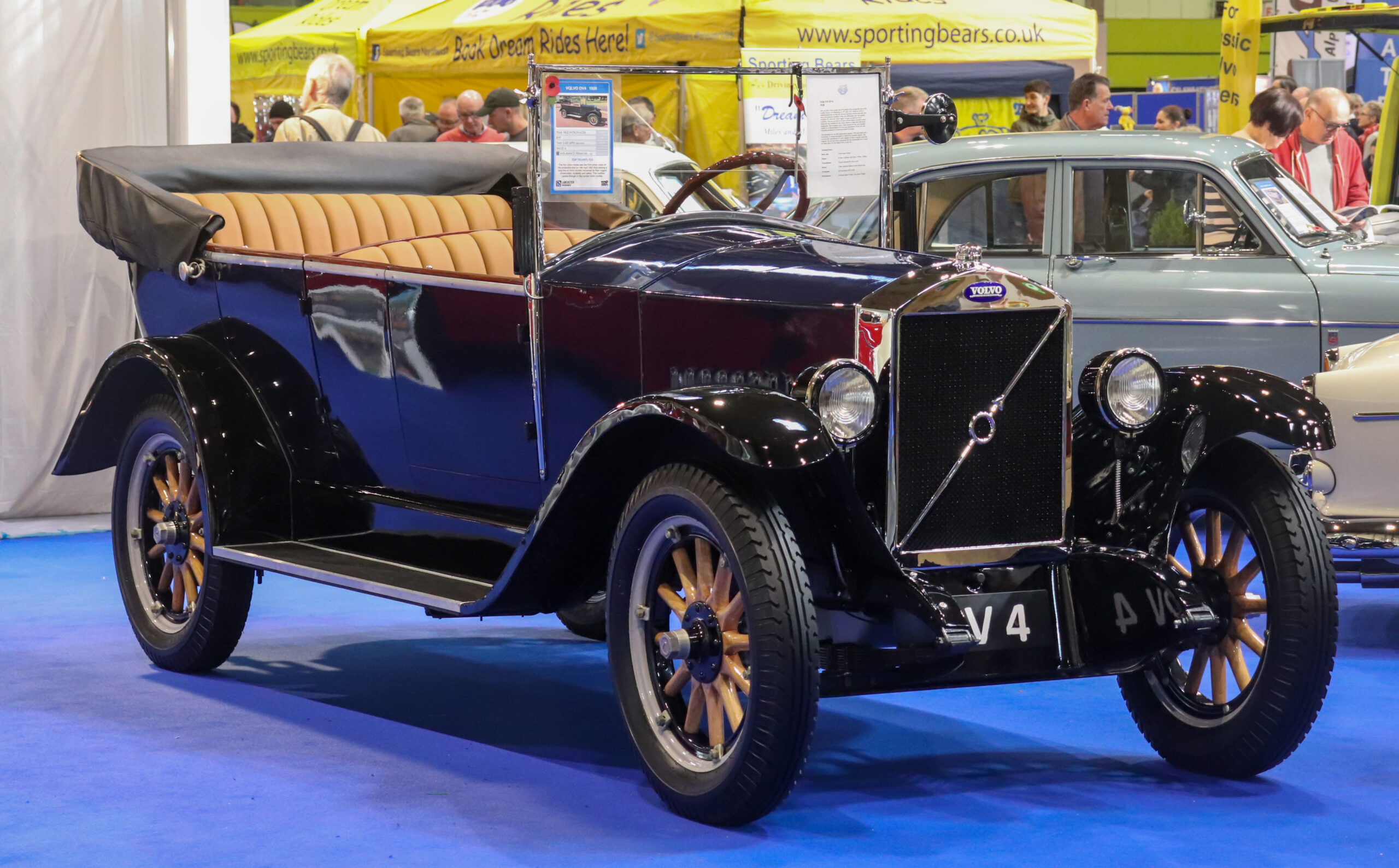
On April 14, 1927, the very first production Volvo car—an open touring model nicknamed ÖV 4 or "Jakob"—rolled through the factory gates at Lundby on the island of Hisingen in Gothenburg. Conceived over a crayfish dinner by SKF sales executive Assar Gabrielsson and engineer Gustav Larson, Volvo was founded on an unyielding principle: that automobiles must be engineered first and foremost for human safety, endurance, and harsh Scandinavian climates.
The SKF Heritage and the Lundby Assembly Line
In the mid-1920s, American and Continental motor cars imported into Sweden routinely failed on the country’s rugged gravel roads and in sub-zero winter temperatures. Assar Gabrielsson (1891–1962), a visionary sales manager at world-leading ball bearing manufacturer SKF, convinced engineer Gustav Larson (1887–1968) that Sweden’s world-renowned high-grade steel and mechanical prowess could produce superior, virtually indestructible vehicles. Backed by SKF financing, they adopted the Latin trademark Volvo (“I roll”), registered by SKF in 1915 for a specialized ball bearing line.
The first production model, the ÖV 4, featured a robust ash and beech wooden frame sheathed in Swedish steel sheet metal and an overhead-valve four-cylinder engine. Within a year, Volvo complemented passenger car output with heavy commercial trucks (Type 1), establishing the robust logistics foundation that would make Volvo a global commercial transport colossus.
The Safety Standard of the World: Nils Bohlin and Gothenburg
Volvo’s humanitarian engineering philosophy reached its global zenith in 1959, when Volvo engineer Nils Bohlin invented the three-point lap-and-diagonal safety belt. In an extraordinary act of corporate altruism, Volvo opened the patent for free use by every automobile manufacturer worldwide, saving an estimated one million lives over subsequent decades. This uncompromising devotion to safety became the definitive hallmark of Swedish automotive identity.
Today, Volvo’s industrial cradle in Gothenburg is celebrated at the spectacular World of Volvo experience center and the historic Lundby campus. As the marque approaches its centenary in 2027, the iron mark (*järnmärket*) remains an internationally revered symbol of mechanical integrity and Scandinavian design clarity.
Salone dell'Automobile di Torino: innovazione tecnica e grandi costruttori
Immagini d'archivio storico dell'Istituto Luce che testimoniano l'evoluzione delle carrozzerie in acciaio, della sicurezza e dell'ingegneria automobilistica europea. (Fonte: Archivio Storico Istituto Luce Cinecittà)
Interactive 360° Heritage View: World of Volvo & Historic Lundby Industrial Campus
Historical Location: Lindholmsallén, 417 56 Göteborg, Sweden (Coordinates: 57.7089, 11.9388)