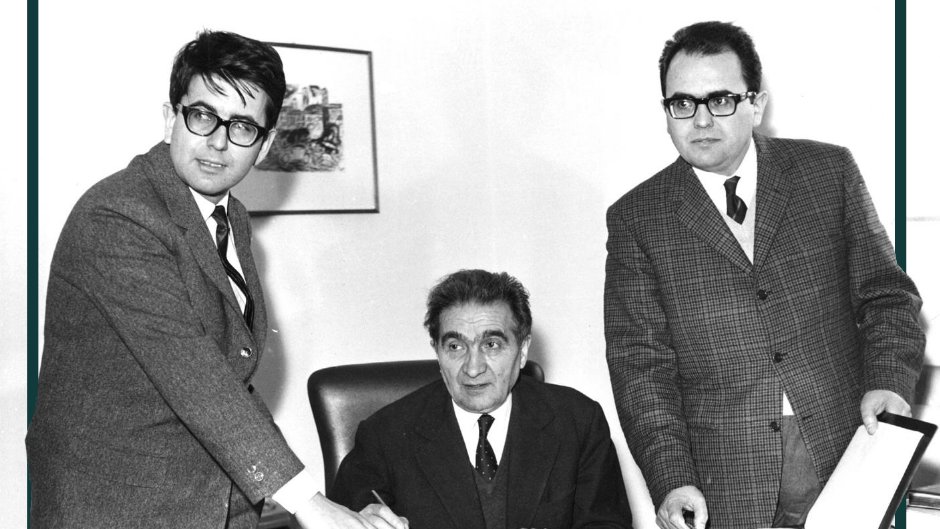
On July 20, 1930, in the tiny hamlet of Albacina near Fabriano, twenty-three-year-old Aristide Merloni registered a modest artisan workshop dedicated to manufacturing precision weighing scales and steelyards (*bilance e bascule*). In a tranquil Apennine river valley known solely for medieval handmade paper, Merloni planted the mechanical seed of what would become the celebrated "Modello Marchigiano" and one of the largest domestic appliance conglomerates in European history: Ariston.

Balancing Precision in the Heart of the Apennines
Aristide Merloni (1897–1970) spent his formative twenties working as an employee in a weighing machine factory in Piedmont. Returning to his native Marche in the depths of the 1930 recession, he carried an unyielding conviction: industrial manufacturing should not concentrate exclusively in overcrowded northern metropolises, but could flourish harmoniously among rural hills, offering dignified employment to peasant families without uprooting them from their land.
Equipping an old mill with a forge, anvil, and manual drill, Merloni crafted heavy-duty steelyards and decimal balances essential for weighing livestock, sacks of grain, and agricultural harvests. His scales earned a reputation for uncompromising accuracy and robust iron castings. By the late 1930s, the Albacina workshop had grown into a modern factory employing dozens of local youths, establishing the mechanical discipline that soon expanded into liquefied gas cylinders, water heaters, and ultimately household cookers and refrigerators under the *Ariston* name (derived from Aristide’s own Greek root meaning “the best”).
The Architectural and Social Imprint on the Esino Valley
The legacy of Aristide Merloni is inscribed into the physical topography of Fabriano and the entire Esino Valley. Merloni’s pioneering philosophy—diffuse industrialization interspersed with olive groves, social housing, and technical apprenticeships—transformed Fabriano into a global capital of home appliances while preserving its pastoral fabric.
Today, the Fondazione Aristide Merloni and the Museo della Carta e della Filigrana in Fabriano celebrate this extraordinary trajectory. The historic plant of Albacina stands as a sacred milestone in Italian industrial sociology, proving that visionary humanism and mechanical precision could turn a mountain hamlet into a world leader.
Nel mondo dell'industria
Original historical newsreel from Archivio Storico Istituto Luce Cinecittà documenting industrial manufacturing workshops, reflecting the rise of regional mechanical manufacturing in the Marche championed by Aristide Merloni. (Fonte: Archivio Storico Istituto Luce Cinecittà)
Interactive 360° Heritage View: Historic Merloni Industrial Complex
Historical Location: Via Don Riganelli 56 / Albacina, 60044 Fabriano AN, Italy (Coordinates: 43.33654, 12.90644)
Historical Archive Gallery