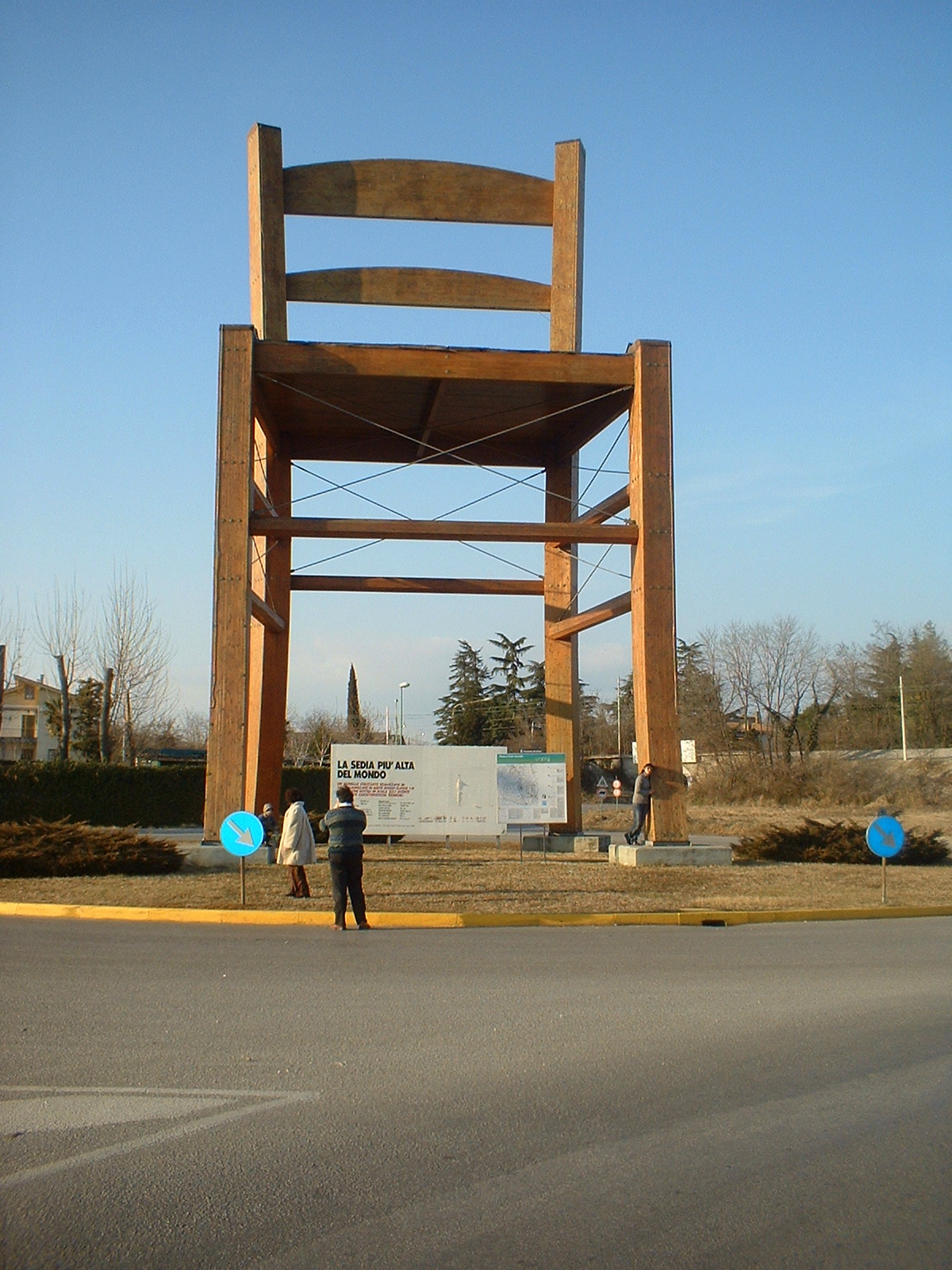
In 1923, inside a rustic barn in the small rural village of Manzano near Udine, master woodworker Antonio Calligaris began hand-assembling simple, sturdy wooden chairs. Using seasoned solid beech felled in the nearby Carnic Alps and straw harvested from the marshy banks of regional rivers, Calligaris birthed the legendary "Marocca" chair, initiating a century-long trajectory that transformed the Natisone valley into Europe's premier Chair Triangle (*Triangolo della Sedia*).

The Marocca: Peasant Ergonomics and Artisan Assembly
During the early 1920s, post-Habsburg Friuli was reconstructing its agrarian economy. Antonio Calligaris (1890–1972) noticed an insatiable demand for robust, honest seating in newly opened village taverns, municipal schools, and farmsteads. With manual lathes and drawknives, he turned local beech wood into curved backrests and solid legs, while women in surrounding villages hand-wove the swamp reed seating (*cannuccia palustre*) in a home-based cottage industry.
The *Marocca* chair became an architectural archetype: virtually indestructible, perfectly balanced, and unpretentious. By the 1930s, the artisanal workshop had introduced semi-mechanized copy lathes and dye vats, allowing Calligaris to produce dozens of chairs daily and distribute them via the Udine-Trieste railway corridor.
Industrial Evolution and the Legacy of Manzano
Calligaris represents the quintessential evolution of Italian territorial districts: from artisanal family workshops to international contemporary design powerhouses. Succeeding generations industrialized frame jointing, embraced curved plywood, and collaborated with prominent Italian architects without deserting their Friulian cradle.
Today, Manzano proudly displays the monumental wooden chair monument (*Monumento alla Sedia*), standing twenty meters tall as a testament to the thousands of woodturners, weavers, and designers who followed Antonio Calligaris’s 1923 footsteps. The company’s historical showrooms in Manzano celebrate this unbroken continuum between raw timber and global industrial design.
Artigianato del legno e mobili rustici nelle valli del Friuli
Cinegiornale storico dell'Archivio Luce che illustra la lavorazione del legno, la tornitura e l'impagliatura artigianale delle sedie friulane negli anni Venti e Trenta. (Fonte: Archivio Storico Istituto Luce Cinecittà)
Interactive 360° Heritage View: Calligaris Headquarters & Historic Workshop
Historical Location: Via Trieste 12, 33044 Manzano UD, Italy (Coordinates: 45.98903, 13.37643)
Historical Archive Gallery
Sources
- S1 — Morocutti, Gianni. La sedia di Manzano: Storia di un distretto industriale. Udine, 2003. ISBN 978-88-88540-12-2.
- S2 — Micelli, Stefano. Futuro artigiano: L'innovazione nelle mani degli italiani. Marsilio, 2011. ISBN 978-88-317-1012-1.
Spotted an error? Write to editorial@culturalheritageonline.com and we correct it the same day.