
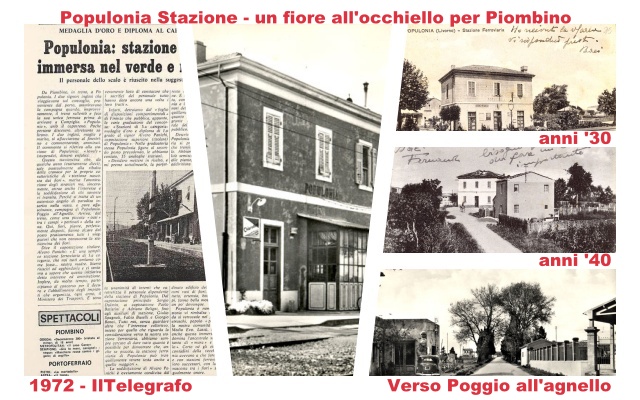
The single-track railway from Campiglia Marittima to Piombino was inaugurated on 5 April 1892 to serve the expanding iron industry of the Piombino coastal region, connecting it directly to iron ore deposits on the Island of Elba. The 14-kilometre line was initially operated by Strade Ferrate del Mediterraneo before passing to Ferrovie dello Stato in 1905.
A Contested Construction
The railway’s construction, approved in 1879, crossed land owned by Count Desideri of Populonia, who strongly opposed the project. After two years of dispute, the count agreed to the expropriation, securing a substantial payment, the naming of the station after his estate, and two unusual conditions: a man with a horn to alert cattle away from the tracks and a prohibition on locomotive operators discarding cigars in the stubble fields to prevent fire.
Tragedy and Later Honours
On 18 February 1934—Carnival Sunday in Piombino—a serious accident occurred when a railcar departing Populonia station at 21:45, having not waited for an earlier service from Portovecchio, collided with that train. The crash killed sixteen people. Between the late 1960s and early 1970s, Populonia station received multiple awards as one of Italy’s most beautiful, thanks to the station master’s meticulous care of painted benches, stone walls decorated with shells and mineral fragments, and ornamental flower beds. Few of these decorative elements remain visible today.
On the heritage map: Populonia Station – Virtual Tour 360°
Frequently asked questions
Why was the Piombino railway built?
The line was constructed to connect the rapidly developing iron smelting industry of Piombino directly to iron ore sources on the Island of Elba, requiring a link to the inland Tyrrhenian rail network.
What unusual conditions did Count Desideri impose?
The count required a man with a horn to be stationed at the tracks to drive away his cattle and banned locomotive operators from discarding cigars in stubble fields to prevent fires.
What happened in the 1934 accident?
A railcar departing Populonia at 21:45 on 18 February collided with an earlier service from Portovecchio that it had failed to wait for, killing sixteen people.


