
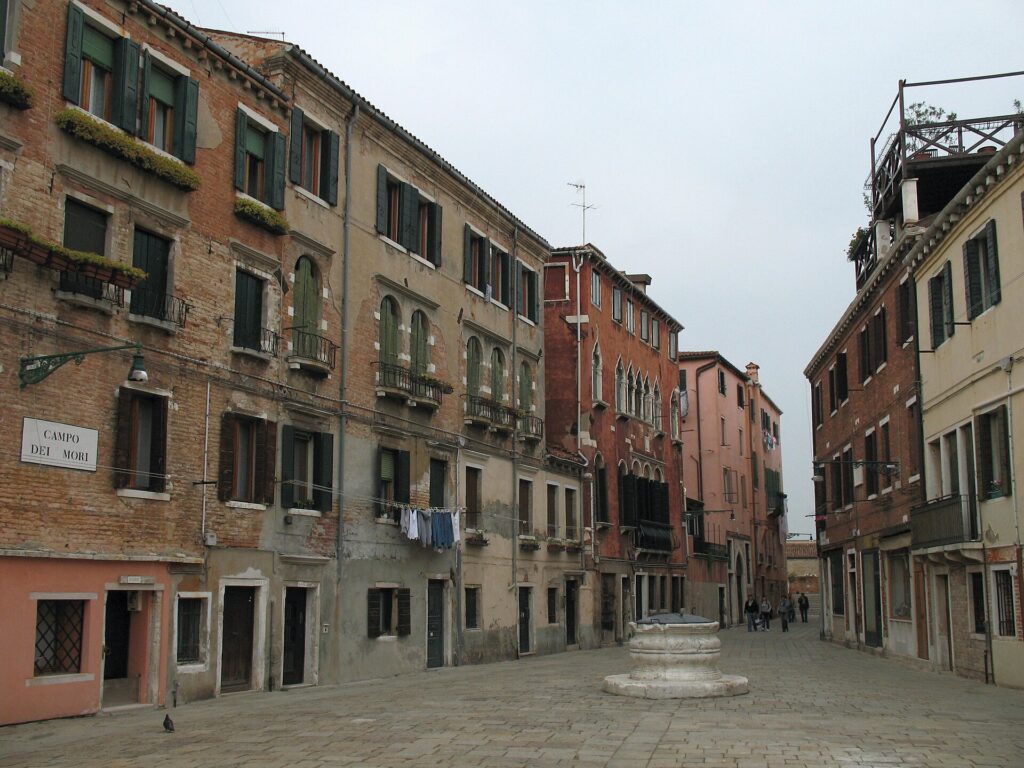
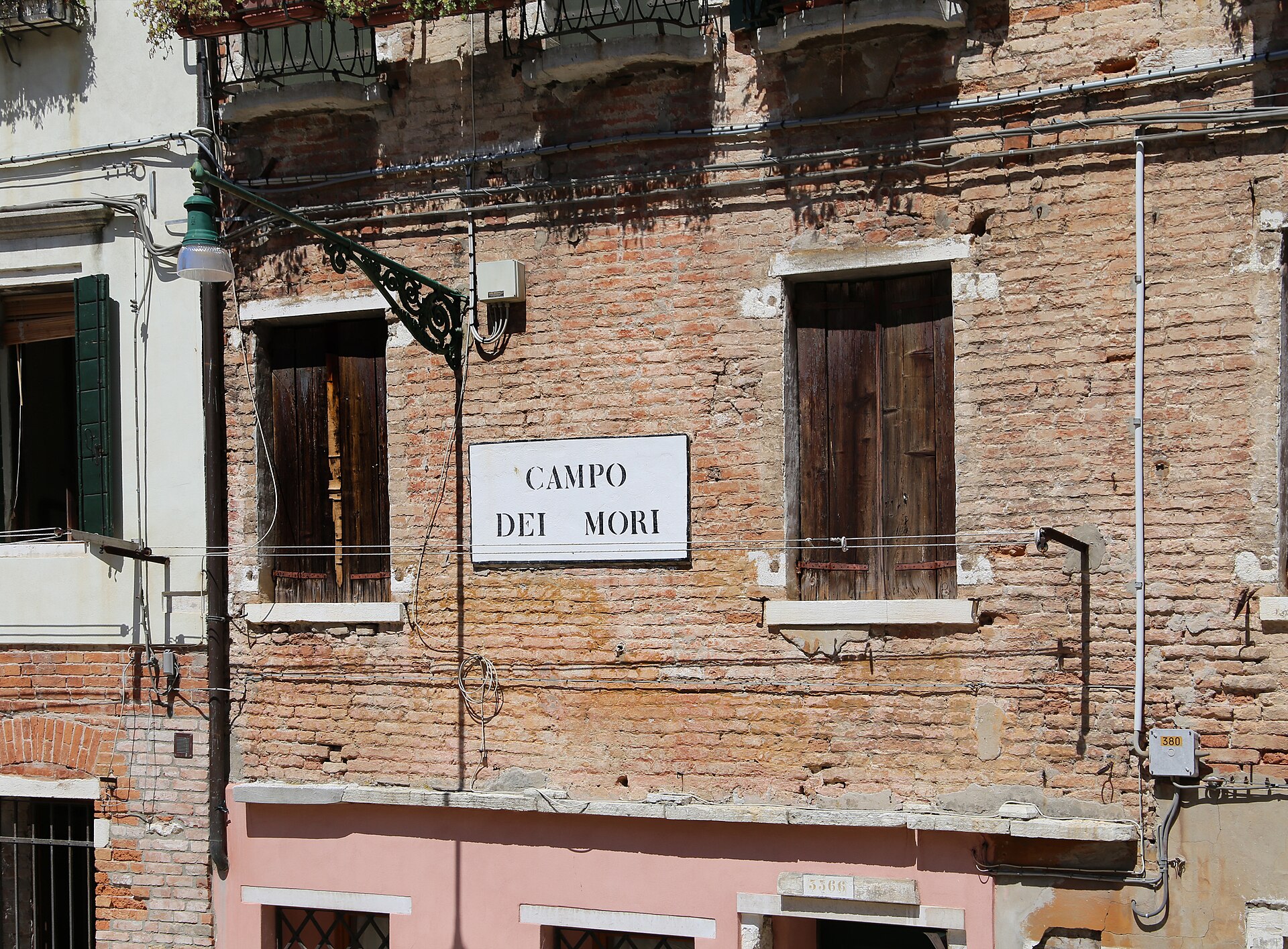
Four figures in eastern dress are built into the walls of this small square, at the height of a passer-by. One of them has an iron nose, and for centuries anonymous Venice pinned its complaints to him.
At a glance
A Venetian chronicle kept in the Marciana tells it this way: in 1112 three brothers — Rioba, Sandi and Afani — left the Morea during a civil war and settled in Venice with a great deal of money, building their houses near what is now the Ponte dei Mori. Their names were cut above the figures carved at the corners of those houses, and the square took its name from them. The family is known in Venice as the Mastelli, and their palace stands a few steps away on the Rio de la Madonna dell’Orto.
What you see
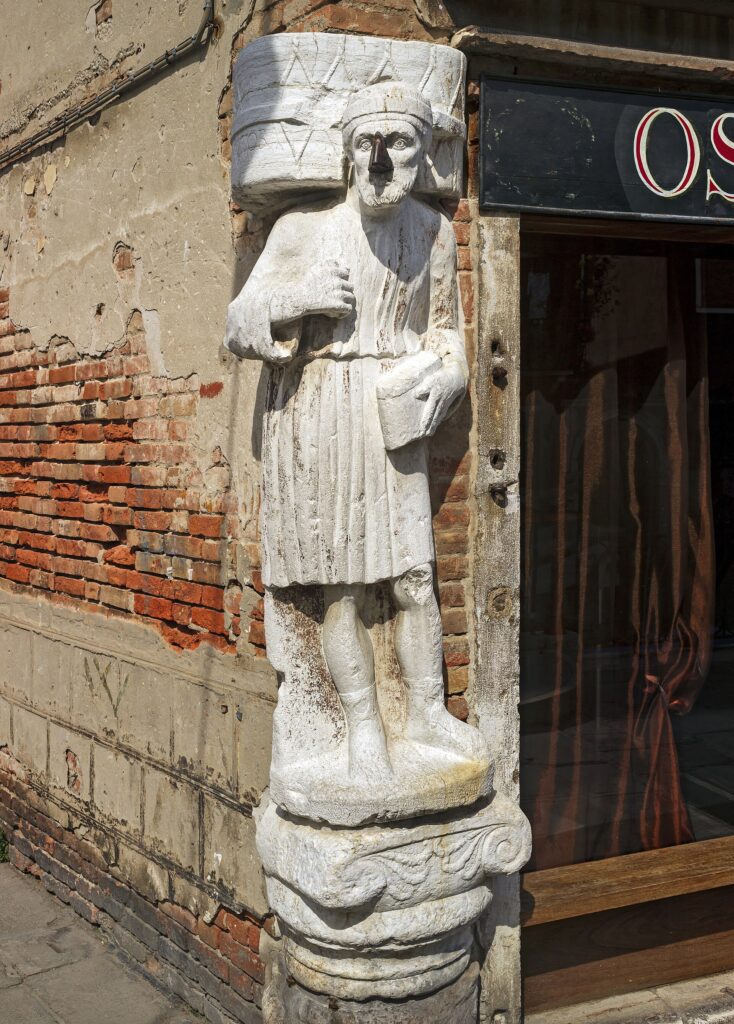
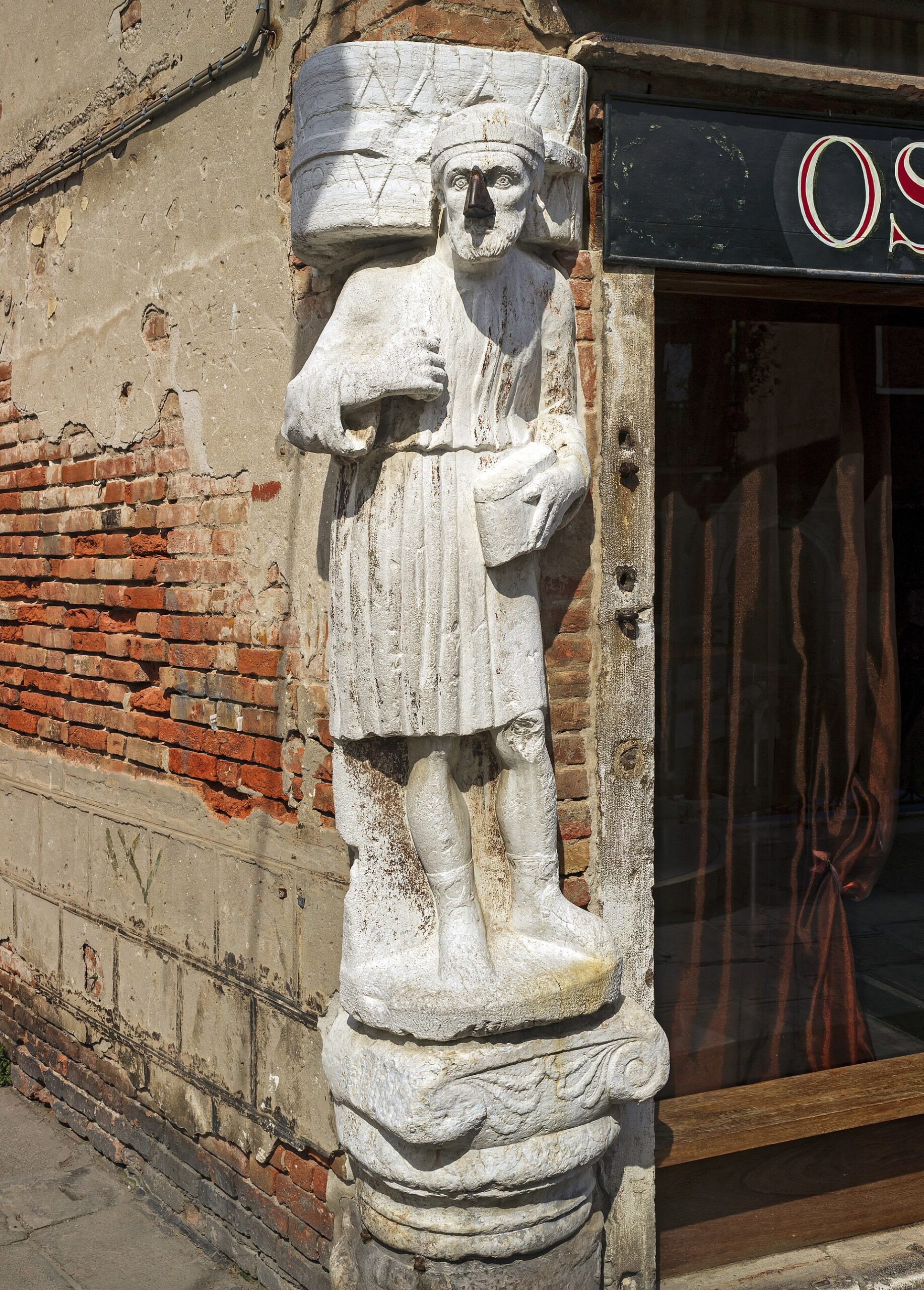
Three figures along the campo and a fourth at the corner by the bridge, all in stone, all worn, all in eastern dress, set low into the brickwork. The fourth is taken to be the brothers’ servant — the same man who leads the camel in the relief on the front of Palazzo Mastelli, where the family kept the sign of its spice warehouse. The figure at the foot of the bridge is the one to look at closely: its nose is iron, a replacement for a broken original, and it is the one Venetians call Sior Antonio Rioba.
Why it matters
Rioba was the Pasquino of Venice. What could not be said aloud under the Republic was written at night and left at his feet or fixed to his chest: satires, accusations, jokes about people with names. A city with no legal opposition found itself a stone one. The house where Tintoretto spent the last years of his life stands on the fondamenta a few doors along, which makes this square, for its size, one of the densest pieces of ground in Cannaregio.
Practical information
- An open square, visible at any hour and free; the figures are at street level and easy to miss
- Palazzo Mastelli and its camel relief are best seen from the far bank of the rio
Getting there
Waterbus to Madonna dell’Orto, then two minutes on foot. From the Strada Nova the walk north takes about ten minutes.
Sources
- Conoscere Venezia, Campo dei Mori alla Madonna dell’Orto and La statua del sior Antonio Rioba, citing the Venetian chronicle in the Biblioteca Nazionale Marciana
- Conoscere Venezia, Palazzo Mastelli alla Madonna dell’Orto, on the camel relief and the spice warehouse
Editorial text © Cultural Heritage Online, 2026. Video filmed and narrated on site by Andrea Manzo.
Gallery
Find it on the map
See this place and what’s around it →📷 Become a Cultural Heritage Online photographer
Share your photos of places: they stay published under your name as the author. The more they're seen, the more you get noticed — and soon a contest will reward the most appreciated photos.
Log in or sign up free to add a photoIs this page about you?
This page is read by travellers and heritage enthusiasts who find it on Google. Tell us how you are connected to this place and we will take it from there.