
Eighty-nine Italian films are listed for 1943. They were made by an industry that did not exist any more by the time the last of them reached a screen.
The year before, as we set out elsewhere, Italy distributed ninety-six of its own films, the most in a decade, inside a market the American studios had walked out of. 1943 begins on that footing and ends with the studio city emptied, the equipment on a train to Germany, and the film school refusing to move.
What came out before September
Three films of that year still matter, and all three reached cinemas before the armistice.
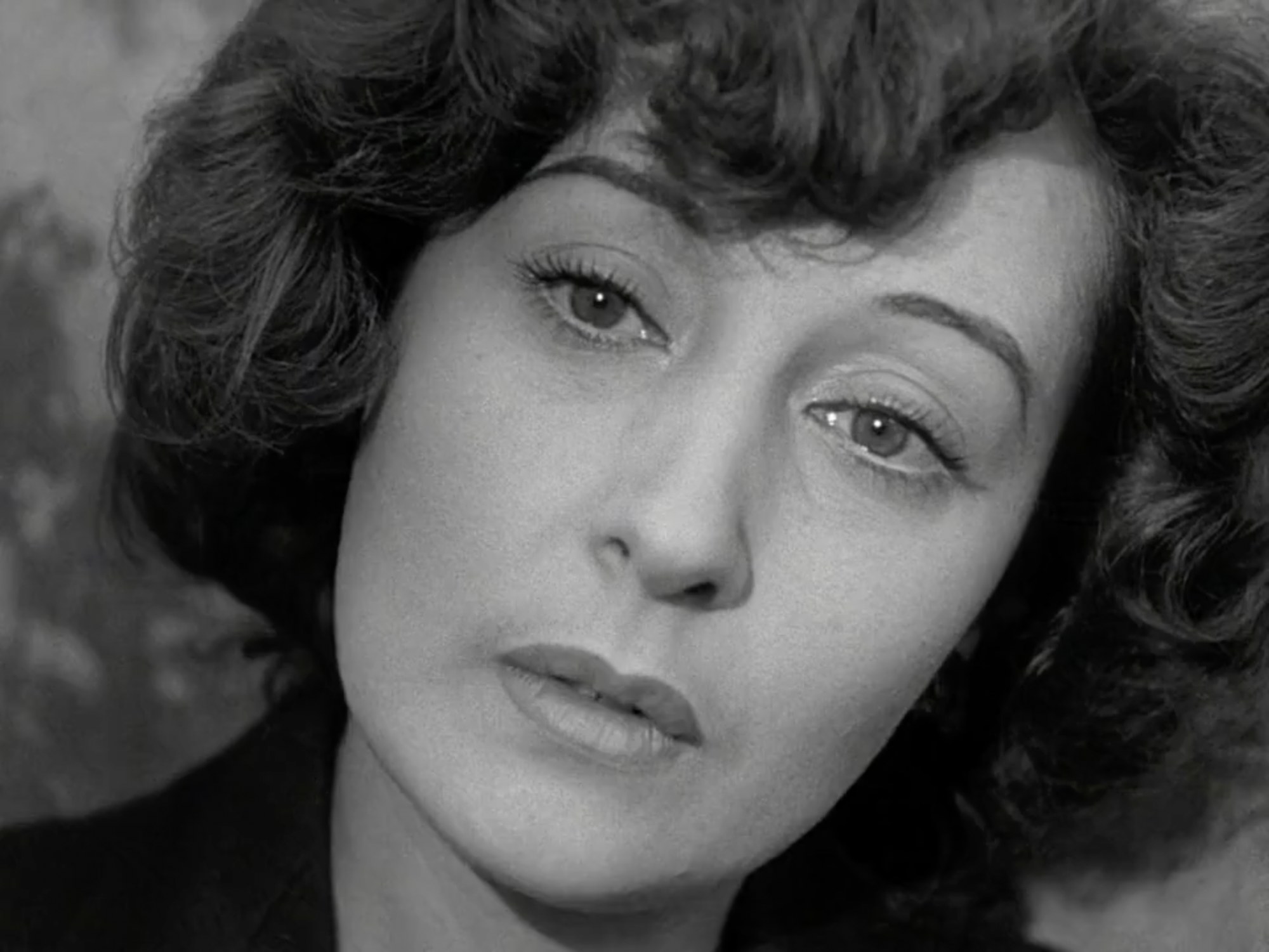
Ossessione was Luchino Visconti’s first film as a director, taken from James M. Cain’s The Postman Always Rings Twice — a debt the credits did not declare, because in the last months of the regime an American novel with that view of life was not something a production could admit to. Clara Calamai plays the innkeeper’s wife, Massimo Girotti the drifter. Treccani records the reception in one line: young critics who would go on to shape post-war Italian cinema wrote about it with enthusiasm, Vittorio Mussolini walked out of the screening, and the Catholic press called on the authorities.
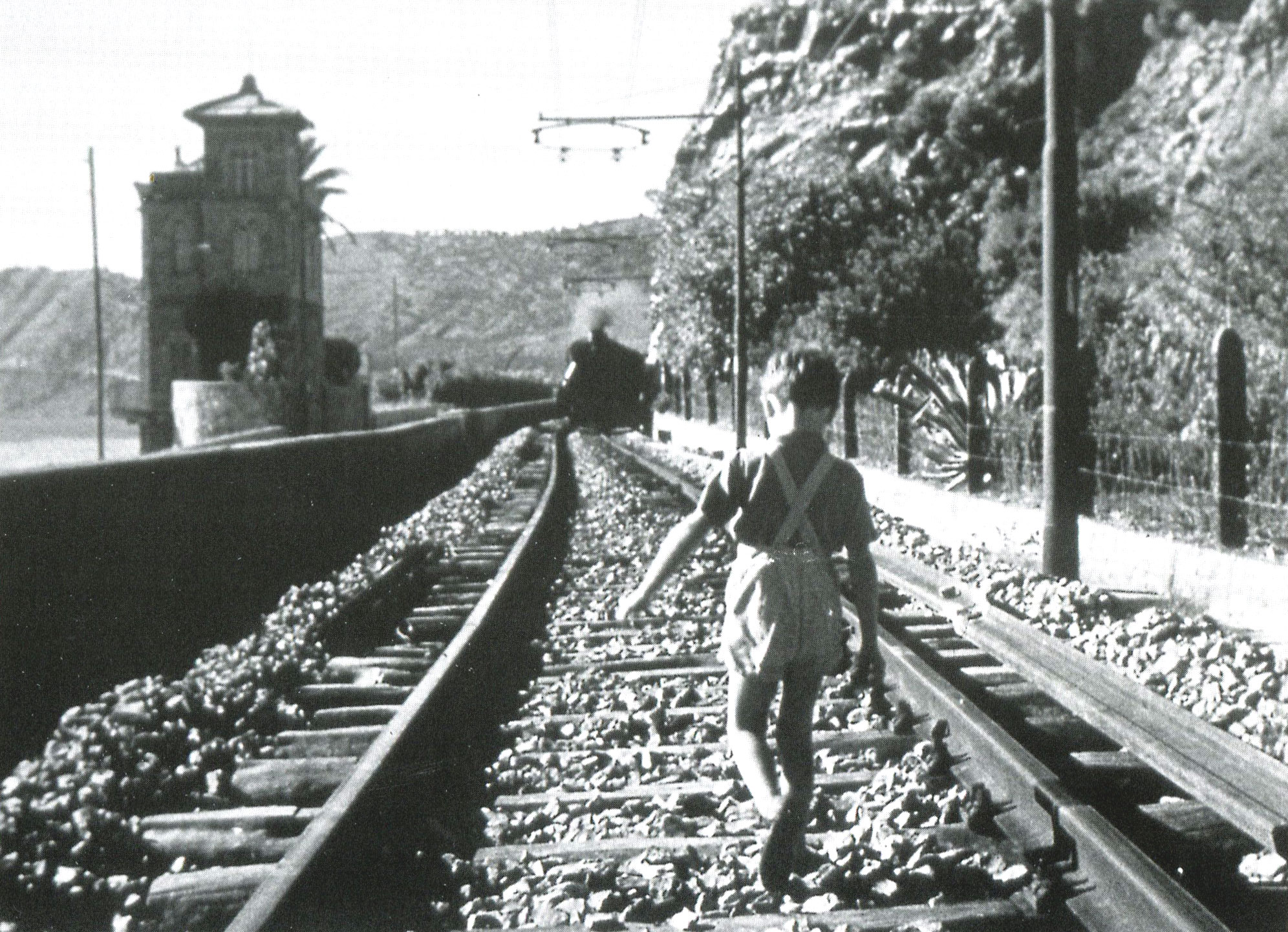
I bambini ci guardano was Vittorio De Sica’s, written with Cesare Zavattini, and it is the film in which he stops being a comic actor who directs. The story is told at the height of a child; the encyclopedia calls it the passage from light comedy to socially engaged work, and notes that the critics of the Italian Social Republic thought little of it. The partnership with Zavattini that began here produced Sciuscià, Ladri di biciclette, Miracolo a Milano and Umberto D.
Giacomo l’idealista was the first film of Alberto Lattuada, then twenty-eight: an elegant, bookish debut of the kind critics afterwards filed under calligrafismo. The year also holds Mario Camerini’s T’amerò sempre and some eighty other titles that are read today, when they are read at all, as evidence rather than as films.
The pair that would carry 1945
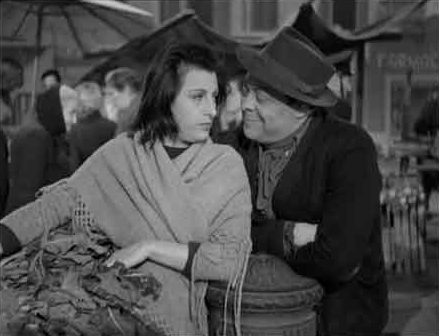
Two popular comedies of 1943 are easy to pass over and should not be. In Mario Bonnard’s Campo de’ fiori Anna Magnani is Elide, a fruit-seller in love with a fishmonger who does not notice; the fishmonger is Aldo Fabrizi. In Mario Mattoli’s L’ultima carrozzella the two are together again, she a music-hall singer, he a cab driver.
Two years later the same two faces carried Roma città aperta, and Fabrizi’s first dramatic part — don Pietro, drawn from a priest killed in the Resistance — came directly out of those comedies. The cast of the most famous Italian film of the century was assembled in the market comedies of the year everything fell apart.
Sixteen railway wagons
On 8 September 1943 the armistice was announced, and within weeks the physical film industry stopped being in Rome.
At Cinecittà the Germans loaded all the remaining heavy equipment onto sixteen railway wagons bound for Germany. Luigi Freddi — the official who a decade earlier had built the studios and the state film school, and who had by then been released from prison — recovered ten of the wagons and had them taken to Venice. There, at the start of 1944, he organised for the Salò Republic a substitute for Cinecittà with three sound stages: it was called Cinevillaggio, and in a year and a half it completed four films. Few people followed it north. The Centro Sperimentale di Cinematografia, the school on via Tuscolana, refused to move at all.
The Mostra at Venice had already stopped: after the three wartime editions held away from the Lido — 1940, 1941 and 1942, later counted as not having taken place — there was nothing from 1943 to 1945. Scalera Film, one of the largest producers of the period, was moved to Venice in 1944 and returned to Rome after the war, where it was wound up in 1952.
Six thousand people
What happened next to Cinecittà is the part worth knowing, and it is not a film story.
In June 1944 Allied troops took the studios and used them as warehouses. In October they were handed to the international refugee organisations, and the sound stages became makeshift housing for six thousand displaced people. Cinecittà remained a refugee camp until 1955.
The largest film studio in Europe, built in 1937 and running at ninety-six films a year in 1942, spent the following decade as a place where people lived because they had nowhere else. Both facts belong to the same building, and the second is the one the tours do not mention.
The people of 1943, and the days we mark them
Each name below has two pages in our calendar, one for the birth and one for the death, and each comes round again every year on the day. The dates are taken from the Treccani Enciclopedia del Cinema and Dizionario Biografico degli Italiani and checked against a second, independent record — the archival authority file of the Italian Ministry of Culture or the Library of Congress. Where the records disagree, the page says so.
- Luchino Visconti, director of Ossessione — born 2 November 1906, Milan · died 17 March 1976, Rome
- Clara Calamai, actress, Giovanna in Ossessione — born 7 September 1909, Prato · died 21 September 1998, Rimini (year of birth disputed — see her page)
- Massimo Girotti, actor, Gino in Ossessione — born 18 May 1918, Mogliano · died 6 January 2003, Rome
- Vittorio De Sica, director of I bambini ci guardano — born 7 July 1901, Sora · died 13 November 1974, Neuilly-sur-Seine
- Anna Magnani, actress — born 7 March 1908, Rome · died 26 September 1973, Rome
- Aldo Fabrizi, actor — born 1 November 1905, Rome · died 2 April 1990, Rome
- Alberto Lattuada, director of Giacomo l’idealista — born 13 November 1914, Milan · died 3 July 2005, Orvieto
- Mario Camerini, director of T’amerò sempre — born 6 February 1895, Rome · died 4 February 1981, Gardone Riviera
One correction is worth recording here, because it is the kind of thing a reader should be able to check. Treccani’s cinema entry gives 1903 as Luchino Visconti’s year of birth. The archival authority record of the Italian Ministry of Culture gives 1906, as does the Library of Congress, and we have followed them. Clara Calamai’s year of birth is still unsettled — 1909 in most records, 1915 in Treccani — and her page carries the disagreement rather than hiding it.
Details
- Italian titles listed for 1943: 89 (the list compiled by Stefano Vigolo), against 96 distributed in 1942
- The armistice: announced 8 September 1943
- Cinecittà, October 1943: the remaining heavy equipment loaded onto sixteen railway wagons for Germany; ten recovered and taken to Venice
- Cinevillaggio, Venice: three sound stages, from early 1944; four films completed in a year and a half
- Centro Sperimentale di Cinematografia: refused to transfer to Venice
- Venice Mostra: nothing from 1943 to 1945
- Scalera Film: moved to Venice in 1944, back in Rome after the war, liquidated 1952
- Cinecittà, June–October 1944: Allied warehouses, then a camp for six thousand refugees, until 1955
- Ossessione: Luchino Visconti, 135 minutes, with Clara Calamai and Massimo Girotti
Where you can still stand
- Cinecittà, Rome — the studios emptied in 1943, with a 360° tour
- Centro Sperimentale di Cinematografia, Rome — the school that would not move
- Palazzo del Cinema, Lido di Venezia — dark from 1943 to 1945
- Italian cinema in 1942 — the year before, and the ninety-six films
- Istituto Luce — the archive that filmed the same years
Do you know more?
On this page we have published what can be seen and what we were able to verify. About the eighty-nine Italian films of 1943, and about what became of the people who made them after September, much is still missing from our files. If you know something — a photograph, a document, a programme, a memory told in your family, or a date we have got wrong — write to Sofia, who looks after these pages.
Write to Sofia
or send a message on WhatsApp
Please start your message with the title of this page, so it reaches the right file. Every contribution is checked against independent sources before it goes on the page, and we always say where a piece of information came from.
Frequently asked questions
How many Italian films were made in 1943?
The list of Italian releases for 1943 runs to eighty-nine titles, against ninety-six distributed in 1942. Most reached cinemas before the armistice of 8 September; after that date the industry was dismantled and moved north.
What happened to Cinecittà after 8 September 1943?
The Germans loaded the remaining heavy equipment onto sixteen railway wagons for Germany; ten were recovered and taken to Venice, where a substitute studio with three sound stages, Cinevillaggio, was set up for the Salò Republic. From June 1944 the Allies used Cinecittà as warehouses, and from that October it housed six thousand refugees, until 1955.
Why was Ossessione a scandal?
It was Visconti’s first film, taken without acknowledgement from an American novel, James M. Cain’s The Postman Always Rings Twice, and it showed a version of Italian life the regime did not want shown. Young critics praised it, Vittorio Mussolini walked out of the screening and the Catholic press called on the authorities.
Was there a Venice Film Festival in 1943?
No. After the three wartime editions of 1940, 1941 and 1942 — held away from the Lido and later counted as not having taken place — the Mostra was interrupted until 1946.
Sources
- Treccani, Enciclopedia del Cinema, entry Cinecittà — the sixteen railway wagons, the ten recovered by Luigi Freddi and taken to Venice, the Cinevillaggio with three sound stages set up at the start of 1944, the Allied warehouses of June 1944 and the six thousand refugees housed from that October until 1955.
- Treccani, Enciclopedia del Cinema, entries Ossessione and on Luchino Visconti — the undeclared source in James M. Cain, the running time, the cast, and the reception; and the entry Centro sperimentale di cinematografia for the refusal to transfer to Venice.
- Treccani, Dizionario Biografico degli Italiani, entry on Vittorio De Sica — I bambini ci guardano (1943), the collaboration with Cesare Zavattini and the judgement of the critics of the Italian Social Republic.
- Treccani, Enciclopedia del Cinema, entries on Anna Magnani, Aldo Fabrizi, Alberto Lattuada and Mario Camerini — Campo de’ fiori and L’ultima carrozzella, the route to Roma città aperta, and Giacomo l’idealista.
- Treccani, Enciclopedia del Cinema, entry Scalera film — the transfer to Venice in 1944, the return to Rome and the liquidation of 1952.
- La Biennale di Venezia, history of the Film Festival — the editions of 1940, 1941 and 1942 held away from the Lido and later considered not to have taken place; Treccani for the interruption from 1943 to 1945.
- The archival authority record of the Italian Ministry of Culture (SAN / SIUSA) and the Library of Congress Name Authority File — the birth and death years behind the anniversary pages linked above.
- The list of 1943 titles on which this article is based was compiled by Stefano Vigolo and sent to the editorial desk on 12 September 2026.