Partner ContentContent published in partnership with Cultural Heritage Online.
Between 1867 and 1913 the population of Riga rose from roughly 80,000 to half a million. The city had become the largest port of the Russian Empire and its fourth largest city, after Moscow, St Petersburg and Warsaw. People arrived in it from the countryside, and people left it for North America — and both movements happened under a state whose paperwork named them by a nationality most of them did not use. That is the reason a Latvian family history so often stalls at a single line on a passenger manifest.
Why the paper trail breaks, and where it resumes
Latvia did not exist as a state until 1918. A person who sailed before that date was recorded abroad as a subject of the Russian Empire, and the place he came from was written by a clerk who had never seen it spelled. The territory itself had passed under Polish-Lithuanian rule in 1581, Swedish in 1621 and Russian in 1710, and each administration left its own layer of place names on the same villages. A farmstead can therefore carry a German name in a church book, a Russian name in a census, and a Latvian name on a modern map.
The country is also not a single archival landscape. It divides into four historical regions — Vidzeme, Kurzeme, Zemgale and Latgale — whose rural architecture, confessional history and record-keeping differ enough that the Ethnographic Open-Air Museum of Latvia, founded in 1924, was built around exactly that division: over a hundred buildings were dismantled where they stood and re-erected on 87 hectares by Lake Jugla, arranged region by region. Latgale is Catholic and its villages carry wayside crosses; the coast has fishermen’s homesteads; inland Vidzeme has prosperous farms. Knowing which of the four a family came from narrows a search before a single name is typed.
What follows is the practical sequence, contributed by our partner: how to read the manifest as a finding aid rather than an answer, how to use a naturalization file to bridge two continents, and how to enter the Latvian archives once the names and places have been resolved.
From Passenger Lists to Latvian Archives: A Research Workflow for Reconstructing a Latvian Ancestor
A passenger manifest can look like the answer to a family-history question. It may give an ancestor’s age, occupation, last residence, nearest relative and destination in North America. It may even name Riga or another Latvian town. Yet the same person can appear elsewhere under a different first name, a shortened surname, another place name or a different country of origin. The manifest is therefore most useful as a map to the next record, not as a complete account of identity.
This is especially important in Latvian genealogy. A person born before Latvia became independent in 1918 may be recorded as coming from Russia. A town may appear under a German, Russian or Polish form. Latvian diacritics often disappeared in English-language records, and surnames were shortened or adapted after migration. The practical task is to show that these records describe the same person and then connect that person to a precise place, family and archival collection in Latvia.
Begin with the family in North America
Start with the most recent person whose identity is certain and work backwards. Before searching Latvian archives, collect the North American records that place the immigrant inside a family. Birth, marriage and death certificates are the foundation, but obituaries, cemetery records, church registers, draft cards, city directories and Social Security applications can add the details that make an archive search possible.
Create an identity sheet for the immigrant. Record every spelling of the name, the approximate birth date, religion, occupation, spouse, parents, siblings, addresses, arrival date and naturalization history. Keep the source beside each fact. A date copied from a family tree should not carry the same weight as a date on a contemporary civil record. Conflicting details should remain visible until another record explains them.
This preliminary work prevents a common mistake: searching a Latvian database for one modern spelling and concluding that the ancestor is absent. The correct record may be filed under a maiden name, a Latvian grammatical ending, a German-language place name or a spelling created by a clerk who heard the name once.
Use passenger lists as finding aids
The U.S. National Archives holds passenger arrival records for foreign arrivals from approximately 1820 through December 1982, although there are gaps. Depending on the period, a manifest may show nationality, birthplace, last residence, ship and arrival date, occupation, the relative left behind and the person the passenger intended to join. Later manifests are often far more informative than a simple index entry.
Read the entire manifest page, including the second page when columns continue across two images. Then examine nearby passengers. Relatives, neighbours and people from the same parish often travelled together. A companion’s record may preserve a place name or family contact that the ancestor’s own line records poorly.
Country labels need historical interpretation. Russia may describe the state that controlled the territory at the time, not the family’s language or later nationality. Courland or Livonia may identify a historical region. Riga may be the actual birthplace, the nearest recognisable city or the port connected with departure. Copy the wording exactly before converting it to a present-day Latvian place.
Build the naturalization timeline
Naturalization files often provide the bridge between an arrival record and a Latvian record. A declaration of intention or petition may identify a former name, birthplace, birth date, spouse, children, address, ship and date of arrival. The documents may also establish when the person became a U.S. citizen, a fact that can matter when a later legal process depends on the sequence of migration and citizenship events.
The search is jurisdiction-specific. Before September 1906, municipal, county, state and federal courts could naturalize applicants. State and local records may now be held by a state archive, county court or historical society. Federal court records are usually associated with the National Archives facility serving that court. There is no single central index covering every naturalization.
For records created after 27 September 1906, the paper trail may also continue through the former Immigration and Naturalization Service. USCIS maintains Certificate Files for many naturalizations from late September 1906 through March 1956, while later records may be held in Alien Files. A negative search from one repository proves only that the record was not found there. It does not establish that the person never naturalized.
Resolve names and places before searching Latvia
Prepare two controlled lists. The first should contain name variants: the spelling found in Latvia, versions without diacritics, maiden and married surnames, shortened forms and English equivalents of given names. The second should contain place variants: the wording in the foreign record, possible historical forms, the modern Latvian name, and the parish or municipality that may have kept the record.
Do not convert names mechanically. Jānis may appear as Janis, John or Johann, but the correct identification still depends on dates, relatives, residence and other evidence. The same caution applies to surnames. Latvian masculine and feminine endings can change the visible form, while clerks abroad may have removed endings or written names phonetically.
Religion is often the detail that opens the correct collection. Latvian church books are organised by denomination and parish, and historical entries may be written in German, Russian, Polish, Latin or Latvian. The Latvian National Archives recommends gathering a person’s name, maiden name where relevant, residence, approximate dates and places of birth, marriage and death, together with religious affiliation, before beginning a church-book search.
Search Raduraksti by collection
Raduraksti, the virtual reading room of the National Archives of Latvia, provides digitised material from the State Historical Archives. Its collections include church books, census material and revision lists. Its databases also cover Riga prefecture passports, University of Latvia students and people deported during the Soviet period. Access requires registration, and much of the material consists of handwritten images rather than fully searchable text.
Search by place and period before relying on a surname index. Once the likely parish and denomination are known, browse the relevant register around the estimated year. A birth or baptism entry may identify parents, residence and godparents; a marriage entry can connect two families; a death entry may provide age or birthplace. Record the archive, collection, file, page or image number exactly as displayed. A screenshot without its archival reference is difficult to verify later.
If the handwriting is unclear, keep the uncertain reading separate from the image. Compare letters with other entries written by the same clerk and look for repeated place names. The National Archives notes that specialists may provide a paid reading service for difficult entries. Guessing a surname and then repeating that guess across a family tree can send every later search in the wrong direction.
Separate genealogical clues from official evidence
An online index, family tree or passenger-list image can be excellent research evidence without being the document required for an official procedure. The distinction concerns both content and form. A record may identify the right person but fail to prove the particular fact an authority must decide. A digital image may guide the search, while a certified archival statement or civil-register extract is needed for submission.
For example, Latvia’s Office of Citizenship and Migration Affairs lists civil-status records, 1935 census information, tax or military files and a pre-war Latvian citizen’s passport among the documents that may prove membership in the Latvian citizenry on 17 June 1940. The authority separately requires documents connecting the applicant to that ancestor. Foreign birth, marriage and name-change records may need authentication and Latvian translation. The precise set depends on the legal category and the country that issued each document.
Families who intend to use the reconstructed record trail for a Latvian citizenship by descent assessment should identify the applicable legal route before ordering certified copies. A passenger list may help prove identity or departure history, but it is not a substitute for evidence of pre-war citizenship, exile, ethnicity or kinship when one of those facts controls the application.
Keep a research log that another person can audit
A useful research log contains more than links. For each record, note the repository, collection, date accessed, exact name and place forms, relatives named, archival reference, and the question the record answers. Add a short discrepancy note where dates or spellings differ. This makes it possible to distinguish a real conflict from an ordinary variation and prevents the same unsuccessful search from being repeated months later.
The strongest family reconstruction rarely rests on one perfect document. It develops through independent records that converge on the same person: a manifest names the last residence, a naturalization petition supplies the arrival date, a marriage record identifies the parents, and a Latvian parish entry places the family in a specific locality. Each source has limitations, but together they can produce a documented chain that is clear enough for another researcher, archive or authority to follow.
A practical order of work
- Start with the closest confirmed generation and obtain civil records linking each parent and child.
- Create an identity sheet listing every name, date, place, relative, religion and occupation found in the evidence.
- Read the complete passenger manifest and inspect travelling companions rather than relying on the index entry.
- Locate declarations, petitions and other naturalization records in the correct federal, state, county or USCIS repository.
- Translate historical place names into a modern Latvian locality and identify the likely parish and denomination.
- Search Raduraksti by collection, place and date, preserving complete archival references for every image.
- Order certified archival or civil records only after confirming what fact and document format the final purpose requires.
- Reconcile differences in names and dates with an evidence table instead of silently choosing one version.
The result should be more than a family story and less than a pile of documents. It should be a traceable explanation of who the ancestor was, where the family lived, how the name changed, which records connect the generations and what each source actually proves.
Sources used in this article
- National Archives of Latvia: Recommendations for Family Researchers
- National Archives of Latvia: Genealogical Research
- Raduraksti: Virtual Reading Room
- U.S. National Archives: Passenger Arrival Records
- U.S. National Archives: Naturalization Records
- Office of Citizenship and Migration Affairs: Latvian Exiles and Their Descendants
- Office of Citizenship and Migration Affairs: Citizens on 17 June 1940 and Their Descendants
- Office of Citizenship and Migration Affairs: Latvians and Livs
- Latvian Ministry of Foreign Affairs: Legalisation of Documents
- U.S. Department of State: Apostille Requirements
Taras Horbatiuk is the Founder and Managing Partner of Bimaris Legal. His work includes Latvian citizenship matters, archival research and the preparation of foreign civil documents for use in Latvia and the wider Baltic region.
The date the paperwork keeps returning to
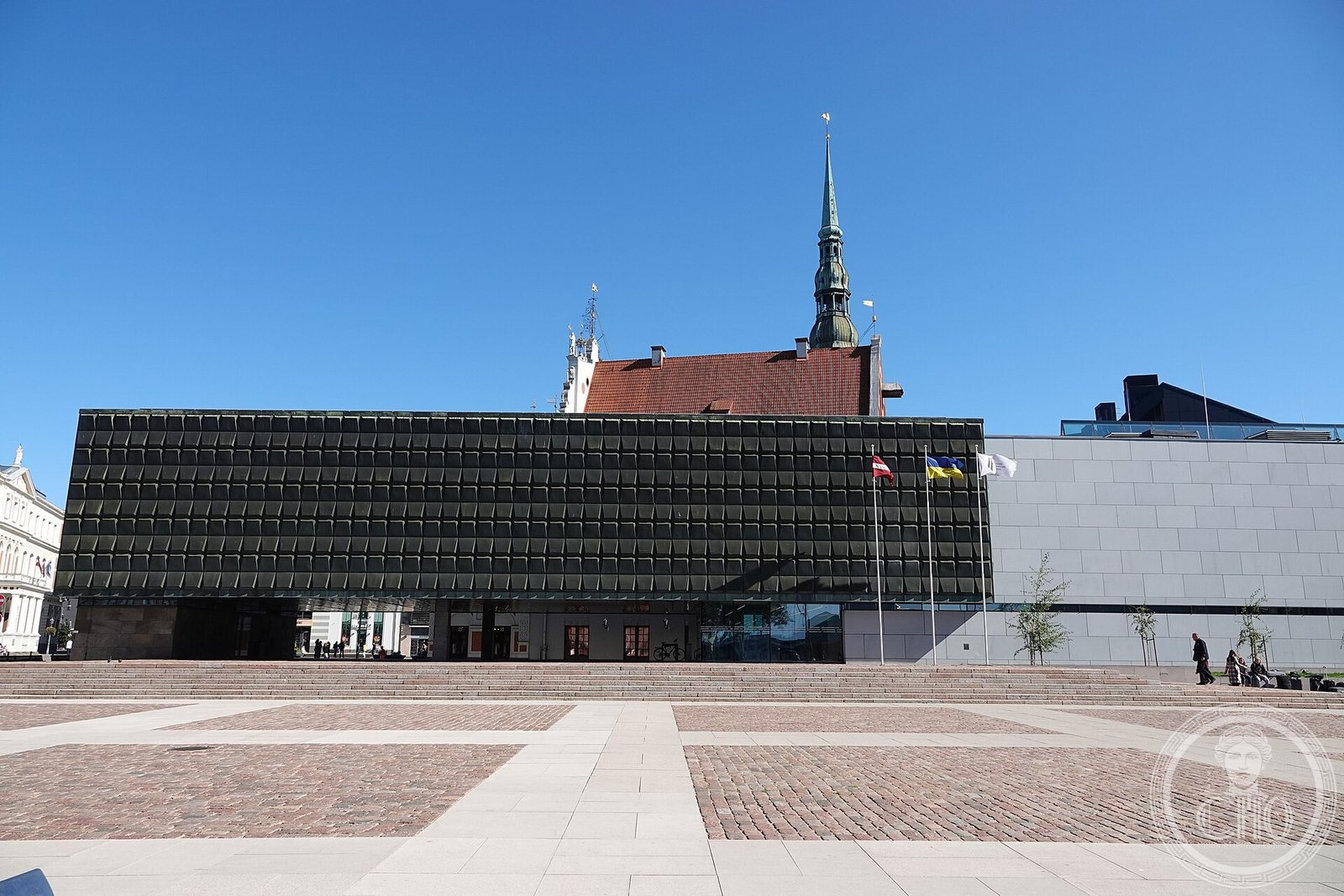
17 June 1940 recurs in the procedure above because it is the day Latvia stopped being able to keep its own records. The country was incorporated into the Soviet Union under the terms of the Molotov–Ribbentrop Pact; mass deportations to Siberia began in June 1941; the Nazi invasion followed within weeks and brought three years of occupation and the near-total annihilation of Latvia’s Jewish community; Soviet forces returned in 1944 and stayed until independence was restored in August 1991. Three occupations, fifty-one years, and a population scattered far enough that a descendant may now be looking for it from Wisconsin or Ontario.
The Museum of the Occupation of Latvia exists because that diaspora refused to let the record go. Founded in 1993, two years after independence, it was assembled around collections held by the Latvian exile community in the United States and West Germany — material carried out of the country, kept in private houses abroad for half a century and brought back. The Latvian state took responsibility for the institution in 2011. It now holds more than 200,000 objects, documents and testimonies, including deportees’ personal effects packed in haste before forced removal, and a reconstructed deportation cattle-wagon.
For anyone following the workflow above, this matters in a specific way. The families whose papers are now being reconstructed from American county courthouses are frequently the same families whose belongings are in that collection. The archive and the family history are two ends of one displacement.
Where the search leads once the file is closed
A reconstructed line usually ends with a parish, a farmstead and a town — and those can be visited. The four regional groupings at the open-air museum on Lake Jugla are the nearest thing to seeing the building a family actually left: the interiors are furnished with linen looms, clay ovens and carved furniture, and the forges and weavers’ workshops still work.
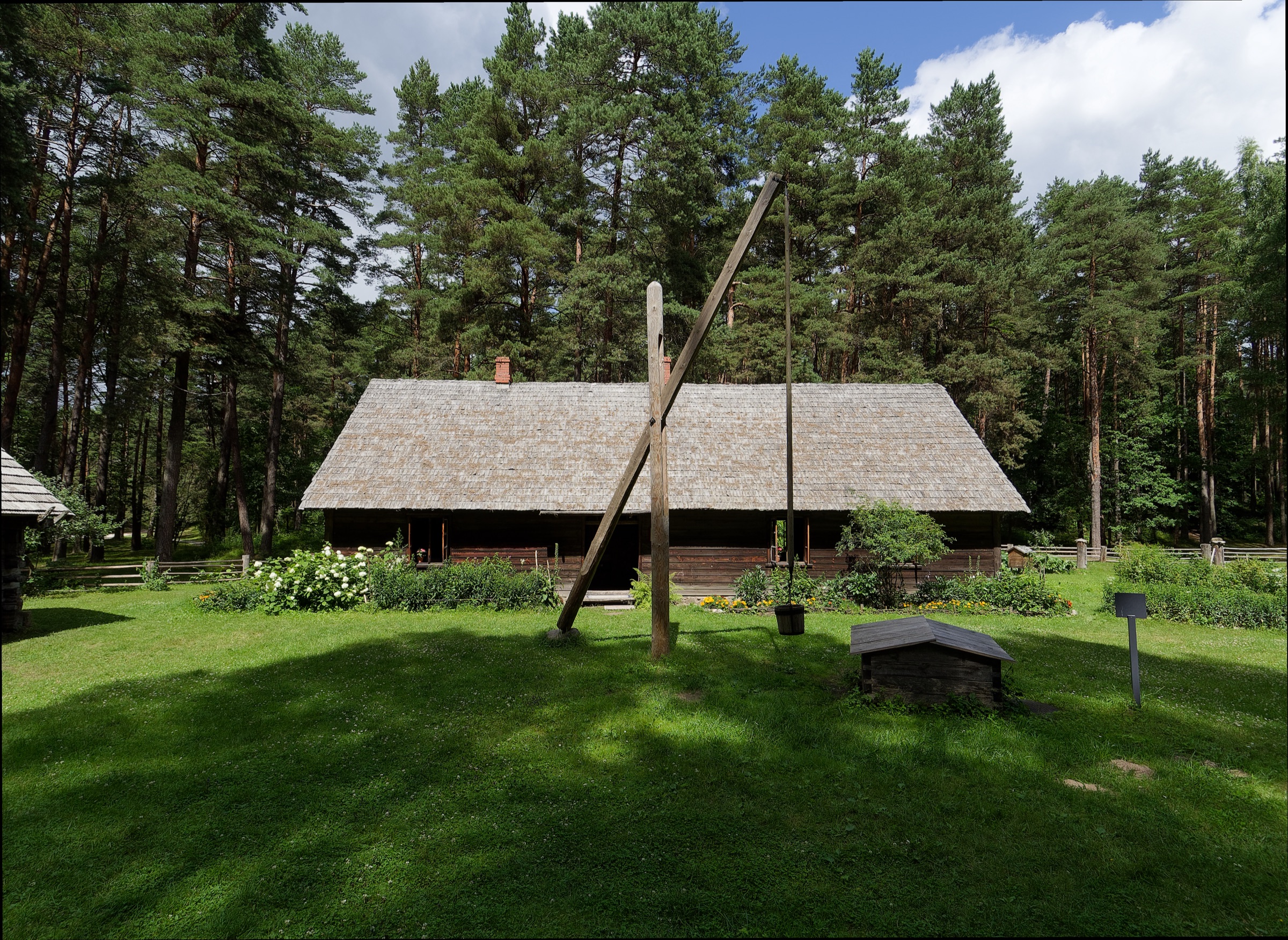
The farmhouse at the head of this article is a case in point. It was built in 1884 at Lūžņa, on the Livonian Coast, and moved to the museum in 1971 — a house from one of the small Livonian-speaking fishing villages along the Kurzeme shore. A researcher whose line runs back to that coast is dealing with a community the Latvian authorities treat as a distinct category in citizenship matters, which is why the Office of Citizenship and Migration Affairs publishes a separate page for Latvians and Livs. The archival question and the building are the same history seen from two sides.
The Riga a departing emigrant passed through is largely still standing. The Historic Centre of Riga was inscribed by UNESCO in 1997, and the inscription deliberately covers two things at once: the medieval Hanseatic old town, and the Art Nouveau district built during precisely the boom years — roughly 1896 to 1913 — when the emigration was at its height. Around 800 Art Nouveau and Jugendstil buildings survive there, the largest concentration in any city in the world. The most extravagant stand on Alberta iela, several of them by Mikhail Eisenstein (1867–1921), father of the film director: number 4 with its rooftop lions and Gorgon heads, number 6 with its red brick avant-corps, and at number 11 the grey National Romanticism of Eižens Laube — a different argument about what a Latvian building should look like, made on the same street.
An ancestor who left in 1905 would not have recognised those façades as heritage. They were new construction, the visible surface of the boom that made the city too expensive and too crowded to stay in.