
Barcelona, Catalonia · 1549–1557 · Monument d’Interès Nacional
At a glance
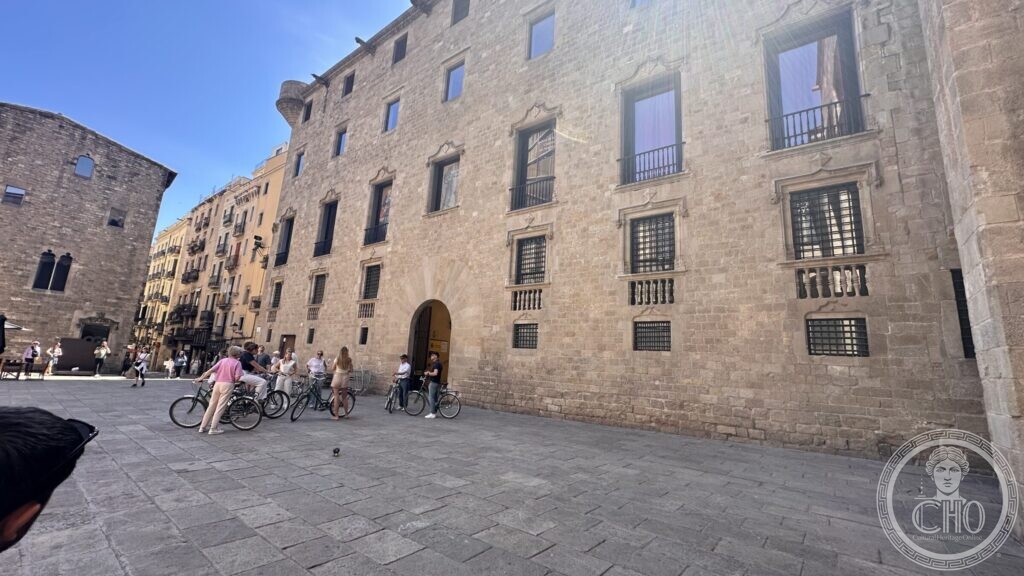
Plaça de Sant Iu is the hinge between the cathedral and the old royal palace. On one side the apse, on the other a long front of Montjuïc stone with a great arched doorway: the Palau del Lloctinent, built in the middle of the 16th century to house the lieutenant — the viceroy — of Catalonia. From 1853 it held the Archive of the Crown of Aragon, and it still carries the archive’s name over the door.
Key facts
- Built: 1549–1557, by the master builder Antoni Carbonell, in stone from Montjuïc
- Ordered by the Corts held at Montsó in 1547 under Emperor Charles V, as an extension of the Palau Reial Major
- Purpose: the residence of the Viceroy of Catalonia
- Five floors and two basements around a planted central courtyard
- A tower on one side, the Mirador del Rei Martí
- Beneath it: Roman (1st century AD), palaeo-Christian (5th–6th) and medieval (8th–11th) archaeology, one layer on another
- Listed as a Monument d’Interès Nacional and in Barcelona’s catalogue of historic and artistic buildings
- Reopened after restoration in January 2007, for teaching, research and guided visits
- Coordinates: 41.3841228, 2.1768790
What you see
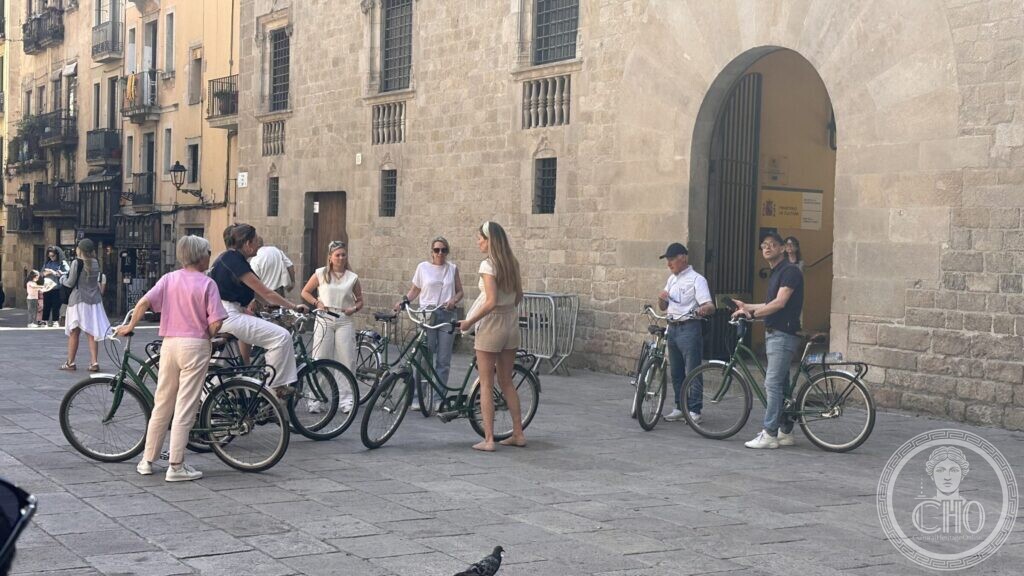
The wall is the thing. It runs almost without ornament, with windows cut high and small, and it gives the square its shade for most of the afternoon. Guided groups stop here because it is one of the few places in the quarter wide enough to stand in; on a weekday morning the arch is a parking spot for bicycle tours, and the doorway behind them leads to the courtyard and its staircase.
The archive itself moved its working collections out in 1994, to a new building on Carrer Almogàvers. What stayed is the older half of the job: the historic seat, the exhibition room that explains the archive and its holdings, and a set of rooms that can be visited. It is a rare case of a medieval quarter where the institution left and the building did not go to hotels.
Photographs

Practical information
- The square is public. The palace courtyard and its historic rooms open for free and guided visits — check the Archive of the Crown of Aragon for times.
- Plaça del Rei is a minute away, through the passage past the cathedral apse.
Sources
- Ministerio de Cultura, Archivo de la Corona de Aragón — «Edificis»: construction 1549–1557 by Antoni Carbonell in Montjuïc stone, the 1547 decree of the Corts of Montsó under Charles V, the viceroy’s residence, the layered archaeology, the Mirador del Rei Martí, the listing as Monument d’Interès Nacional, the January 2007 reopening, and the 1994 move of the working archive to Carrer Almogàvers
Record researched and written by Luigi De Marchi for Cultural Heritage Online, 2026.
Find it on the map
See this place and what’s around it →📷 Become a Cultural Heritage Online photographer
Share your photos of places: they stay published under your name as the author. The more they're seen, the more you get noticed — and soon a contest will reward the most appreciated photos.
Log in or sign up free to add a photoIs this page about you?
This page is read by travellers and heritage enthusiasts who find it on Google. Tell us how you are connected to this place and we will take it from there.