
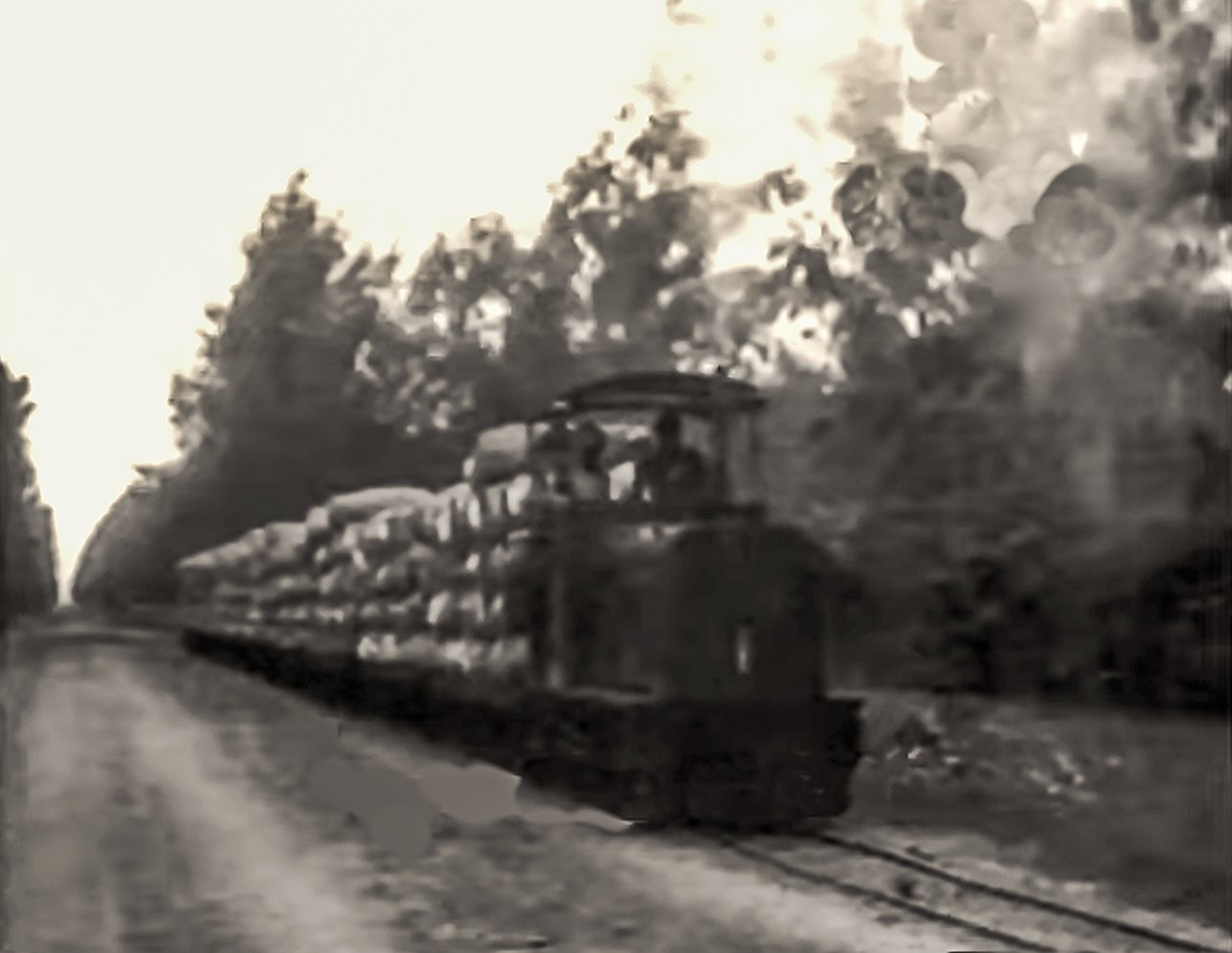
On the middle Shabelle, an Italian prince laid out a company town of plantations, factories and its own railway. Today it is the Somali city of Jowhar.
At a glance
Villaggio Duca degli Abruzzi — commonly Villabruzzi — was the most ambitious Italian settlement in Somalia. Luigi Amedeo of Savoy, Duke of the Abruzzi, founded it in 1920 on the middle course of the Shabelle River as the estate of the Società Agricola Italo-Somala (SAIS). Around irrigated plantations of sugar cane and cotton the Duke built dams, roads, a railway, schools, hospitals, a church and a mosque, so that by 1926 the colony counted sixteen villages. It was the most agriculturally developed part of Somalia before the Second World War. The town is called Jowhar today.
Key facts
- Founded: 1920, by Luigi Amedeo of Savoy, Duke of the Abruzzi
- Operator: Società Agricola Italo-Somala (SAIS)
- River: middle Uebi Scebeli (Shabelle)
- Built: dams, roads, a light railway, schools, hospitals, a church and a mosque
- Crops: sugar cane and cotton on irrigated plantations, plus food industries
- 1926 scale: sixteen villages, about 3,000 Somali and 200 Italian residents
- Names: Villaggio Duca degli Abruzzi / Villabruzzi; today Jowhar, capital of Middle Shabelle
History
Luigi Amedeo of Savoy, the Duke of the Abruzzi, was a mountaineer and polar explorer before he turned to colonial agriculture. He first reached Africa in 1905 and in 1920 founded a farming settlement on the middle Shabelle, backed by the Società Agricola Italo-Somala. The estate was conceived as a self-contained agro-industrial colony: irrigated plantations of sugar cane and cotton, workshops and food industries, and the infrastructure to serve them. The Duke raised funds to build dams, roads, a railway, schools, hospitals, a church and a mosque; by 1926 the settlement had grown into sixteen villages holding roughly 3,000 Somali and 200 Italian inhabitants.
The place became the most agriculturally developed part of pre-war Somalia. A 1935 newsreel shows its signature economy in motion: cotton pressed into bales and carried on the estate’s narrow-gauge railway to a collection point. When the colonial state created the Regia Azienda Monopolio Banane (RAMB) in 1936 and reorganised the banana trade toward the coast, it terminated the inland colonisation consortia, Villabruzzi among them, and export dominance passed to the Genale–Merca district downstream.
As with the other colonial estates, the output rested on a coerced labour system: Somali farmers were pressed into plantation work, and forced labour spread through the hut tax. The Italian settlement dissolved after the Second World War. The trusteeship years and early independence kept much of the fabric in use; the state collapse of the 1990s did not. Jowhar is now a Somali city built on an Italian plan.
What you see
The surviving record is photographic rather than standing. A 1937 photograph of the Villabruzzi railway station shows a low building under a corrugated roof, its signboard reading “Villaggio Duca degli Abruzzi,” a goods wagon on the siding and colonial staff posed on the track — the hub of the light railway that tied the plantations to the mills. A 1938 postcard records the estate hotel, a long single-storey block with a deep veranda, a car and a motorcycle drawn up outside.
The 1935 newsreel frame used here completes the picture: a small locomotive hauling flat wagons piled with cotton bales down a tree-lined embankment. Together the images document a planned landscape of production — rail, plantation and factory — transplanted whole from Italy’s own company and reclamation towns to the Horn of Africa.
Practical information
- Access: Jowhar and Middle Shabelle are affected by insecurity; the site is not open to visitors, and this card is an archival record rather than a travel guide.
- Today: Jowhar is the capital of the Middle Shabelle region, a Somali city of tens of thousands.
- Best sources: the historic photographs on Wikimedia Commons and the literature listed below.
Getting there
Jowhar lies on the middle Shabelle about 90 kilometres north of Mogadishu. The colonial settlement occupied the same ground as the modern town. Because of the security situation in Middle Shabelle, the area is not currently reachable by travellers; the location is given for reference and mapping.
Nearby
- The Genale barrage and irrigation district: the downstream banana district that took over export dominance after 1936.
- Mogadishu: the colonial capital, about 90 km to the south.
- Shabelle River: the watercourse both schemes were built to divert and irrigate.
Sources
- “Jowhar,” English Wikipedia — foundation in 1920 by the Duke of the Abruzzi, the dams, railway, schools, hospitals, church and mosque, the sixteen villages of 1926, and the settlement as the most agriculturally developed part of pre-war Somalia.
- Diana Garvin, “Fruit of Fascist Empire: Bananas and Italian Somaliland,” The Italianist (2023) — the 1936 RAMB reorganisation that terminated the inland colonisation consortia and the labour system behind the plantations.
- Historic photographs: Giornale Luce B0600 (1935, Istituto Luce), the Villabruzzi railway station (1937) and estate hotel (1938), Wikimedia Commons.
Find it on the map
See this place and what’s around it →Record researched and written by Luigi De Marchi for Cultural Heritage Online, 2026.
_b.jpg)
📷 Become a Cultural Heritage Online photographer
Share your photos of places: they stay published under your name as the author. The more they're seen, the more you get noticed — and soon a contest will reward the most appreciated photos.
Log in or sign up free to add a photo