
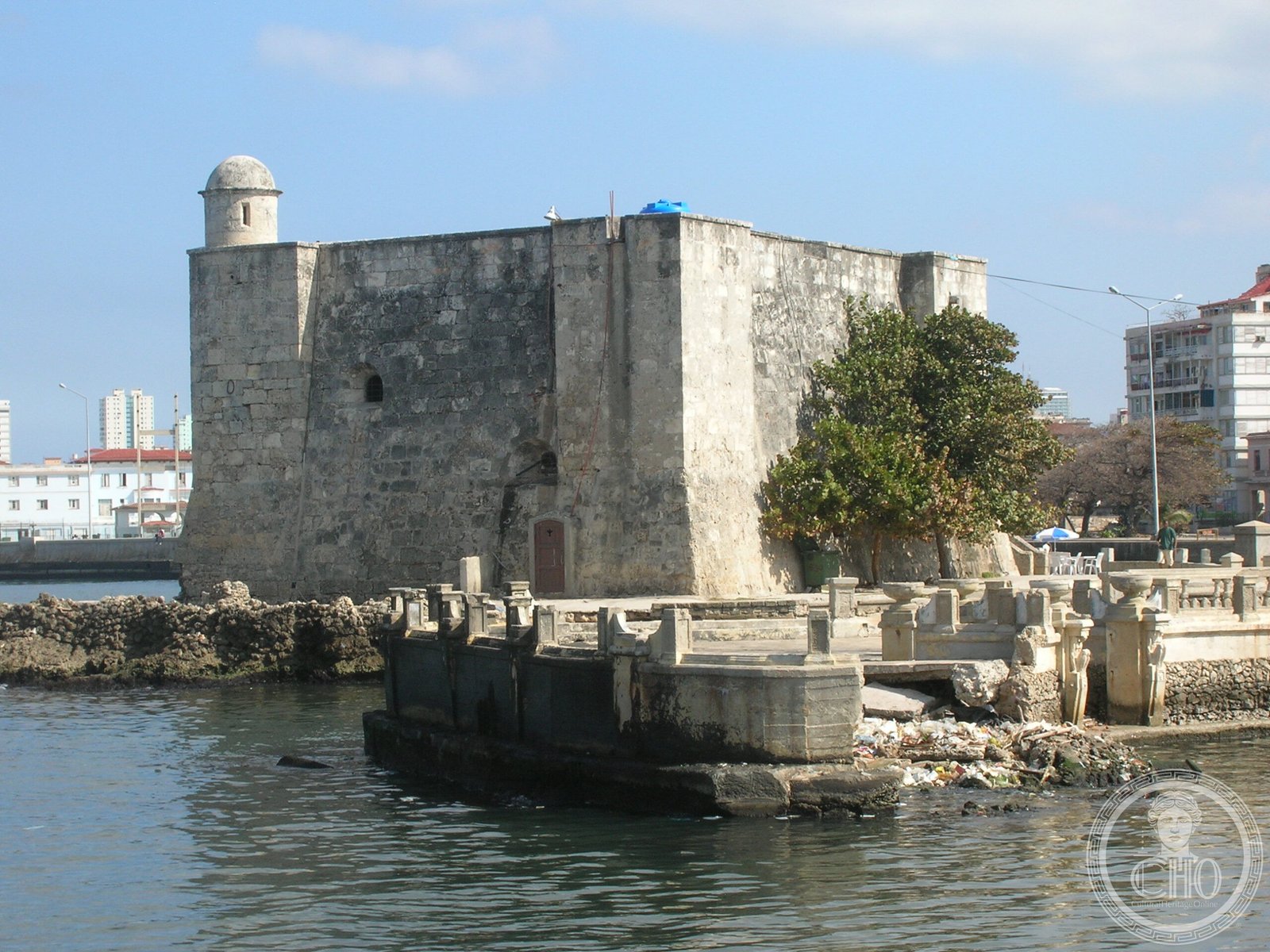
A sentinel fortress on a coral islet guarding the mouth of the Almendares River, this 17th-century tower has watched over Havana’s harbour for nearly four centuries, surviving British bombardment and restoration to become a landmark of Spain’s American empire.
At a glance
The Torreón de la Chorrera—formally the Fuerte de Santa Dorotea de la Luna de la Chorrera—stands on a small coral islet metres from the shore. Completed in May 1646, it was designed to block enemy naval access to the Almendares River mouth. Today it houses a restaurant.
History
Construction finished in 1646 during Spain’s consolidation of control over Cuba. The British damaged and captured the tower when they took Havana in 1762. Following their occupation, Spanish forces rebuilt the fortress in its present form. In 1982, UNESCO inscribed the Torreón as part of Old Havana’s World Heritage site, recognising the city’s role in European conquest of the Americas.
What you see
The tower rises from a coral foundation barely larger than the structure itself. Its austere design reflects practical defensive needs rather than architectural ornament. Whitewashed masonry and a compact footprint typify 17th-century Caribbean fortifications.
Cultural significance
The Torreón embodies Havana’s strategic importance during the colonial period. It exemplifies the defensive architecture Spain deployed across the Caribbean to protect trade routes and colonial possessions. Its survival through warfare and centuries of maritime change makes it tangible evidence of European imperial ambition in the New World.
Key facts
- Country: Cuba
- Completed: May 1646
- UNESCO World Heritage Site: 1982 (as part of Old Havana)
- Coordinates: 23.13°N, 82.41°W
- Current use: Restaurant
Practical information & getting there
The Torreón sits on a small islet in Havana Harbour, accessible from the waterfront. Its location within the UNESCO-listed old city means you can visit as part of wider exploration of colonial Havana’s fortifications and historic districts. Check locally for opening hours and restaurant reservation details.
Sources & resources
Find it on the map
See this place and what’s around it →📷 Become a Cultural Heritage Online photographer
Share your photos of places: they stay published under your name as the author. The more they're seen, the more you get noticed — and soon a contest will reward the most appreciated photos.
Log in or sign up free to add a photoIs this page about you?
This page is read by travellers and heritage enthusiasts who find it on Google. Tell us how you are connected to this place and we will take it from there.