

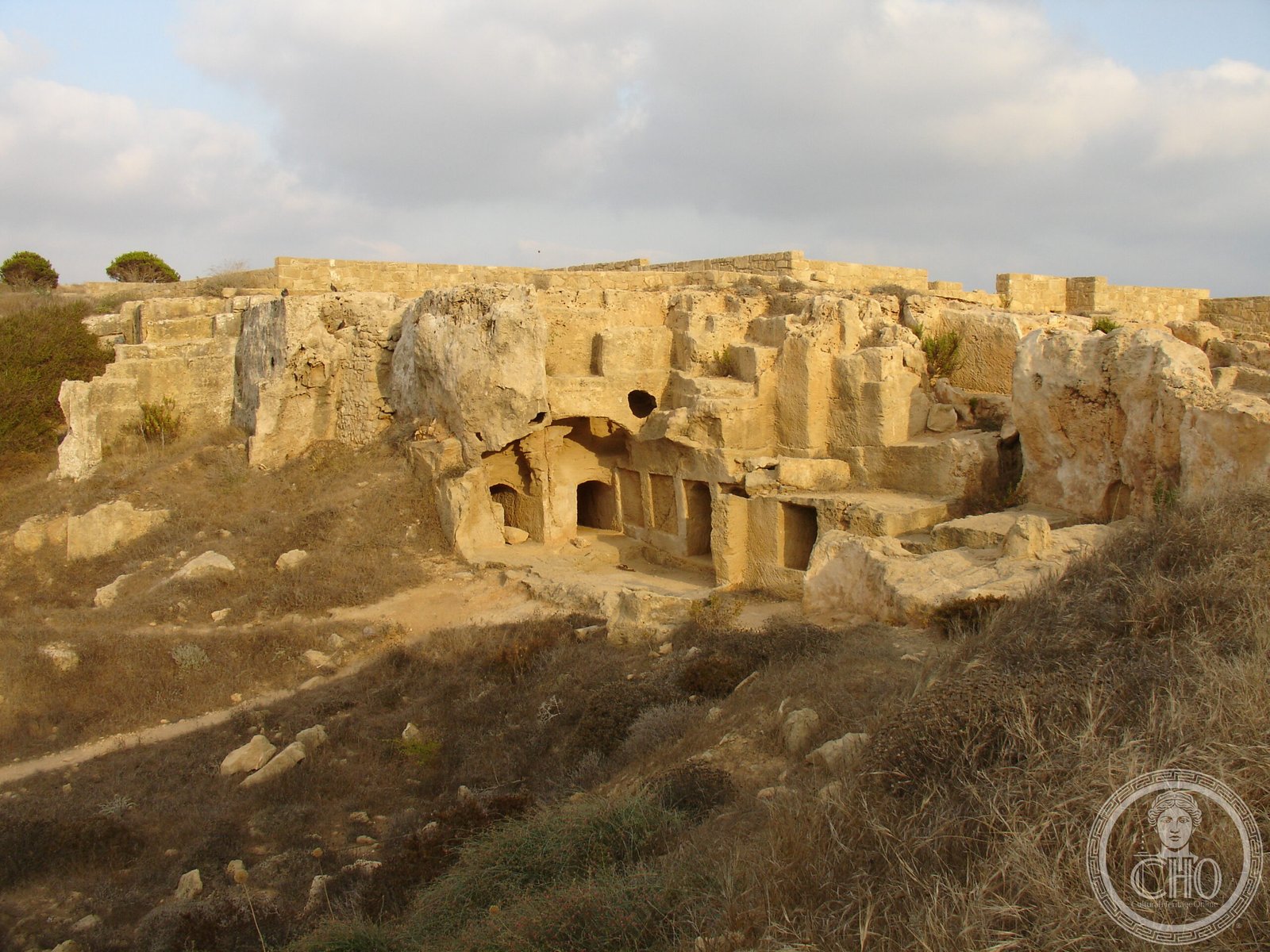
A monumental rock-cut necropolis north of Paphos, housing the burials of Cypriot aristocrats and officials across nearly seven centuries. Carved with Doric columns and frescoed walls, these underground tombs reveal the wealth and architectural ambitions of the ancient Paphian elite.
At a glance
The Tombs of the Kings is a large necropolis approximately 2 kilometres north of Paphos harbour. The underground tombs, many dating to the 4th century BC, are carved from solid rock and served as burial sites for Paphian aristocrats and high officials until the 3rd century AD. Despite their name, no kings were buried here; the designation reflects the magnificence of the tombs themselves.
History
The tombs have been known and casually explored for centuries. Richard Pockocke provided the earliest modern written account in 1783. Formal archaeological work began in 1870 under Luigi Palma di Cesnola, the American consul to Cyprus. The first scientifically supervised excavations took place in 1915, led by Menelaos Markides, curator of the Cyprus Museum.
Systematic excavation resumed in the late 1970s and 1980s under Sophocles Hadjisavvas, former director of Cyprus’s Department of Antiquities. His work revealed a connection between Tomb 8 and the Ptolemaic dynasty, notably the burial of Cyprus’s final Hellenistic king, who committed suicide following the Roman occupation of the island. Much archaeological evidence was lost to grave robbers over centuries, though Rhodian amphorae with manufacturing stamps have proven invaluable for dating materials from the Hellenistic and early Roman periods across the Eastern Mediterranean.
What you see
The tombs are carved directly into native rock, some imitating the layout and structure of contemporary houses. Architectural details include Doric columns and frescoed walls. The underground chambers vary in scale and complexity, reflecting the status of those interred within. Archaeological excavations continue to reveal new details about construction techniques and burial practices.
Cultural significance
These tombs provide crucial evidence for understanding elite society in Hellenistic and early Roman Cyprus. The practice of depositing Rhodian amphorae in burials has allowed scholars to establish more secure chronologies for archaeological material across the Eastern Mediterranean. The site demonstrates the enduring architectural sophistication of Paphian culture and the profound disruption caused by Roman conquest.
Key facts
- Country: Cyprus
- City: Paphos
- Period: 4th century BC–3rd century AD
- Coordinates: 34.775°N, 32.407°E
- UNESCO World Heritage Site: Designated 1980 (as part of Paphos)
Practical information & getting there
The Tombs of the Kings are located approximately 2 kilometres north of Paphos harbour along the northern coast of Cyprus. The site remains under archaeological investigation. For current visiting hours, entry fees, and accessibility information, contact the Cyprus Department of Antiquities or the local Paphos tourism authority.
Sources & resources
Find it on the map
See this place and what’s around it →📷 Become a Cultural Heritage Online photographer
Share your photos of places: they stay published under your name as the author. The more they're seen, the more you get noticed — and soon a contest will reward the most appreciated photos.
Log in or sign up free to add a photo