Susa (Greek: “Σοῦσα”, from the Elamite “Shush” — the name probably connected to the Elamite word “shush” or to the word for the “lily” flower, the ancient symbol of the city — the modern city is called “Shush” in Persian, and the modern Iranian province of Khuzestan takes its name from the Aramaic “Khuzistan”, meaning “land of the Khuz people”, the Aramaic designation for the Elamite population of the region), inscribed by UNESCO in 2015, is one of the oldest continuously inhabited cities in the world — an archaeological site in the Khuzestan Province of southwestern Iran where human settlement is documented from approximately 4200 BCE (the “Susa I” pottery period, one of the most technically and artistically accomplished pottery traditions of the prehistoric Near East) through the Elamite, Achaemenid, Seleucid, Parthian, Sassanid, and Islamic periods to the present day, creating an approximately 6,000-year continuous record of urban life at a single location. Susa occupies a strategic position at the confluence of the Shaur and Dez rivers on the Susiana plain (the alluvial lowland of Khuzestan that forms the Iranian extension of the Mesopotamian floodplain), approximately 230 km east of Basra (Iraq) and approximately 150 km from the Persian Gulf, in a position that gave it simultaneous access to the riverine trade networks of Mesopotamia and the highland resources (metals, timber, horses) of the Iranian plateau via the Zagros mountain passes. The site of Susa is composed of four main mounds (“tells” — the characteristic stratified mounds of Near Eastern archaeological sites, formed by the successive superimposition of construction phases over thousands of years): the Acropolis mound (the “Tell de l’Acropole” — the oldest and highest of the four mounds, site of the prehistoric Susa I and II occupation, approximately 36 m high above the surrounding plain); the Apadana mound (the “Tell de l’Apadana” — the site of the Achaemenid royal palace of Darius I, approximately 30 m high); the Royal City mound (the “Tell de la Ville Royale” — the site of the Elamite Middle period city and the Achaemenid administrative city); and the Artisan Quarter mound (the “Tell des Artisans”).
Susa’s archaeological significance and the five millennia of urban life Acropolis Mound · Apadana Palace Darius · Shush Castle · Ahvaz 80 km · Tchogha Zanbil 40 km
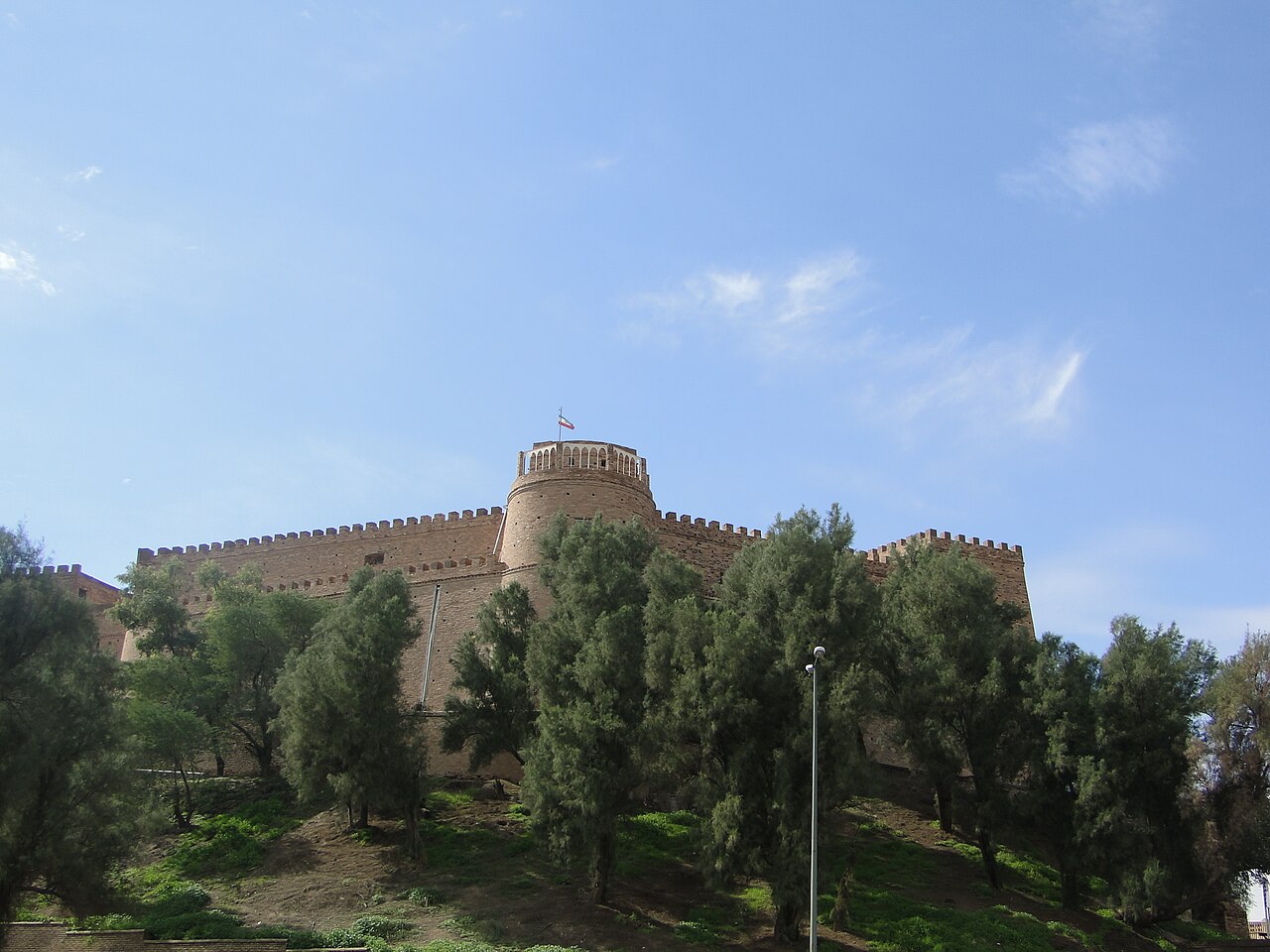
The archaeological significance of Susa in world history is extraordinary, primarily because of the accumulation of extraordinary artifact discoveries at the site in nearly continuous excavation since 1884 CE: (1) the Hammurabi Code stele (the most famous single artifact from the ancient Near East — the approximately 2.25 m high black-diorite stele inscribed with the law code of the Babylonian king Hammurabi, approximately 1754 BCE, which was looted from Babylon by the Elamite king Shutruk-Nahhunte approximately 1155 BCE and brought to Susa as war booty; discovered during the French excavations at Susa in 1901 CE and now in the Louvre in Paris, Inventory number Sb8); (2) the proto-Elamite tablets (approximately 10,000 clay tablets inscribed with the proto-Elamite script [a pictographic writing system approximately 3200–2900 BCE, one of the world’s earliest writing systems, which has not been deciphered] discovered at Susa in the Acropolis and Ville Royale mounds — one of the largest collections of proto-Elamite writing in the world); (3) the “Susa A” pottery (the painted ceramics of the Susa I period, approximately 4200–3800 BCE — tall beakers with geometric and animal designs painted in dark paint on a buff slip, considered among the most artistically accomplished prehistoric ceramics in the world; the best examples are in the Louvre and the National Museum of Iran in Tehran); (4) the Darius I statue (a life-size diorite statue of the Achaemenid Great King Darius I, found at Susa in 1972 CE during Iranian excavations, and now in the National Museum of Iran — the statue, whose base is inscribed in Egyptian hieroglyphs identifying Darius as pharaoh [indicating it was made in Egypt, probably at Memphis, and transported to Susa], is one of the few surviving large-scale sculptures of an Achaemenid king); and (5) the “Archer Frieze” tiles (the large-format glazed brick panel from the Darius I palace at Susa, showing two files of archers of the Persian royal guard in profile, in brilliant colours [blue, yellow, white, brown] on a white ground — one of the finest examples of Achaemenid glazed brick decoration, now in the Louvre and in the National Museum of Iran). The French Archaeological Mission at Susa (the “Délégation Archéologique Française en Iran” or DAFI) held a monopoly on archaeological excavation at Susa from 1897 to 1979 CE — the longest single-site excavation monopoly in the history of Middle Eastern archaeology. The “Château de Morgan” (Shush Castle) that dominates the Apadana mound was built by the French archaeologist Jacques de Morgan in 1897 CE as the expedition’s base camp and to protect excavation equipment; built in a neo-Gothic style from bricks recycled from the Achaemenid period walls of Susa (using 3,000-year-old Achaemenid fired bricks as construction material for a 19th-century European castle — an act of archaeological self-contradiction typical of the colonial-era approach to heritage), it has become the most recognisable landmark of modern Susa/Shush.
Practical information
The modern city of Shush (ancient Susa) is approximately 80 km north of Ahvaz (the capital of Khuzestan Province, with an international airport, AHZ, with connections to Tehran and several international destinations) and approximately 40 km northwest of the Tchogha Zanbil UNESCO site (making a combined Susa + Tchogha Zanbil visit an ideal 2-day Khuzestan UNESCO circuit). The Susa/Shush archaeological site is open daily (hours vary; typically 08:00–18:00 in season); entrance fee applies. The principal monument visible at the site is the Shush Castle (Château de Morgan), which houses a small museum of artifacts from the excavations. The Susa mounds can be walked (the Acropolis mound and Apadana mound offer the best views over the site and the surrounding Susiana plain), though the ancient palace structures have been reduced to foundations and walls by centuries of erosion and the intensity of the French excavations. The Tomb of Daniel (the “Daniyal-e Nabi” shrine — the traditional tomb of the Biblical prophet Daniel, considered a holy site by both Jews and Muslims, in the centre of the modern city of Shush, marked by a distinctive Khuzestan-style conical tile-covered dome) is a significant local pilgrimage site adjacent to the archaeological area. Best visiting months: October–April (the Khuzestan summer is extreme; temperatures regularly exceed 50°C June–August).
Frequently Asked Questions
What is the Hammurabi Code and why is the Susa stele so important in legal history?
The Code of Hammurabi (compiled approximately 1754 BCE by Hammurabi, the sixth king of the First Babylonian Dynasty, whose full reign was approximately 1792–1750 BCE and who unified Mesopotamia under Babylonian rule — a political achievement that made Babylon the dominant city of the Middle East for the next century) is the most complete surviving example of an ancient Mesopotamian “law code” — a collection of legal rulings, precedents, and social regulations inscribed in cuneiform script on a diorite stele and set up in a public place in the Babylonian capital (possibly in the temple of the god Marduk) where citizens could read and reference the law. The Hammurabi Code consists of a prologue (in which Hammurabi presents himself as a divinely appointed just king chosen by the gods Anu and Enlil to establish justice, protect the weak, and lead the people of Mesopotamia), 282 laws (covering commercial transactions, property ownership, family law, inheritance, wages and prices, liability for damage, and criminal penalties), and an epilogue (reaffirming the divine mandate of the laws and calling down curses on any future king who alters them). The laws are famous for their application of the “lex talionis” (“law of retaliation”) principle — “an eye for an eye, a tooth for a tooth” (the exact phrase in law 196: “If a free man has destroyed the eye of another free man, one shall destroy his eye”) — but also for the class-differentiated penalties they prescribe (the same act carries different penalties depending on the social status of the victim and the perpetrator: a free man, a commoner [mushkenum], and a slave receive different amounts of compensation or punishment for the same offense) and for the surprisingly sophisticated commercial and contract law they document (hundreds of the 282 laws deal with commercial transactions, partnerships, deposits, loans, and the obligations of merchants, agents, and innkeepers — evidence of a highly developed commercial economy in Babylonian Mesopotamia). The legal tradition represented by the Hammurabi Code influenced subsequent Near Eastern law codes (the Assyrian laws of approximately 1100 BCE, the Hittite laws of approximately 1200 BCE), and scholars have noted structural and linguistic parallels between the Hammurabi Code and the Biblical “Book of the Covenant” (Exodus 20–23) and other parts of the Torah — a connection that may reflect the common ancient Near Eastern legal tradition of which both Babylonian and Israelite law are branches.
What makes the proto-Elamite writing system significant in the history of writing?
The proto-Elamite script (approximately 3200–2700 BCE, the writing system used at Susa and other Elamite sites in the late 4th–early 3rd millennium BCE) holds a contested position in the history of writing because it represents one of the two or three earliest writing systems in the world, contemporaneous with or possibly slightly later than the Sumerian proto-cuneiform script that developed at Uruk in southern Mesopotamia, but apparently independent from it rather than derived from it. The problem with the proto-Elamite script is that it has resisted decipherment: despite approximately 80,000 proto-Elamite tablets from some 30 different sites (Susa holding the largest collection), and despite more than a century of scholarly effort, no one has successfully read the proto-Elamite script. The script consists of approximately 1,000 distinct signs (sign combinations suggest the number may be even higher), used primarily for administrative/accounting purposes (the tablets record quantities of goods, animals, and agricultural produce — the same administrative function as the earliest Sumerian proto-cuneiform tablets). The failure of decipherment stems from: (1) the unknown underlying language (Elamite was a language isolate — unrelated to any other known language family — but proto-Elamite may have been used to write either Elamite or a pre-Elamite language of the Susiana plain that has left no other trace); (2) the predominantly logographic/ideographic character of the script (the signs appear to represent words or concepts rather than syllables, making it impossible to reconstruct pronunciation without a bilingual text); and (3) the absence of any bilingual inscription comparable to the Rosetta Stone that allowed the decipherment of Egyptian hieroglyphs. The proto-Elamite script was eventually replaced by a “Linear Elamite” script (approximately 2200 BCE) and then by the Babylonian cuneiform adapted to write the Elamite language (approximately 2000 BCE onward). The proto-Elamite tablets are thus a fascinating but frustrating window onto a world whose language and contents we can partially infer (it was clearly an administrative accounting system) but cannot directly read.
EXCERPT: Susa, Iran, UNESCO-inscribed 2015, is one of the oldest continuously inhabited cities in the world (~4200 BCE to present) — the Elamite and Achaemenid royal capital from which the Hammurabi Code stele was looted to the Louvre, home to 10,000 undeciphered proto-Elamite tablets, and the Acropolis mound housing the 1897 Shush Castle built from recycled 3,000-year-old Achaemenid bricks.
META: UNESCO World Heritage Sites near Susa Iran: Tchogha Zanbil Iran 40 km southeast (UNESCO 1979), Shushtar Historical Hydraulic System 90 km north (UNESCO 2009), Persepolis Iran 350 km northeast (UNESCO 1979) — Susa Shush Iran UNESCO 2015, Hammurabi Code stele Louvre, Elamite civilization Khuzestan, proto-Elamite undeciphered script, Achaemenid Darius I palace, oldest city Iran 4200 BCE.
Sources
- S1 — UNESCO World Heritage Centre — Susa (Ref. 1455) — https://web.archive.org/web/20230601000000/https://whc.unesco.org/en/list/1455/
- S2 — UNESCO World Heritage Centre — Statement of Outstanding Universal Value (Ref. 1455) — https://whc.unesco.org/en/list/1455/
Spotted an error? Write to editorial@culturalheritageonline.com and we correct it the same day.