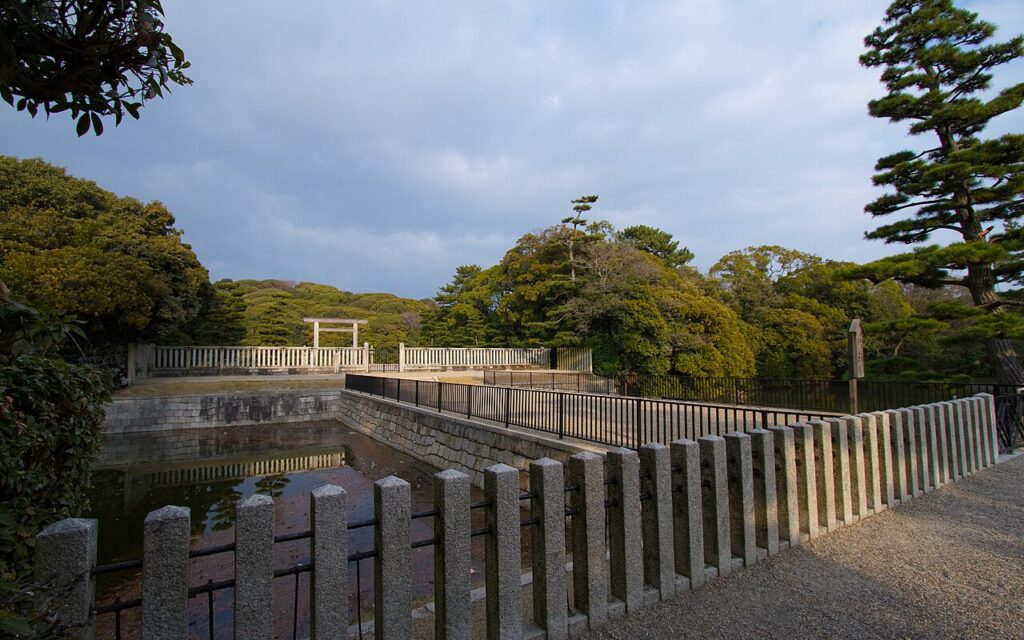
The Buddhist Monuments in the Horyu-ji Area lie 12 km from the Mozu-Furuichi Kofun Group as the crow flies, and the Historic Monuments of Ancient Nara 19 km. The Mozu-Furuichi Kofun Group is a serial property of 45 components containing 49 kofun, the large earthen burial mounds that gave the Kofun period of Japanese history its name. Inscribed in 2019, the mounds record the social structure and funerary practices of the Japanese archipelago between the 3rd and 6th centuries CE.
The World Heritage sites within reach of the Mozu-Furuichi Kofun Group
The distances below are straight lines between the reference points that UNESCO publishes for each property. They tell you what is close, not how long the journey takes by road or rail.
| Site | Country | Distance | Inscribed | Type |
|---|---|---|---|---|
| Buddhist Monuments in the Horyu-ji Area | Japan | 12 km | 1993 | Cultural |
| Historic Monuments of Ancient Nara | Japan | 19 km | 1998 | Cultural |
| Ancient Capitals of Asuka and Fujiwara | Japan | 19 km | 2026 | Cultural |
| Sacred Sites and Pilgrimage Routes in the Kii Mountain Range | Japan | 28 km | 2004 | Cultural |
| Historic Monuments of Ancient Kyoto (Kyoto, Uji and Otsu Cities) | Japan | 39 km | 1994 | Cultural |
| Himeji-jo | Japan | 78 km | 1993 | Cultural |
Read together, the nearest sites chart the shift from mounded tombs to wooden temples and from provincial power to a centralised state. The Mozu-Furuichi kofun belong to the 3rd to 6th centuries, before Japan became a centralised state under the influence of the Chinese legal system. Horyu-ji preserves wooden buildings from the late 7th or early 8th century that mark the arrival of Buddhist architecture. Nara was the capital from 710 to 784, and Asuka and Fujiwara were the two earlier capitals, from 588 to 710 CE, where key elements of that same centralised governance were introduced and consolidated.
Forty-nine mounds selected from 160,000
The Mozu-Furuichi Kofun Group stands on high ground above the Osaka Plain, arranged in two major clusters. UNESCO selected its 45 components and 49 kofun from a total of 160,000 such mounds across Japan. The selection concentrates on the middle Kofun period, from the late 4th to the late 5th centuries, which is considered the peak of mound building. The mounds vary widely in size and take geometric forms: keyhole, scallop, square and circle. They were decorated with paving stones and the clay figures known as haniwa, which could be plain cylinders arranged in rows or modelled into objects, houses, animals and people.
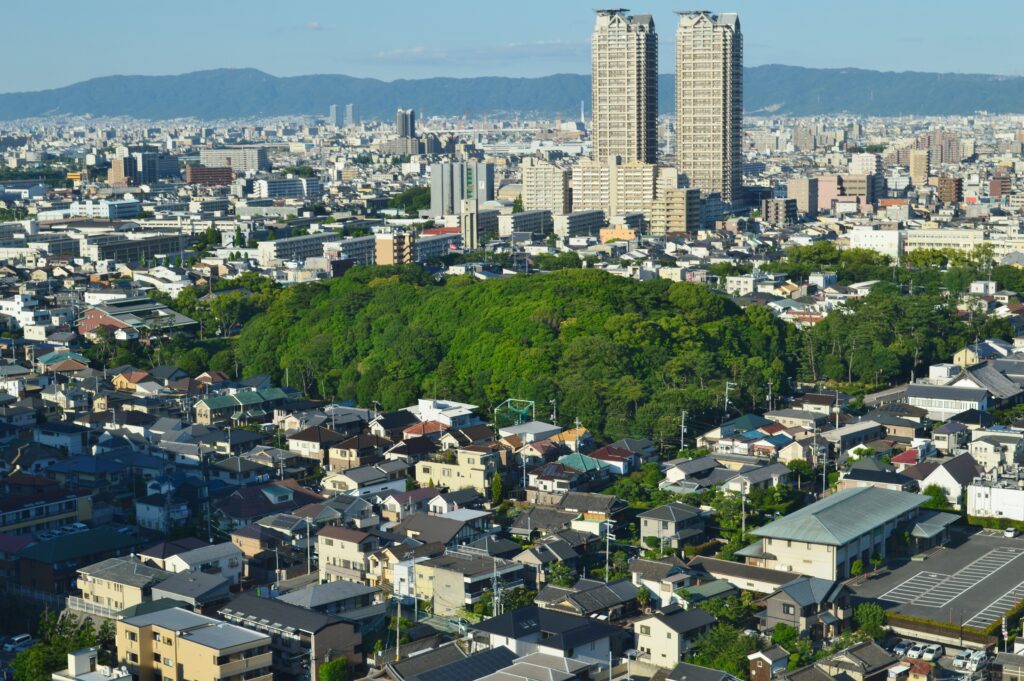
The scale of the selected mounds reflects the period’s social order. Some of the kofun are Ryobo, imperial mausolea managed by Japan’s Imperial Household Agency, and are understood as tombs for kings’ clans and their affiliates. The range of types and sizes, the grave goods and the haniwa together provide evidence of social class differences and a highly sophisticated funerary system. The components survive as a significant visible presence within the present-day Osaka landscape, despite the high degree of 20th-century urbanisation around them.
Why the kofun were inscribed under criteria (iii) and (iv)
UNESCO inscribes the property under two criteria. Criterion (iii) recognises the group as an extraordinarily rich record of Kofun period culture in Japan’s ancient history, showing how society was structured, how social classes differed and how its funerary system worked. Criterion (iv) recognises the mounds as an outstanding type of ancient East Asian burial mound construction. The features UNESCO points to include the clay sculptures, the moats and the geometric terraced mounds reinforced with stone, as well as the part the kofun played in creating social hierarchies during that period.
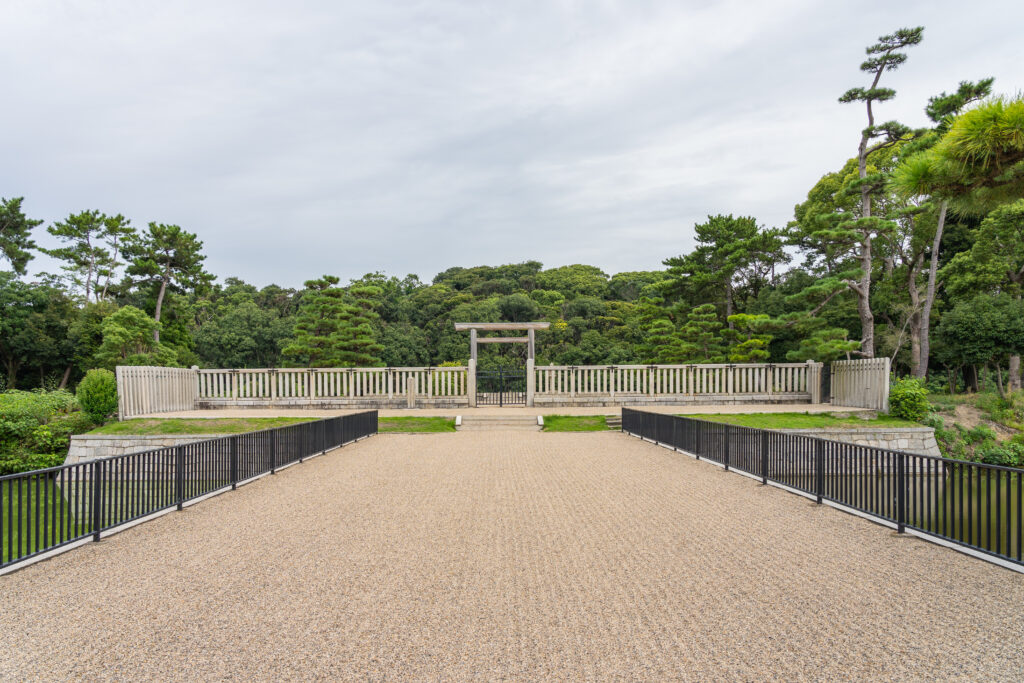
The property’s integrity rests on the rationale for selecting the 49 individual mounds and their capacity to carry the kofun culture. That integrity faces pressures familiar to urban archaeological landscapes: loss of some features, including moats, and changes to settings caused by building close by. What survives authentic is the form, materials and archaeological contents of the mounds, together with the respect they still command in Japanese society.
Frequently Asked Questions
Which UNESCO World Heritage sites are near the Mozu-Furuichi Kofun Group?
The Buddhist Monuments in the Horyu-ji Area are 12 km away in a straight line, the Historic Monuments of Ancient Nara and the Ancient Capitals of Asuka and Fujiwara both 19 km, the Sacred Sites and Pilgrimage Routes in the Kii Mountain Range 28 km, and the Historic Monuments of Ancient Kyoto 39 km.
How many kofun are in the Mozu-Furuichi Kofun Group?
The serial property contains 49 kofun, selected from a total of 160,000 mounds across Japan. They are spread across 45 components and arranged in two major clusters, the Mozu and Furuichi groups, on high ground above the Osaka Plain.
When was the Mozu-Furuichi Kofun Group inscribed on the World Heritage List?
In 2019, under criteria (iii) and (iv). Criterion (iii) recognises the exceptional testimony to Kofun period culture, and criterion (iv) the outstanding type of ancient East Asian burial mound construction.
What are haniwa?
Haniwa are clay figures used to decorate the kofun. They were made as cylinders set in rows, or as representations of objects, houses, animals and people. They are among the tangible attributes UNESCO cites for the property.
Sources
- UNESCO World Heritage Centre — Mozu-Furuichi Kofun Group: Mounded Tombs of Ancient Japan (inscribed 2019). https://whc.unesco.org/en/list/1593/
- UNESCO World Heritage Centre — Buddhist Monuments in the Horyu-ji Area (inscribed 1993). https://whc.unesco.org/en/list/660/
- UNESCO World Heritage Centre — Historic Monuments of Ancient Nara (inscribed 1998). https://whc.unesco.org/en/list/870/
- UNESCO World Heritage Centre — Ancient Capitals of Asuka and Fujiwara (inscribed 2026). https://whc.unesco.org/en/list/1757/
- UNESCO World Heritage Centre — Sacred Sites and Pilgrimage Routes in the Kii Mountain Range (inscribed 2004). https://whc.unesco.org/en/list/1142/
- UNESCO World Heritage Centre — Historic Monuments of Ancient Kyoto (Kyoto, Uji and Otsu Cities) (inscribed 1994). https://whc.unesco.org/en/list/688/
Spotted an error? Write to the editors and we correct it the same day.