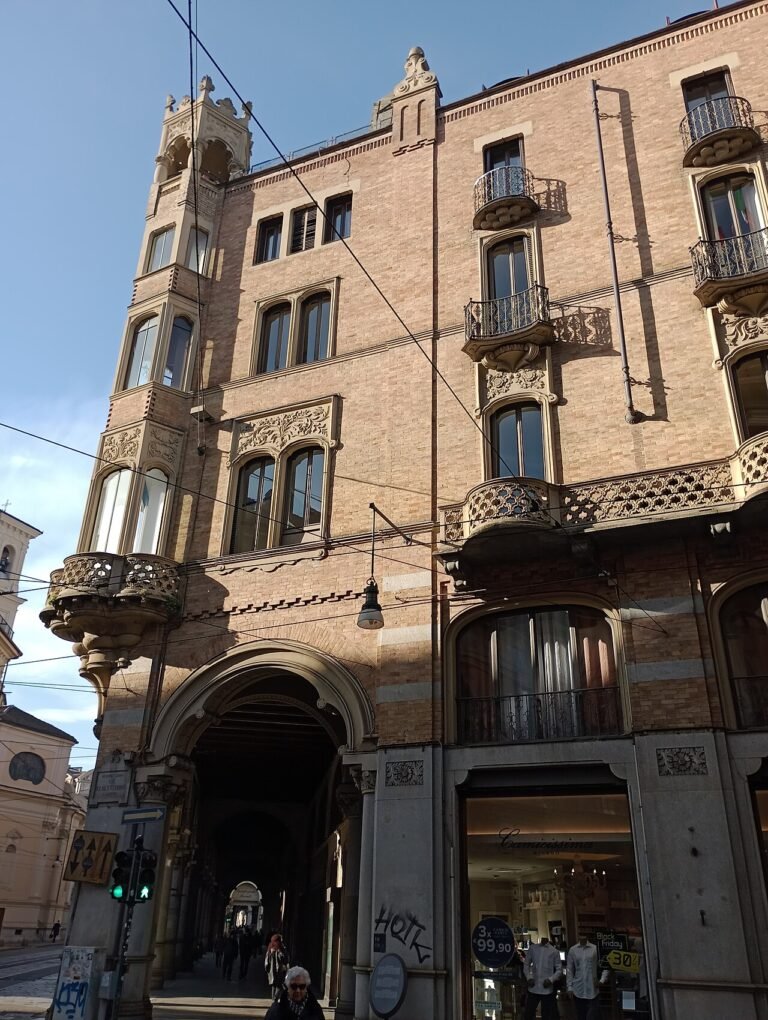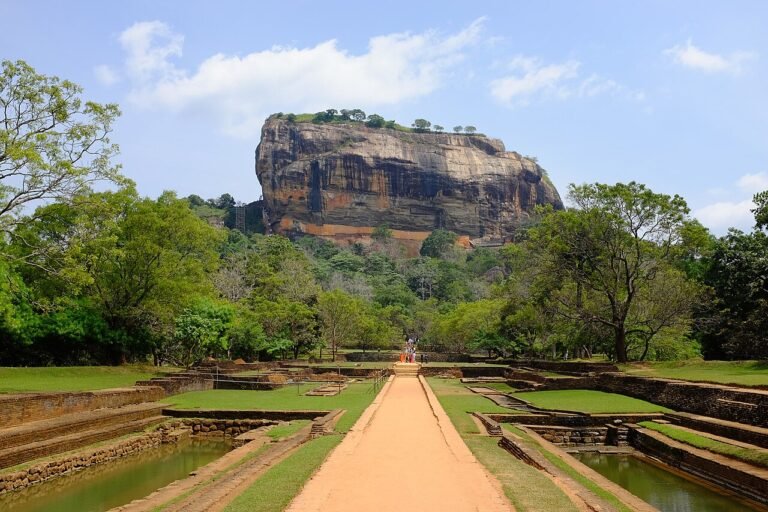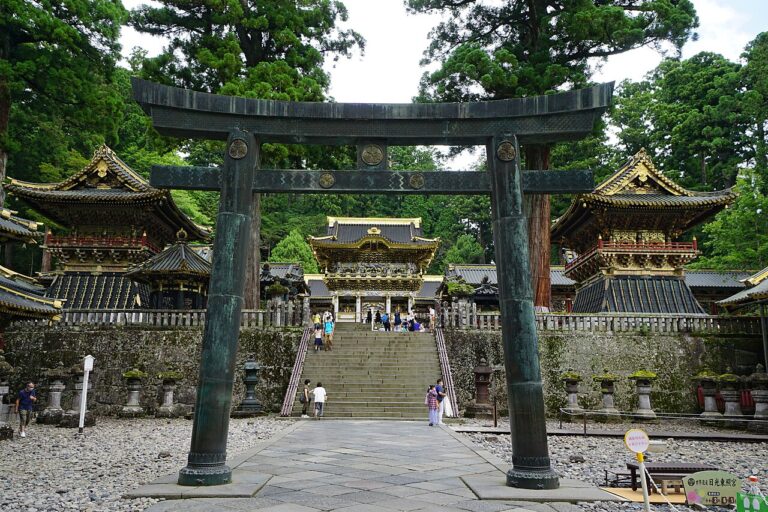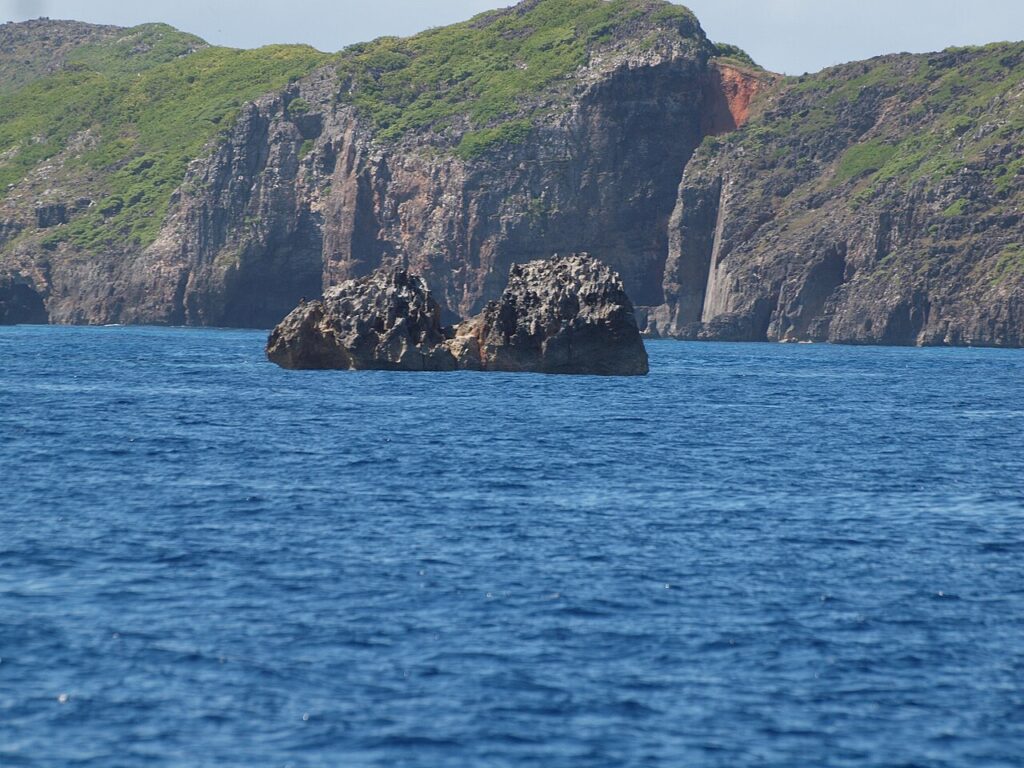
The nearest World Heritage sites to the Ogasawara Islands are all on the Japanese mainland: the Sacred Sites and Pilgrimage Routes in the Kii Mountain Range lie 854 km away, and the Sites of Japan’s Meiji Industrial Revolution 866 km. The Ogasawara Islands themselves form a natural property inscribed in 2011. They are an oceanic archipelago more than 1,000 km south of the main Japanese Archipelago, where evolutionary processes are still being studied.
The World Heritage sites near the Ogasawara Islands
The distances below are straight lines between the reference points that UNESCO publishes for each property. They tell you what is close in geographic terms; they do not tell you how long the journey takes by sea or air.
| Site | Country | Distance | Inscribed | Type |
|---|---|---|---|---|
| Sacred Sites and Pilgrimage Routes in the Kii Mountain Range | Japan | 854 km | 2004 | Cultural |
| Sites of Japan’s Meiji Industrial Revolution: Iron and Steel, Shipbuilding and Coal Mining | Japan | 866 km | 2015 | Cultural |
| Fujisan, sacred place and source of artistic inspiration | Japan | 877 km | 2013 | Cultural |
| The Architectural Work of Le Corbusier, an Outstanding Contribution to the Modern Movement | India, Japan, France, Belgium, Switzerland, Argentina, Germany | 916 km | 2016 | Cultural |
| Ancient Capitals of Asuka and Fujiwara | Japan | 936 km | 2026 | Cultural |
| Buddhist Monuments in the Horyu-ji Area | Japan | 954 km | 1993 | Cultural |
What links these distant sites is the story of a single culture. The Kii Mountain Range preserves sacred mountains continuously venerated for more than 1,200 years; the Horyu-ji area holds some of the oldest surviving wooden buildings in the world, from the moment Buddhism reached Japan; and the Ancient Capitals of Asuka and Fujiwara document the introduction of the Chinese-style state before Nara and Kyoto. The Meiji Industrial Revolution sites then show how Japan adopted Western technology from the mid-19th century. Fujisan sits in the middle of this arc, part of the sacred and artistic tradition that both earlier and later properties illuminate from different angles.
Why the Ogasawara Islands are a natural laboratory
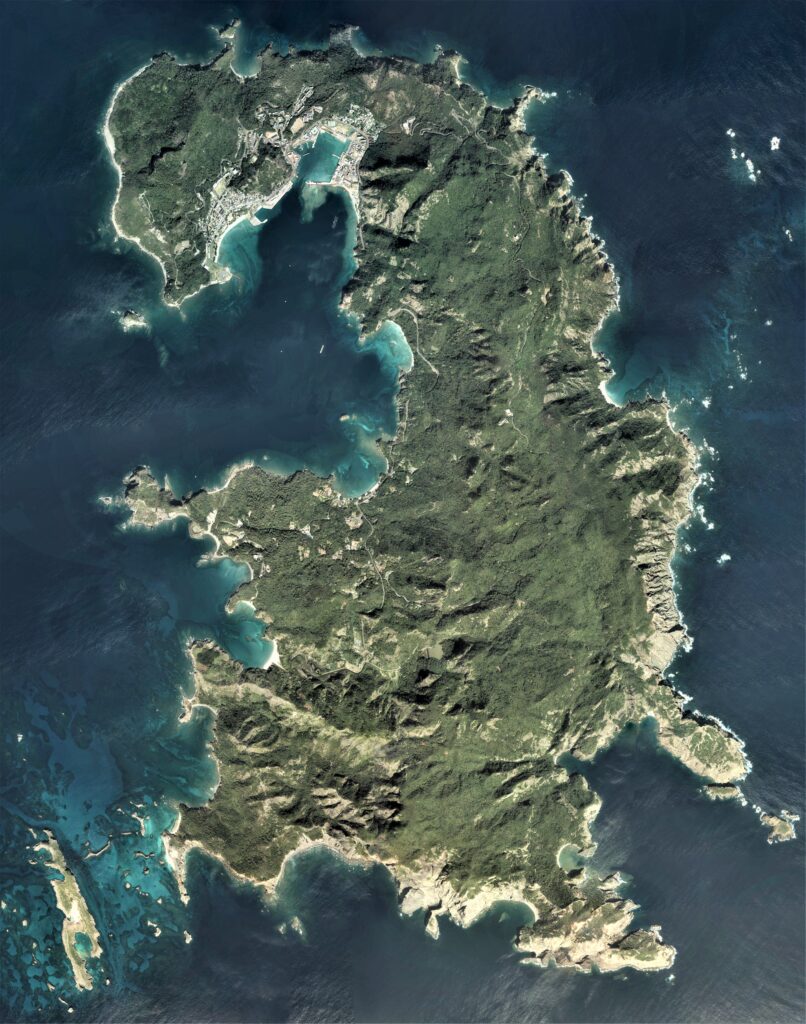
The Ogasawara Islands are an oceanic island group resting along the Izu-Ogasawara Arc Trench System. They were never connected to a continent, so every native species present had to cross open ocean. The UNESCO brief synthesis explains that the property’s ecosystems reflect a range of evolutionary processes, illustrated through an assemblage of plant species from both Southeast Asian and Northeast Asian origin. That mix is one reason the islands are considered an outstanding example of ongoing evolutionary processes in oceanic island ecosystems.
Endemism on land: land snails and woody plants
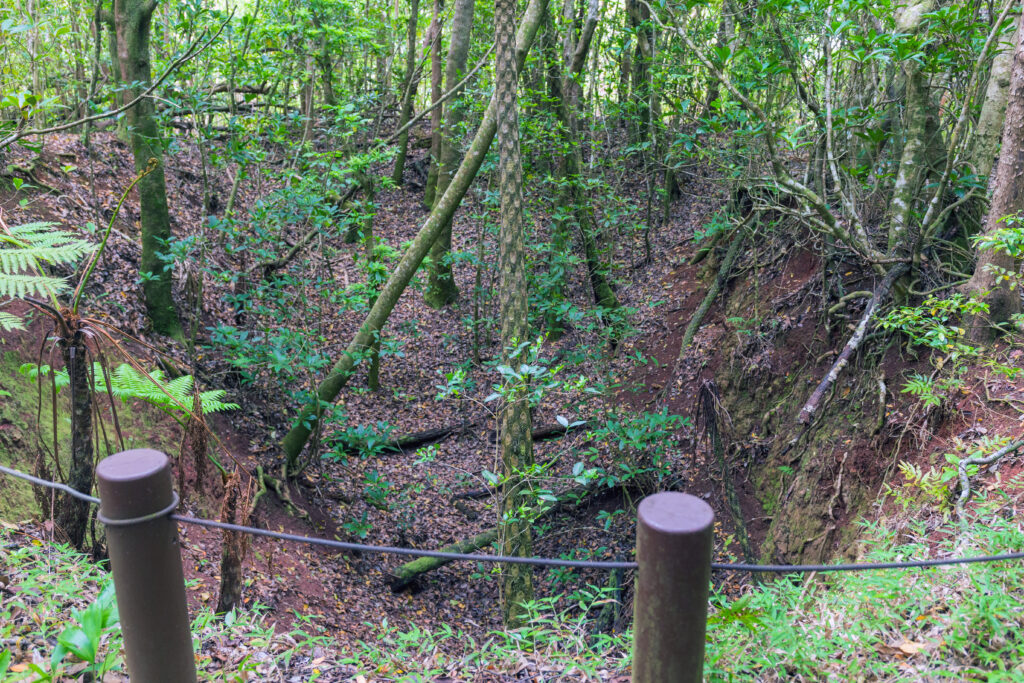
The islands show exceptionally concentrated rates of endemism, as high as 70% in woody plants. Land snails are even more striking: there are more than 100 recorded native species, over 90% of which are endemic to the islands. UNESCO’s criterion (ix) text argues that the Ogasawara Islands are an important centre for active, ongoing speciation, with fine-scale adaptive radiation between and sometimes within the different islands. It is the combination of concentrated endemism and adaptive radiation that, in UNESCO’s view, sets the property apart from other places illustrating evolutionary processes.
What the property includes and who lives there
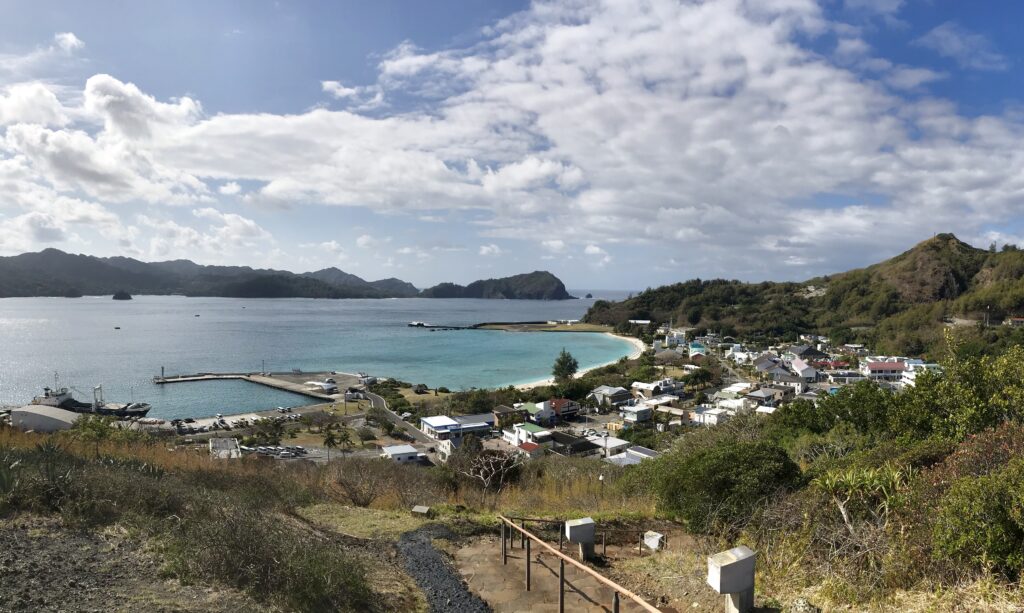
The inscribed property totals 7,939 hectares, comprising 6,358 ha of terrestrial area and 1,581 ha of marine area. It includes more than 30 islands clustered in three groups: Mukojima, Chichijima and Hahajima. Three further individual islands are part of the property: Kita-iwoto and Minami-iwoto of the Kazan group, and isolated Nishinoshima Island. Today only two islands are inhabited: Chichijima and Hahajima. Their vegetation is largely subtropical forest and shrubland, with steep cliffs marking much of the coastline.
Frequently Asked Questions
Which UNESCO World Heritage sites are near the Ogasawara Islands?
The nearest are the Sacred Sites and Pilgrimage Routes in the Kii Mountain Range at 854 km and the Sites of Japan’s Meiji Industrial Revolution at 866 km. Fujisan lies 877 km away, while the nearest cultural site with a component outside Japan is the Architectural Work of Le Corbusier at 916 km.
Why were the Ogasawara Islands inscribed as a UNESCO site?
The islands were inscribed in 2011 under criterion (ix) for their reflection of ongoing evolutionary processes. They show exceptionally high endemism, including over 90% of native land snail species and up to 70% of woody plants, alongside active speciation through adaptive radiation.
How many islands are part of the Ogasawara UNESCO property?
The serial property includes more than 30 islands spread across three groups: Mukojima, Chichijima and Hahajima. Kita-iwoto, Minami-iwoto and Nishinoshima are also separate components of the property. Today, only Chichijima and Hahajima have permanent inhabitants.
Is the Ogasawara Islands site on the UNESCO danger list?
No. However, UNESCO identifies invasive alien species as the most important integrity issue. Historic logging and future invasions have already altered many habitats, and the management plan places critical importance on controlling access to the islands and alien invasive species.
Sources
- UNESCO World Heritage Centre — Ogasawara Islands (inscribed 2011). https://whc.unesco.org/en/list/1362/
- UNESCO World Heritage Centre — Sacred Sites and Pilgrimage Routes in the Kii Mountain Range (inscribed 2004). https://whc.unesco.org/en/list/1142/
- UNESCO World Heritage Centre — Sites of Japan’s Meiji Industrial Revolution: Iron and Steel, Shipbuilding and Coal Mining (inscribed 2015). https://whc.unesco.org/en/list/1484/
- UNESCO World Heritage Centre — Buddhist Monuments in the Horyu-ji Area (inscribed 1993). https://whc.unesco.org/en/list/660/
- UNESCO World Heritage Centre — Ancient Capitals of Asuka and Fujiwara (inscribed 2026). https://whc.unesco.org/en/list/1757/
- UNESCO World Heritage Centre — Fujisan, sacred place and source of artistic inspiration (inscribed 2013). https://whc.unesco.org/en/list/1418/
Spotted an error? Write to the editors and we correct it the same day.