
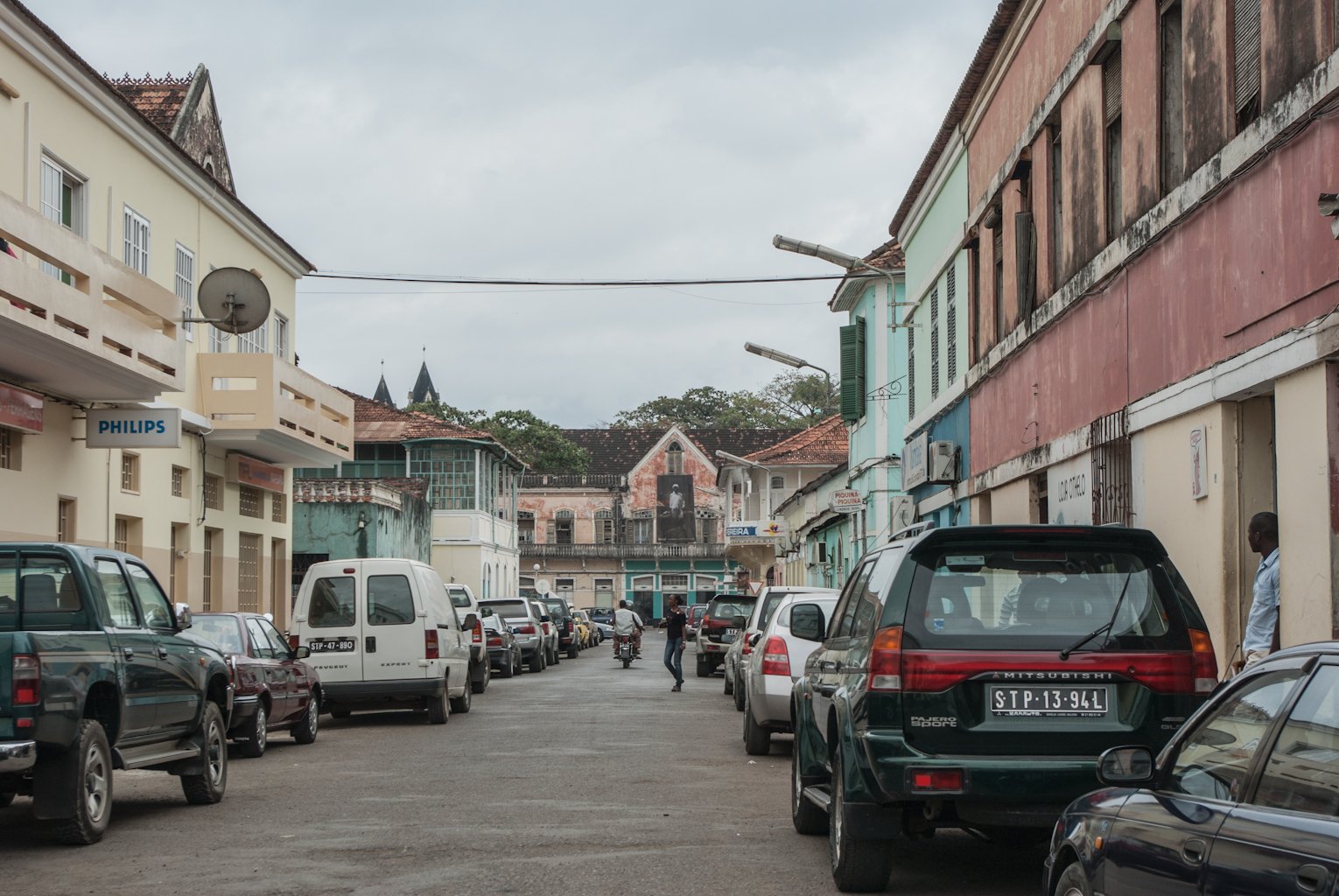
São Tomé sits on the equator in the Gulf of Guinea, a Portuguese-speaking island capital surrounded by one of Africa’s most biodiverse rainforests. Its nearest UNESCO World Heritage Sites lie on the African mainland, reached by a short flight across the gulf.
Lopé-Okanda: Rainforest and Savanna in Gabon ✈ ~1 hr from São Tomé
Lopé-Okanda National Park in Gabon, inscribed in 2007 under criteria (ix) and (x), protects an extraordinary transition zone where dense equatorial rainforest meets ancient savanna refugia. The park shelters western lowland gorillas, forest elephants, and more than 400 bird species. Gabon’s low population density and longstanding conservation commitment have left large sections of this forest ecologically intact. Researchers from around the world work here on primate behaviour and forest carbon stocks. A flight from São Tomé International Airport to Libreville takes roughly one hour, with onward road access to the park’s research station.
Dja Faunal Reserve: Congo Basin Biodiversity ✈ ~2.5 hrs via Yaoundé
Dja Faunal Reserve in southern Cameroon, UNESCO-listed since 1987, is one of Africa’s largest and best-protected rainforests, covering 526,000 hectares of the Congo Basin watershed. Inscribed under criteria (ix) and (x), it hosts forest elephants, chimpanzees, western lowland gorillas, and bongo antelope. The Dja River forms a near-perfect natural boundary, and much of the reserve remains accessible only by dugout canoe. Yaoundé offers the logical gateway, reachable by connecting flight from São Tomé via Libreville or Douala.
Salonga National Park: Heart of the Congo ✈ ~3 hrs via Kinshasa
Across the Congo River in the Democratic Republic of Congo, Salonga National Park stretches across 36,000 square kilometres of pristine rainforest — the largest tropical forest national park in Africa. Inscribed since 1984 under criteria (vii) and (ix), it protects the bonobo in its only natural habitat alongside Congo peacocks, forest buffalo, and okapi. Access from São Tomé requires a flight to Kinshasa and subsequent river travel, making this among the most remote UNESCO sites anywhere, but the conservation significance is unmatched on the continent.
São Tomé Island: Colonial Heritage Close to Home Walking distance from city centre
The city itself retains a quiet colonial fabric — the Sé Cathedral, built in 1534, is one of the oldest cathedrals in sub-Saharan Africa. Roças, the plantation complexes established during the cocoa boom of the nineteenth century, dot the island’s interior and are the subject of an ongoing tentative UNESCO nomination. The Museum of São Tomé and Príncipe, housed in a restored fort beside the bay, documents both the Portuguese colonial period and the pre-independence cultural life of the islands. Walking through the old town at dusk, when fishing boats return to the waterfront, gives a sense of a city that has chosen a slower pace as a form of resistance.
Practical information
São Tomé International Airport connects to Lisbon, Luanda, Accra, and Libreville. The city centre and its colonial architecture are walkable from most hotels. For mainland Africa UNESCO sites, day trips are not feasible — plan at least three nights in Gabon or Cameroon to justify the flight. The rainy season runs June to August; the dry, cooler season (gravana) from July to September offers clearer skies for forest and wildlife viewing on the mainland. A yellow fever vaccination certificate is required for entry to São Tomé.
Frequently Asked Questions
Does São Tomé and Príncipe have any UNESCO World Heritage Sites?
No. As of 2025, São Tomé and Príncipe has no inscribed UNESCO World Heritage Sites, though the country’s cocoa plantation landscape (roças) is under consideration as a tentative nomination.
What is the closest UNESCO site to São Tomé?
Lopé-Okanda National Park in Gabon, roughly 450 kilometres to the east across the Gulf of Guinea, is the nearest inscribed site. A direct flight from São Tomé takes about one hour.
What is the best time of year to visit São Tomé?
The gravana season (July to September) brings cooler, drier weather and is the most comfortable time for exploring. The long rainy season (October to May) offers lush green landscapes but can make interior roads difficult.
Sources
- S1 — Vansina, Jan. Paths in the Rainforests: Toward a History of Political Tradition. University of Wisconsin Press, 1990. ISBN 978-0-299-12574-5.
- S2 — Reader, John. Africa: A Biography of the Continent. Alfred A. Knopf, 1998. ISBN 978-0-679-40979-3.
Spotted an error? Write to editorial@culturalheritageonline.com and we correct it the same day.

.jpg)