
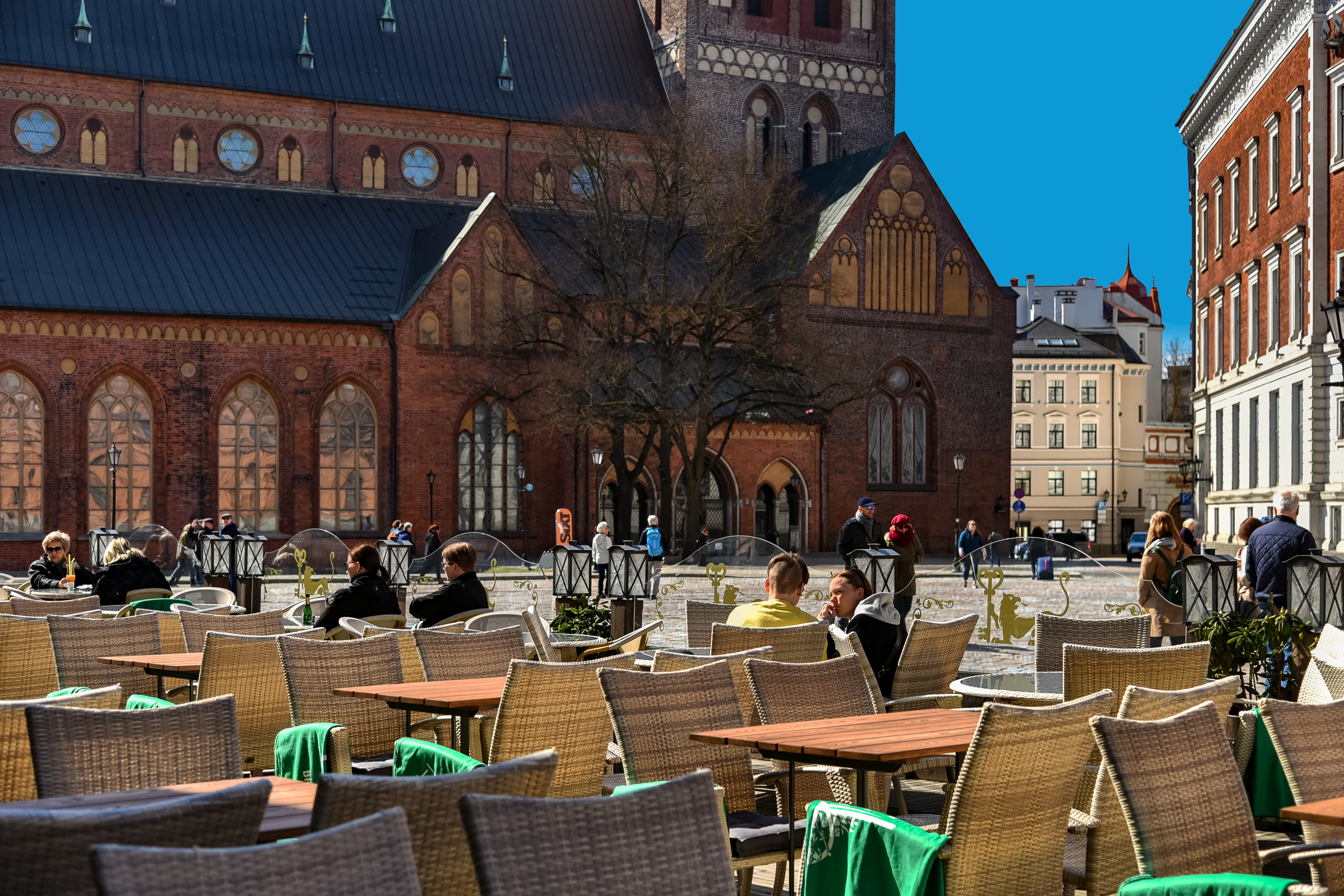
Riga holds a UNESCO inscription of unusual scope: the same city centre contains medieval merchant houses, a cathedral founded in 1211, and the densest concentration of Art Nouveau architecture anywhere in the world. A second inscription, the Struve Geodetic Arc, extends the heritage territory beyond the city itself. From Cultural Heritage Online.
Historic Centre of Riga within the city — walkable
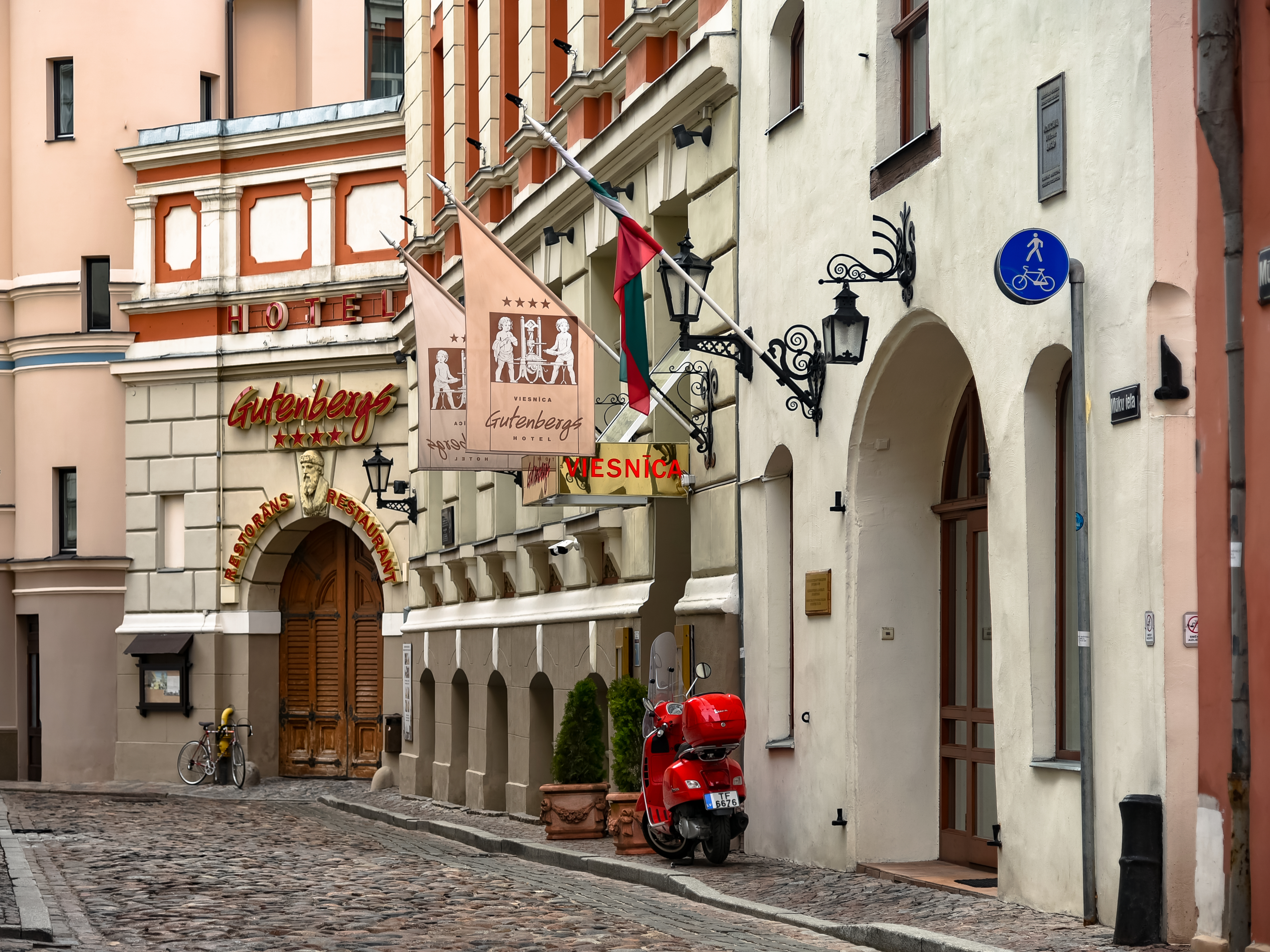
The Historic Centre of Riga received UNESCO inscription in 1997 on two distinct grounds, which is what makes the site exceptional. The medieval layer — concentrated in Vecrīga, the Old Town — preserves the core of a Baltic trading city that grew wealthy through the Hanseatic League from the 13th century onward. The Dome Cathedral, consecrated in 1211 and progressively enlarged over the following centuries, is among the largest Romanesque-Gothic churches in the Baltic region. Its organ, installed in 1884, was the largest in the world at the time of its construction. St Peter’s Church, with a spire reaching 123 metres, provides the vertical landmark that oriented sailors entering the Daugava River.
The Three Brothers — a group of stone residential buildings on Mārstalu iela dating from the 15th through 17th centuries — are the oldest surviving dwellings in Latvia and document the evolution of urban domestic architecture across three centuries without leaving a single block. The Castle of the Order of the Brothers of the Sword, now the official residence of Latvia’s president, anchors the northern edge of the protected zone.
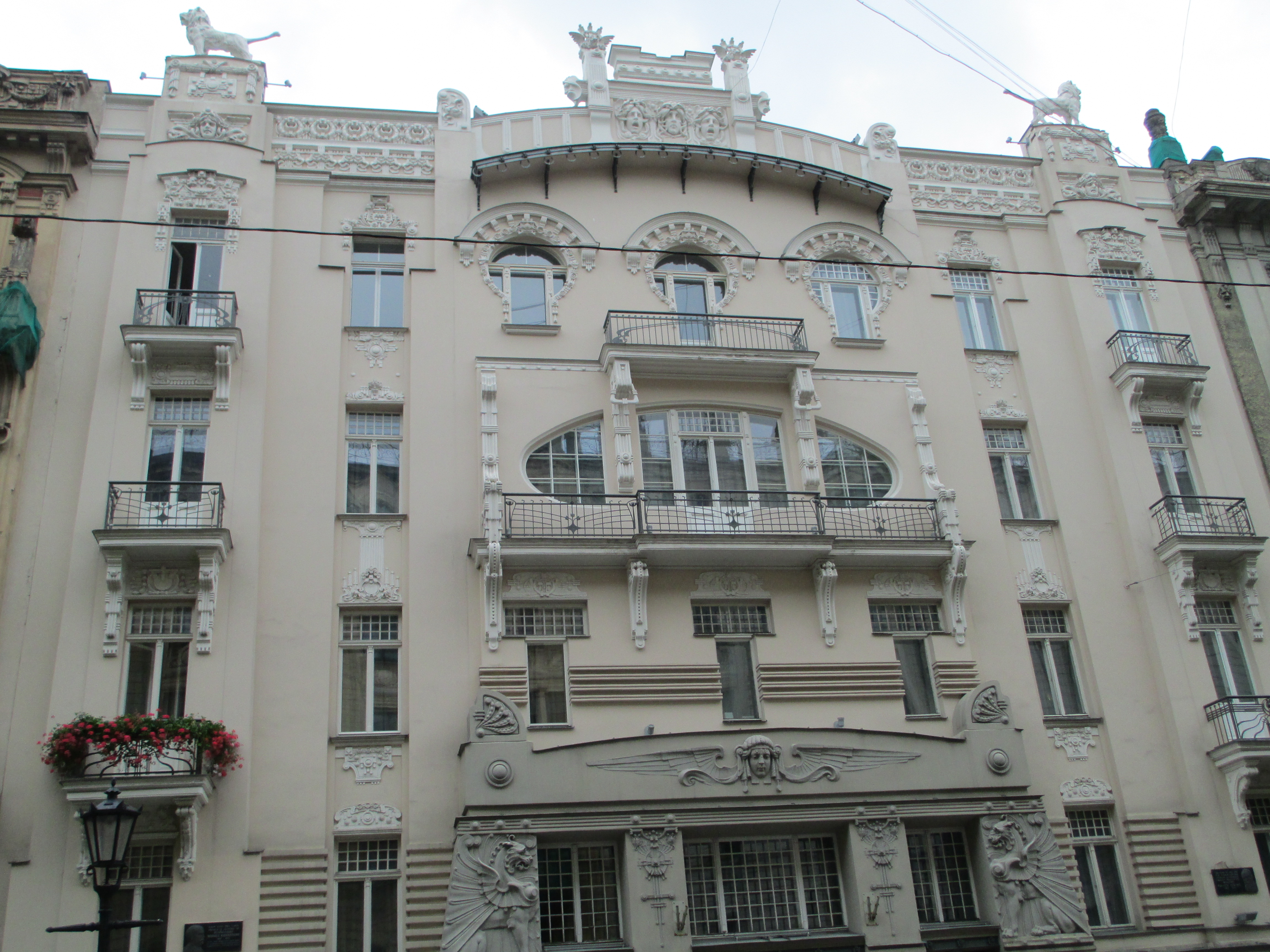
The second ground for inscription is the Art Nouveau district, and it is where Riga stands entirely alone. Approximately 750 buildings — roughly one-third of the entire city’s building stock — carry Art Nouveau facades, a figure unmatched by any other city. The most photographed concentration runs along Alberta iela and Elizabetes iela, where Mikhail Eisenstein, a civil engineer working for the Tsarist municipal government, produced facades of dense, almost theatrical ornament between 1900 and 1906. Eisenstein is better known today as the father of filmmaker Sergei Eisenstein, but his buildings shaped the physical character of the city far more durably than any film. A distinct local tendency, National Romanticism, interwove Latvian folk motifs — sun symbols, stylised amber patterns, carved faces drawn from ethnographic sources — into the Art Nouveau vocabulary in a way that has no direct parallel elsewhere in Europe.
Getting there: The Old Town is a 10-minute walk from Riga Central Station; Alberta iela is a 15-minute walk north across the city canal. Allow: Half a day for the Old Town; a further 2 hours for a self-guided Art Nouveau walk along Alberta and Elizabetes. Best for: Architectural historians, first-time visitors to Riga, and anyone interested in the late-19th-century Baltic urban boom.
Struve Geodetic Arc multiple points — day trip by car or bus
The Struve Geodetic Arc is a chain of triangulation survey stations extending 2,820 kilometres from Hammerfest in Norway to the Black Sea, established between 1816 and 1855 by the astronomer Friedrich Georg Wilhelm Struve to measure the precise size and shape of the Earth. It was inscribed as a UNESCO World Heritage Site in 2005 and spans ten countries — a rare trans-boundary designation covering Estonia, Latvia, Lithuania, Russia, Belarus, Ukraine, Moldova, Finland, Sweden, and Norway.
The Latvian section of the arc includes points in the eastern and central parts of the country. Several are accessible as day excursions from Riga by regional bus or car, though the stations themselves are marked by modest stone obelisks rather than monumental structures. The scientific significance is primary: the arc provided the first accurate measurement of a meridian and contributed directly to the establishment of the metric system’s geodetic foundations. Visitors who engage with the arc do so for the history of science rather than visual spectacle.
Getting there: Latvian arc points lie 80–150 km from Riga; a car is the practical option. Regional bus connections exist to nearby towns. Allow: A full day for a round trip to one or two stations. Best for: Travellers with an interest in the history of cartography, geodesy, or 19th-century scientific expeditions.
Frequently Asked Questions
How many UNESCO World Heritage Sites are near Riga?
Latvia has two UNESCO World Heritage Sites, and both are accessible from Riga. The Historic Centre of Riga (inscribed 1997) is within the city itself. The Struve Geodetic Arc (inscribed 2005) is a trans-boundary site whose Latvian stations can be reached as day trips from the capital.
How long does it take to explore the Art Nouveau district in Riga?
The core Art Nouveau walk along Alberta iela and Elizabetes iela takes approximately 1.5 to 2 hours at a comfortable pace. Alberta iela is about a 15-minute walk north of the Old Town, crossing the city canal. The Riga Art Nouveau Museum at Alberta iela 12 offers interior context and is worth allowing an extra hour.
When is the best time to visit Riga for heritage sightseeing?
May through September offers the most practical conditions: long daylight hours, mild temperatures, and all museum sites fully open. July and August are the busiest months in the Old Town. Late spring (May–June) and early autumn (September) give similar light with notably thinner crowds. Winter visits are viable but short days limit outdoor walking time along the Art Nouveau streets.
Why does Riga have so many Art Nouveau buildings?
Riga’s Art Nouveau concentration reflects a specific moment of rapid urban expansion under Tsarist rule at the turn of the 20th century. Between roughly 1898 and 1914, the city more than doubled in area as industrialisation drew population from across the Baltic provinces. Wealthy merchants and the rising professional class commissioned new apartment buildings in the fashionable European style, and architects including Mikhail Eisenstein worked quickly to meet demand. Because this growth phase was so compressed — and because Riga’s urban core was never rebuilt on the scale seen in Western European cities after the Second World War — the buildings survived largely intact into the 21st century.


.jpg)
.jpg)
