
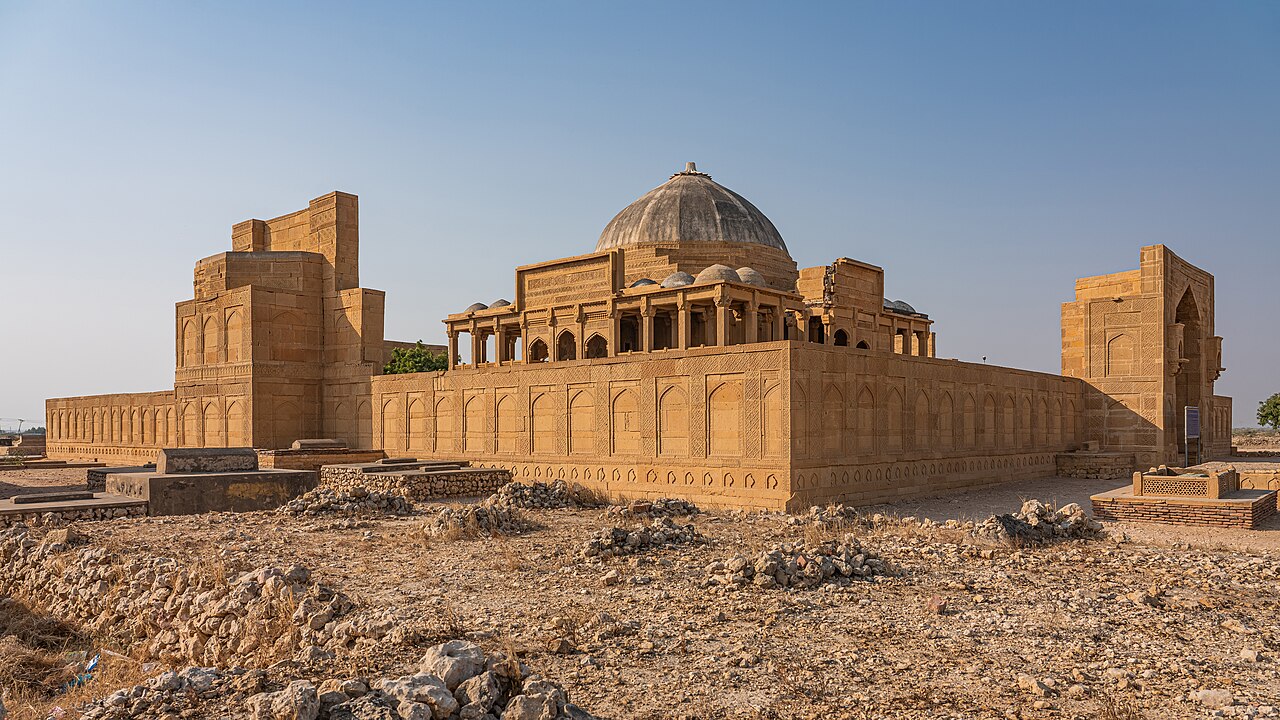
Within a day’s reach of Karachi lie two of Pakistan’s most significant UNESCO World Heritage Sites — a medieval necropolis that holds half a million graves, and a Bronze Age city that was among the largest on earth. From Cultural Heritage Online.
Historical Monuments at Makli, Thatta 90 km · 1.5 hr by road
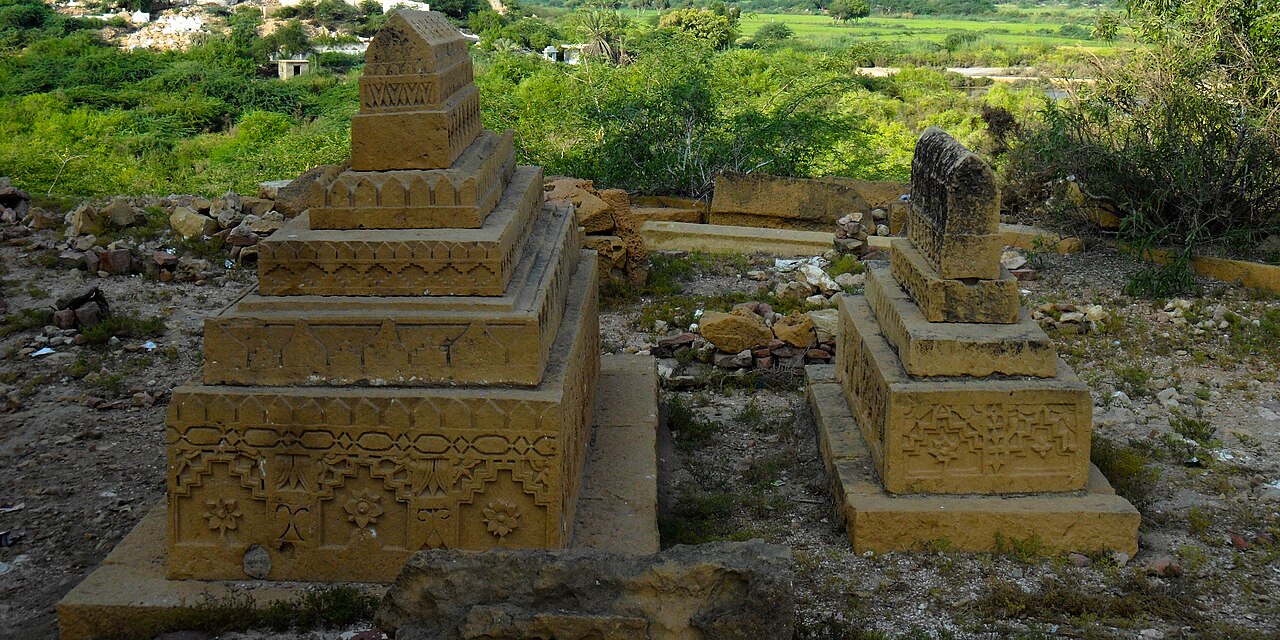
Makli Hill, rising above the flat Sindh plain just outside Thatta, holds one of the largest necropolises in the world. Roughly 500,000 graves spread across ten square kilometres — rulers, Sufi saints, and scholars of successive dynasties buried here from the 14th century onward. UNESCO inscribed the site in 1981, recognising an unbroken record of funerary architecture that spans the Samma, Arghun, Tarkhan, and Mughal periods.
The monuments range in ambition from unadorned brick mounds to elaborate octagonal pavilions sheathed in geometric tile work and calligraphic inscriptions. The Mausoleum of Sultan Ibrahim stands out: its carved sandstone surfaces are dense with interlacing patterns, each panel a small argument for the stonecutters of medieval Sindh. A short distance away in Thatta proper, the Shah Jahan Mosque — commissioned between 1644 and 1647 — shelters 93 domes engineered for exceptional acoustics. A whisper near one wall carries cleanly to the far corner.
The site receives relatively few international visitors, which means you can walk among the tombs without crowds and pause as long as you like at a single carved lintel. Early morning, when the light is flat and cool, is the best time to read the stone surfaces properly.
Getting there: 90 km northeast of Karachi via the M9 Motorway and National Highway N55; approximately 1.5 hours by car or hire vehicle. Local buses run from Karachi’s Lea Market to Thatta. Allow: 3–4 hours for the necropolis and the Shah Jahan Mosque. Best for: Travellers with an interest in Islamic architecture, Sufi heritage, and Mughal-era craftsmanship.
Archaeological Ruins at Mohenjo-daro 460 km · 7 hr by road or ~1 hr by air
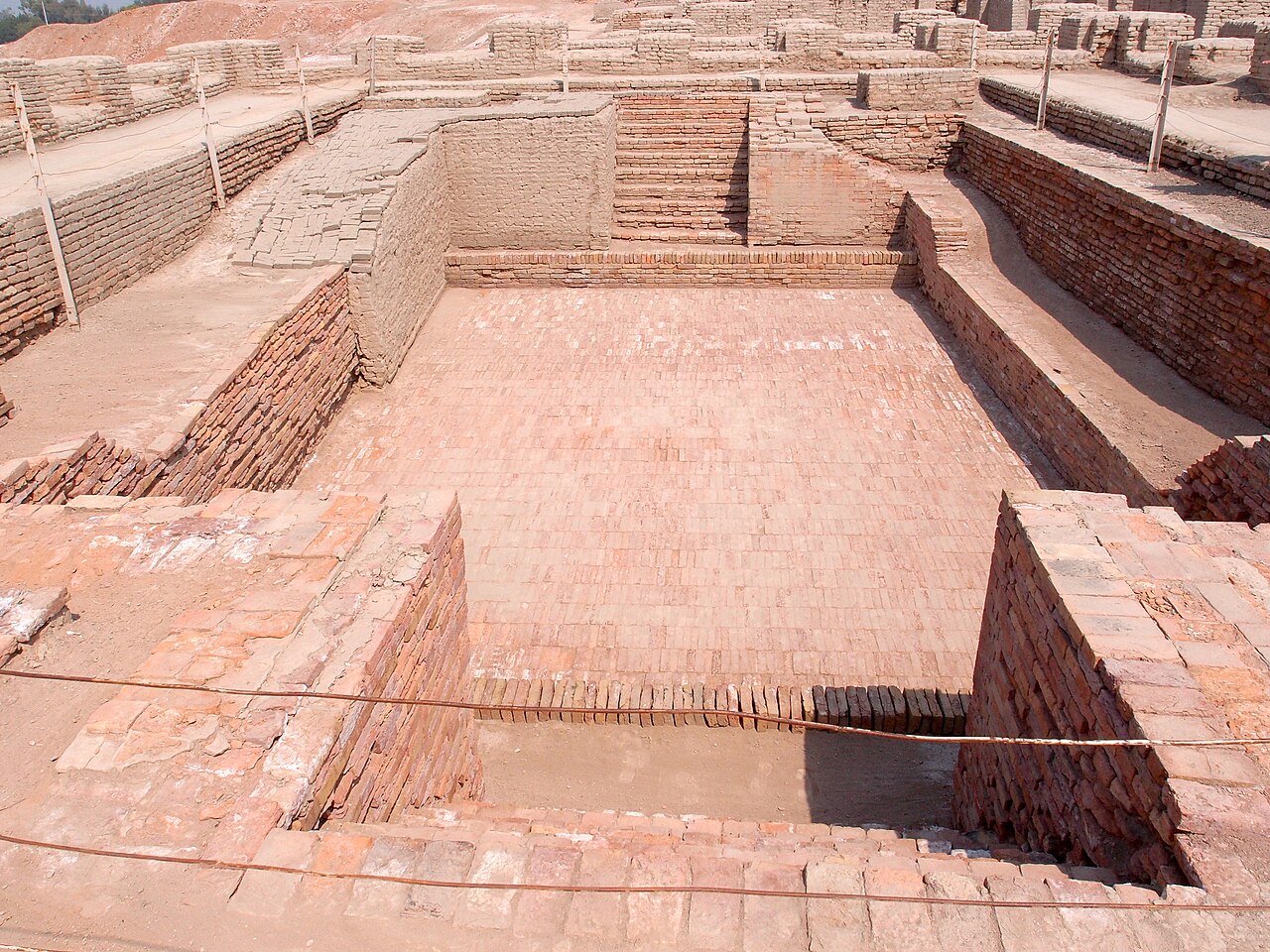
Around 2500 BC, when the first pharaohs were consolidating power in Egypt and Mesopotamian city-states were trading by river, a planned urban centre of perhaps 40,000 to 50,000 people occupied the floodplain near present-day Larkana in Sindh. Mohenjo-daro was rediscovered between 1921 and 1922 and UNESCO inscribed it in 1980. It remains the largest known city of the Indus Valley Civilisation and one of the earliest examples of municipal planning anywhere on earth.
The site divides into two distinct zones. The elevated citadel holds the Great Bath — a pool of kiln-fired brick sealed with bitumen, measuring roughly 12 by 7 metres — as well as what excavators have interpreted as a granary and an assembly hall. The lower city below is a grid of residential blocks with lanes wide enough for carts, drainage channels running beneath the streets, and houses built inward around central courtyards that kept out summer heat. The civilisation that built all this left behind a script on seals and pottery that has never been deciphered.
Walking the lower city, the geometry of the streets is still legible. The brickwork is precise and uniform — a standardised brick size used across the entire Indus Valley — and the drainage system is more sophisticated than anything contemporary in the ancient world. The site museum holds original seals, bronze figurines, and pottery recovered during excavation.
Getting there: 460 km north of Karachi; approximately 7 hours by road via the Indus Highway. The faster option is a domestic flight from Karachi to Moenjodaro Airport (roughly 1 hour), with onward transfer to the site by road (10 km). Pakistan International Airlines and Air Sial serve the route on varying schedules. Allow: Half a day minimum at the site; an overnight stay in Larkana makes the visit more relaxed. Best for: Archaeology and ancient history enthusiasts; those with a particular interest in Bronze Age urbanism or comparative civilisations.
Frequently Asked Questions
How many UNESCO World Heritage Sites are near Karachi?
Two UNESCO World Heritage Sites are accessible from Karachi. The Historical Monuments at Makli, Thatta, were inscribed in 1981; the Archaeological Ruins at Mohenjo-daro were inscribed in 1980. Both are in Sindh province.
How do you get from Karachi to Makli Necropolis?
Makli is 90 kilometres northeast of Karachi via the M9 Motorway and National Highway N55, roughly a 1.5-hour drive. Hire a car or take a local bus from Lea Market toward Thatta. From Thatta town, Makli Hill is about 1 kilometre further by road. There is no rail connection.
Is it possible to visit both sites in one trip from Karachi?
Combining them in a single day is impractical given the distances. Makli is a straightforward day trip from Karachi. Mohenjo-daro, 460 km north, is better approached as a two-day excursion: fly to Moenjodaro Airport in the morning, spend the day at the site, overnight in Larkana, and return the following day. October through March is the most comfortable season for both visits; Sindh summers are intense and archaeological sites offer little shade.
What makes Mohenjo-daro historically significant?
Mohenjo-daro was one of the largest urban settlements on earth around 2500 BC, contemporary with the Old Kingdom of Egypt and the early cities of Mesopotamia. Its planners laid out the city on a regular grid, engineered an underground drainage network, and standardised brick sizes across a civilisation that stretched from the Arabian Sea coast to the foothills of the Himalayas. The culture that built it left behind a script on thousands of clay seals that remains undeciphered — meaning we do not yet know what this civilisation called itself or how it governed.


.jpg)
