
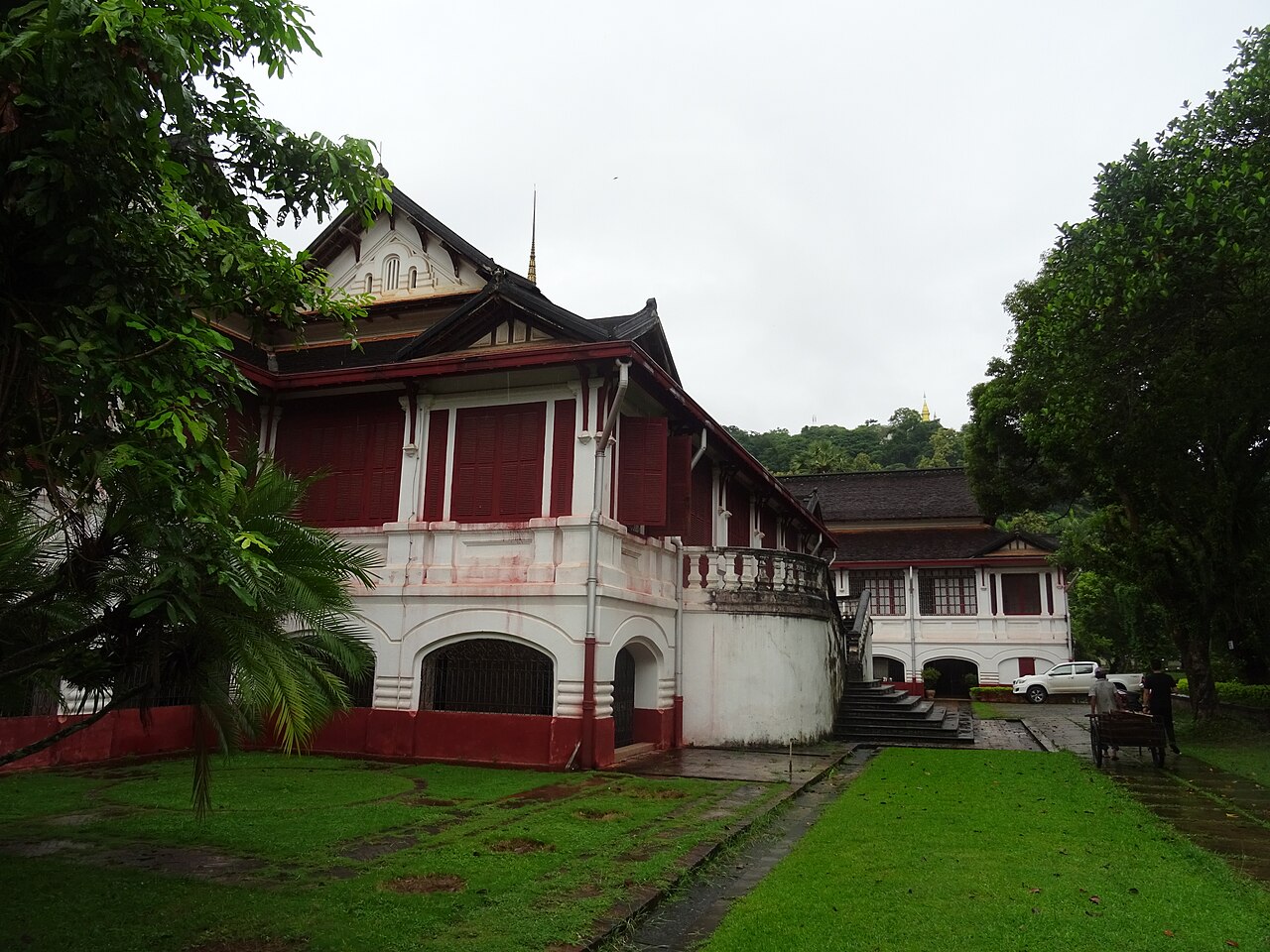
Laos holds three UNESCO World Heritage Sites, and Luang Prabang is itself one of them — a royal capital where gilded temple rooftops rise above the Mekong and centuries-old traditions survive intact. The other two, the Khmer sanctuary of Vat Phou and the enigmatic Megalithic Jar Sites of Xieng Khouang, reward the effort of travelling beyond the city with landscapes and archaeology found nowhere else in Southeast Asia. From Cultural Heritage Online.
Town of Luang Prabang Within the city — no travel required
Inscribed in 1995, the Town of Luang Prabang is the outstanding example of the encounter between Lao vernacular architecture and European colonial urbanism — a fusion that UNESCO recognised for an integrity few historic towns anywhere in Asia still preserve. The city occupies a peninsula between the Mekong and the Nam Khan rivers. Its streets hold 33 working Buddhist monasteries alongside French-era shophouses, tree-lined boulevards, and the Royal Palace Museum at its centre.
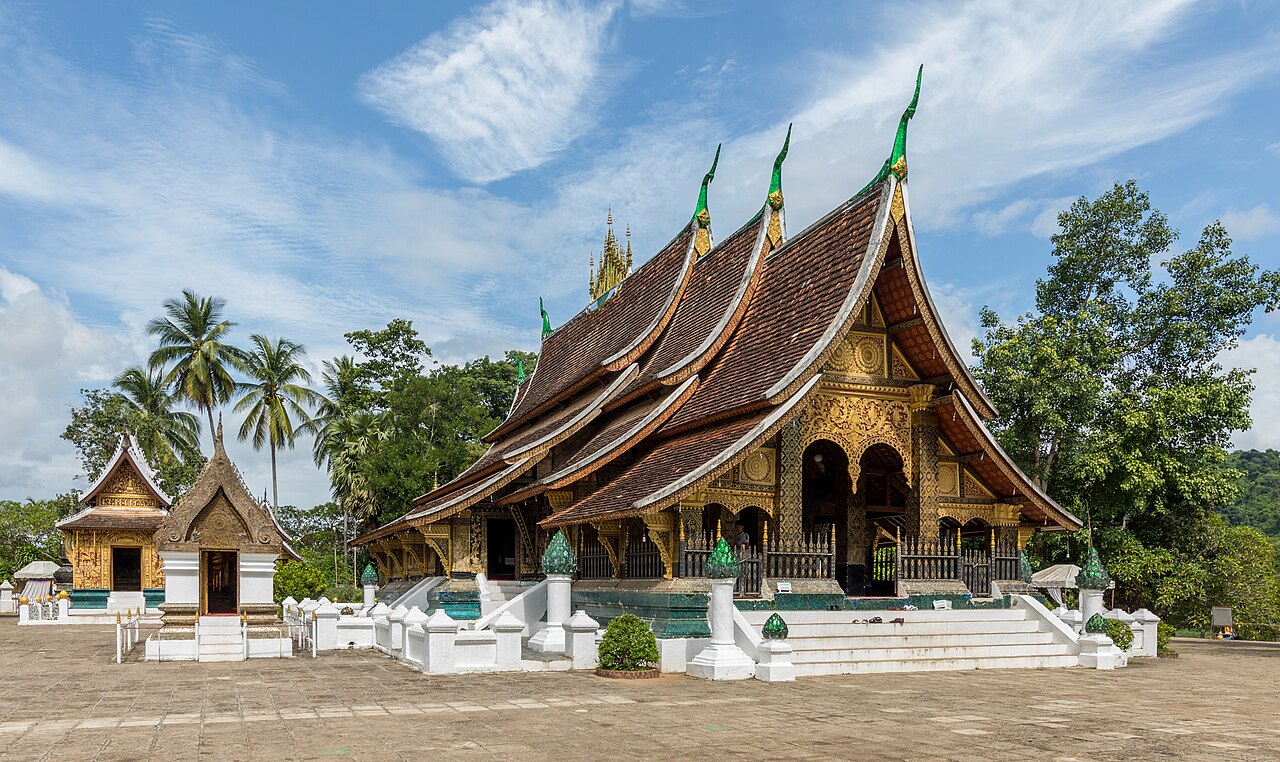
Wat Xieng Thong, built in 1560 at the northern tip of the peninsula, is the finest temple in Laos. Its sim (ordination hall) sweeps low to the ground in three tiered rooflines, their gilded surfaces reading differently at every hour of daylight. The rear exterior wall carries a mosaic of the Tree of Life in coloured glass — deep red and cobalt set against a black ground — the kind of work that takes time to read properly. Climb Mount Phousi at dusk and the inscribed zone spreads below: temple rooftops, the silver ribbon of the Mekong, and forested ridges beyond.
What makes Luang Prabang irreplaceable is the tak bat, the alms-giving procession that takes place at dawn every morning. Orange-robed monks file silently through the streets collecting sticky rice from residents kneeling on the pavement. It is not a performance put on for visitors; it is a daily religious practice unbroken for centuries. Watching quietly from a respectful distance, without flash photography, is the appropriate way to experience it.
Getting there: Luang Prabang International Airport has direct connections from Bangkok, Hanoi, Chiang Mai and Vientiane; the city centre is 4 km from the terminal. Allow: Two to three full days to explore the inscribed zone. Best for: Travellers interested in living Buddhist culture, colonial architecture, and Mekong landscapes.
Vat Phou and Associated Ancient Settlements within the Champasak Cultural Landscape 700 km south — 1.5 hr domestic flight to Pakse, then 1 hr by road
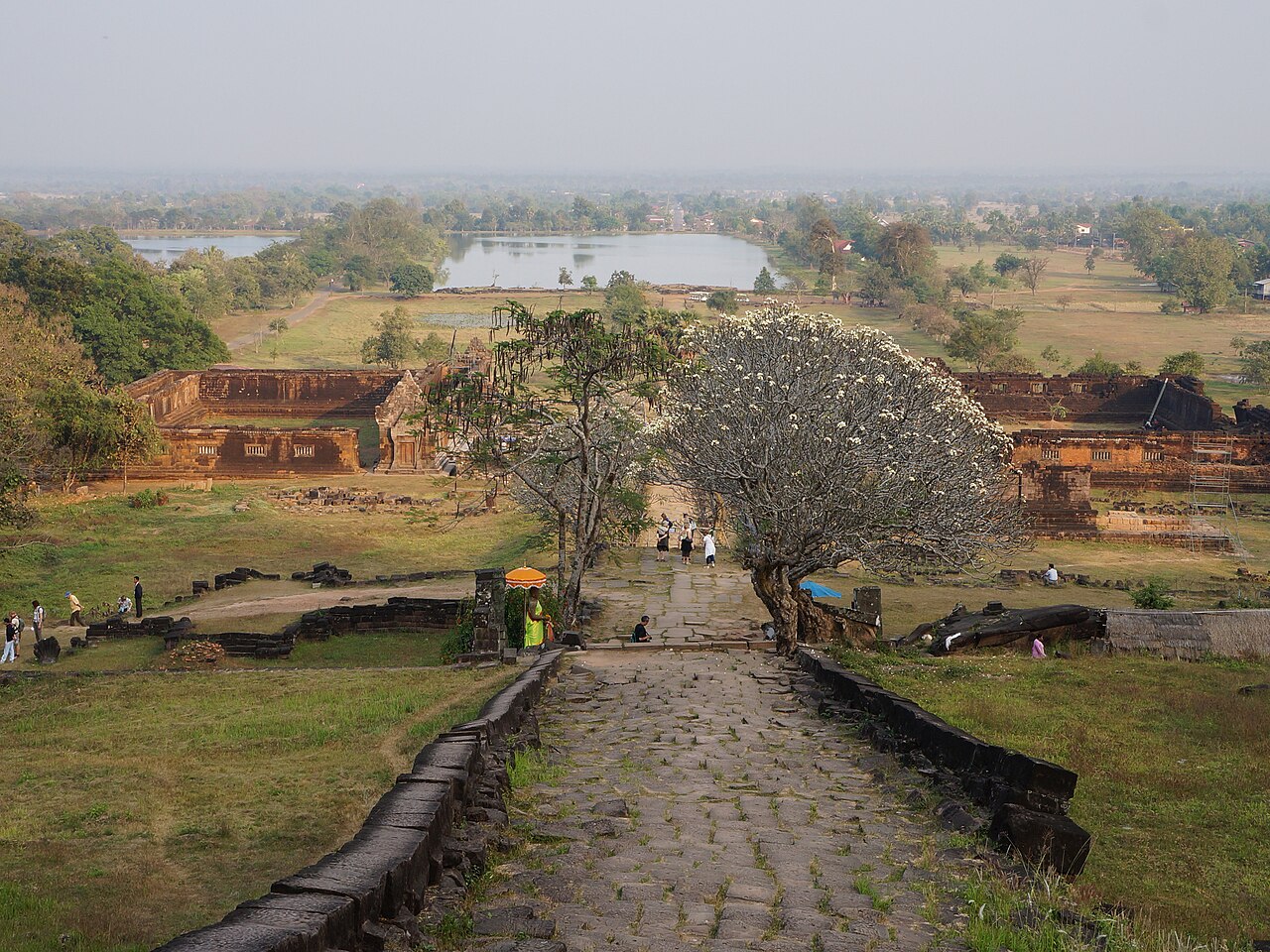
Inscribed in 2001, Vat Phou is a Khmer Hindu-Buddhist temple complex built into the southern face of Phu Kao mountain in Champasak province. The mountain has been considered sacred since at least the 5th century — long before the Khmer empire extended this far south. The main sanctuary dates primarily from the 11th and 12th centuries, which means it predates Angkor Wat. Where Angkor overwhelms with scale, Vat Phou compels with the precision of its relationship to the landscape: the linga-shaped summit of Phu Kao rises directly above the sanctuary, giving the entire complex a vertical axis that was deliberate from the first stone laid.
A 1.5-kilometre processional avenue lined with guardian naga balustrades connects two lower palaces to the upper sanctuary. Frangipani trees — the same species planted here for centuries — root in the stone stairs and grow sideways from crumbling walls, their roots splitting masonry in slow motion. Carvings of Vishnu, Shiva, and the Trimurti survive on the sanctuary walls. The UNESCO inscription encompasses not just the temple but the broader Champasak Cultural Landscape: ancient fish weirs, earthwork reservoirs, and associated settlements that document how this civilisation managed and shaped its territory.
Getting there: Fly Luang Prabang to Pakse (approximately 1.5 hours via Lao Airlines); from Pakse, take a tuk-tuk or hired vehicle 40 km south to Champasak, then a short ferry crossing to the west bank. The site is 9 km south of Champasak town. Allow: Half a day at the site; budget an overnight in Champasak or Pakse to avoid a rushed visit. Best for: Khmer history and archaeology enthusiasts, photographers drawn to dramatic natural settings.
Megalithic Jar Sites in Xiengkhuang — Plain of Jars 230 km southeast — 1 hr domestic flight to Phonsavan, or 8 hr by road
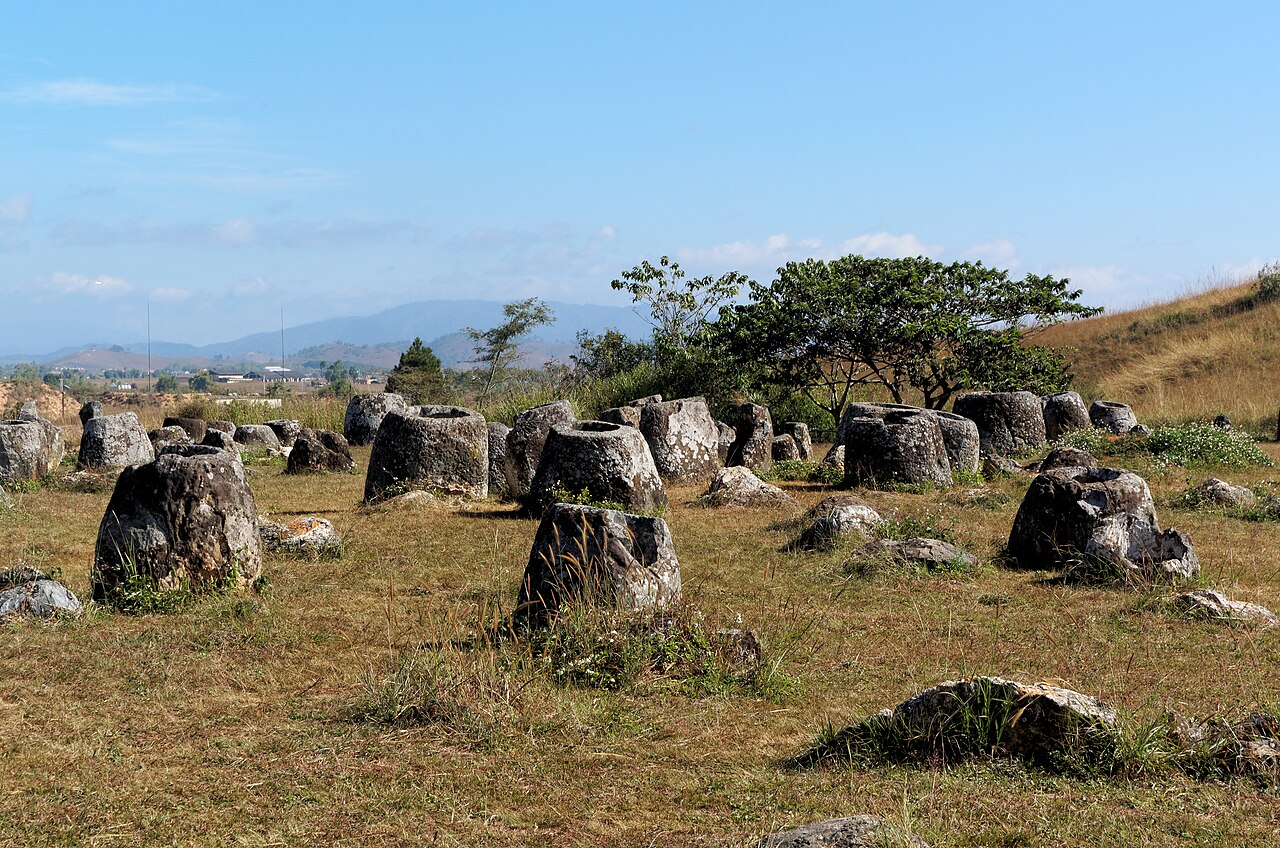
Inscribed in 2019, the Megalithic Jar Sites comprise hundreds of large stone jars distributed across the Xieng Khouang plateau, carved and placed there between approximately 500 BC and 500 AD. The jars are enormous — the largest stand over 3 metres tall and weigh several tonnes — and they are distributed across at least 90 sites, with 15 of those sites forming the inscribed property. Bones, pottery fragments and glass beads found inside and around them suggest a funerary function, though the precise ritual context remains archaeologically unresolved.
The plateau itself is part of what makes the site arresting. The jars sit in open grassland at elevations above 1,000 metres, with long views in every direction. The region was heavily bombed during the Second Indochina War, and unexploded ordnance continues to be cleared; visitors must stay on marked paths. That constraint focuses the experience rather than diminishing it: you move slowly, read the landscape carefully, and understand that this ground has layers of history extending in both directions from the Bronze Age.
Getting there: Fly Luang Prabang to Phonsavan (approximately 1 hour via Lao Airlines, several weekly services); the main jar sites are within 15 km of Phonsavan town. Alternatively, a bus or hired vehicle covers the 230 km route in roughly 8 hours. Allow: One full day to visit two or three sites. Best for: Travellers with an interest in prehistoric archaeology and those seeking landscapes off the main tourist circuit.
Frequently Asked Questions
How many UNESCO World Heritage Sites are near Luang Prabang?
Laos has three UNESCO World Heritage Sites in total, and all three are accessible from Luang Prabang. The Town of Luang Prabang (inscribed 1995) is the city itself. The Vat Phou and Associated Ancient Settlements within the Champasak Cultural Landscape (2001) lie 700 km to the south. The Megalithic Jar Sites in Xiengkhuang — Plain of Jars (2019) are 230 km southeast.
How do you visit Wat Xieng Thong and the Luang Prabang UNESCO site?
The inscribed historic zone is walkable from most hotels in the city centre. Wat Xieng Thong is at the northern tip of the peninsula, about 1.5 km from the Royal Palace Museum — an easy walk or a short tuk-tuk ride. The site has no single entrance ticket; individual temples charge small admission fees, typically 20,000 to 30,000 LAK. Sunrise is the best time to witness the tak bat alms-giving procession; early evening is ideal for climbing Mount Phousi.
Can you combine all three Laos UNESCO sites in one trip?
Yes, but it takes planning. The most efficient sequence is to fly Luang Prabang — Phonsavan (Plain of Jars, 1–2 nights) — Vientiane — Pakse (Vat Phou, 1–2 nights) before returning or continuing south. Dry season (November to April) is the most comfortable period for travel across all three sites; the plateau at Xieng Khouang can be cold at night from December to February. Rainy season (May to October) brings lush landscapes but can affect road conditions around Champasak and the plateau.
What is known about who built the Plain of Jars and why?
The jars were created by an Iron Age culture active on the Xieng Khouang plateau between roughly 500 BC and 500 AD. No written records survive from this period in Laos, so knowledge of the builders comes entirely from archaeological evidence. Excavations have uncovered human bones, ceramic vessels and glass beads in and around the jars, strongly suggesting a funerary purpose — the jars may have held the remains of the deceased, or been used as part of secondary burial rites. The stone used is sandstone and granite, quarried at distances of up to 8 km from some sites. The civilisation that created them had disappeared or transformed beyond recognition well before the Khmer or Lao kingdoms rose to prominence in the region.



.jpg)
