

Tanzania holds four UNESCO World Heritage Sites within reach of Dar es Salaam — a trading city whose own history is inseparable from the Swahili coast that produced them. Stone Town, Kilimanjaro, the Serengeti plains, and the medieval ruins of Kilwa Kisiwani span ecosystems, eras, and cultures that together form one of the world’s most varied heritage itineraries. From Cultural Heritage Online.
Stone Town of Zanzibar 35 min by fast ferry or 20 min by flight
Stone Town is the old quarter of Zanzibar City, a dense grid of lanes cut through coral-rag buildings that have been absorbing traders, pilgrims, and conquerors since at least the tenth century. UNESCO inscribed it in 2000 as an outstanding example of a Swahili coastal trading town, one where Arab, Persian, Indian, and African building traditions merged into something that belongs entirely to the Indian Ocean world. The air inside the narrowest alleys is cool and smells of cloves and salt; sounds arrive muffled — a call to prayer, the clatter of dhow rigging from the harbour a block away.
The architecture does most of the talking. Arab merchants commissioned the carved wooden doors that define nearly every street facade — some carry brass studs borrowed from Indian shipbuilding tradition, others feature Quranic inscriptions framed by geometric floral bands. The Old Fort, built by Omani Arabs between 1698 and 1701 on the site of a Portuguese chapel, stands at the seafront and now serves as a cultural centre. The Palace Museum traces the rise and fall of the Busaidi Sultanate that controlled East African trade in the nineteenth century. The site of the former slave market — where perhaps 50,000 enslaved people passed annually at the trade’s peak — is now occupied by an Anglican cathedral consecrated in 1879, its altar positioned over the whipping post.
Walking Stone Town takes two to three hours at a minimum; a half-day is more honest if you want to sit in the Forodhani night market and watch the strait turn gold at dusk. The ferry crossing from Dar es Salaam’s Kivukoni terminal takes 35 minutes on Azam Marine fast services. Flights depart from Julius Nyerere International and land at Zanzibar’s Abeid Amani Karume Airport in 20 minutes.
Getting there: Fast ferry from Kivukoni terminal, Dar es Salaam, 35 min (Azam Marine); or domestic flight, 20 min. Allow: Half-day to full day. Best for: First-time visitors to Tanzania; history and architecture travellers; anyone combining a beach stay in the archipelago.
Kilimanjaro National Park 300 km northwest — 1 hr 15 min flight or 8 hr bus to Moshi
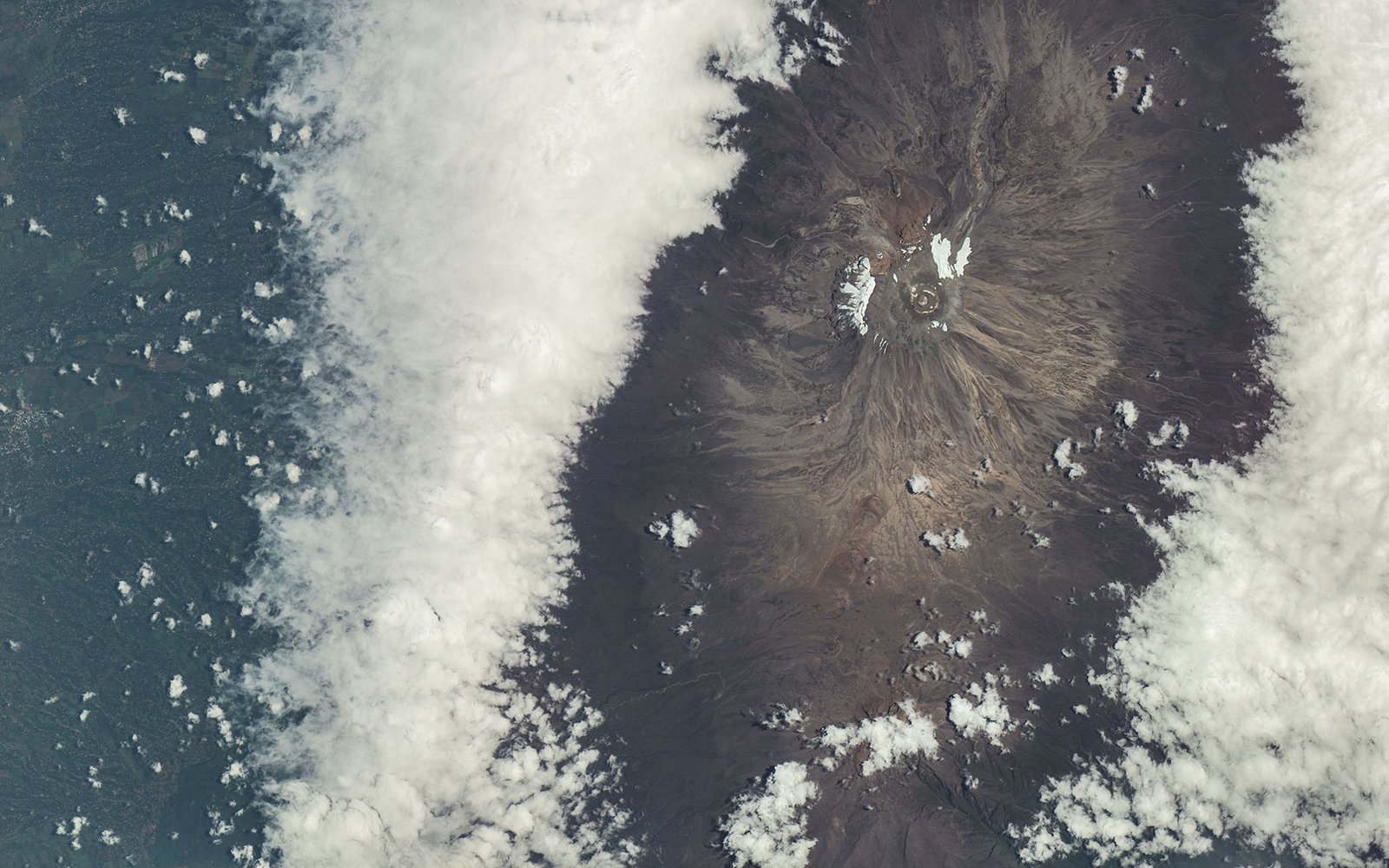
At 5,895 metres, Kilimanjaro is the highest freestanding mountain on Earth and the dominant landmark of northern Tanzania. UNESCO inscribed the national park in 1987, recognising both the ecological significance of its stacked vegetation zones — montane forest, heath and moorland, alpine desert, and the glaciated summit — and the mountain’s scientific record stretching back to the first European documentation by German missionary Johann Rebmann in 1848. The summit crater holds the Furtwängler Glacier, now dramatically smaller than when Hans Meyer and Ludwig Purtscheller first reached Uhuru Peak in 1889, but still a field of cracked blue ice that catches morning light like fractured glass.
Climbers ascend along one of several designated routes. The Machame Route, sometimes called the Whiskey Route, and the longer Lemosho Route are the most popular, both requiring seven to eight days round trip to allow for proper acclimatisation. Neither requires technical climbing experience, but both demand sustained physical effort at altitude — temperatures above 4,000 metres regularly drop below -10°C before dawn. The national park also rewards non-climbers: the lower forest belt around Marangu supports blue monkeys, white-necked ravens, and roughly 1,200 plant species, and day hikes to the park boundary are straightforward from Moshi.
Getting there: Domestic flight from Dar es Salaam to Kilimanjaro Airport (KIA), 1 hr 15 min; or overnight coach to Moshi, approx. 8 hr. Allow: 7–8 days for a summit attempt; 1–2 days for lower forest walks. Best for: Trekkers and altitude hikers; wildlife and botanical travellers using Moshi as a base.
Serengeti National Park 350 km northwest — 1 hr domestic flight to Seronera
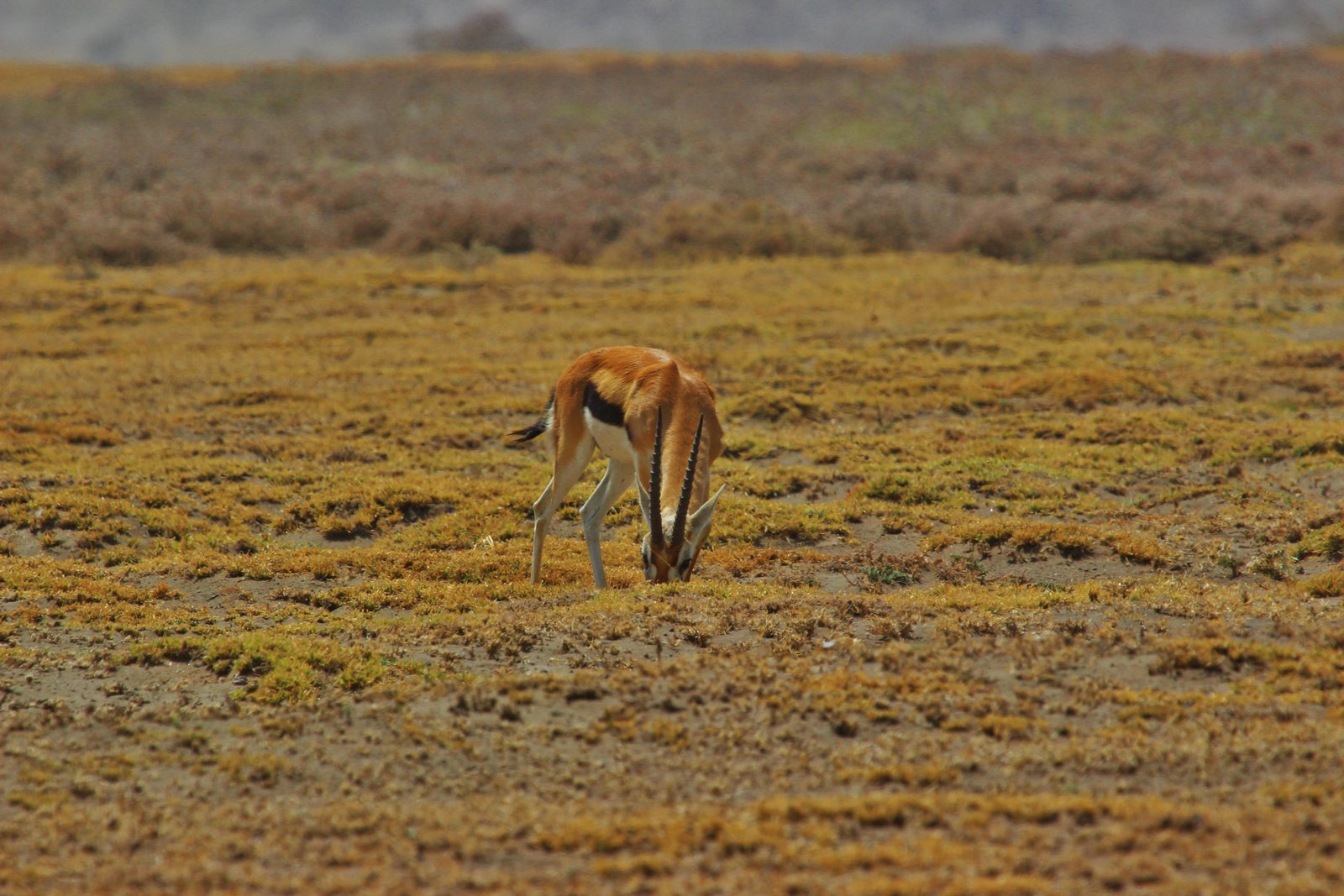
The Serengeti was inscribed in 1981 for one of the most complete large-mammal ecosystems remaining anywhere on the planet. The park covers 14,763 square kilometres of open savanna, riverine woodland, and granite kopjes, and it supports the largest overland animal migration on Earth: roughly 1.5 million wildebeest and 200,000 zebra move in a clockwise circuit across the ecosystem each year, following rainfall and fresh grass. The sound of that movement — hooves on dry earth, the barks of wildebeest calves — carries far across the plain in the dry-season months between June and October.
Game viewing is productive year-round. The southern short-grass plains around Seronera hold resident lion prides and cheetah throughout the year, and the kopje outcrops provide reliable leopard habitat. The Grumeti and Mara rivers mark where the migration crosses north into Kenya’s Masai Mara between July and August — crocodiles wait in numbers at these crossing points that can reach several thousand animals in a single hour. The neighbouring Ngorongoro Conservation Area, inscribed separately in 1979, sits 150 kilometres to the east and contains the world’s largest intact volcanic caldera, home to an enclosed population of roughly 25,000 large mammals.
Getting there: Domestic flight from Dar es Salaam to Seronera airstrip, approx. 1 hr; charter flights also serve Grumeti and Kogatende for northern circuit access. Allow: Minimum 3 nights; 5–7 nights to cover southern and northern circuits. Best for: Wildlife photographers; first safari travellers; those combining with Ngorongoro.
Ruins of Kilwa Kisiwani and Ruins of Songo Mnara 320 km south — 1 hr domestic flight to Kilwa Masoko
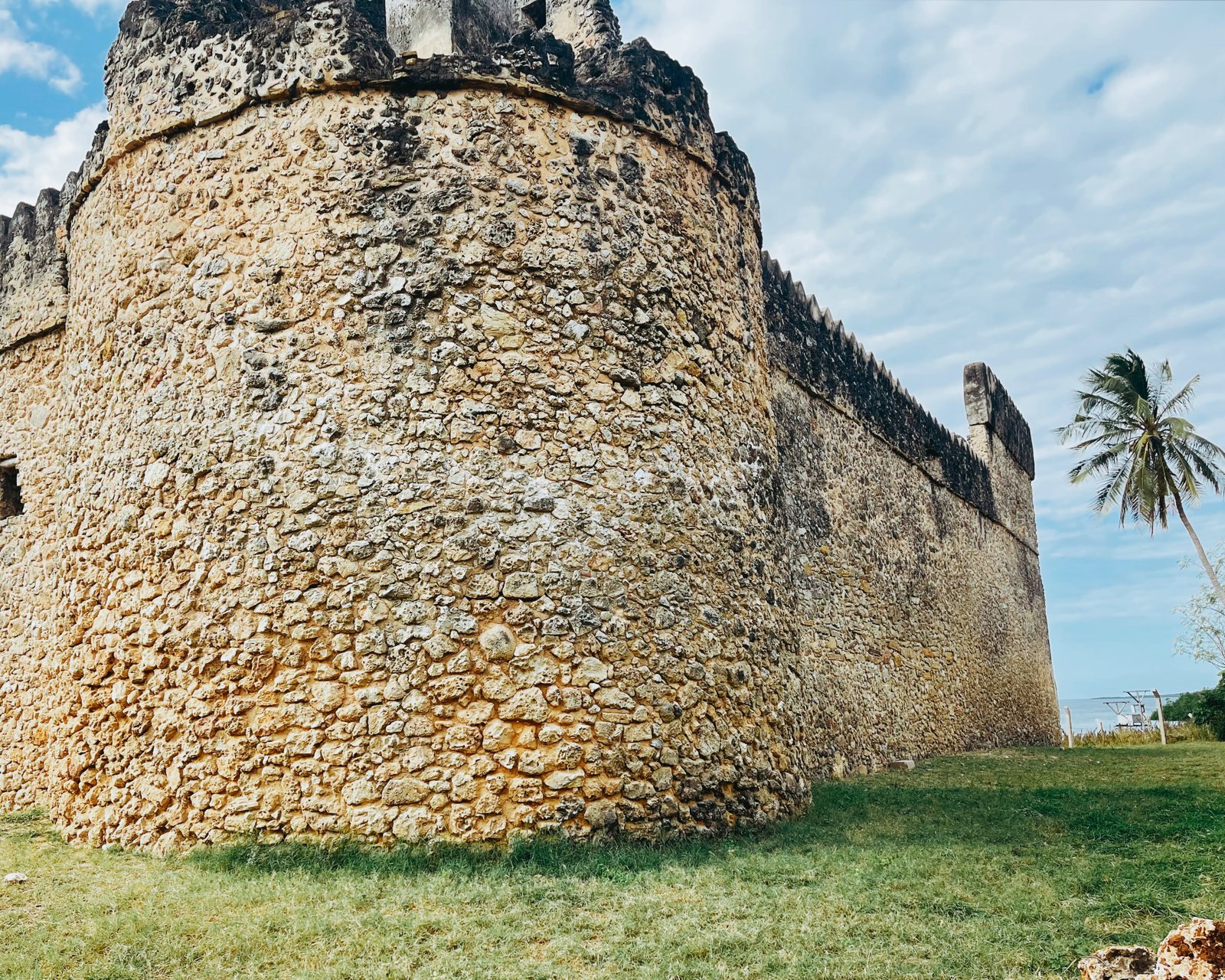
Kilwa Kisiwani and the nearby island of Songo Mnara preserve the most substantial remains of the medieval Swahili city-states that controlled Indian Ocean trade between the thirteenth and sixteenth centuries. UNESCO inscribed both in 1981. At its height in the fourteenth century, the Sultanate of Kilwa was among the wealthiest polities in sub-Saharan Africa, taxing gold transported overland from Zimbabwe and re-exporting it across the Indian Ocean. The Moroccan traveller Ibn Battuta visited in 1331 and described Kilwa as one of the finest cities in the world.
What remains is an extraordinary field of coral-stone architecture: the Great Mosque, the largest ancient mosque on the East African coast, with its forest of vaulted ceilings still partly intact after seven centuries; the Husuni Kubwa palace complex with its octagonal bathing pool; and the Gereza Fort, built by the Portuguese in the early sixteenth century over the ruins of earlier structures. The stones are pitted and pale, warm to the touch in the afternoon, and the site is almost always quiet — access by dhow from Kilwa Masoko takes about fifteen minutes, and visitor numbers remain low enough that you can stand inside the Great Mosque with nothing but the sound of the channel and the wind through the roof apertures.
Getting there: Domestic flight from Dar es Salaam to Kilwa Masoko, approx. 1 hr; then dhow to Kilwa Kisiwani island, 15 min. Road access via the A7 highway is possible but takes approximately 7 hr from Dar es Salaam. Allow: Half-day on the island; full day if visiting Songo Mnara. Best for: Pre-colonial African history; Islamic architecture; travellers willing to seek out genuinely off-circuit sites.
Frequently Asked Questions
How many UNESCO World Heritage Sites are near Dar es Salaam?
Four UNESCO World Heritage Sites are accessible from Dar es Salaam: the Stone Town of Zanzibar (inscribed 2000), Kilimanjaro National Park (1987), Serengeti National Park (1981), and the Ruins of Kilwa Kisiwani and Ruins of Songo Mnara (1981). Tanzania holds seven UNESCO sites in total; the Ngorongoro Conservation Area (1979) and the Selous Game Reserve — now Nyerere National Park (2014) — are also within the country, with the latter currently on the UNESCO Danger List.
How do I visit Stone Town from Dar es Salaam?
The most practical option is the Azam Marine fast ferry from Kivukoni terminal in central Dar es Salaam, which reaches Stone Town in approximately 35 minutes. Ferries run multiple times daily; booking in advance is advisable during high season (July–August and December–January). Alternatively, Precision Air and other domestic carriers operate 20-minute flights between Julius Nyerere International and Zanzibar’s Abeid Amani Karume Airport. A day trip from Dar es Salaam is feasible, though an overnight stay allows a much fuller experience of Stone Town and the archipelago.
When is the best time to visit the Serengeti and combine it with other sites?
The dry season from late June through October offers the best game viewing across the Serengeti — grass is short, animals concentrate around water sources, and the wildebeest migration reaches its northern circuit and Mara River crossings between July and September. This same window suits Kilimanjaro trekking, when summit conditions are most stable, making a combined Tanzania itinerary of 12–14 days viable. Stone Town and Kilwa can be visited year-round; Kilwa’s coastal roads are easier to navigate in the dry months if you are travelling by road rather than flying.
What was the Sultanate of Kilwa and why does it matter historically?
The Sultanate of Kilwa was a Swahili city-state founded in the tenth century on an island off the southern Tanzanian coast. By the fourteenth century it controlled the export of gold from the Zimbabwe Plateau, taxing trade caravans and re-distributing goods across the Indian Ocean to Arabia, Persia, and India. Its wealth funded some of the most sophisticated coral-stone architecture in sub-Saharan Africa, including the Great Mosque at Kilwa Kisiwani — still the largest medieval mosque on the East African coast. Portuguese forces seized the town in 1505, ending its role as an independent commercial power, but the ruins that remain are among the best-preserved evidence of pre-colonial urban civilisation in Africa south of the Sahara.


.jpg)

.jpg)
