
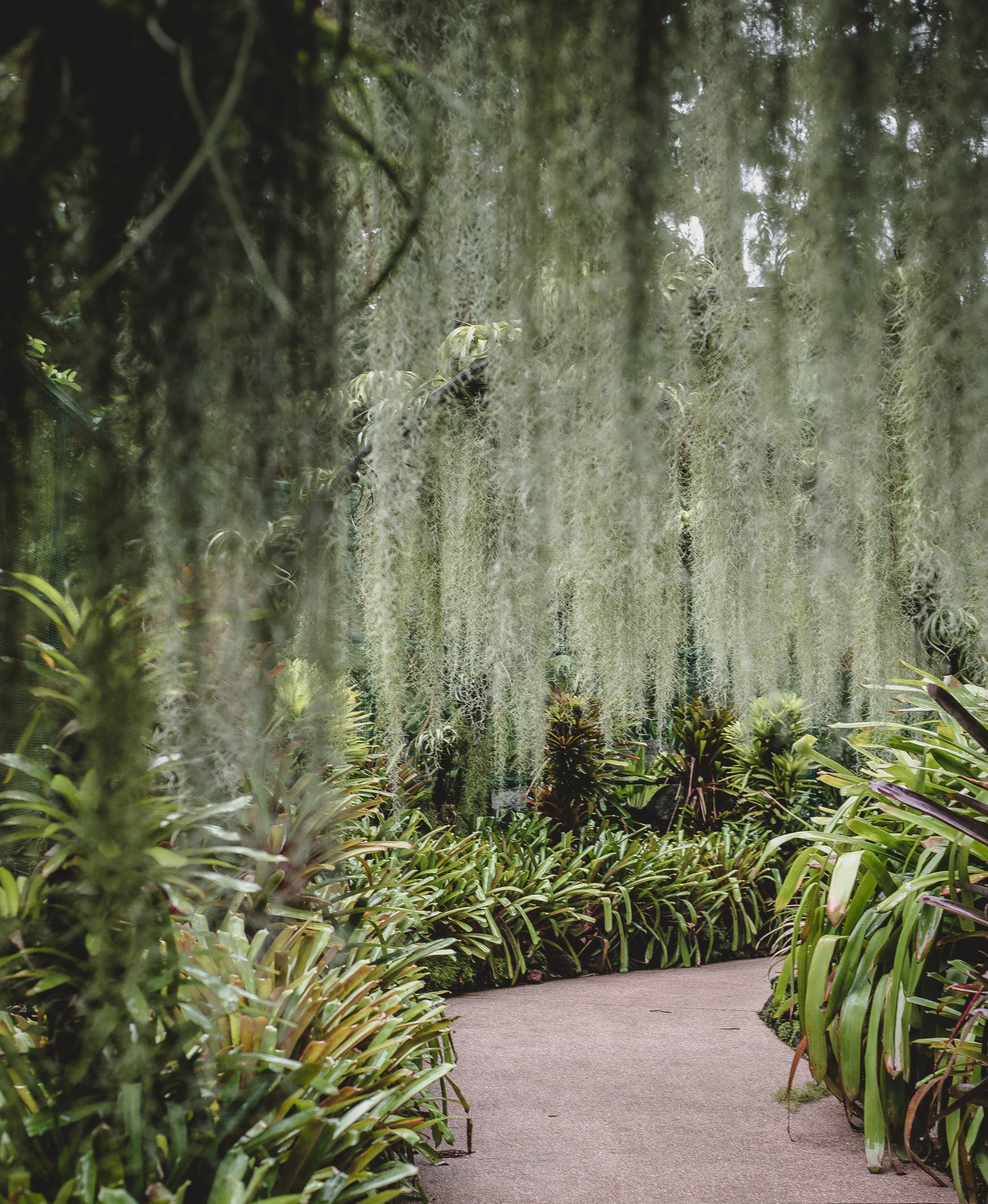
Singapore sits at the southern tip of the Malay Peninsula, placing it within a few hours of some of Southeast Asia’s most layered UNESCO-inscribed landscapes — from its own tropical garden heritage to 600-year-old port cities and primeval Sumatran rainforest. These are four sites that reward the journey, each for entirely different reasons. From Cultural Heritage Online.
Singapore Botanic Gardens City centre — MRT Botanic Gardens (CC19/DT9)
The Singapore Botanic Gardens opened in 1859 and have never closed. That continuity matters: across 82 hectares of Tanglin, the gardens carry an unbroken record of tropical plant science, colonial-era landscape design, and the rubber cultivation research that transformed the regional economy in the early twentieth century. UNESCO inscribed the gardens in 2015 — one of only three botanic gardens on the World Heritage list — citing their outstanding contribution to science, education, and conservation over 160 years.
Walk the Tyersall Avenue edge in the early morning and the air is dense with damp earth and citrus. The Evolution Garden traces plant life from 400-million-year-old fern relatives to modern flowering species; it reads as much as a geology lesson as a horticultural one. The National Orchid Garden, set on a slope above Swan Lake, holds more than 1,000 species and 2,000 hybrids — including several named after visiting heads of state. The oldest rubber tree in Singapore stands near the Tanglin Core, a survivor of Henry Ridley’s 1888 propagation experiments that seeded the regional plantation industry.
The Bandstand and colonial bungalows along the inner paths give the gardens a layered texture that a simple park cannot replicate. This is heritage that is still actively used — families, runners, school groups, researchers — all sharing the same paths on any given morning.
Getting there: MRT Circle Line or Downtown Line to Botanic Gardens station; the Tanglin Gate entrance is a two-minute walk. Allow: 2–3 hours minimum; the Orchid Garden charges a separate admission fee. Best for: botanists, early risers, families, and anyone who wants Singapore’s only UNESCO site on foot.
Historic Centre of George Town, Penang 380 km north — 55 min flight or 4 hr by road
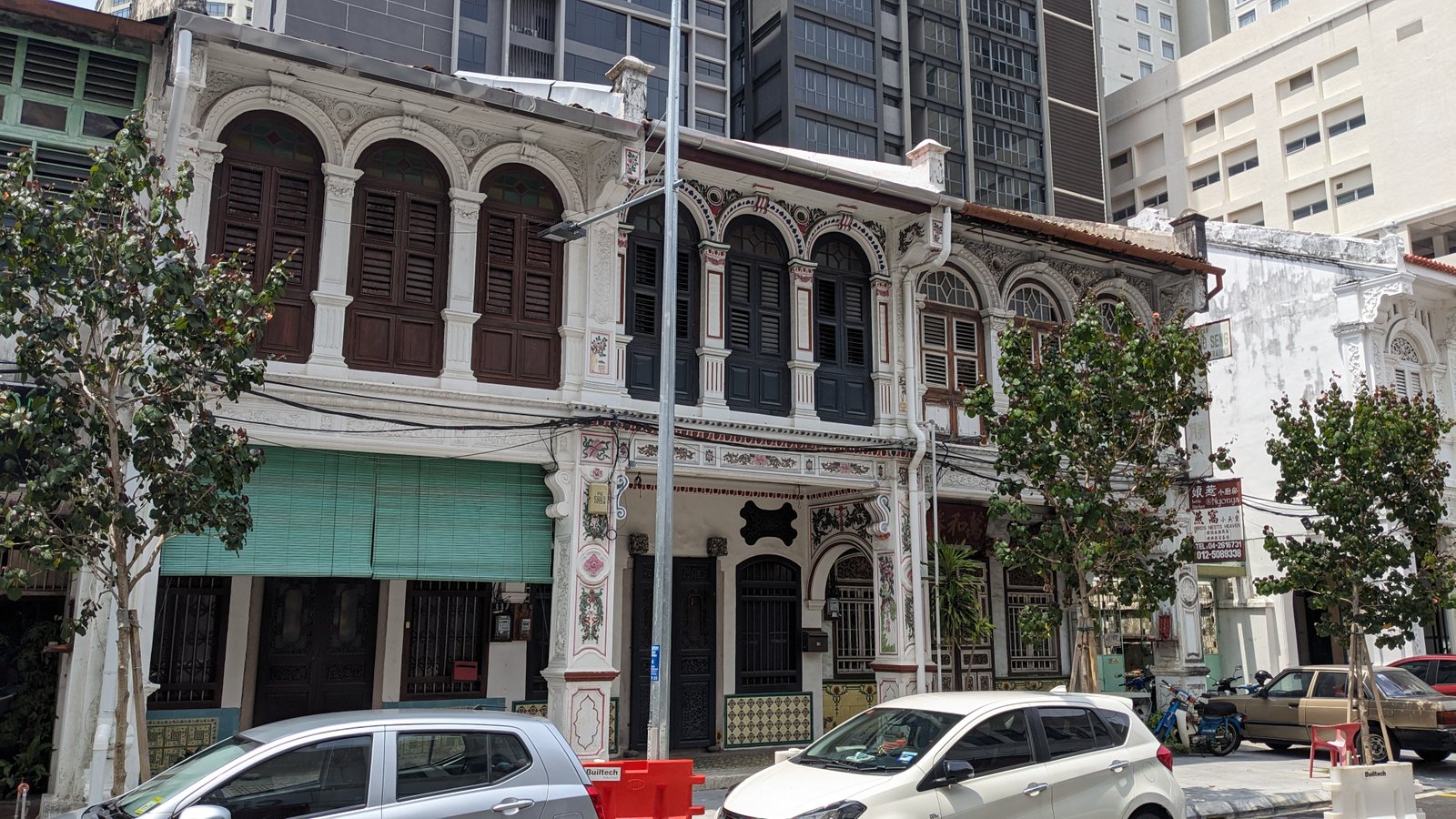
UNESCO inscribed George Town jointly with Melaka in 2008, under the designation Historic Cities of the Straits of Malacca. The inscription recognises what developed over four centuries of maritime trade: a townscape where British colonial administration, Chinese merchant guilds, Indian trading communities, and Peranakan (Straits-born Chinese) families built side by side, producing architecture found nowhere else in Southeast Asia.
The core zone of about 109 hectares compresses an extraordinary density of building types. Clan jetties extend over the water on the eastern shore, their houses occupied by the same surnames that built them in the nineteenth century. On Armenian Street, the Khoo Kongsi clan house fills an entire block with carved timber screens, tilework, and a covered courtyard that echoes under the weight of its own ornamentation. Fort Cornwallis, where Francis Light landed in 1786 to claim the island for the East India Company, anchors the waterfront. The scale is intimate: most streets are walkable in an hour, but the detail takes days.
George Town functions as a living city first. Hawker centres, morning markets, and art studios occupy the same shophouses as boutique hotels. The conservation zone protects facades and structural elements but permits active commercial use — which keeps the streets genuinely inhabited rather than preserved as a theme park.
Getting there: Fly Singapore–Penang (55 min, multiple daily departures); or take the KTM train to Butterworth and cross by ferry (10 min). Alternatively, private car or bus via the North-South Expressway takes approximately 4 hours. Allow: Minimum 2 days to cover the core zone and clan jetties. Best for: Architecture enthusiasts, food travellers, and those interested in multicultural urban history.
Historic City of Melaka 220 km north — 2.5 hr by coach
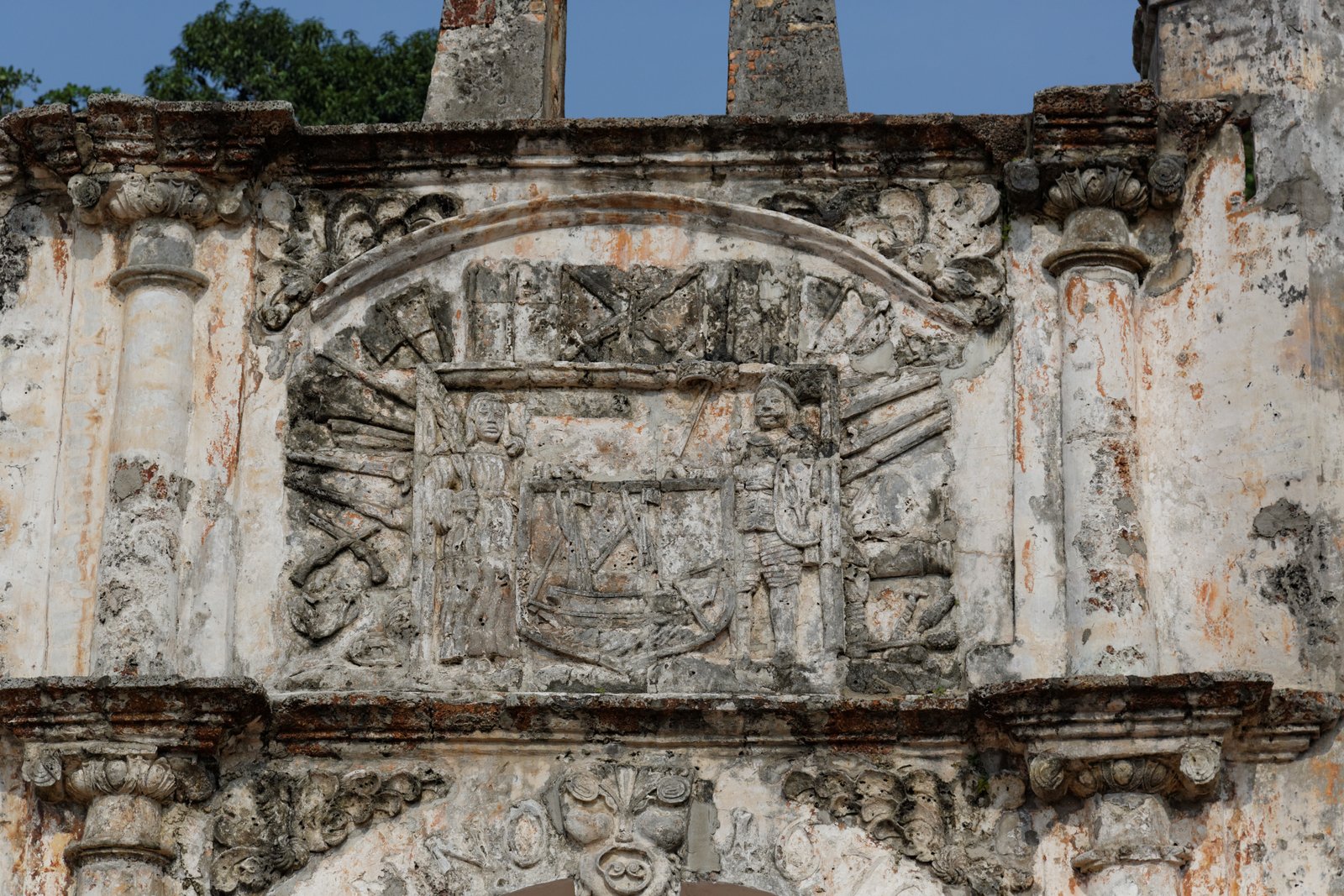
Melaka is older than any other site on this list. The Sultanate of Malacca formed here around 1400, and within a century the port controlled the spice trade through the narrowest point of the straits. The Portuguese took the city in 1511 — the first European colonial conquest in Southeast Asia — followed by the Dutch in 1641 and the British in 1824. Each layer left buildings that still stand.
The Stadthuys, built by the Dutch around 1650, is one of the oldest surviving Dutch structures in Asia: a solid block of terracotta-red plaster that absorbs afternoon heat and glows an almost amber colour in low light. Beside it, Christ Church (1753) uses the same red laterite stone for its interior columns. The Porta de Santiago gate — the single surviving arch of the Portuguese A Famosa fortress — stands fifty metres away on a low hill. A few minutes’ walk brings you into Jonker Street and the Baba Nyonya quarter, where Peranakan mansions display the same synthesis of Chinese craft and colonial Malay influence found in George Town, but with a distinct Melakan inflection in the tilework and painted shutters.
The UNESCO inscription covers a core zone along the river mouth and includes the historic hilltop, the Dutch administrative quarter, and the Jonker Street heritage zone. Melaka receives far fewer international visitors than Penang and remains more disorienting and more rewarding for it.
Getting there: Coaches depart Golden Mile Complex, Singapore, roughly every 30 minutes; journey time 2.5–3 hours depending on border queues at Tuas or Woodlands. Taxis and private transfers are faster. Allow: One full day is feasible; an overnight stay allows the riverfront at dusk and the morning market. Best for: Colonial history, Peranakan culture, and travellers wanting a quieter alternative to Penang.
Tropical Rainforest Heritage of Sumatra 1 hr flight to Medan, then overland
This is not a day trip. The Tropical Rainforest Heritage of Sumatra, inscribed in 2004, covers three national parks — Gunung Leuser, Kerinci Seblat, and Bukit Barisan Selatan — spread across 2.5 million hectares of the Sumatran interior. The site holds some of the highest concentrations of plant and animal species in the world, including orangutans, Sumatran tigers, Sumatran elephants, and the Rafflesia arnoldii, the largest individual flower on earth.
Gunung Leuser, in the north of Sumatra near Bukit Lawang, is the most accessible entry point. The rainforest canopy closes overhead at a height that makes the understorey feel aquatic — filtered green light, constant moisture, the sound of water moving through roots that never fully dry out. Orangutans move through the upper canopy in the early morning; on a multi-day trek you may not see the forest floor at all. The three parks are on the UNESCO List of World Heritage in Danger (since 2011), under pressure from illegal logging and agricultural encroachment — a factor that makes access both more urgent and more complex to arrange responsibly.
Travel independently only with advance planning: licensed guides are required inside Gunung Leuser, and road conditions between Medan and Bukit Lawang vary seasonally. This site rewards serious travellers who have prepared for the logistics.
Getting there: Fly Singapore to Medan (approximately 1 hour; Scoot and Batik Air operate this route). From Medan, hire a driver to Bukit Lawang (3.5 hr). Alternatively, take a ferry from Harbourfront to Batam, then onward transport into Sumatra — slower but viable for budget travellers. Allow: Minimum 3 nights at the forest edge; 5–7 days for a proper trek. Best for: Wildlife and conservation travellers, hikers, and those with experience of remote jungle environments.
Frequently Asked Questions
How many UNESCO World Heritage Sites are near Singapore?
Singapore has one UNESCO World Heritage Site of its own — the Singapore Botanic Gardens, inscribed in 2015. Within the wider region, three additional sites are accessible from Singapore: the Historic Centre of George Town and the Historic City of Melaka (both inscribed in 2008 as the Historic Cities of the Straits of Malacca), and the Tropical Rainforest Heritage of Sumatra (inscribed 2004). That gives a total of four UNESCO-inscribed sites reachable from Singapore, ranging from a city-centre garden to remote Sumatran jungle.
What should I see at the Singapore Botanic Gardens?
The National Orchid Garden is the most concentrated single attraction — it holds over 1,000 species and 2,000 hybrids across a landscaped hillside and charges a modest separate entry fee. The Evolution Garden traces 400 million years of plant history and is free with general admission. For historical context, the area around the Tanglin Core includes the oldest rubber tree in Singapore, a living remnant of the 1888 experiments that launched the regional plantation industry. Morning visits (before 9 am) give you cooler temperatures and the garden largely to yourself.
Can I visit George Town and Melaka on the same trip from Singapore?
Yes, and many travellers do. The practical routing is Singapore to Melaka by coach (2.5 hr north), then Melaka to Penang by bus or train (3–4 hr further north), finishing with a flight back to Singapore from Penang. This takes 5–7 days at a comfortable pace — enough for a full day in Melaka and two days in George Town. Alternatively, fly to Penang first and work south by road, ending with the coach back from Melaka to Singapore. Both sites are inscribed under the same UNESCO designation, which makes the combined visit a coherent heritage itinerary rather than two separate detours.
Why is the Tropical Rainforest Heritage of Sumatra on the UNESCO Danger List?
UNESCO placed the site on its List of World Heritage in Danger in 2011, citing illegal logging, agricultural conversion — particularly palm oil expansion — poaching, and road construction within the protected zones. The three national parks (Gunung Leuser, Kerinci Seblat, Bukit Barisan Selatan) are not contiguous, which makes coordinated protection harder across different provincial administrations. Conservation organisations continue active work in the Gunung Leuser area in particular, and responsible tourism with licensed operators contributes directly to the economic case for maintaining forest cover.


.jpg)

.jpg)