Within two hours of Lisbon, six UNESCO World Heritage Sites span a thousand years of architecture, faith and empire — from a 12th-century Cistercian church to a hilltop Romantic palace visible from the capital on a clear day. From Cultural Heritage Online.
Monastery of the Hieronymites and Tower of Belém 20 min by tram
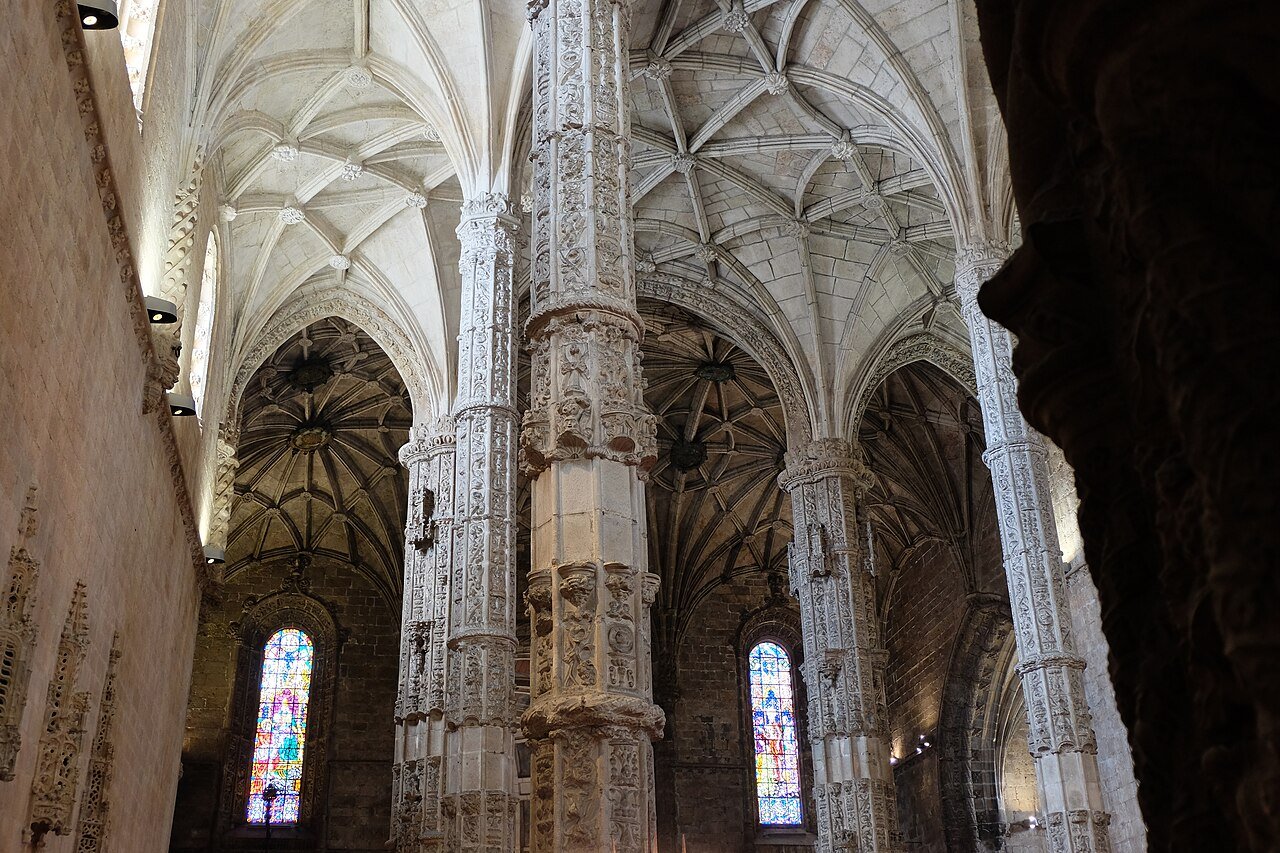
Inscribed jointly in 1983, the Hieronymites Monastery and the Tower of Belém together anchor Portugal’s Age of Discovery in stone. Construction of the monastery began in the early 1500s near the Tagus embarkation point from which Vasco da Gama set sail for India, funded by a levy on the Portuguese India trade. The building is the supreme statement of the Manueline style — Portugal’s own late-Gothic idiom, layered with ropes, armillary spheres and maritime motifs carved into honey-coloured limestone. Inside the church, the remains of da Gama and poet Luís de Camões rest in elaborate tombs relocated here in 1880. A short walk west along the riverbank, the Tower of Belém was designed by Francisco de Arruda and built between 1514 and 1519. At 30 metres tall, it served as a ceremonial gateway and embarkation point, its four-storey silhouette still rising from the same Tagus shore where the Atlantic voyages departed. On a bright morning the carved balconies cast sharp shadows over pale Lioz limestone, and the smell of the river reaches the upper terrace.
Getting there: Tram 15E from Praça do Comércio, approximately 20 minutes. Allow: 3 hours for both sites. Best for: The two monuments complement each other perfectly in a single Belém morning, and the monastery cloister is among the finest Manueline spaces in Europe.
Cultural Landscape of Sintra 40 min by train
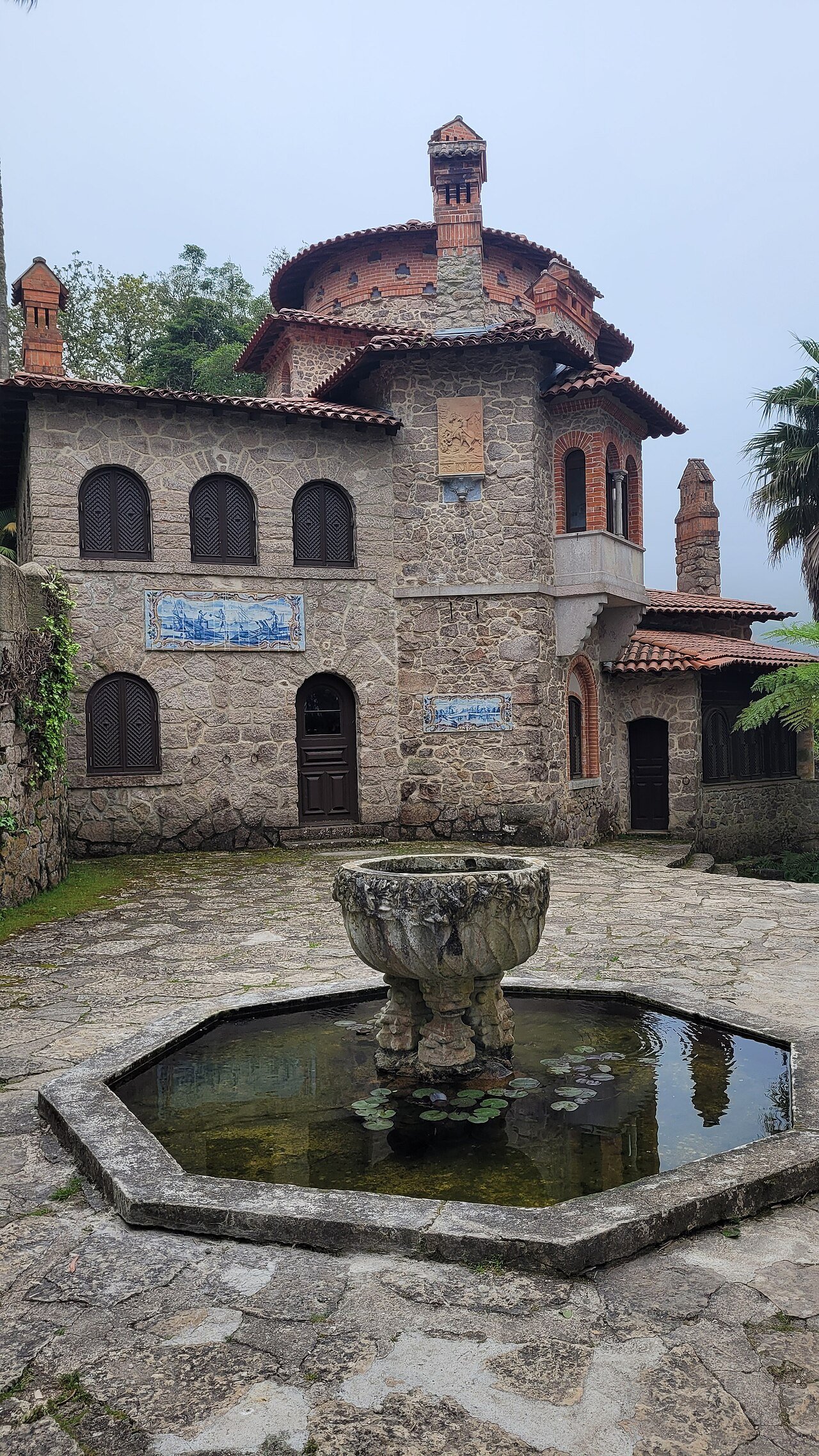
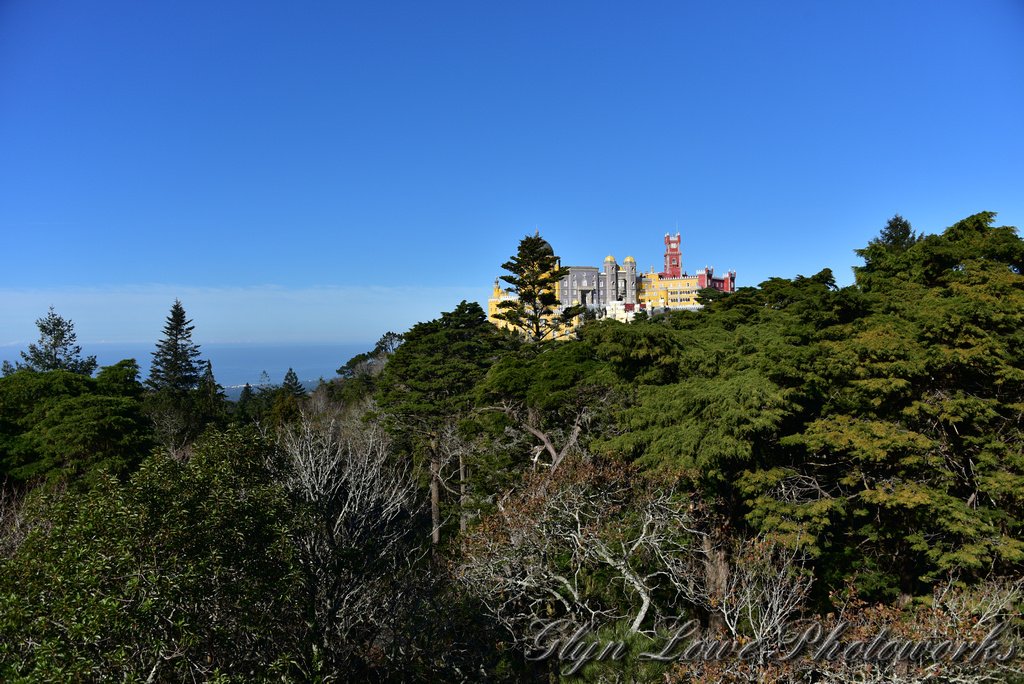
The Cultural Landscape of Sintra was inscribed in 1995 as one of the outstanding expressions of 19th-century Romanticism in the world. Rising from a wooded ridge above the town, Pena Palace is its defining landmark — designed by German mining engineer Wilhelm Ludwig von Eschwege at the direction of King Ferdinand II and built between 1842 and 1854. The palace assembles Neo-Gothic, Neo-Manueline, Neo-Islamic and Neo-Renaissance elements into a single chromatic mass of yellow ochre and red terracotta. The surrounding Pena Park covers more than 200 hectares of exotic woodland, where tree ferns from Australia grow alongside American redwoods. Below the ridge, the town holds the National Palace with its twin conical chimneys, the ruined Moorish Castle and the overgrown gardens of Monserrate. From the palace terraces on a clear day, the Atlantic ocean and the Tagus estuary are both visible at once — a panorama roughly 60 kilometres wide.
Getting there: CP or Fertagus train from Rossio or Oriente stations, approximately 40 minutes. Allow: 4–5 hours. Best for: The density of monuments within walking or shuttle distance makes Sintra the most rewarding single day trip from Lisbon.
Monastery of Batalha 1 hr 30 min by bus
Batalha Monastery was inscribed in 1983, and its construction history alone tells a story of national ambition. Building began in 1386 in fulfilment of a vow made by King John I after the Portuguese victory at the Battle of Aljubarrota in 1385, and continued through seven successive reigns until around 1517 — more than 130 years of uninterrupted building. Architect Afonso Domingues started the project; Huguet took over in 1402 and introduced the Flamboyant Gothic vocabulary that defines the exterior. The nave rises 32.4 metres, its weight carried on piers so slender that the interior feels disproportionately tall. The Founder’s Chapel houses the joint tomb of John I and his English wife Philippa of Lancaster, while the Royal Cloister displays intricate Manueline tracery in its arches. The Unfinished Chapels, their roofless vaults open to the sky since the 16th century, are the most photographed element — the 15-metre portal was completed in 1509 and remains one of the most elaborate carved surfaces in Portugal.
Getting there: Rede Expressos bus from Sete Rios terminal, approximately 1 hour 30 minutes. Allow: 2–3 hours. Best for: Combines easily with Alcobaça for a full day on the so-called Route of the Monasteries, both sites accessible via the same bus corridor.
Monastery of Alcobaça 1 hr 30 min by bus
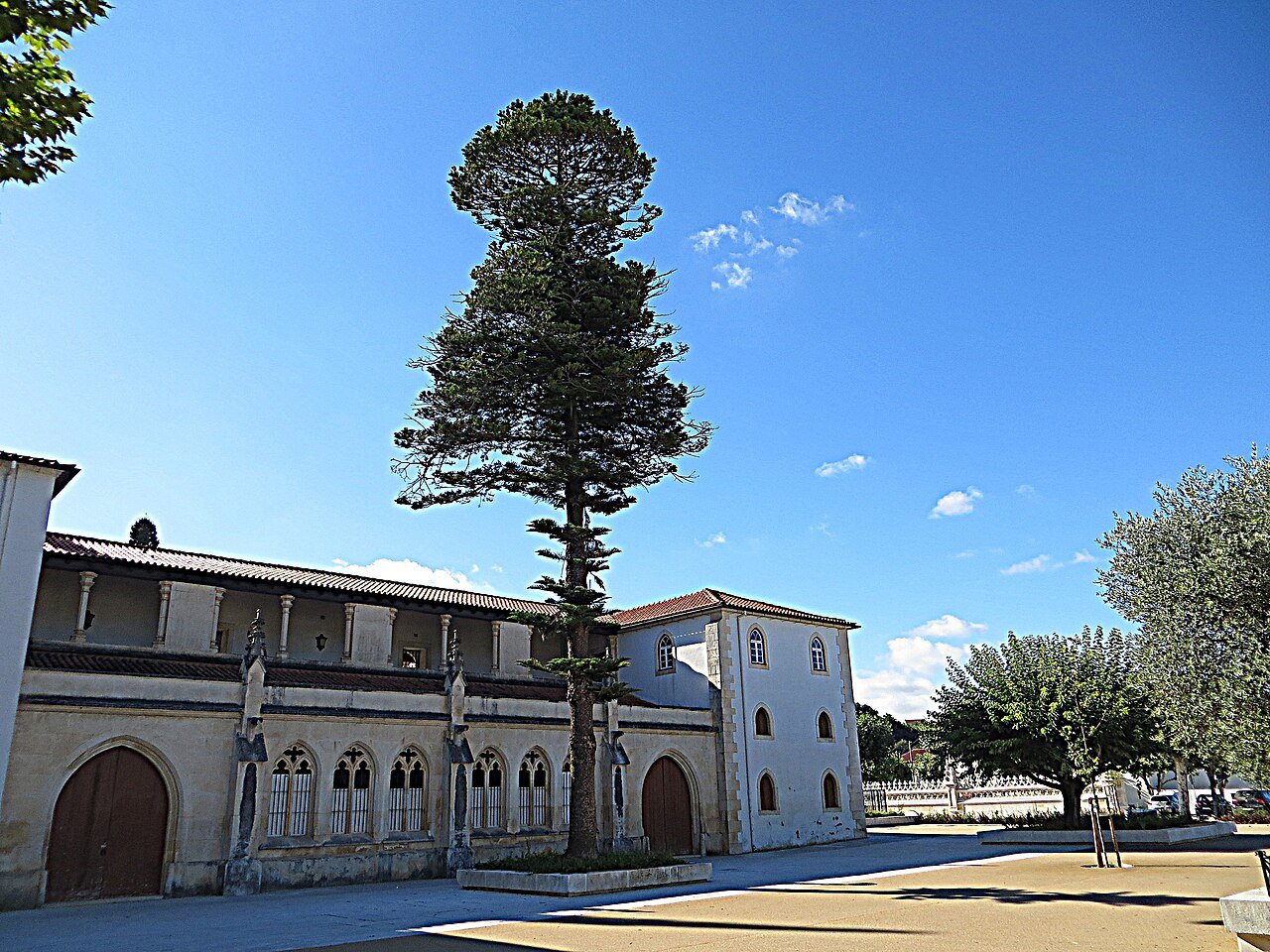
The Monastery of Alcobaça received its UNESCO inscription in 1989, and it represents the first fully Gothic building on Portuguese soil. King Afonso I — Afonso Henriques, Portugal’s founding monarch — established the monastery in 1153 as a gift of land to Bernard of Clairvaux, following the Cistercian conquest of Santarém from Moorish forces. Cistercian monks developed the site according to their characteristic austerity: the church measures 106 metres in length, with lateral aisles rising 20 metres to match the central nave height, making it still the largest Portuguese church. The space is cool and shadowless, its unadorned limestone demanding the eye move along the structure rather than rest on ornament. In the transept, the tombs of King Pedro I and Inês de Castro are among the finest Gothic funerary sculptures in Europe — carved in the 14th century with biblical scenes and supported by stone lions. During the reign of King Manuel I, a Manueline second storey was added to the cloister, and the monastery operated until the dissolution of religious orders in 1834.
Getting there: Bus from Sete Rios terminal, approximately 1 hour 30 minutes; combine with Batalha on the same day. Allow: 2 hours. Best for: The pairing of Gothic austerity with exceptional medieval sculpture makes Alcobaça a counterpoint to the ornate Manueline buildings at Batalha and Belém.
Convent of Christ, Tomar 2 hrs by bus
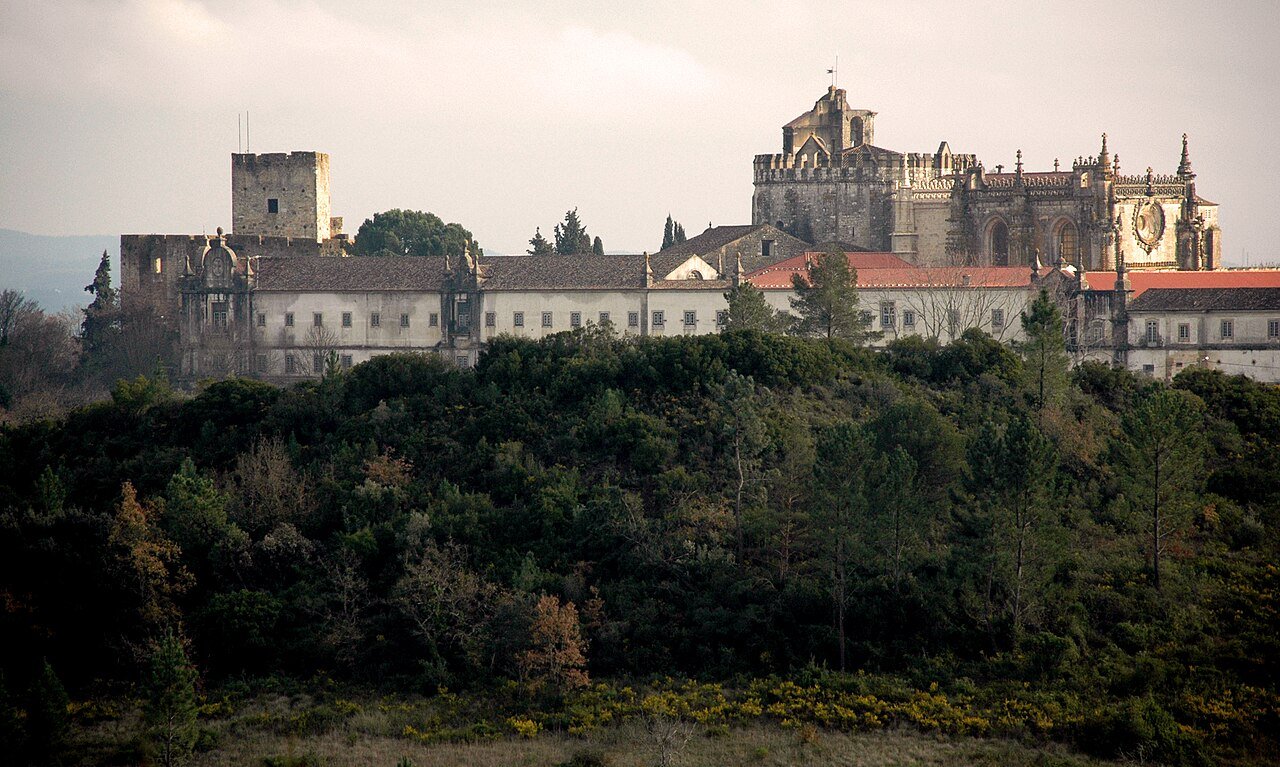
Inscribed in 1983, the Convent of Christ in Tomar is the most architecturally layered of the six sites, compressed onto a hill above the Nabão River and spanning the 12th to the 16th century without interruption. The Knights Templar established their Portuguese castle here in 1118; Grand Master Gualdim Pais completed the Charola — a 16-sided Romanesque oratory modelled on the Holy Sepulchre in Jerusalem — around 1160. The interior of the Charola is a circular drum, its walls covered with gilded Manueline decoration added later. King Manuel I commissioned a rectangular nave from 1510 onward, and the architects Diogo de Arruda and Juan de Castillo covered it with the ropes, coral, armillary spheres and Order of Christ crosses that define Manueline carving at its most confident. The Chapter House window, executed between 1510 and 1513, is the site’s single most celebrated object — an eruption of vegetal and maritime forms at a scale that has to be seen to be registered. Eight cloisters, built across the 15th and 16th centuries, connect the complex.
Getting there: Rede Expressos bus from Sete Rios terminal, approximately 2 hours. Allow: 2–3 hours. Best for: The Charola rotunda and the Manueline Chapter House window reward visitors who arrive with time to sit and look rather than move through quickly.
Historic Centre of Évora 1 hr 30 min by train
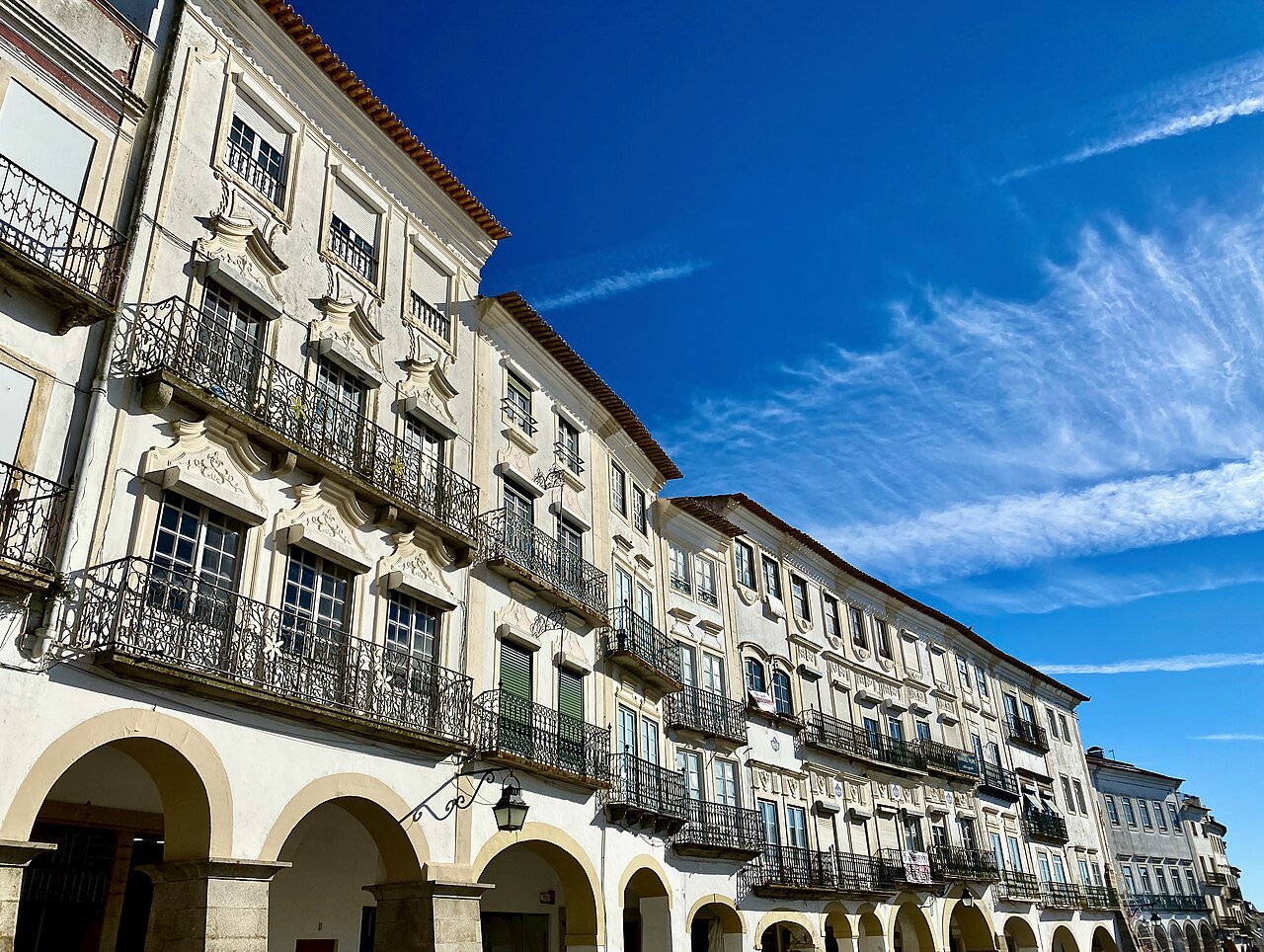
The Historic Centre of Évora was inscribed in 1986, recognised for a continuity of occupation and monumental building that extends from Roman conquest in 57 BC to the present. The Roman Temple of Évora, standing in the centre of the old city, dates to the first century and was probably erected in honour of the Emperor Augustus. Fourteen Corinthian columns survive intact, their granite shafts rising 7.68 metres — the temple endured because the medieval city used it as a slaughterhouse and later as a public weighing room, inadvertently preserving it from quarrying. The Cathedral of Évora was built primarily between 1280 and 1340, one of the most substantial Gothic monuments in Portugal; its pipe organ dates to around 1566. The Silver Water Aqueduct, commissioned by King João III, was built between 1531 and 1537, running 9 kilometres to bring water into the city — its arched piers still stride through the Alentejo landscape to the north. In the tight grid of the old centre, whitewashed walls and blue azulejo trim give the streets a pale, dry luminosity that distinguishes Évora from the Atlantic cities to its west.
Getting there: Intercidades train from Oriente station, approximately 1 hour 30 minutes. Allow: 3–4 hours. Best for: Évora offers the broadest chronological range of any site on this list — Roman, medieval, Renaissance and Baroque all within a 15-minute walk — making it the most complete single-city day trip from Lisbon.
Frequently Asked Questions
How many UNESCO World Heritage Sites are near Lisbon?
Six UNESCO World Heritage Sites are reachable within approximately two hours of central Lisbon. They are the Monastery of the Hieronymites and Tower of Belém, the Cultural Landscape of Sintra, the Monastery of Batalha, the Monastery of Alcobaça, the Convent of Christ in Tomar, and the Historic Centre of Évora. All are accessible by public transport from Lisbon’s main train or bus stations.
What is the closest UNESCO World Heritage Site to Lisbon?
The Monastery of the Hieronymites and Tower of Belém are the closest — both located in the Belém district of Lisbon itself, reachable in approximately 20 minutes by tram 15E from Praça do Comércio. They were jointly inscribed in 1983 and can be visited in a single morning.
Can I visit Batalha and Alcobaça on the same day trip from Lisbon?
Yes. Both monasteries are served by buses from Lisbon’s Sete Rios terminal and the journey to each takes roughly 1 hour 30 minutes. The sites are also about 20 kilometres apart by road, so a day trip that takes in both is feasible with an early start. Allow at least two hours per monastery.
Is Évora worth a full day trip from Lisbon?
Évora rewards a full day. The Historic Centre packs a Roman temple, a Gothic cathedral, a Renaissance aqueduct and the dense street fabric of an Alentejo town into an area navigable on foot. The Intercidades train from Oriente station reaches Évora in about 90 minutes, and there are several departures each day in both directions.
Sources used in this article
- UNESCO World Heritage Centre — World Heritage List.
- Wikipedia — Jerónimos Monastery.
- Wikipedia — Batalha Monastery.
- Wikipedia — Convent of Christ, Tomar.
- Wikipedia — Alcobaça Monastery.
- CHO — Interactive heritage map.