Within four hours of Budapest, five UNESCO World Heritage Sites span medieval village streets, Benedictine monasteries, Baroque royal palaces, Roman burial chambers, and one of Europe’s longest cave systems. From Cultural Heritage Online.
Buda Castle District and Andrássy Avenue City Centre
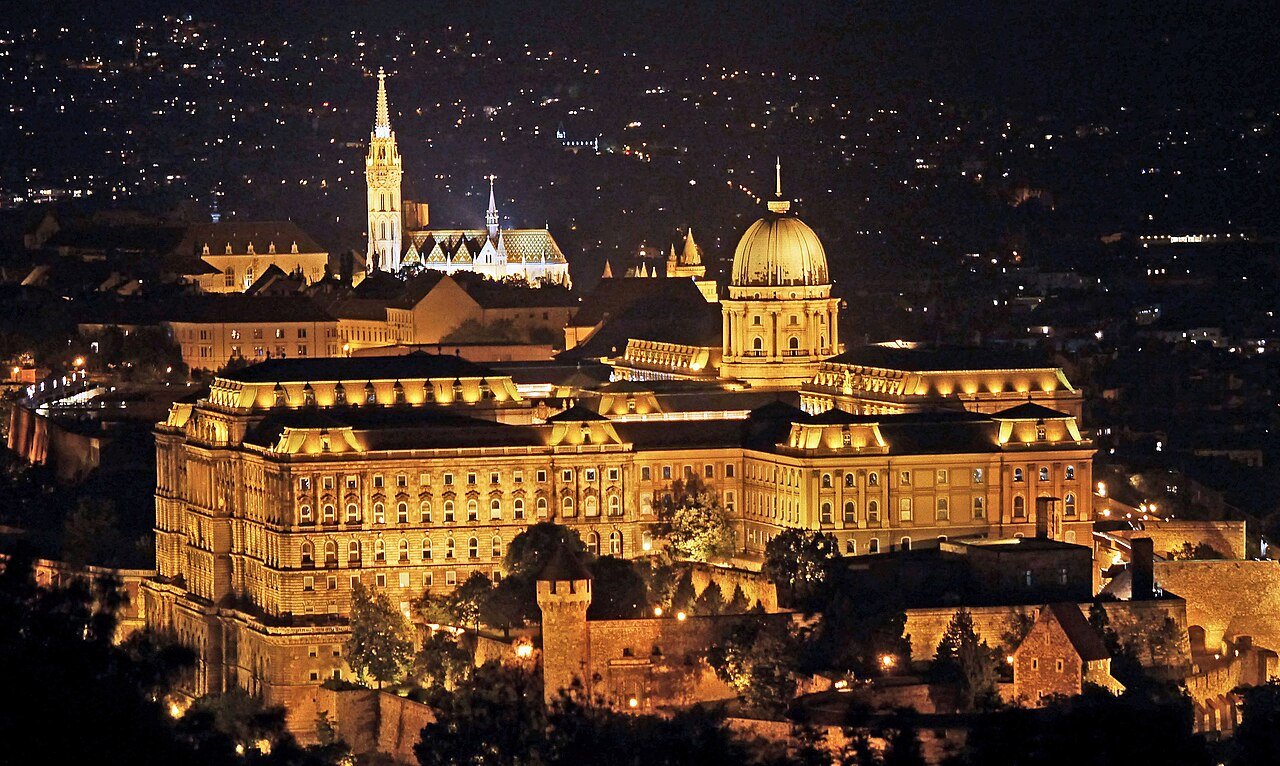
Inscribed in 1987, the Buda Castle District and Andrássy Avenue form the heart of Budapest’s UNESCO designation — one of the most layered urban heritage sites in Central Europe. Castle Hill rises 60 metres above the Danube, its silhouette defined by the turreted Fisherman’s Bastion and the Gothic Revival Matthias Church, whose diamond-patterned Zsolnay tile roof catches morning light like polished mosaic. The Royal Palace — first completed under King Béla IV in 1265 — was rebuilt as a Baroque complex between 1749 and 1769 under Empress Maria Theresa, then substantially damaged in the 1944–45 Siege of Budapest and reconstructed during the communist era. Today it holds the Hungarian National Gallery and Budapest Historical Museum. Andrássy Avenue, running 2.4 kilometres from the inner city to Heroes’ Square, was laid out from 1872 to 1876 and is lined with Neo-Renaissance palaces, the Hungarian State Opera House, and the world’s second-oldest metro line running beneath it.
Getting there: Bus 16 from Clark Ádám tér to Castle Hill; the Buda Castle Funicular is an alternative from the Chain Bridge. Allow: Full day. Best for: Visitors who want a single site that compresses centuries of Hungarian royal, architectural, and political history into one walkable hill.
Hollókő Traditional Village 2 hours by bus

Hollókő — “Raven-stone” in Hungarian — became the first village in the world to receive UNESCO World Heritage status when it was inscribed in 1987. Tucked into the forested hills of Nógrád County in northern Hungary, it preserves the vernacular architecture of the Palóc people: whitewashed farmhouses with carved timber verandas, dark-tiled roofs, and gardens enclosed by low wooden fences, arranged along a single unpaved street that has changed little since the 18th century. The settlement’s layout dates to reconstruction after a catastrophic fire in 1909, which paradoxically froze its pre-industrial character in amber. A 13th-century castle ruin crowns the hill above the village, visible from the churchyard below. Around 50 residents still live here year-round, and the community maintains traditional Palóc embroidery, pottery, and folk dress, particularly during Easter festivities when the village fills with colour. Walking the single main street takes under 20 minutes. The silence between those steps is the point.
Getting there: Approximately 2 hours by Volánbusz from Budapest Stadion bus station; no direct train. Allow: 2–3 hours. Best for: Anyone seeking a living ethnographic landscape rather than a monument — Hollókő demonstrates that heritage can be inhabited, not merely preserved behind glass.
Pannonhalma Archabbey ~1 hr 50 min by train + taxi
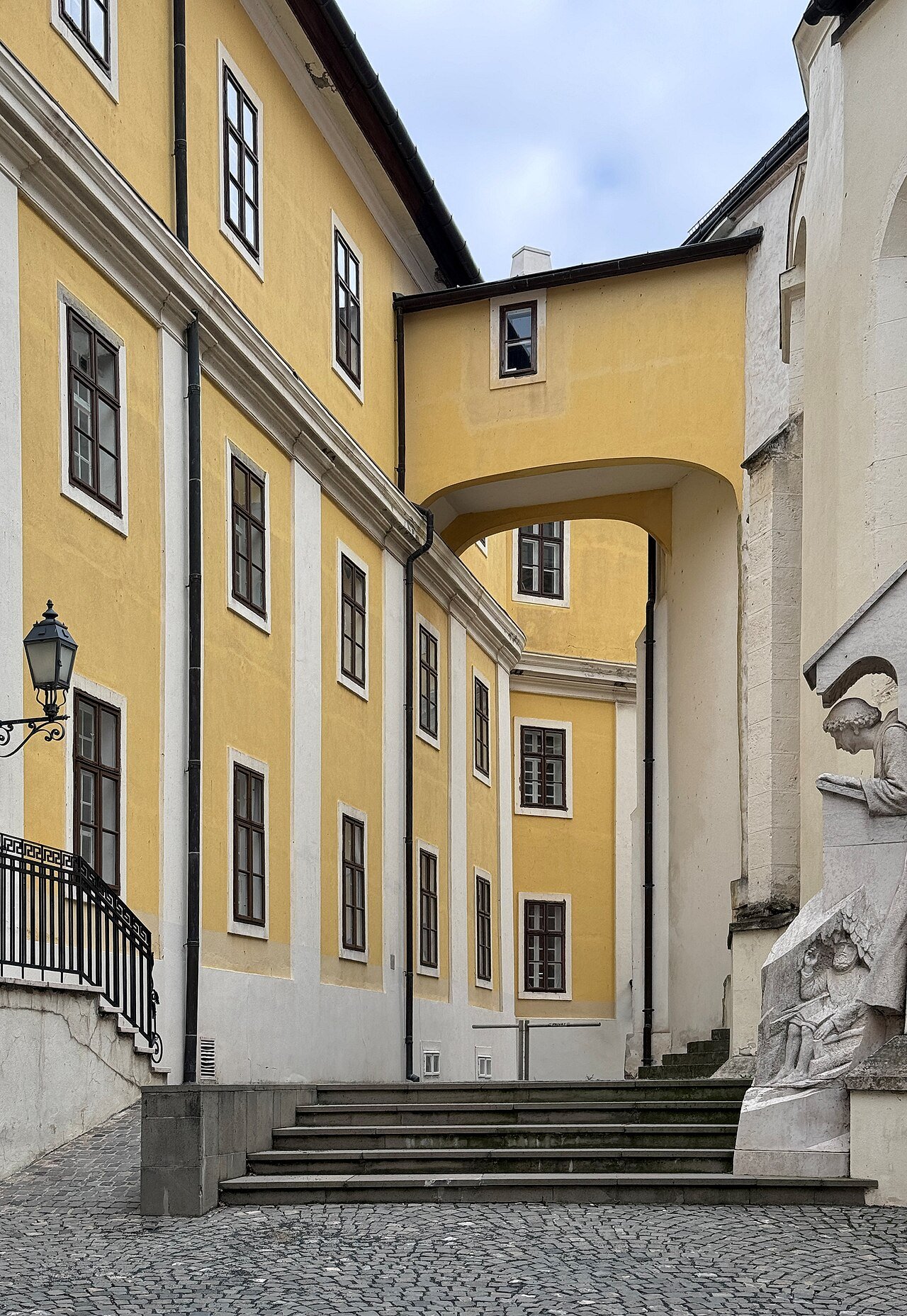
Founded in 996 AD by Prince Géza of Hungary — its first prior later crowning King Stephen I — the Benedictine Pannonhalma Archabbey has operated continuously for more than a thousand years, making it one of Central Europe’s oldest functioning monastic communities. It was inscribed as a UNESCO World Heritage Site in 1996. The complex crowns Sacred Hill (Mons Sacer Pannoniae), rising 282 metres above the surrounding Transdanubian plain, and its skyline of Romanesque, Gothic, and Baroque church towers is visible for miles across the wheat fields. Inside, the 11th-century basilica retains a crypt containing the tomb of Astrik, the abbey’s founding prior; the 19th-century library holds 360,000 volumes including a 1055 charter — the oldest surviving document written partly in Hungarian. The abbey school, still educating students today, lends the site an active, non-museified character. Stone corridors cool noticeably in summer, carrying the smell of incense from the church above.
Getting there: Intercity train to Győr (approximately 1 hour 30 minutes), then taxi or local bus to Pannonhalma (20 minutes). Allow: 2 hours on site. Best for: Travellers drawn to living religious heritage — the abbey monks still produce wine and lavender products on the estate, sold in the visitor shop.
Early Christian Necropolis of Pécs ~2 hrs 40 min by Intercity train
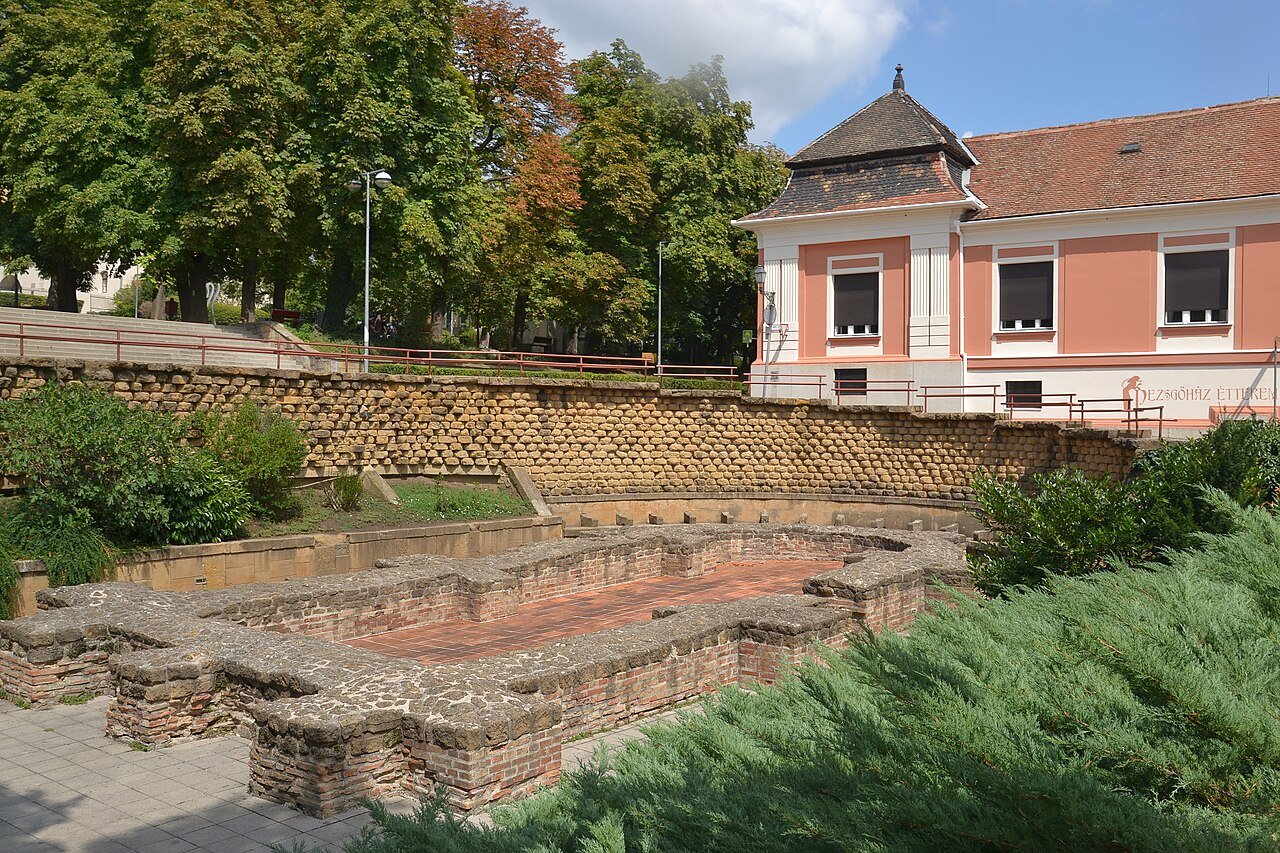
The ancient Roman city of Sopianae — present-day Pécs — served as the capital of Valeria province in the 4th century AD. Beneath its modern streets lies one of the most significant Roman burial complexes outside Italy, a UNESCO World Heritage Site since 2000. The necropolis contains painted burial chambers, mausoleums, and early Christian chapels whose fresco programmes — depicting Adam and Eve, Daniel in the lion’s den, and the apostles — represent the earliest Christian iconography in the Carpathian Basin. The burial chambers were built in two levels: an underground crypt for interment and an above-ground chapel for commemorative rites. Several structures preserve original lime-painted walls in remarkable condition, the ochres and deep reds still sharp after 1,600 years underground. The Cella Septichora Visitor Centre, opened in 2007, integrates excavated chambers into a subterranean museum route beneath Széchenyi Square. The scale is intimate — a single visit covers roughly 600 metres of interconnected passages.
Getting there: Direct Intercity train from Budapest Keleti to Pécs (approximately 2 hours 40 minutes); the necropolis visitor centre is a 10-minute walk from the station. Allow: 2–3 hours including the visitor centre. Best for: Anyone interested in the Roman foundations of European Christianity — the paintings here predate most Byzantine iconography in the region by at least a century.
Caves of the Aggtelek Karst ~3 hrs 30 min by car (car recommended)
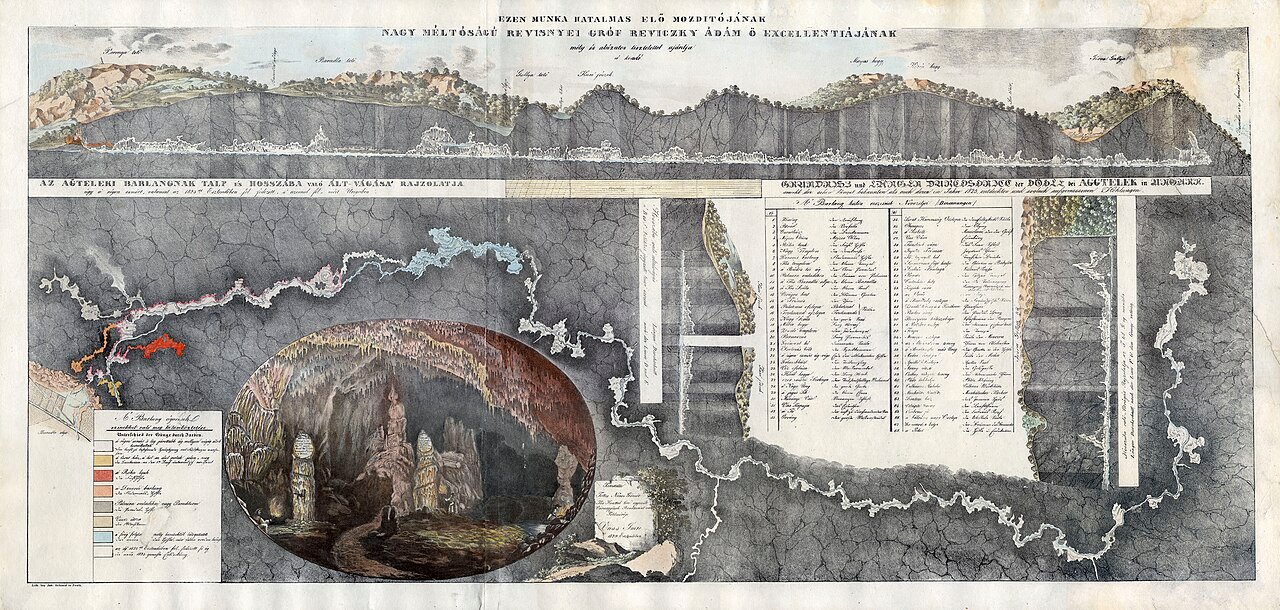
Straddling the Hungarian-Slovak border in the Gemer-Tornai karst plateau, the Caves of Aggtelek Karst and Slovak Karst were jointly inscribed as a UNESCO World Heritage Site in 1995 (extended in 2000). The Hungarian section centres on Baradla Cave, the longest stalactite cave in Europe at 25 kilometres, of which approximately 7 kilometres open to visitors. First scientifically mapped by Imre Vass in 1825, the cave system took millions of years of water dissolving Triassic limestone to form. Inside, the scale is disorienting: the Concert Hall chamber rises 30 metres and seats 1,000 people — classical concerts are held here each summer, the sound carrying with an unusual clarity in the 10°C air. Formations named for their shapes — the Styx lake, the Dragon’s Head stalactite, the Moorish Temple passage — have drawn visitors since the 19th century. Guided tours range from 1 to 7 hours depending on the route chosen. The cave maintains a constant temperature regardless of season.
Getting there: Car is strongly recommended; approximately 3 hours 30 minutes from Budapest via the M3 motorway toward Miskolc, then northeast toward Aggtelek. Bus connections exist but require changes and add considerable time. Allow: 2–3 hours underground plus travel. Best for: Those who want a genuinely unusual experience — hearing footsteps echo through a chamber that has never seen daylight is something a surface monument cannot replicate.
Frequently Asked Questions
How many UNESCO World Heritage Sites are near Budapest?
Five UNESCO World Heritage Sites are reachable within approximately four hours of Budapest: the Buda Castle District and Andrássy Avenue (city centre), Hollókő Traditional Village (2 hours by bus), Pannonhalma Archabbey (under 2 hours by train and taxi), the Early Christian Necropolis of Pécs (2 hours 40 minutes by train), and the Caves of Aggtelek Karst (around 3 hours 30 minutes by car).
What is the closest UNESCO World Heritage Site to Budapest?
The Buda Castle District and Andrássy Avenue are the closest — they are located within the city itself. Castle Hill is reachable by bus or funicular in minutes from central Pest. Visitors who have already explored the castle area and want to travel further might consider Hollókő, the next nearest site at about 2 hours by bus.
Can you visit multiple UNESCO sites near Budapest in a weekend?
Two sites can comfortably be combined in a weekend. Buda Castle District fills a first day without effort. Pannonhalma Archabbey pairs well as a second day with an early Győr train — the abbey tour takes around 2 hours, leaving time to explore Győr’s Baroque city centre before returning to Budapest. Pécs and Aggtelek each warrant separate overnight trips given their distance.
Do you need a guide to visit the Aggtelek caves?
Yes. Entry to Baradla Cave is by guided tour only; independent exploration is not permitted. Tours depart several times daily from the Aggtelek and Jósvafő entrances and range from 1 to 7 hours depending on the route. Booking in advance is recommended during summer months when capacity fills quickly, particularly for longer tours into the cave’s deeper sections.
Sources used in this article
- UNESCO World Heritage Centre — World Heritage List.
- Wikipedia — Buda Castle.
- Wikipedia — Pannonhalma Archabbey.
- Wikipedia — Early Christian Necropolis of Pécs.
- CHO — Interactive heritage map.