
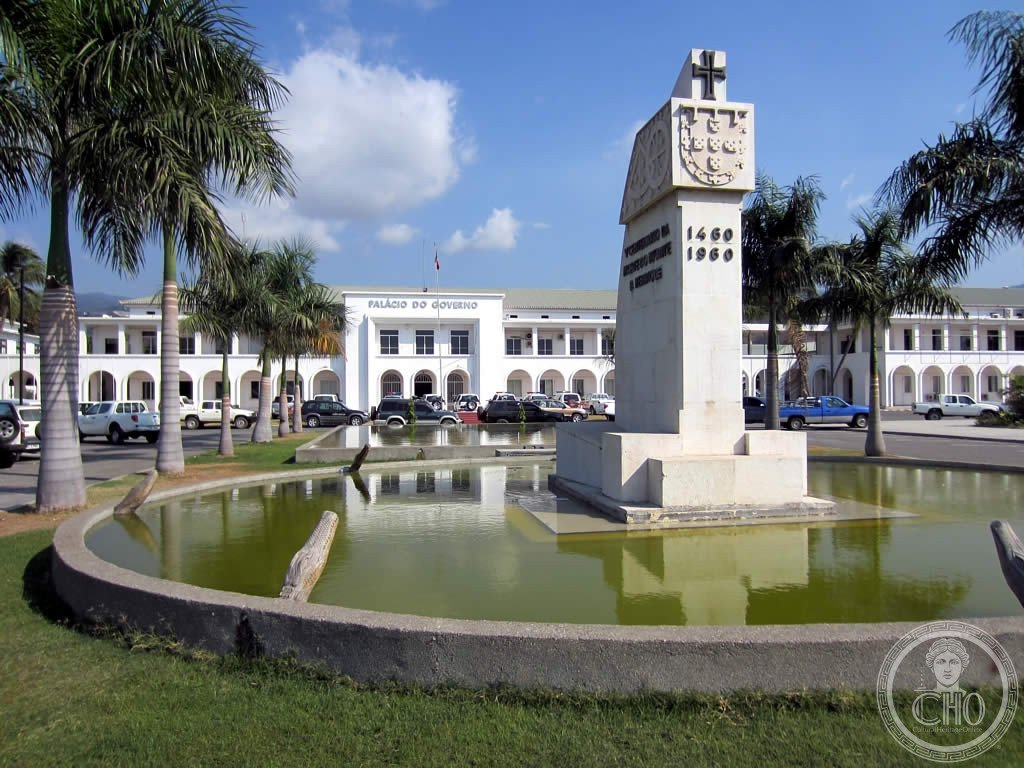
The long white palace on the Dili waterfront – the last great monument of Portuguese Asia, now the seat of the world’s youngest nation of the 21st century’s first decade.
At a glance
- Type
- Seat of government
- Period
- 1953-1960
- Style
- Late Portuguese colonial classicism
- Location
- Avenida Marginal, Dili, Timor-Leste
- Coordinates
- -8.5536, 125.5783
- Builder
- Portuguese colonial administration
Overview
The Palacio do Governo of Dili stretches its arcaded white facade along the seafront boulevard, facing the Banda Sea – the largest building of Portuguese Timor and today the office of the Prime Minister of Timor-Leste. Built in the 1950s as the administrative palace of Portugal’s easternmost province, it survived invasion, occupation, and the violence of 1999 to become the symbol of the recovered state.
History
Portugal ruled Timor for four centuries; the palace replaced wartime ruins of the Japanese occupation. After the 1975 Indonesian invasion it housed the occupation government; the 1999 independence referendum and the militia rampage that followed left Dili burned, but the palace stood. With full independence in 2002 – the first new nation of the millennium – it became the seat of government of the Democratic Republic of Timor-Leste.
Architecture and Design
The two-storey palace runs nineteen bays of round-arched arcades, whitewashed with classical pilasters and a central pediment bearing the national arms, before a formal garden with the statue of Prime Minister celebrating independence. The composition – tropical classicism, arcades against the sea – is the finest surviving ensemble of late Portuguese colonial architecture in Asia.
Cultural significance
The palace embodies Timor-Leste’s layered history: Portuguese Asia, Indonesian occupation, UN transition, and hard-won sovereignty. The waterfront before it hosts national ceremonies, and the building anchors a capital where Portuguese, Tetum, and Bahasa pasts converge.
Visiting today
The palace is a working government building viewed from the Avenida Marginal and its gardens; the waterfront walk continues to the Motael church and the Resistance Museum, essential to understanding the independence struggle.
Getting there
The palace faces the central seafront of Dili, ten minutes from the airport by taxi; mikrolet minibuses ply the boulevard.
Sources and resources
Find it on the map
See this place and what’s around it →Record researched and written by Luigi De Marchi for Cultural Heritage Online, 2026.
📷 Become a Cultural Heritage Online photographer
Share your photos of places: they stay published under your name as the author. The more they're seen, the more you get noticed — and soon a contest will reward the most appreciated photos.
Log in or sign up free to add a photoIs this page about you?
This page is read by travellers and heritage enthusiasts who find it on Google. Tell us how you are connected to this place and we will take it from there.