
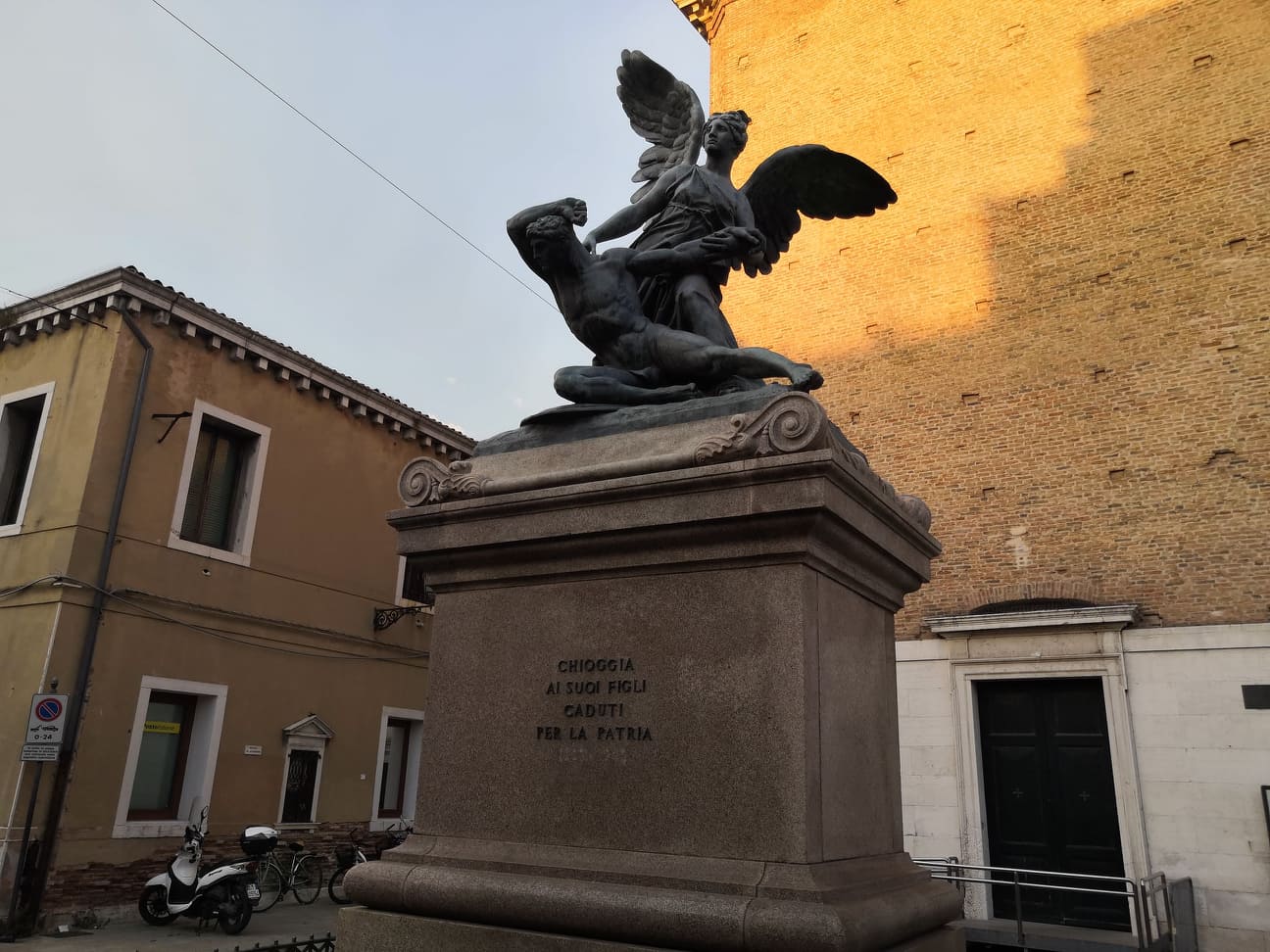
The Monumento ai Caduti in Chioggia, Veneto, was created by the Italian sculptor Domenico Trentacoste in 1926. The monument commemorates those who fell in war.
Trentacoste was a Palermo-born sculptor who trained in Florence and worked extensively in Paris before establishing his reputation across Italy. His career spanned both marble and bronze sculpture, with works ranging from portrait busts to monumental commissions. The Chioggia monument exemplifies the public commemorative sculpture undertaken across Italy following the First World War, when communities throughout the peninsula erected memorials to honour their fallen.
About Domenico Trentacoste
Born in Palermo in 1859, Trentacoste apprenticed as a young boy and later travelled throughout Italy before settling in Florence from 1878. A royal commission for King Umberto I’s visit provided funds for him to move to Paris in 1880, where he became a regular exhibitor at the annual Salon. He worked in both marble and bronze and executed numerous portrait busts and monumental works before his death in 1933.
Details
- Creator: Domenico Trentacoste
- Year: 1926
- Location: Chioggia, Veneto
- Type: War memorial sculpture
Frequently asked questions
Who was Domenico Trentacoste?
An Italian sculptor born in Palermo in 1859, Trentacoste trained under Domenico Costantino and worked in both marble and bronze. He spent significant time in Paris as a regular Salon exhibitor before establishing his reputation across Italy.
When was the Chioggia monument created?
The monument was completed in 1926, several years after the conclusion of the First World War, reflecting a widespread movement across Italy to commemorate fallen soldiers.
What materials did Trentacoste use?
Throughout his career, Trentacoste worked in both marble and bronze, materials he employed across portrait busts, funerary monuments, and public commemorative works.
Sources
- S1 — Panzetta, Alfonso. Dizionario degli scultori italiani dell'Ottocento e del primo Novecento. Umberto Allemandi, 2003. ISBN 978-88-422-1158-7.
- S2 — Bossaglia, Rossana. I maestri della scultura italiana del primo Novecento. Electa, 1997. ISBN 978-88-435-6178-0.
Spotted an error? Write to editorial@culturalheritageonline.com and we correct it the same day.


