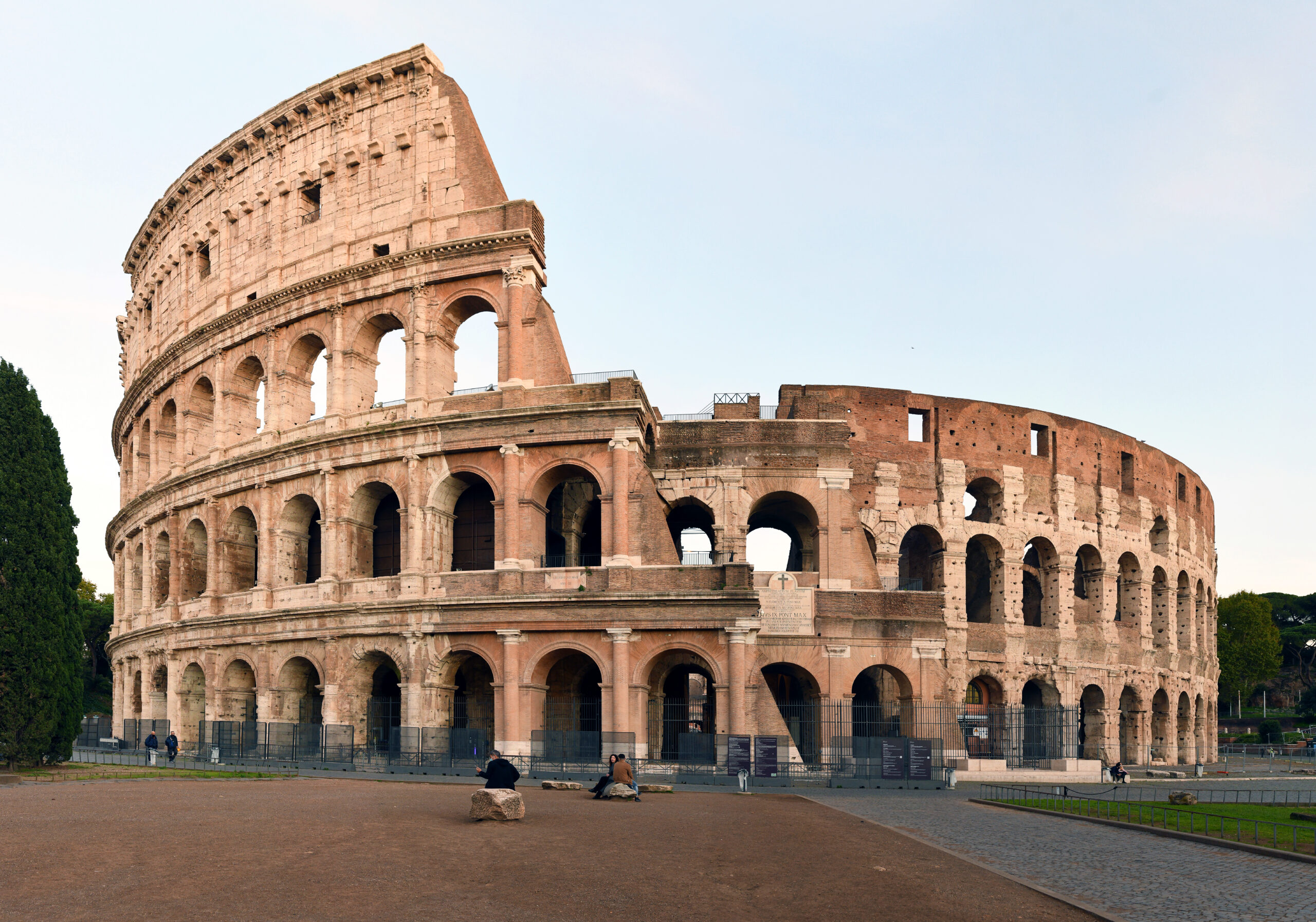
The Colosseum, or Amphitheatrum Flavium, stands as Italy’s most important archaeological monument and one of the world’s most recognizable symbols of Rome. Construction began in 72 CE under Emperor Vespasiano and was completed under his successor Tito. Located in Rome, the capital of both the modern Italian state and the ancient Roman Empire, the Colosseum represents the pinnacle of Roman engineering and cultural achievement.
Construction and Inauguration
Built as the largest amphitheater in the world, the Colosseum was designed and constructed to serve multiple purposes within Roman society. The structure’s completion marked a significant moment in the city’s architectural history, with its inauguration by Emperor Tito establishing it as a centerpiece of Roman public life.
Purpose and Function
The amphitheater was constructed to host three principal types of spectacles. Gladiatorial combats formed the primary entertainment, drawing crowds of thousands. The venue also hosted fights between wild animals, which were a popular feature of Roman entertainment. Additionally, the structure served as the site for executions of condemned criminals, reflecting the complex nature of public gatherings in ancient Rome.
On video
Explore more: 509 heritage places in Roma
Frequently asked questions
When was the Colosseum built and by whom?
Construction of the Colosseum began in 72 CE under Emperor Vespasiano and was inaugurated by his successor, Emperor Tito.
What was the primary purpose of the Colosseum?
The amphitheater was designed to host gladiatorial fights, animal combat, and executions of condemned prisoners.
Why is the Colosseum significant to Rome?
As the largest amphitheater in the world and a symbol of Rome recognized globally, the Colosseum represents Rome’s architectural achievement and cultural importance as capital of the ancient Roman Empire.
Sources
- S1 — Carandini, Andrea. Archeologia classica: Vedere il tempo antico con gli occhi del presente. Einaudi, 2008. ISBN 978-88-06-19349-2.
- S2 — Settis, Salvatore. Il futuro del 'classico'. Einaudi, 2004. ISBN 978-88-06-14382-4.
Spotted an error? Write to editorial@culturalheritageonline.com and we correct it the same day.