
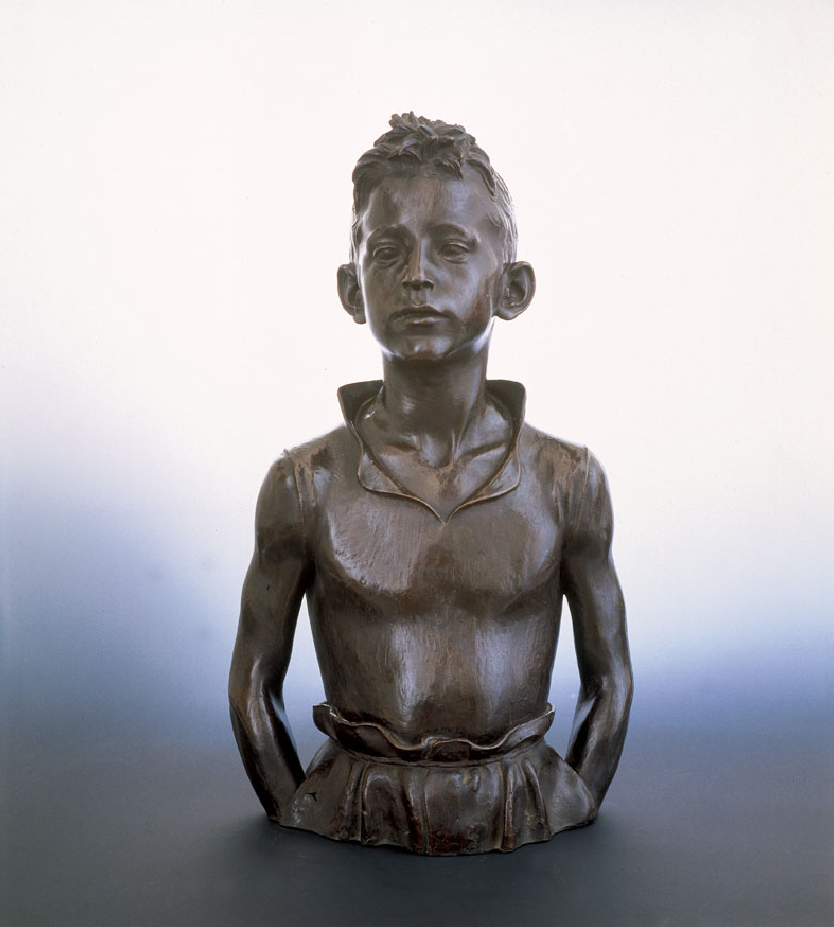
Il galletto is a sculpture created by Francesco Messina in 1934. Messina was an Italian figurative sculptor associated with the Novecento movement, a modernist tendency that emphasised classical form and idealistic procedure in early-twentieth-century Italian art.
The work dates from a formative period in Messina’s career. In 1932, after spending his early years in Genoa, he relocated to Milan. Two years later, in 1934, he secured a tenured professorship in Sculpture at the Accademia di Belle Arti di Brera, and would soon assume the role of director. During this time, his work attracted the attention of prominent art historian Carlo Carrà, who recognised Messina’s approach as marked by simplicity, grandeur, and classical idealism.
About Francesco Messina
Messina (1900–1995) was born in Linguaglossa, in the Province of Catania, Sicily. His sculptures are held in major museums across Europe and beyond, including institutions in Venice, Paris, Berlin, Vienna, and Washington, D.C. From 1922 onwards, he exhibited regularly at the Biennale Internazionale d’Arte in Venice and participated in exhibitions of the Novecento Italiano group in Milan between 1926 and 1929.
Details
- Artist: Francesco Messina
- Year: 1934
- Movement: Novecento Italiano
- Medium: Sculpture
Frequently asked questions
Who was Francesco Messina?
Francesco Messina (1900–1995) was an Italian sculptor born in Sicily who became an important figurative artist associated with the Novecento movement. He moved to Milan in 1932 and held a professorship at the Accademia di Belle Arti di Brera from 1934.
What movement did Messina belong to?
Messina was associated with the Novecento Italiano, an Italian modernist movement that emphasised classical form and idealistic procedure. He participated in exhibitions organised by the group between 1926 and 1929.
Where are Messina’s works displayed?
His sculptures are held in museums across Europe and internationally, including institutions in Venice, Paris, Berlin, Vienna, and Washington, D.C., as well as in South America and Asia.
Sources
- S1 — Panzetta, Alfonso. Nuovo dizionario degli scultori italiani dell'Ottocento e del primo Novecento. AdArte, 2003. ISBN 978-88-422-1158-7.
- S2 — Pontiggia, Elena. Il Novecento Italiano. Abscondita, 2003. ISBN 978-88-8416-048-5.
Spotted an error? Write to editorial@culturalheritageonline.com and we correct it the same day.


