
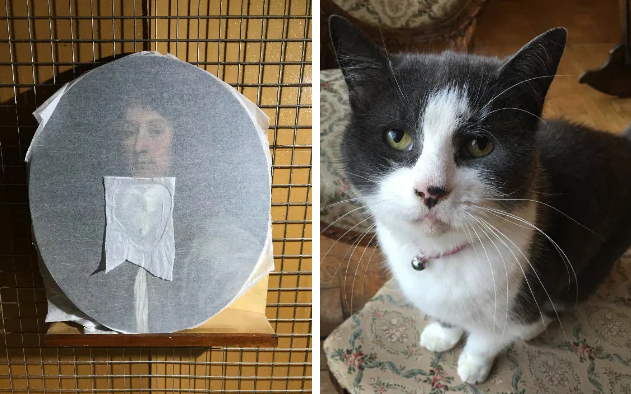
Reported in January 2019, British art critic Bender Grosvenor experienced an unusual conservation mishap when his cat damaged a valuable 17th-century portrait during restoration work. The painting, a portrait by English artist John Michael Wright, had been purchased in 2015 for £5,250 (approximately €5,900) and was undergoing cleaning to restore its original appearance when the incident occurred.
The Damage
While the painting was being cleaned, Grosvenor’s cat jumped onto the work and scratched it, ultimately creating punctures in the canvas. The damaged area was located in a central part of the composition, affecting the subject’s clothing rather than the face. Despite the apparent seriousness of the damage, conservators determined that restoration was possible, though the work would be more complex and costly than initially anticipated.
Restoration and Recovery
The cost of restoration doubled from the original estimate due to the repairs needed. However, the damage proved manageable rather than irreparable. The fact that the punctures were confined to the clothing section of the portrait meant the artistic integrity of the face remained intact, allowing restorers to proceed with repairs without losing significant artistic value. A photograph of the cat that circulated on social media following the incident showed the animal appearing regretful, though cat behavior experts would likely dispute any genuine sense of guilt on the feline’s part.
Frequently asked questions
What painting was damaged?
A 17th-century portrait by English artist John Michael Wright, purchased in 2015 for £5,250, that was undergoing restoration when the cat caused scratches and punctures to the canvas.
How much did restoration cost?
The restoration cost approximately double the initial estimate due to the damage caused by the cat, though the exact final figure was not specified in available reports.
Was the damage irreparable?
No. The damage affected the clothing area rather than the subject’s face, making restoration possible without significant loss of artistic content, though the work required extended time and increased expense.
Sources
- S1 — Settis, Salvatore. Italia S.p.A.. L'assalto al patrimonio culturale. Einaudi, 2002. ISBN 978-88-06-16973-2.
- S2 — Solima, Ludovico. Management museale: Teoria e pratica per la gestione del museo. Carocci, 2018. ISBN 978-88-430-9366-3.
Spotted an error? Write to editorial@culturalheritageonline.com and we correct it the same day.


