

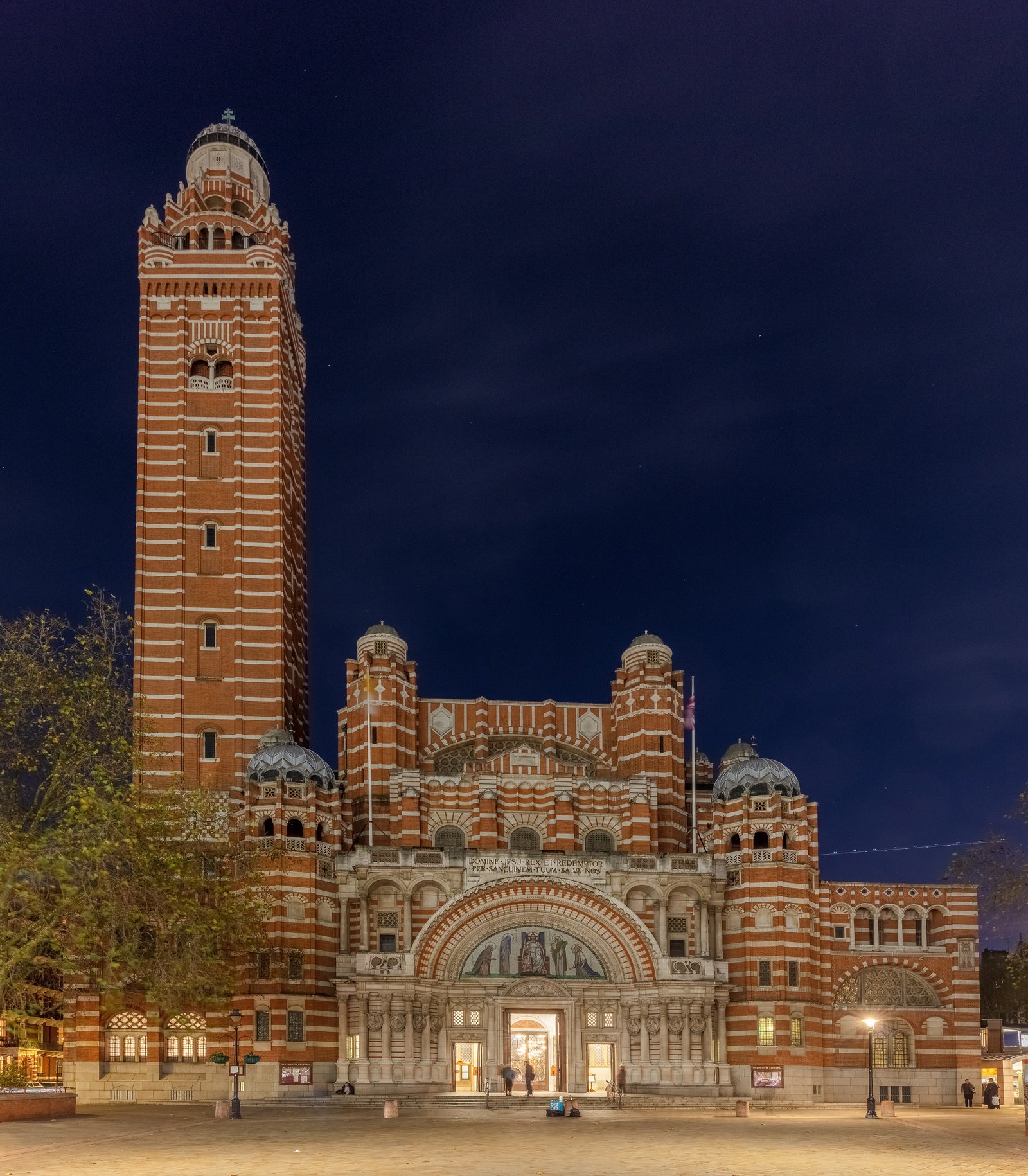
The Metropolitan Cathedral of the Most Precious Blood stands as England and Wales’s largest Catholic church, a striking neo-Byzantine structure of brick and stone designed by John Francis Bentley and completed in 1903.
At a glance
Westminster Cathedral is the principal Catholic church of England and Wales and the seat of the Archbishop of Westminster. Its distinctive architectural language—9th-century Christian neo-Byzantine—was executed almost entirely in brick without steel reinforcement, a technical and aesthetic achievement that drew admiration from architectural critics.
History
The Archdiocese of Westminster acquired the cathedral site in 1885. Construction proceeded from 1895 to 1903 under the direction of architect John Francis Bentley. The building has received two papal visits: Pope John Paul II on 28 May 1982, and Pope Benedict XVI on 18 September 2010.
What you see
Bentley’s design draws on 9th-century Christian Byzantine precedent, translated into a wholly original idiom of striped brick and stone. The cathedral was constructed without steel reinforcements, relying instead on traditional masonry craftsmanship. Sir John Betjeman called it “a masterpiece in striped brick and stone” that demonstrates “the good craftsman has no need of steel or concrete.”
Cultural significance
Westminster Cathedral represents a bold architectural statement in late-19th-century London—a refusal of industrial materials in favour of handcrafted brick. Its neo-Byzantine vocabulary was deliberately counter to prevailing Gothic Revival tastes, marking it as an independent artistic vision within English cathedral architecture.
Key facts
- Country: United Kingdom
- City: City of Westminster
- Coordinates: 51.4961, −0.1397
- Architect: John Francis Bentley
- Construction: 1895–1903
- Architectural style: 9th-century Christian neo-Byzantine
Practical information & getting there
The cathedral is located in the City of Westminster. For current opening hours, services, and visitor information, consult the official cathedral website or contact the Archdiocese of Westminster directly.
Sources & resources
Find it on the map
See this place and what’s around it →📷 Become a Cultural Heritage Online photographer
Share your photos of places: they stay published under your name as the author. The more they're seen, the more you get noticed — and soon a contest will reward the most appreciated photos.
Log in or sign up free to add a photoIs this page about you?
This page is read by travellers and heritage enthusiasts who find it on Google. Tell us how you are connected to this place and we will take it from there.