
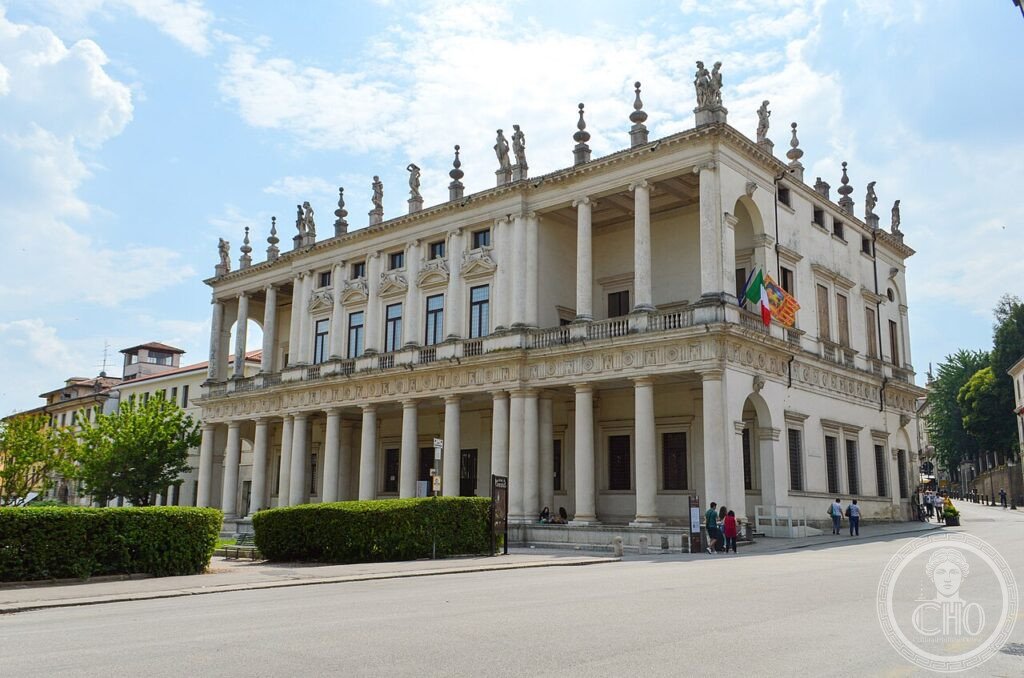
Vicenza is the city Andrea Palladio built almost from scratch. Its Basilica Palladiana and its Teatro Olimpico, the oldest surviving covered theatre in the world, still carry the perspective stage sets painted for the building’s opening night in 1585 and never since replaced.
At a glance
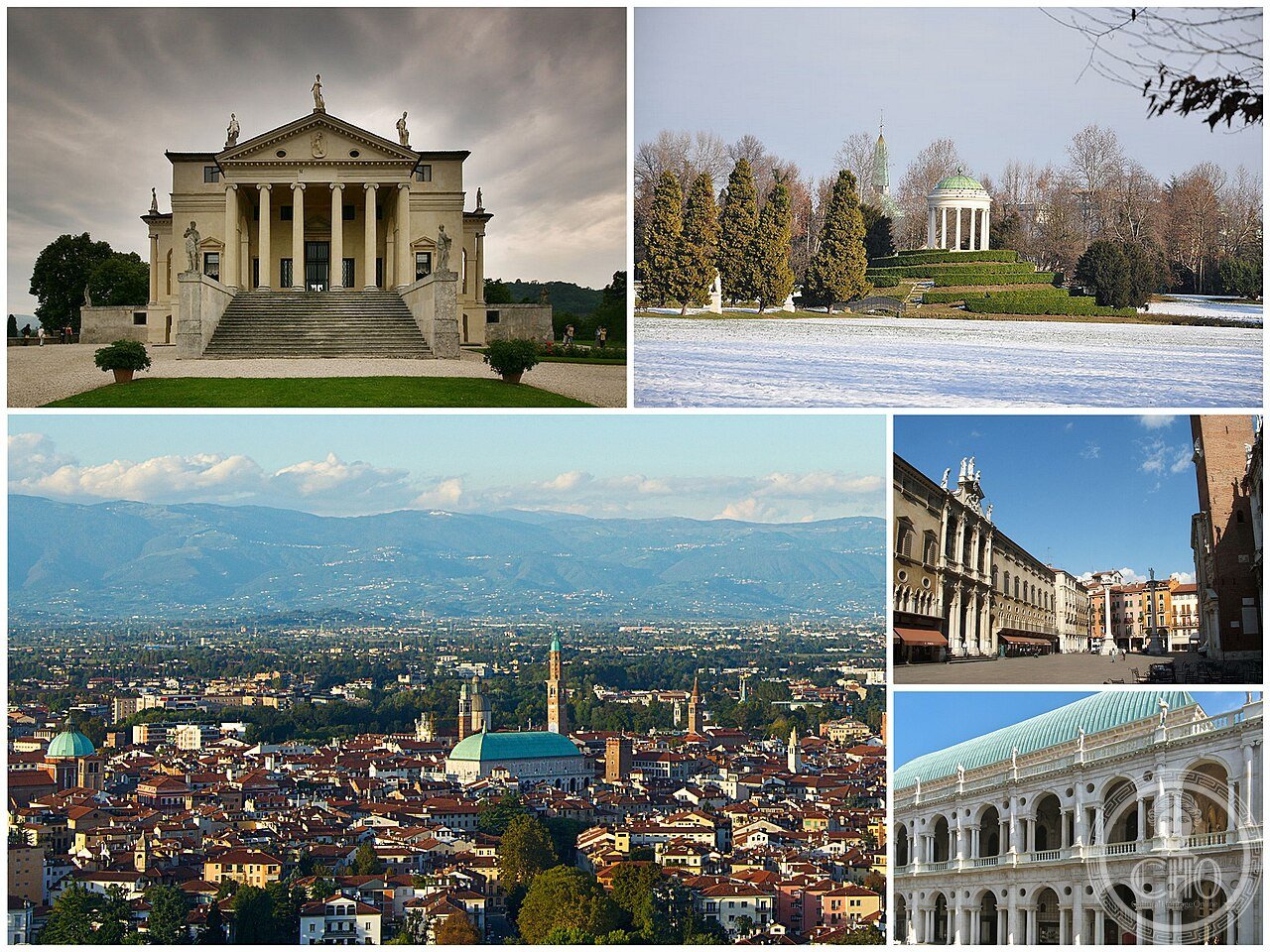
Vicenza’s historic centre and twenty-three Palladian villas scattered across the Veneto countryside form a single UNESCO World Heritage site, inscribed in 1994 and extended in 1996 to take in the rural villas. Within the city, the Basilica Palladiana, the Teatro Olimpico, the Loggia del Capitaniato and some twenty private palaces make up the urban half of the listing; outside it stand villas such as La Rotonda in Vicenza itself, Villa Barbaro at Maser, Villa Emo at Fanzolo di Vedelago and Villa Badoer at Fratta Polesine.
The architect behind it all was Andrea di Pietro della Gondola, a stonemason from Padua who arrived in Vicenza as a teenager. The humanist Gian Giorgio Trissino spotted him working a quarry at Cricoli in 1538 and gave him the name Palladio, after Pallas Athena, for a character in his own epic poem. Palladio’s treatise, the Quattro Libri dell’Architettura, published in 1570, went on to shape architecture as far afield as Jefferson’s Monticello and the British country house.
Key facts
- Architect: Andrea Palladio (1508–1580), born Andrea di Pietro della Gondola in Padua.
- Basilica Palladiana: designed from 1549, completed in 1614, long after Palladio’s death, replacing the collapsed Gothic loggias of the medieval Palazzo della Ragione.
- Teatro Olimpico: commissioned in 1580 by the Accademia Olimpica, completed by Vincenzo Scamozzi after Palladio’s death, opened in 1585.
- UNESCO status: the historic centre of Vicenza was inscribed on the World Heritage List in 1994; the listing was extended in 1996 to include twenty-three Palladian villas across the Veneto.
- Treatise: the Quattro Libri dell’Architettura, published by Palladio in Venice in 1570, became the most widely translated architectural treatise in history.
History
In 1538 Gian Giorgio Trissino, a Vicentine poet and humanist, encountered the young stonemason Andrea di Pietro della Gondola at a quarry in Cricoli and gave him the name by which he is known today. The encounter set Palladio on the path from craftsman to architect under Trissino’s patronage.
The Basilica Palladiana grew out of a long-running structural problem. The Gothic Palazzo della Ragione, built in 1444, had lost its upper loggia in 1496, and a succession of architects, among them Sansovino, Jacopo da Brescia, Falconetto and possibly Giulio Romano and Michelangelo, had their proposals rejected. Palladio’s solution, presented in 1546 and approved in 1549, wrapped the old palace in a new classical shell built around the paired arches now known as the Palladian motif. Construction ran for decades and was only finished in 1614, well after Palladio’s death.
Palladio’s influence spread largely through his own writing. The Quattro Libri sold out its first printing within three years, and Giacomo Leoni’s English translation of 1715 helped launch the Palladian revival in Britain, championed by Lord Burlington at Chiswick House. Vicenza’s Palladian buildings and the Veneto villas were together inscribed on the UNESCO World Heritage List in 1994.
What you see
In Piazza dei Signori, the Basilica Palladiana presents its paired loggias, Ionic above and Doric below, wrapped around the older civic hall. Its roof, covered in copper scales added during an early twentieth-century restoration in place of Palladio’s original lead sheeting, can be seen from a rooftop terrace open to visitors.
At the Teatro Olimpico, the sequence begins with a painted sky on the entrance ceiling before opening onto the horseshoe-shaped auditorium, whose seating capacity was reduced from its original scale in the nineteenth century for safety reasons. The stage facade, the largest of any Renaissance theatre, is pierced by five gates; behind each runs a painted street in forced perspective, built for the theatre’s opening production of Sophocles’ Oedipus Rex in 1585 and never altered since. A small adjoining room, the Odeo, was designed by Scamozzi for chamber music.
Villa La Rotonda, a short distance outside the centre, presents an identical six-column Ionic portico on each of its four sides and a central dome modelled on Rome’s Pantheon. It remains privately owned by the Valmarana family, which limits public access to set days.
Practical information
- Tickets: a combined ticket covers the Teatro Olimpico and the Museo Civico at Palazzo Chiericati; check current prices and hours through the official Vicenza tourism or museum channels.
- Villa La Rotonda: privately owned and open to visitors only on limited days, with separate access for the exterior grounds and the interior; confirm current arrangements before travelling.
- Teatro Olimpico: still used for live performances in summer, staged in front of the original 1585 sets; check the season programme directly with the theatre.
Getting there
Vicenza sits on the main rail line linking Venice, Verona and Milan, with regular Trenitalia services from all three cities; timetables and fares are best checked directly with Trenitalia before travelling.
Nearby
- Villa La Rotonda — a short trip from the historic centre, Palladio’s best-known villa with its four identical porticos.
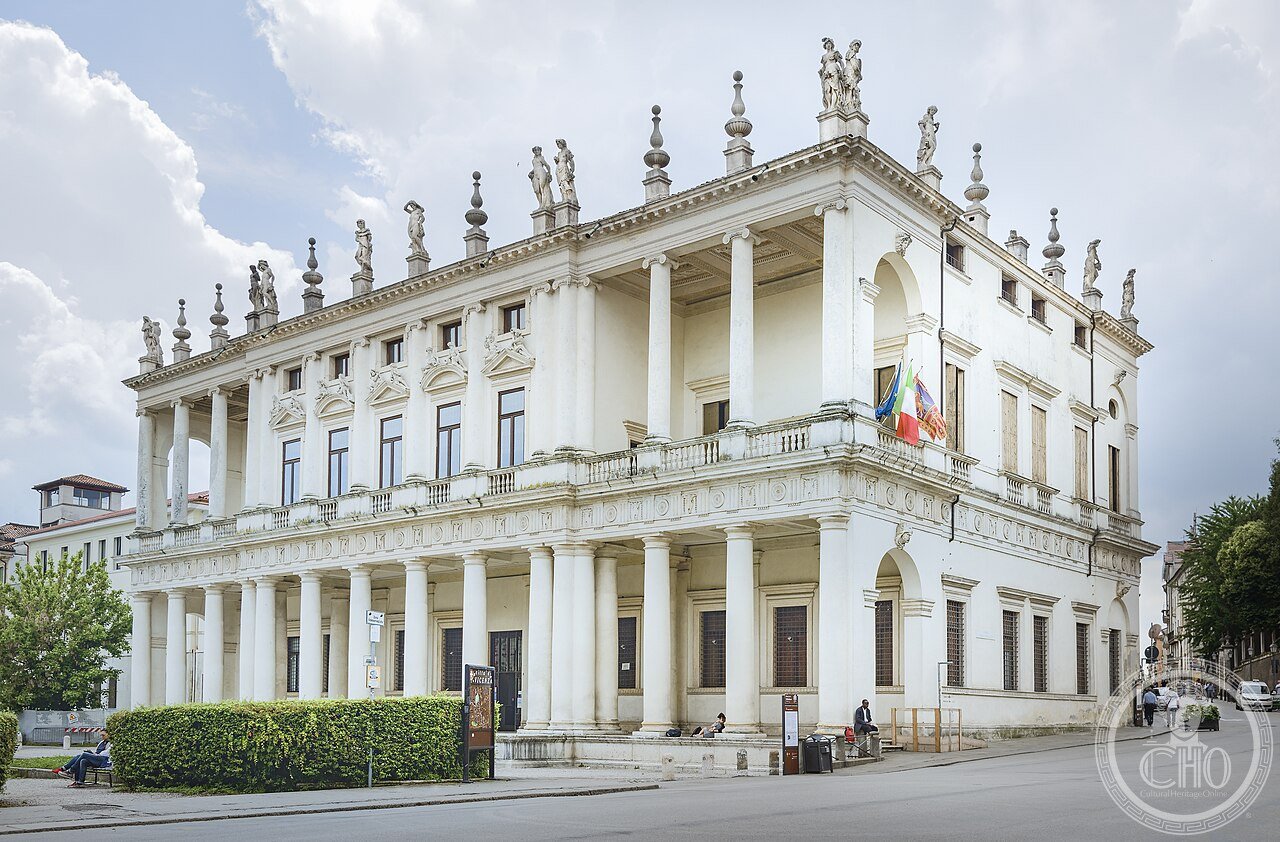
- Palazzo Chiericati — home to the Museo Civico, which holds original Palladio drawings.
- Loggia del Capitaniato — Palladio’s late work of 1571, facing the Basilica across Piazza dei Signori.
Sources
- Accademia Olimpica di Vicenza
- UNESCO World Heritage List
- Museo Civico di Palazzo Chiericati
Gallery
Find it on the map
See this place and what’s around it →Historical events at this place (3)
📷 Become a Cultural Heritage Online photographer
Share your photos of places: they stay published under your name as the author. The more they're seen, the more you get noticed — and soon a contest will reward the most appreciated photos.
Log in or sign up free to add a photoIs this page about you?
This page is read by travellers and heritage enthusiasts who find it on Google. Tell us how you are connected to this place and we will take it from there.