
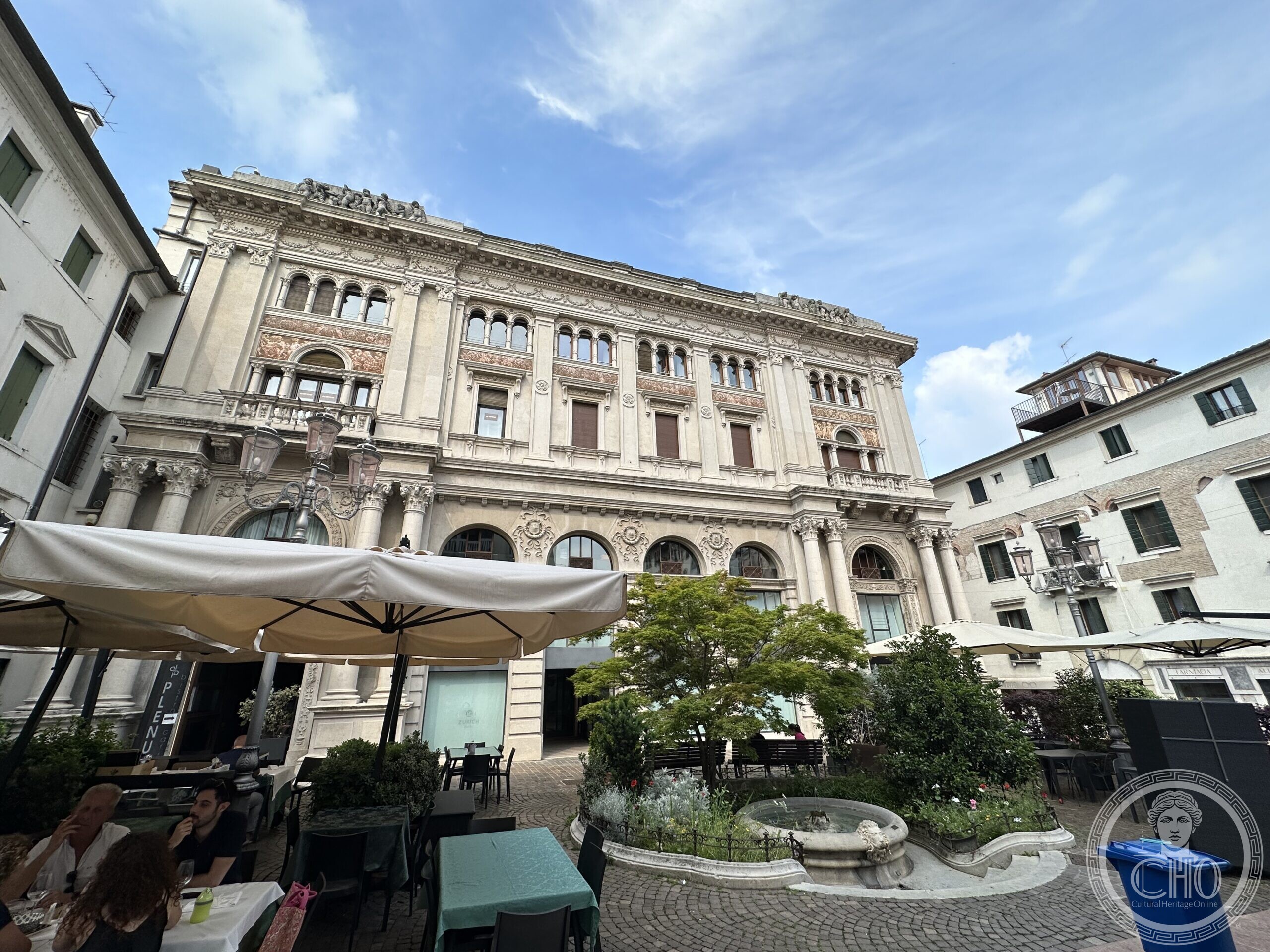
A porticoed street that has carried Treviso’s traffic since it was the cardo maximus of the Roman town, still walking a straight line between the Duomo and the old seat of civic power, past frescoed palazzi, an Art Nouveau pharmacy, and shops that have traded under the same arcades for generations.
At a glance
Calmaggiore runs in a straight north-west to south-east line through the historic centre of Treviso, linking Piazza dei Signori — the seat of the medieval city’s temporal power — to the Duomo, its spiritual counterpart. The name almost certainly comes from the Latin callis maior, “the greater street,” and the route itself is older still: it follows the cardo maximus of the Roman town of Tarvisium. Porticoes run down both sides, fronting palazzi decorated with frescoes and stucco reliefs from several different centuries, and shops trading under the arcades today occupy buildings that have served the same purpose for generations.
Key facts
- Where: historic centre of Treviso, between Piazza dei Signori and the Duomo
- Name: from the Latin callis maior, “the greater street”
- Roman origin: follows the line of the cardo maximus of Roman Tarvisium
- Medieval role: the symbolic link between the Palazzo della Signoria (temporal power) and the Duomo (spiritual power)
- What lines it: continuous porticoes, frescoed and stuccoed palazzi of several periods, and long-established shops
What you see
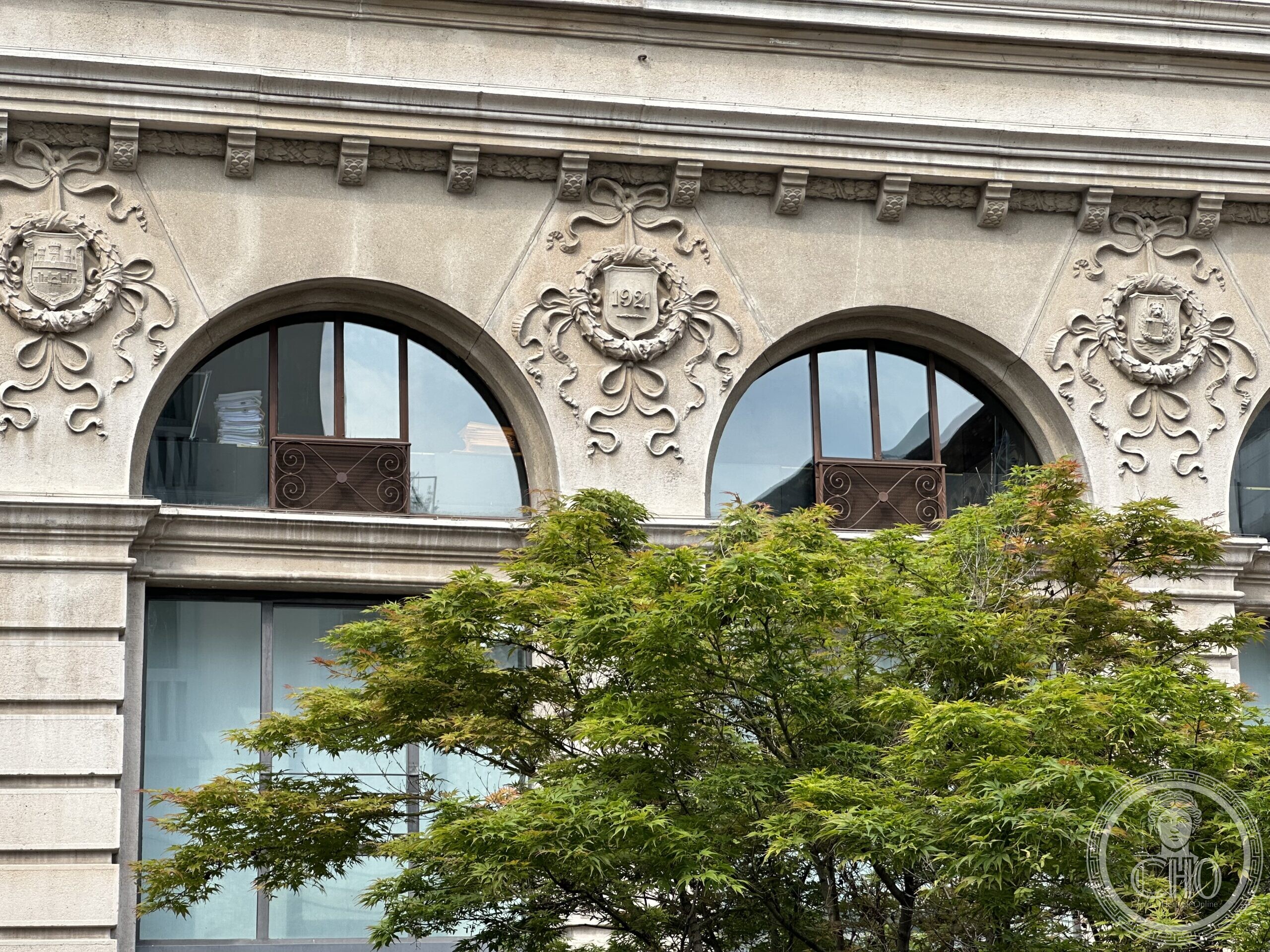
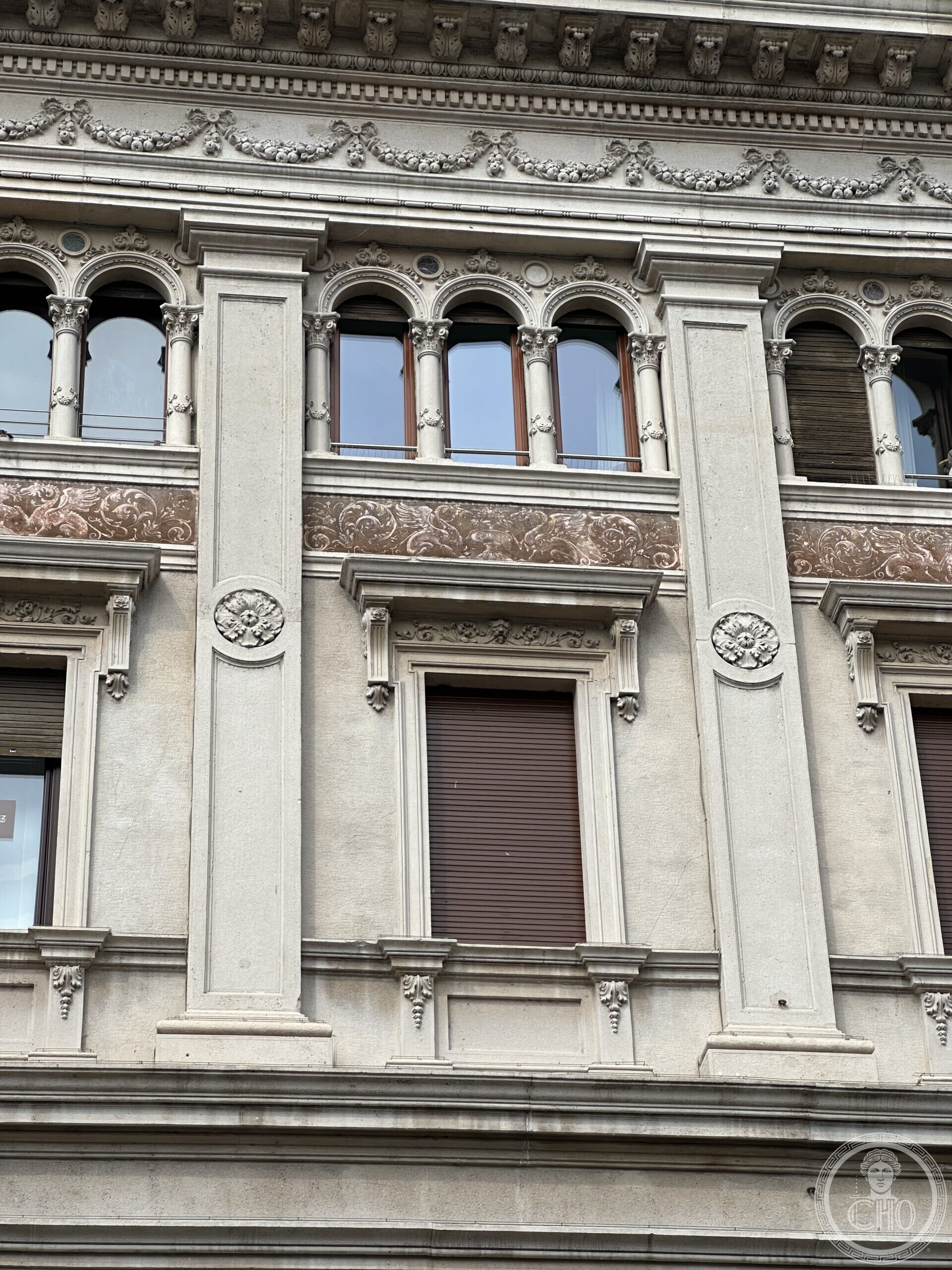
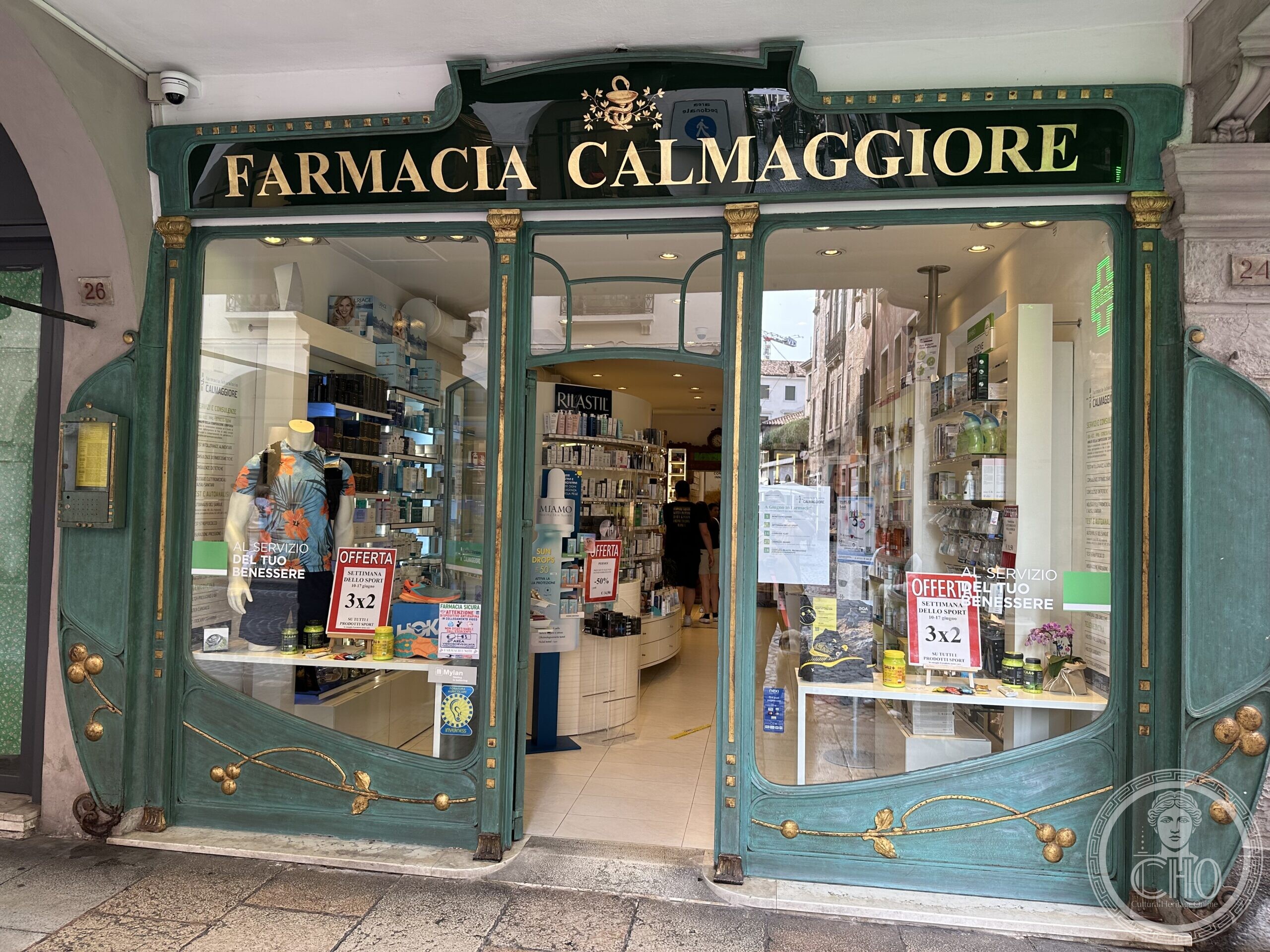
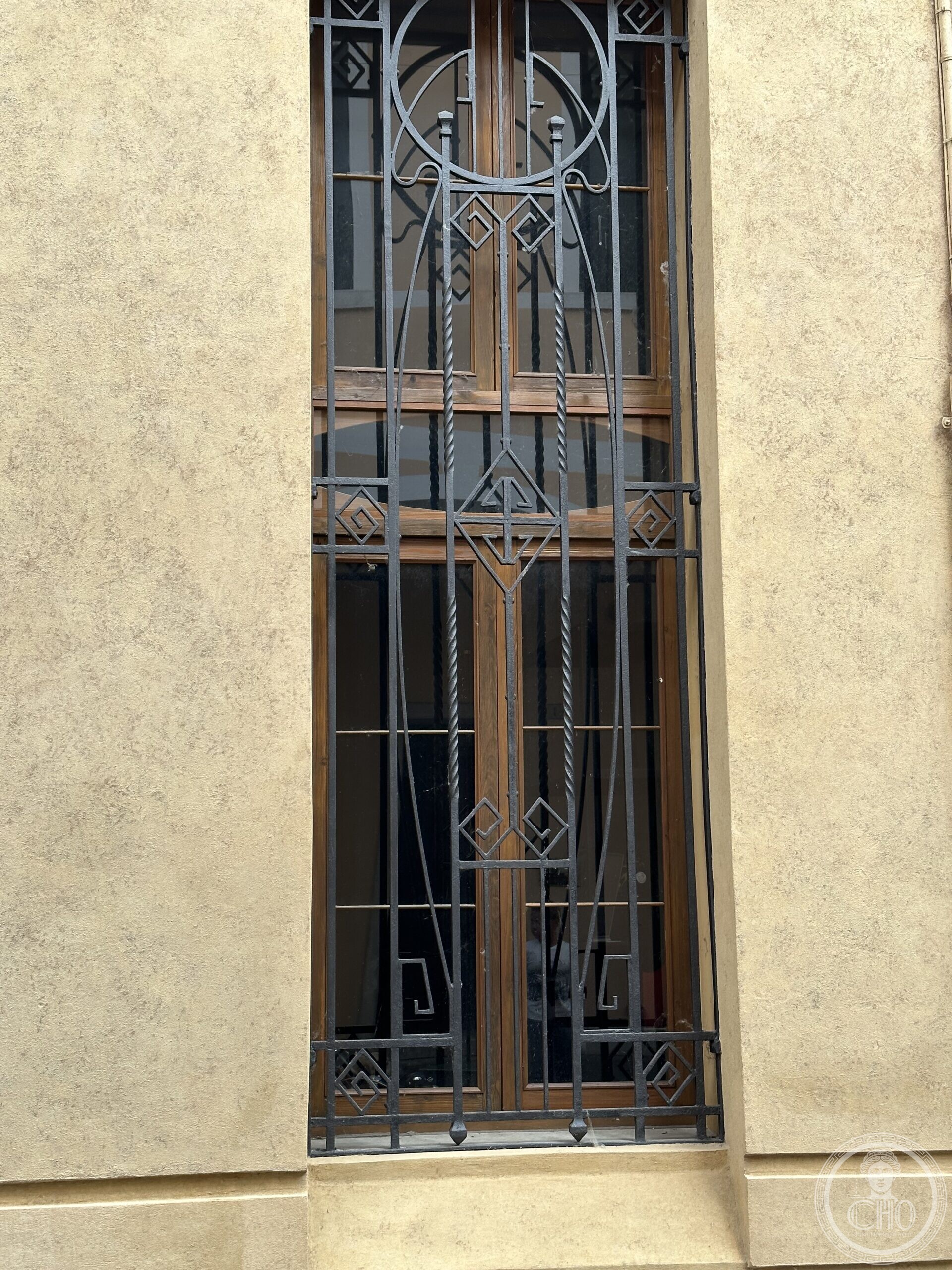
The street’s decorated facades span centuries side by side. One early-twentieth-century palazzo on Calmaggiore carries a full classical dress of Corinthian pilasters, a running frieze of putti at the cornice, and a series of carved shields — one dated 1921 — each held by a ribboned wreath: the kind of confident commercial architecture Italian towns built for banks, insurers and department stores in the years around the First World War. We have not been able to identify the building by name or architect. A few doors along, the Farmacia Calmaggiore keeps a complete Art Nouveau shopfront: green-painted woodwork picked out in gold, a caduceus (the serpent-and-cup emblem of pharmacy) worked into the transom in gold leaf, and curved glazing bars typical of the style — a working example of the kind of decorated storefront that once lined commercial streets across Italy and now survives only in isolated cases. A nearby window shows the same taste in ironwork: a geometric Art Nouveau grille in wrought iron, its circles and diamonds a smaller echo of the same visual language.
Do you know more?
We have not identified the 1921 palazzo by name or architect, or dated the Farmacia Calmaggiore’s Art Nouveau shopfront. If you know either, write to Sofia, who looks after these pages.
Write to Sofiaor send a message on WhatsApp
Please start your message with the title of this page, so it reaches the right file. Every contribution is checked against independent sources before it goes on the page, and we always say where a piece of information came from.
Getting there
Calmaggiore runs through the pedestrianised heart of Treviso, a short walk from the railway station, linking Piazza dei Signori directly to the Duomo.
Sources
- Wikipedia (Italian), “Calmaggiore” — on the street’s name, its Roman origin as the cardo maximus of Tarvisium, and its medieval symbolic role.
- paesionline.it, “Via Calmaggiore, la storia e lo shopping nel centro di Treviso.”
- Luigi De Marchi, who photographed the street.
Gallery
Photographs by Luigi De Marchi.
Find it on the map
See this place and what’s around it →Record researched and written by Luigi De Marchi for Cultural Heritage Online, 2026.
📷 Become a Cultural Heritage Online photographer
Share your photos of places: they stay published under your name as the author. The more they're seen, the more you get noticed — and soon a contest will reward the most appreciated photos.
Log in or sign up free to add a photo