
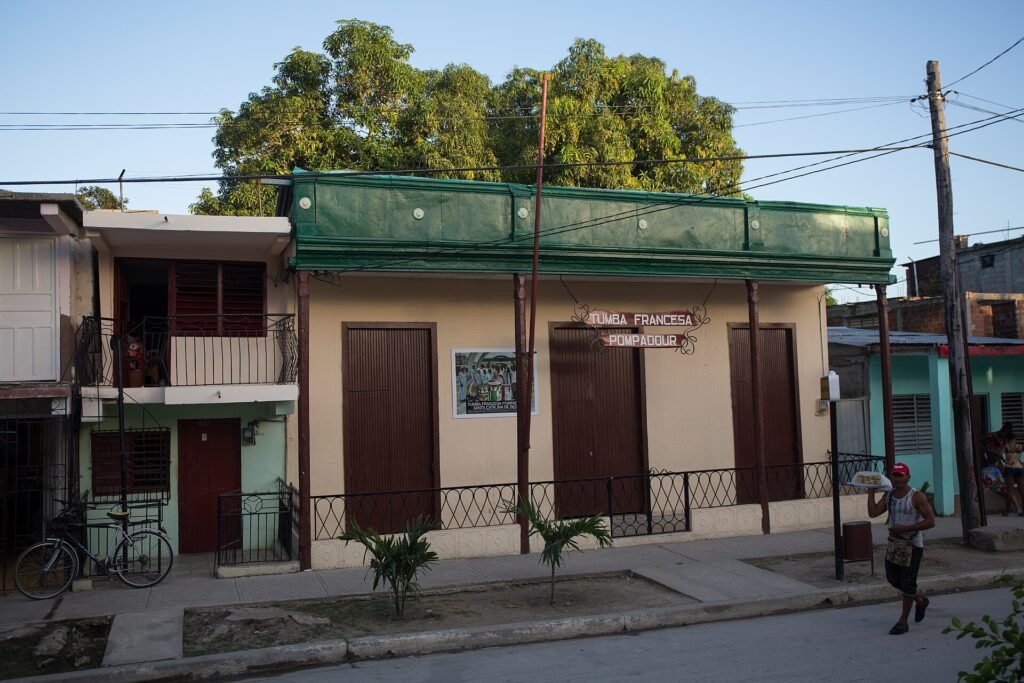
A secular Afro-Cuban genre of dance, song, and drumming born from the cultural memory of enslaved people brought to eastern Cuba from Saint-Domingue in the 1790s, kept alive by three surviving societies.
In UNESCO’s words
The dance, song and drumming style known as Tumba Francesa (French Drum) was brought to Cuba by Haitian slaves who were resettled in the island’s eastern regions following the unrest in Haiti during the 1790s. It embodies one of the oldest and most tangible links to the Afro-Haitian heritage of Cuba’s Oriente province and developed from an eighteenth- century fusion of music from Dahomey in West Africa and traditional French dances. After Cuba’s abolition of slavery in 1886 and the resulting migration of former slaves to urban areas in search of work, Tumba Francesa societies emerged in several cities. Tumba Francesa performances generally open with a solo in Spanish or French patois by a lead singer, the composé. Following the composé’s cue, the catá, a large wooden idiophone, bursts into a pulsating beat enhanced by three drums known as tumbas. These hand-played instruments, similar to modern conga drums, are crafted from a single piece of hollowed wood and decorated with carved and painted motifs. The dances are performed under the direction of the Mayor de Plaza. The predominately female chorus singers and dancers wear long colonial-era dresses with West African kerchiefs and brandish colourful scarves. The singers keep rhythm with metal rattles or chachás. Performances consisting of a series of 30- minute songs and dances generally last well into the night. Today, only two of the many dance styles associated with Tumba Francesa are still regularly performed: the masón, a light parody of French ballroom dances; and the yubá, an improvised dance accompanied by rousing drum rhythms. The popularity of Tumba Francesa reached its peak at the end of the nineteenth century. Nowadays, three community ensembles continue to keep the traditions of the Tumba Francesa alive.
Official description, UNESCO Intangible Cultural Heritage List — La Tumba Francesa
At a glance
Tumba Francesa is a dance, song, and drumming style that fuses music from Dahomey in West Africa with traditional French dances. Brought to Cuba by Haitian slaves resettled in the island's eastern regions during the 1790s, it represents one of the oldest tangible links to Afro-Haitian heritage in Cuba's Oriente province. The tradition is performed by community ensembles that continue to keep these practices alive.
Origins & history
Tumba Francesa developed from an eighteenth-century fusion of Dahomey music and French dance traditions, arriving in Cuba with Haitian slaves following unrest in Haiti during the 1790s. After Cuba abolished slavery in 1886, former slaves migrated to urban areas seeking work, and Tumba Francesa societies then emerged in several cities. The tradition reached its peak in popularity at the end of the nineteenth century.
The practice
Performances open with a solo by a lead singer, the composé, sung in Spanish or French patois. The catá, a large wooden idiophone, provides a pulsating beat enhanced by three hand-played drums called tumbas, crafted from hollowed wood and decorated with carved and painted motifs. A Mayor de Plaza directs the dances. Predominantly female chorus singers and dancers wear long colonial-era dresses with West African kerchiefs, brandish colourful scarves, and keep rhythm with metal rattles or chachás. Performances last well into the night.
Cultural significance
Tumba Francesa preserves the heritage of enslaved and formerly enslaved people and their descendants. Today, three community ensembles continue the tradition. Two dance styles remain regularly performed: the masón, a light parody of French ballroom dances, and the yubá, an improvised dance with rousing drum rhythms. These societies serve as living repositories of cultural knowledge passed directly between generations.
Key facts
- Country: Cuba
- Inscribed: 2008
- UNESCO list: Representative List of the Intangible Cultural Heritage of Humanity
- UNESCO reference: 00052
- UNESCO vocabulary: Dance; Instrumental music; Vocal music
- Map: Oriente — the locality named in UNESCO’s official description of this element
Where to experience it
Tumba Francesa traditions persist in the communities of Oriente province, where three surviving ensembles continue to keep the practice alive through performances and teachings. These community groups maintain the heritage through regular gatherings and cultural events, preserving the distinctive dance styles of masón and yubá alongside the characteristic percussion of the catá and tumbas. Visitors interested in experiencing the tradition should connect with local cultural organizations in the region to learn about performance schedules and opportunities to witness this living link to Afro-Haitian heritage.
Sources & resources
- UNESCO — official element page: La Tumba Francesa
- UNESCO — open data record: Intangible Heritage List, reference 00052
- UNESCO — official video: UNESCO film on this element — embedded on this page
- UNESCO — official photograph: Photograph of this element — J. Silveira
- Reference — Wikipedia (secondary): Tumba francesa — consulted as a secondary reference, not as confirmation
- Cultural Heritage Online: Our archive and city guides

Find it on the map
See this place and what’s around it →📷 Become a Cultural Heritage Online photographer
Share your photos of places: they stay published under your name as the author. The more they're seen, the more you get noticed — and soon a contest will reward the most appreciated photos.
Log in or sign up free to add a photo