
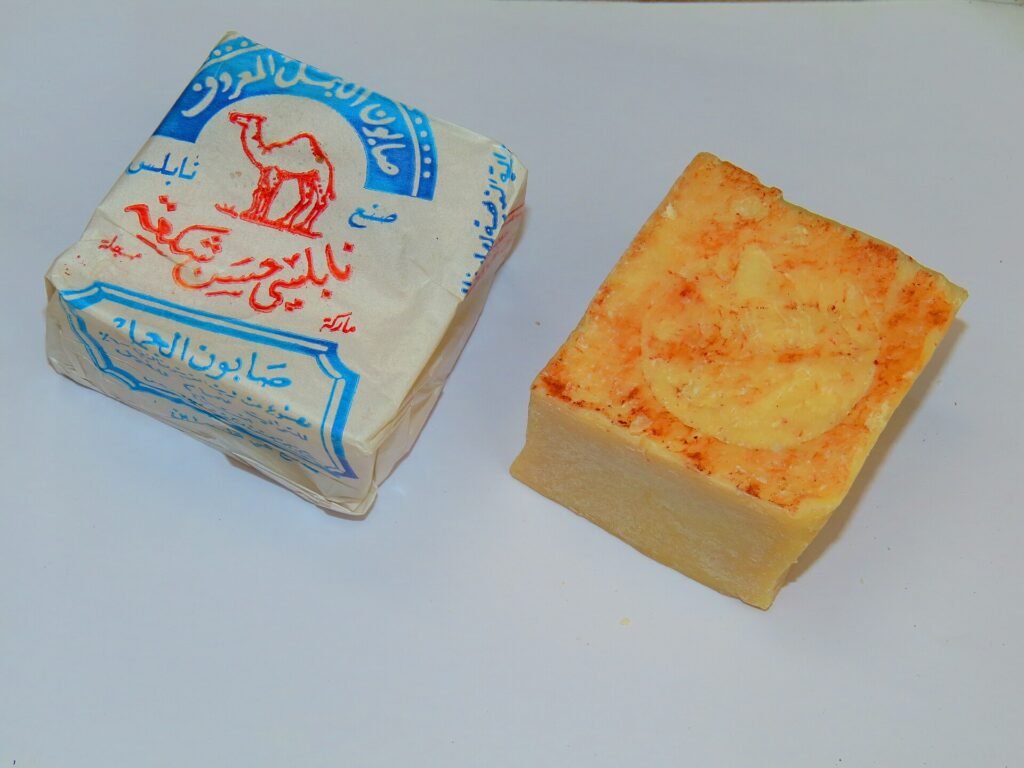
A craft of olive oil, water, and alkaline salts—transformed by hand into pale, nearly scentless bars that have defined Nablus for seven centuries.
In UNESCO’s words
Nabulsi is a hand-crafted soap made in Palestine made from three natural, local ingredients: olive oil, water and lye. The practitioners make the soap after the olive harvest, adding their family’s stamp before packaging it and storing it for one year. Most families in Palestine share the tradition, with both men and women taking part in all stages of the production process and children helping their parents cut and pack the soap. A source of income for practicing families, the craft is passed on through hands-on practice in farms, olive presses and within families and small workshops. It is also taught by organizations, featured in movies, and transmitted through social media networks. The use of olive oil reflects people’s strong relation to nature, and many people use their homemade soap as a personal gift for celebrations such as weddings and birthdays. Often, soap makers give soaps to visitors to take home. The element encourages dialogue while connecting family members and communities.
Official description, UNESCO Intangible Cultural Heritage List — Tradition of Nabulsi soap making in Palestine
At a glance
Nabulsi soap is hand-crafted from three natural, local ingredients: olive oil, water, and lye. Makers shape the soap after the olive harvest, stamp it with their family's mark, and store it for one year before packaging. Both men and women take part in all stages of production, and children help by cutting and packing the finished bars. The craft provides income for practicing families and reflects a strong connection to nature.
Origins & history
The tradition is passed down through hands-on practice within families, farms, olive presses, and small workshops. It is also taught by organizations, featured in films, and shared through social media networks. This multi-generational transmission keeps the knowledge alive across Palestinian communities, where most families participate in the craft.
The practice
Soap makers combine olive oil, water, and lye to create the finished product. The work involves both men and women at every stage, from initial mixing through the final cutting and packing, with children joining their parents in the process. Families add their own distinctive stamp to each batch, marking the soap before it is stored for a full year.
Cultural significance
Nabulsi soap strengthens ties between family members and communities, encouraging dialogue and connection. People often give homemade soap as personal gifts for celebrations such as weddings and birthdays, and soap makers commonly offer bars to visitors to take home. The practice matters economically to families who make it, and its survival across generations demonstrates the community's commitment to this valued tradition.
Key facts
- Country: State of Palestine
- Inscribed: 2024
- UNESCO list: Representative List of the Intangible Cultural Heritage of Humanity
- UNESCO reference: 02112
- UNESCO vocabulary: Handicrafts; Hygiene; Soap
- Map: Nablus — the locality named in UNESCO’s official description of this element
Where to experience it
Nabulsi soap is made throughout Palestine, where families, small workshops, and organizations keep the tradition alive. Visitors can observe soap-making in farms and olive presses, watch demonstrations at workshops, and purchase finished bars directly from makers. The craft is also featured in films and shared widely through social media, making it accessible to those curious about Palestinian heritage and the practice of transforming local olives into handmade gifts.
Sources & resources
- UNESCO — official element page: Tradition of Nabulsi soap making in Palestine
- UNESCO — open data record: Intangible Heritage List, reference 02112
- UNESCO — official photograph: A Palestinian family making Nabulsi soap at home: Mr Khaled Omar Diab and his wife, Mrs Ferial Daoud, from Mazre' Al-Nobani village — Palestinian Ministry of Culture, 2023
- Reference — Wikipedia (secondary): Nabulsi soap — consulted as a secondary reference, not as confirmation
- Cultural Heritage Online: Our archive and city guides

Find it on the map
See this place and what’s around it →📷 Become a Cultural Heritage Online photographer
Share your photos of places: they stay published under your name as the author. The more they're seen, the more you get noticed — and soon a contest will reward the most appreciated photos.
Log in or sign up free to add a photo